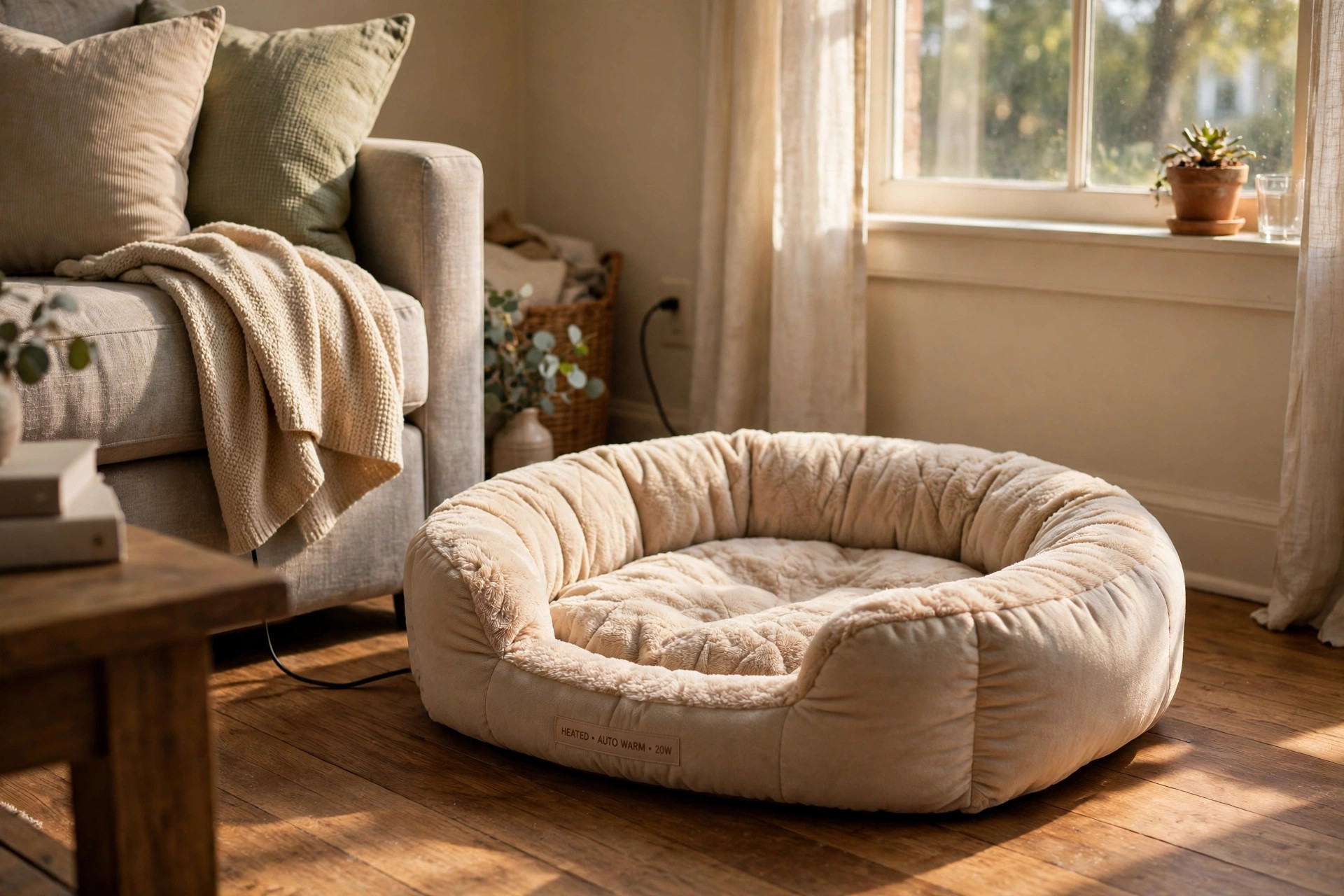

An old dog slows down. He rises with care. He moves with care. The stairs become hard. A cold floor becomes hard. A heated pet bed for arthritic older dogs can help in a simple way. It gives steady warmth while he rests. Warmth eases stiff joints. It helps the dog relax. Many owners of senior dogs say a warm bed changes the mood of the whole house.
Arthritis is common in older dogs. The joints grow worn with age. Large breeds feel it first. But small dogs feel it too. The dog may limp in the morning. He may lie down more often. He may stop wanting long walks. These are signs of joint pain. A vet can confirm the cause. A vet can also set a care plan. Medicine, gentle exercise, and good rest all play a part. A warm bed is one part of that plan.
This guide explains what a heated pet bed is. It shows what to look for before you buy. It covers the main types, the cost, and the care. It also covers safety, because heat and pets need care. By the end, you will know how to choose a bed that suits your old dog.
Why a Heated Bed Helps an Arthritic Dog
Heat has a plain effect on sore joints. Warmth loosens tight muscles. It widens the small blood vessels near the skin. Better blood flow brings comfort to stiff areas. When a dog lies on a warm surface, the joints do not have to warm up on their own. The bed does the work.
Cold is the enemy of arthritis. Many dogs limp more on winter mornings. A cold floor draws heat from the body. The dog must spend energy to stay warm. An older dog has less energy to spare. A heated bed keeps his core warm through the night. He wakes with less stiffness.
Comfort also affects mood. A dog in pain may grow restless. He may pant at night. He may keep shifting to find a soft spot. Steady warmth helps him settle. He falls asleep sooner. He sleeps longer. Better rest helps the whole body heal.
Some owners try a plain blanket first. A blanket gives some insulation. But it gives no heat of its own. On a cold floor, the blanket soon grows cold too. A heated bed adds a gentle source of warmth. It works like a warm lap that never leaves. For dogs with thin coats or little body fat, the gain is clear.
Warmth is not a cure. It does not fix worn joints. It does not replace vet care. But it is a kind and useful aid. Many vets mention heat as part of joint care at home. Ask your own vet before you start. The vet knows your dog best.
What to Look for in a Heated Pet Bed: Heated Pet Bed for Arthritic Older Dogs
Shops sell many heated beds. They differ in price and quality. A few points matter most. Look at each point before you spend money.
Type of Heat
Two kinds of heat are common. Electric beds plug into a wall outlet. They use a low-watt heating pad inside the bed. They hold a steady warmth for hours. They suit dogs that rest in one spot all night. Check that the cord is chew resistant. A cord cover is a good sign.
Self-warming beds use no power. They hold a thin layer of reflective material. The layer bounces the dog’s own body heat back to him. These beds are cheap and safe. They give mild warmth, not deep heat. They suit mild stiffness or warm rooms. For a dog with clear arthritis, an electric bed gives more help.
Some beds use a microwave pad. You warm the pad in the oven of the kitchen, then place it in the bed. The warmth lasts a few hours. It fades by morning. These work for naps. They are less useful for the night.
Size and Support
The bed must fit the dog. Measure the dog from nose to tail when he lies on his side. Add six inches. That is the least length the bed should have. A dog that hangs off the edge will not rest well.
Support matters as much as size. An arthritic dog sinks into a soft thin bed. The joints press against the hard floor below. That brings pain. Choose a bed with thick foam. Memory foam is a good choice. It shapes to the body and spreads the weight. Pair firm support with the heat. That pair gives the best rest.
Think about how the dog gets onto the bed. A tall-sided bed is hard to step into. A low edge is easier. Some dogs need a ramp to reach a high bed. A dog ramp for suv and high bed access is made for cars and tall beds, but the same idea applies at home. Easy entry keeps the dog from straining his joints each time he lies down.
Safety Features
Heat must stay gentle. The bed should feel warm to your hand, never hot. A good bed holds a temperature near the dog’s own body warmth. It should never climb above 102 degrees Fahrenheit. Many beds have a built-in thermostat. The thermostat cuts the power when the bed is warm enough. That is a feature worth paying for.
The cover should resist water. Old dogs may have small accidents. A water-resistant liner keeps the heating pad dry. The outer cover should come off for washing. A washable cover keeps the bed fresh and clean.
Look for a seal of approval from a testing lab. The U.S. Consumer Product Safety Commission lists safety rules for heated pet products and tracks recalls of unsafe items. A listed product has passed set tests. That gives peace of mind.
Types of Heated Beds
Heated beds come in several shapes. Each shape suits a different dog and home.
Heated pad inserts. These are flat pads that slide into an old bed. They are the cheapest option. If your dog loves his old bed, an insert keeps what he knows. Make sure the pad fits flat with no folds. Folds can trap heat in one spot.
Heated bolster beds. These have raised sides. The dog can lean against the soft edge. Many dogs like the feeling of a wall at their back. The sides also block drafts. These beds suit dogs that curl up to sleep.
Heated orthopedic beds. These pair a heating element with thick memory foam. They are the top choice for arthritis. The foam supports the joints. The heat eases the stiffness. A best orthopedic dog bed for senior large dogs follows the same idea of firm support, with or without heat. For a large old dog, this type is often worth the higher price.
Heated mats. These are thin and firm. They work well on top of a crate floor or under a blanket. They suit dogs that sleep in a crate. They also travel well.
Outdoor heated houses. Some dogs spend time in the yard or a garage. A heated shelter keeps them warm there. A heated dog house for winter cold climates uses the same low-watt heat in a small enclosed space. Use only products made for outdoor use. Indoor beds are not safe in damp sheds.
Choose the shape that fits the dog’s habit. Watch where he sleeps now. Buy the heated version of that spot.
Cost and Price
Prices range wide. A self-warming bed costs about 20 to 40 dollars. A microwave pad bed costs about 25 to 50 dollars. An electric heated bed costs about 40 to 120 dollars. Large electric orthopedic beds can reach 150 dollars or more.
Size drives the price. Small beds for lap dogs cost less. Extra-large beds for big breeds cost more. Brand name adds to the price too. A known maker with a warranty often charges more than a no-name seller.
Do not buy on price alone. A very cheap electric bed may lack a thermostat. It may use thin wires. It may wear out in one season. Read the label. Look for the wattage. Most good beds use between 4 and 25 watts. That is a small load. It costs only a few dollars a year to run.
Think of the bed as a long-term aid. An old dog may use it every day for years. A bed that lasts three winters costs less per year than a cheap bed replaced each year. Check the warranty. One year is common. Two years is better.
Shops like Chewy and The Home Depot list many options with buyer reviews. Reviews from owners of senior dogs are the most useful. They tell you how the bed held up over time.
Care and Upkeep
A heated bed needs simple care. Keep the cover clean. Wash it as the label says. Most covers go in a home washing machine. Use warm water and mild soap. Dry it well before you put it back. A damp cover against a heating pad is not safe.
Check the cord each month. Look for chew marks or worn spots. If the cord is damaged, stop using the bed. A damaged cord is a fire risk. Keep the cord where the dog cannot reach it. Run it behind furniture when you can.
Check the heat each month too. Place your hand flat on the bed for a minute. It should feel warm and even. If one spot feels hot, the pad may be failing. If the bed feels cold when plugged in, the element may be dead. Replace the pad or the bed. Do not try to fix the wiring yourself.
Keep the bed in a dry spot. Do not place it where water can spill on it. Do not use an indoor bed on a wet porch. Moisture and electric heat do not mix.
Rotate the bed now and then. Dogs wear one spot thin. Turn the pad over if the maker allows it. This spreads the wear. The bed will last longer.
Safety
Safety comes first with any heated product. Follow these rules.
Set up the bed on a flat floor. Do not fold it. Do not bunch it up. Heat must spread in an even way.
Never leave a damaged bed plugged in. If you smell burning or see scorch marks, unplug it at once. Throw it away. No bed is worth a fire.
Watch the dog in the first week. Some dogs chew cords. Some dogs dig at the pad. If your dog chews, choose a bed with a steel-wrapped cord. Or place the cord out of reach. The ASPCA offers general guidance on keeping cords and small hazards away from pets.
Very old or sick dogs may not move well. A dog that cannot shift his body may lie on one hot spot too long. Check on such dogs often. A low-heat bed with a thermostat is the safest choice for them.
Do not use a human heating pad for a dog. Human pads run hotter. They lack pet-safe covers. They can burn a dog that lies on them all night. Buy a product made for pets.
Unplug the bed in summer if the room is warm. Extra heat is not needed then. The dog can use the bed unplugged as a plain orthopedic bed.
The American Kennel Club and PetMD both publish care guides for senior dogs. Their vets note that heat aids should be one part of a full care plan. Medicine, weight control, and gentle walks matter too. A warm bed supports the plan. It does not replace it.
Frequently Asked Questions
Are heated beds safe for dogs with arthritis?
Yes, when the bed is made for pets and used as directed. Choose a low-watt bed with a thermostat. Check the cord often. Watch the dog in the first days. Stop use if the bed feels hot in one spot. Ask your vet if you are unsure.
What temperature should a heated pet bed reach?
It should feel warm to the touch, close to the dog’s body temperature. Most good beds hold between 100 and 102 degrees Fahrenheit. It should never feel hot. If you cannot keep your hand on it in comfort, it is too hot.
Can a heated bed stay plugged in all night?
Beds made for pets are built for long use. A bed with a thermostat can stay plugged in through the night. It will cycle on and off to hold a safe warmth. Still, check the bed each month for wear. Unplug it when no one is home for a long time.
How do I clean a heated dog bed?
Take off the outer cover and wash it as the label directs. Wipe the heating pad with a damp cloth if the maker allows it. Never soak the pad. Never put the pad in a washing machine. Let all parts dry fully before you plug the bed in again.
Will a heated bed cure my dog’s arthritis?
No. Heat eases pain and stiffness. It does not repair worn joints. Think of it as comfort care. Pair it with vet visits, proper medicine, good weight, and gentle exercise. Many owners find the mix works better than any one step alone.
Self-warming or electric: which is better for an old arthritic dog?
Electric beds give stronger, steadier heat. They help more with clear joint pain. Self-warming beds are cheaper and need no outlet. They suit mild stiffness or warm rooms. For a dog that limps on cold mornings, an electric bed is the better pick.
A Final Word
An old dog asks for little. A soft place. A warm place. A quiet corner of the house. A heated pet bed for arthritic older dogs gives two of those at once. It is a small purchase with a daily return. The dog sleeps deeper. He rises with less pain. He spends his last years in comfort.
Take time to choose well. Measure the dog. Read the label. Pick a safe heat source and firm support. Keep the bed clean and check it often. Your old friend has given you years of loyalty. A warm bed is a fair way to give some comfort back.
See The Spruce Pets for more detail. See also Petco for further detail.
References
American Kennel Club. (n.d.). Dog care and training resources. https://www.akc.org ASPCA. (n.d.). Pet care and animal welfare resources. https://www.aspca.org Chewy. (n.d.). Pet supplies. https://www.chewy.com Petco. (n.d.). Pet supplies and services. https://www.petco.com PetMD. (n.d.). Pet health information. https://www.petmd.com The Home Depot. (n.d.). Home improvement products. https://www.homedepot.com The Spruce Pets. (n.d.). Pet care guides and product reviews. https://www.thesprucepets.com U.S. Consumer Product Safety Commission. (n.d.). Product safety information. https://www.cpsc.gov
Was this guide helpful?

About James Carter
The My Garden US editorial team writes practical, in-depth home and garden guides for American homeowners — tested advice, no fluff.
You May Also Like

Dog Anxiety Vest for Thunderstorms and Fireworks: A Complete Guide
April 16, 2026 0 views
Cat Harness and Leash Set for Outdoor Walks: A Complete Guide
September 7, 2026 0 views
Finding the Best Dog Nail Grinder Quiet for Nervous Dogs
June 8, 2026 0 views