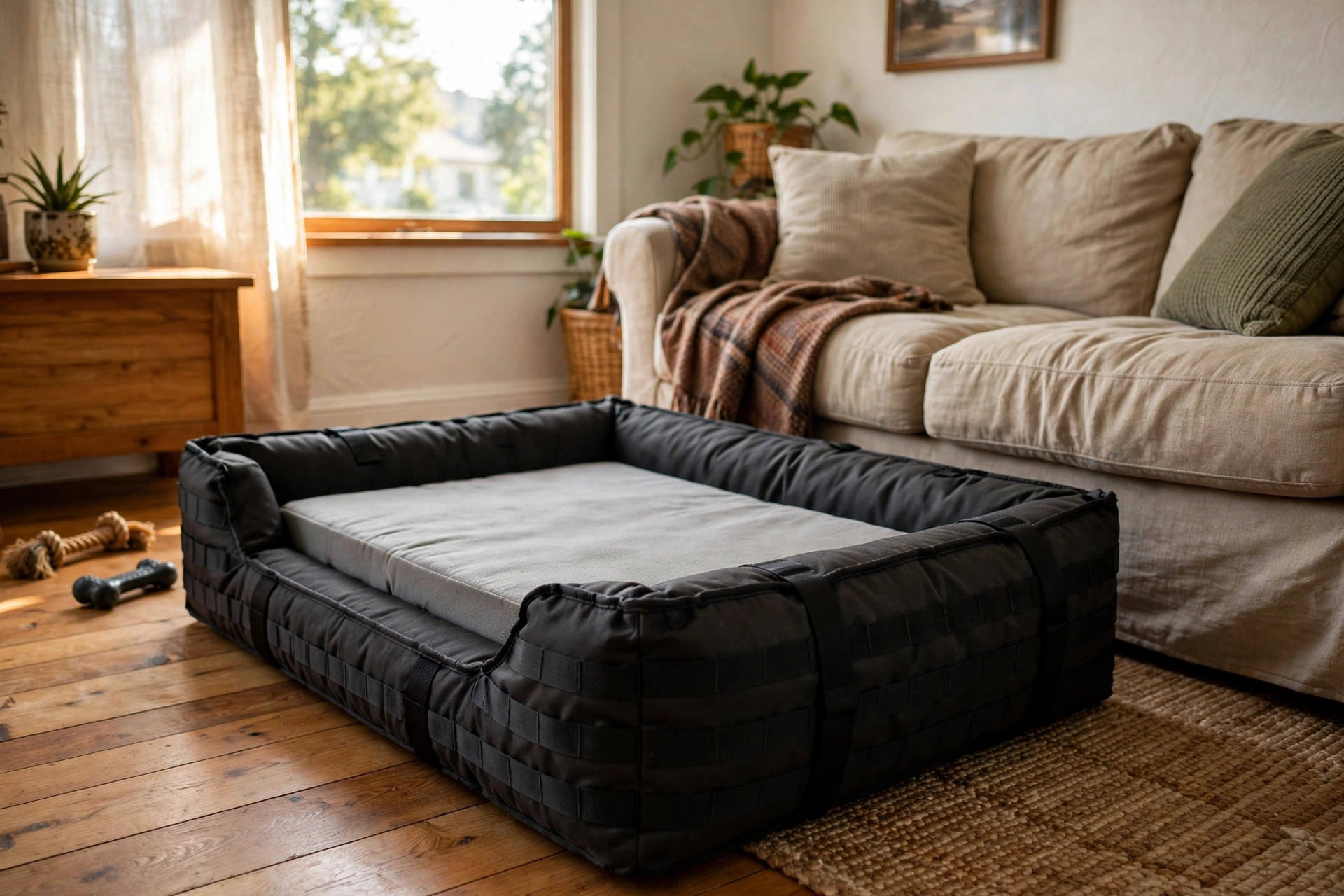

Many dog owners in America know the sight. You buy a soft bed on Monday. By Friday it is flat stuffing on the floor. Dogs chew. Some dogs chew hard. The best dog bed for chewers indestructible usa shoppers look for is built to survive this habit. It must stay whole through months of gnawing, digging, and dragging. This guide explains what makes a bed truly tough. It covers materials, designs, prices, and care. It also answers common questions from owners of power chewers.
Why Heavy Chewers Destroy Ordinary Beds
Chewing is natural for dogs. Puppies chew when they cut teeth. Young dogs chew when they are bored. Some breeds chew for life. Anxious dogs chew to calm their nerves. A standard bed gives a dog a perfect target. It is soft, it is on the floor, and it tears with small effort.
Ordinary beds fail in clear ways. Seams split first. A dog finds a loose thread and pulls. Stuffing comes out next. Foam pads break into chunks. Some dogs eat the pieces. That is a health risk. The ASPCA notes that swallowed fabric and foam can cause blockages in dogs. A bed that falls apart is not only a waste of money. It can also send a dog to the vet. This is why shoppers search for the best dog bed for chewers indestructible usa models with real chew-proof build.
A tough bed solves more than one problem. It saves money over time. It keeps the house clean. It gives the dog a safe place to rest and chew. Owners of strong breeds report that a good chew-proof bed lasts years where a soft bed lasted days.
What to Look for in an Indestructible Dog Bed: Best Dog Bed for Chewers Indestructible Usa
Shopping for a tough bed is easier with a short checklist. Look at the fabric, the build, and the design. Each point matters.
First, check the outer fabric. The cover should resist claws and teeth. Ballistic nylon is a top choice. Canvas duck cloth also works well. Some makers use a tight weave rated for high denier count. Higher denier means thicker threads. Thicker threads mean harder chewing. Avoid thin fleece or loose knit on the outer layer. They tear fast.
Second, check the seams. Double stitching holds better than single stitching. Hidden seams are better than exposed seams. A dog cannot chew what it cannot find. Some beds place zippers in hard-to-reach spots. That small detail makes a real difference. PetMD guides on choosing dog supplies remind owners that build quality often matters more than brand name.
Third, check the filling. Solid foam slabs last longer than loose stuffing. Loose polyfill pulls out in clumps. A single foam block gives the dog nothing to grab. Memory foam and high-density foam both work. The foam should sit inside a tough inner liner as well as the outer cover.
Fourth, check the shape. Flat mats are harder to destroy than bolster beds. Raised edges give a dog something to grip. For the worst chewers, a raised cot with a tight fabric sling beats any padded bed. There is little to chew on a frame-and-sling design.
Fifth, check the warranty. Honest makers stand behind chew-proof claims. A one-year or lifetime chew warranty is a good sign. Read the fine print. Some warranties cover defects but not chewing. The best ones cover chewing itself.
Types of Indestructible Dog Beds
Not every tough bed looks the same. The main types suit different dogs and homes.
Raised cot beds. These use a metal or heavy plastic frame with a stretched fabric center. The dog lies off the floor. Air flows under the bed. There are no corners to grab and no stuffing to pull. Many kennels use them. They work well for large breeds and for dogs that dig at bedding. Chewy lists many raised dog beds in this style for American homes.
Heavy-duty mat beds. These are flat pads with ballistic covers and solid foam inside. They fit in crates and corners. They look like normal beds but chew far less. They suit dogs that like to curl up on a cushion.
Ballistic bolster beds. These have tough outer fabric but keep the raised edges some dogs love. They are a middle ground. They survive moderate chewers. True power chewers may still work the corners loose.
Metal-frame chew-proof beds. A few makers weld full steel frames and bolt the fabric down. These cost more. They suit the most extreme chewers. They are common in shelters and kennels.
Orthopedic chew-proof beds. Older dogs need joint support. Some makers pair thick orthopedic foam with a ballistic cover. These cost more but serve senior power chewers well.
When you compare types, think about your dog first. A crate-trained dog may do best with a flat mat. A large outdoor dog may love a raised cot. A senior dog needs the orthopedic option. There is no single winner for every home.
Cost and Price in the USA
Prices for tough dog beds run higher than prices for soft beds. The build costs more. Here is what American shoppers can expect.
Basic chew-resistant mats start near 30 to 50 dollars. They use simple foam and canvas covers. They suit light to moderate chewers.
Mid-range beds cost 60 to 120 dollars. This range holds most ballistic nylon beds with solid foam. It is the sweet spot for most owners. The American Kennel Club notes that dog bed sizing matters as much as price, so measure your dog before you order.
Heavy-duty and raised cot beds cost 80 to 150 dollars. Metal-frame models can reach 150 to 250 dollars. Orthopedic chew-proof beds sit near 120 to 200 dollars.
The math favors the tough bed. A 25-dollar soft bed that lasts two weeks costs 650 dollars a year. A 120-dollar indestructible bed that lasts three years costs 40 dollars a year. Buyers who track spending find the tough bed cheaper in the long run. Home Depot also stocks pet beds across these price bands for shoppers who want to see them in person.
Shipping is often free from large American sellers. Watch for sales in spring and near major holidays. Prices drop when new models arrive.
Care and Upkeep
A tough bed still needs care. Regular cleaning extends its life and keeps the dog healthy.
Wash the cover on a set schedule. Most ballistic covers handle machine washing. Use cold water and mild soap. Skip bleach. It weakens fabric threads. Air dry when you can. High heat wears covers faster.
Wipe the frame on raised beds. Metal frames collect dust and hair. A damp cloth does the job. Check bolts and joints once a month. Tighten anything loose. A loose frame wobbles and invites chewing.
Inspect for damage each week. Look at corners and seams. Small frays can be trimmed before they grow. If a dog opens a hole, patch it fast or remove the bed. Loose threads invite more pulling. The Spruce Pets offers practical dog bed cleaning tips that fit busy households.
Rotate the bed if the dog favors one spot. Even wear lasts longer. Keep a second cover if the maker sells one. Swap covers on wash day so the dog never goes without.
Air the foam out in sun now and then. Sunlight cuts odor. Do not leave foam in harsh sun for hours. UV breaks foam down over time.
Safety Notes for Strong Chewers
No bed is truly indestructible. The word means highly resistant. Owners should still watch their dogs.
Remove any bed with exposed foam or stuffing. Dogs that swallow pieces risk intestinal blockage. Blockages can need surgery. If your dog vomits, stops eating, or strains after chewing bedding, call a vet at once.
Check small parts. Buttons, tags, and plastic zippers can come off. Cut tags off new beds. Choose beds with hidden zippers.
Size the bed right. A bed that is too small bunches up. Bunched fabric is easy to grab and chew. A bed that fits lets the dog stretch out flat. PetMD has clear guidance on dog bed safety for households with aggressive chewers.
Watch new beds for the first week. Some dogs test a new bed hard in the first days, then settle. If the chewing never stops, the bed may not suit that dog. Try a different type. The CPSC product safety pages also track recalls, so check that your model has no open recall.
Keep chew toys near the bed. A dog with a good toy chews the toy, not the bed. This simple step saves many beds.
Frequently Asked Questions
What is the most indestructible dog bed for heavy chewers? Raised cot beds with tight fabric slings resist chewing best. There is little for the dog to grab. Metal-frame models rank next. For padded comfort, choose a ballistic nylon bed with a solid foam slab and hidden seams.
Do chew-proof dog beds really work? They work for most dogs. They greatly slow damage and often stop it. No bed survives every dog. A small number of extreme chewers will damage any soft surface. For those dogs, a raised cot or a metal-frame bed is the best bet.
What material is best for a dog bed for chewers? Ballistic nylon leads the list. Heavy canvas duck cloth is close behind. Look for high denier ratings. The filling should be a solid foam slab, not loose stuffing. Double-stitched hidden seams add real strength.
How much should I pay for an indestructible dog bed in the USA? Plan on 60 to 150 dollars for a good one. Basic mats start near 30 dollars. Metal-frame and orthopedic models can pass 200 dollars. Compare the price to what you spend replacing soft beds. The tough bed usually wins.
Can I leave my dog alone with a chew-proof bed? Yes, once the dog has used it safely for a week or two under watch. Check the bed often for new damage. Remove it at once if the cover opens and filling shows. Most owners crate-train with these beds without trouble.
How do I clean a ballistic nylon dog bed? Remove the cover and machine wash cold with mild soap. Air dry or tumble dry low. Wipe foam inserts with a damp cloth. Air the foam in mild sun to cut odor. Most covers wash well for years.
A Short Final Word
The best dog bed for chewers indestructible usa buyers can find is the one that fits their dog, their home, and their budget. Raised cots beat padding for the hardest chewers. Ballistic covers beat thin fabric every time. Solid foam beats loose stuffing. Spend once on a strong bed instead of spending all year on weak ones. Watch the bed, clean it on schedule, and give the dog good chew toys. Do that, and the bed will serve for years.
Pet owners who upgrade the rest of the home at the same time often look at related gear. A well-fitted dog door for a storm door makes outdoor access easy. Regular grooming with the right dog brush for short hair keeps shedding down. And cat owners in the same house may want a cat calming diffuser for multi-cat homes to keep the peace. PetSmart also carries a wide range of tough dog beds for shoppers who prefer a store visit. Petco lists many chew-resistant beds with customer reviews that help with the choice. The American Humane site shares general pet care resources worth a look for new owners.
References
American Humane. (n.d.). Animal welfare and pet care resources. https://www.americanhumane.org American Kennel Club. (n.d.). Dog care and training resources. https://www.akc.org Chewy. (n.d.). Pet supplies. https://www.chewy.com Petco. (n.d.). Pet supplies and services. https://www.petco.com PetMD. (n.d.). Pet health information. https://www.petmd.com PetSmart. (n.d.). Pet supplies and services. https://www.petsmart.com The Home Depot. (n.d.). Home improvement products. https://www.homedepot.com The Spruce Pets. (n.d.). Pet care guides and product reviews. https://www.thesprucepets.com U.S. Consumer Product Safety Commission. (n.d.). Product safety information. https://www.cpsc.gov
Was this guide helpful?

About Robert Taylor
The My Garden US editorial team writes practical, in-depth home and garden guides for American homeowners — tested advice, no fluff.
You May Also Like

Best Outdoor Dog Toy for Fetch in Yard
March 9, 2026 0 views
Best Dog Crate Divider for Growing Puppies: A Complete Guide
July 8, 2026 0 views
Dog Tie Out Cable for Camping and Yard: A Plain Guide
September 1, 2026 0 views