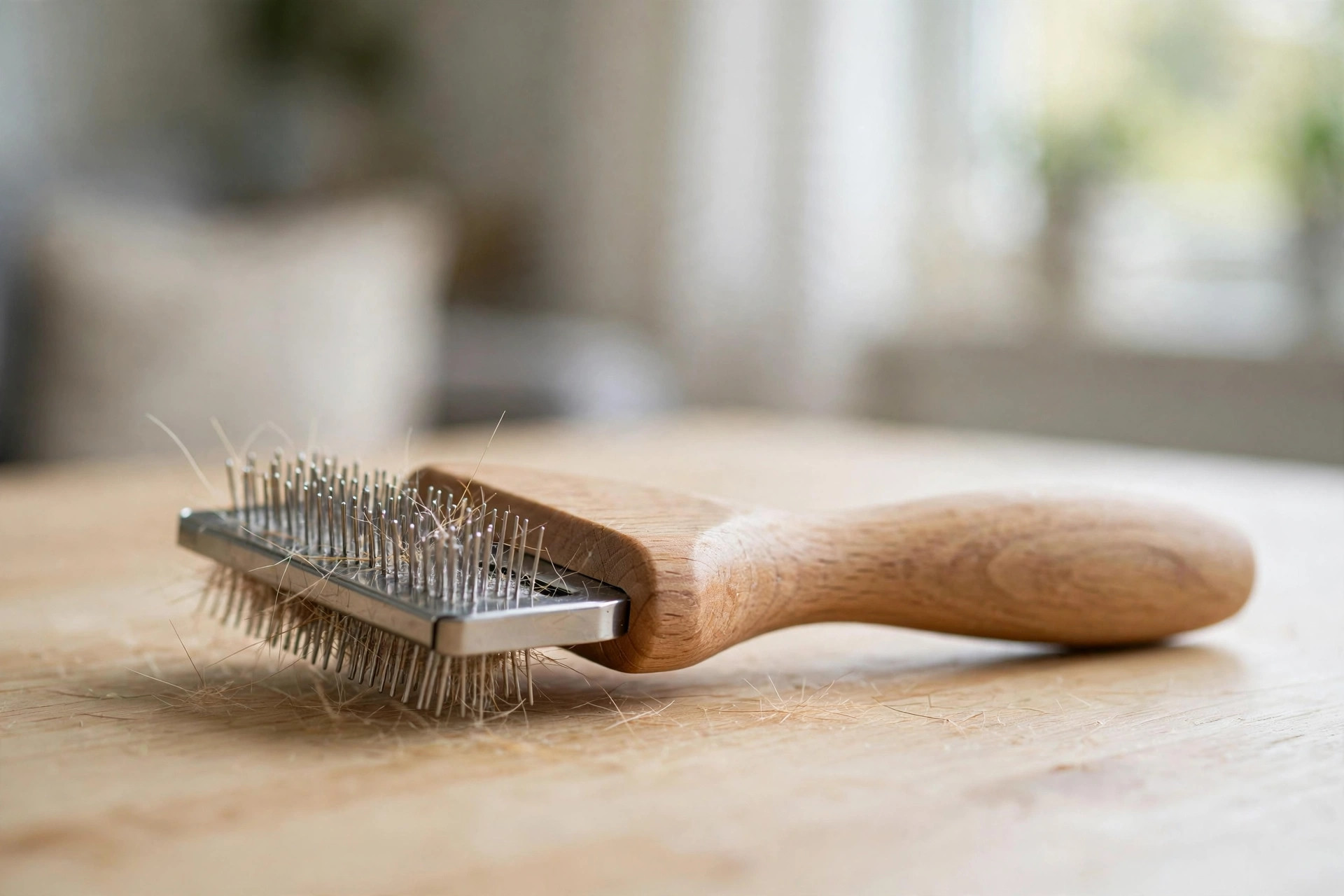

Many owners think short hair means no shedding. This is not true. Dogs with short coats can shed a great deal. Pugs, beagles, labs, and boxers all drop hair every day of the year. The best dog brush for short hair deshedding is the simple tool that keeps this problem under control. This guide explains what to buy, how to use it, and how to care for it. It is written in plain words for the average American dog owner.
Why Short-Haired Dogs Still Shed
Shedding is normal. A dog grows new hair and loses old hair in a cycle. Short hair falls out just like long hair does. The difference is that short hair is harder to see until it builds up on the floor, the couch, and your clothes.
Some breeds shed more in spring and fall. This is called seasonal shedding. During these times, the dog loses a heavy undercoat. The American Kennel Club notes that even single-coated breeds shed light hairs all year long, and double-coated short breeds can fill a vacuum bag in one week of heavy shedding season (American Kennel Club, n.d.).
Regular brushing pulls out loose hair before it lands on your furniture. It also spreads the natural oils through the coat. This keeps the coat shiny and the skin healthy. A good routine takes only a few minutes a day.
Types of Deshedding Brushes for Short Hair: Best Dog Brush for Short Hair Deshedding
Not every brush works well on short hair. Long pins made for thick coats can scratch short-haired skin. The best dog brush for short hair deshedding is one built for short coats. The main types are described below.
Rubber Curry Brushes
A rubber curry brush has soft rubber teeth. You move it in small circles over the coat. It lifts loose hair and dust. It also feels like a gentle massage, so most dogs enjoy it. These brushes work well in the bath too, since the rubber grips the coat when wet. They are cheap and hard to break.
Deshedding Blades and Rakes
Deshedding blades have a row of short metal teeth. The teeth reach past the top coat and grab the loose undercoat. Brands such as FURminator made this style famous for shedding control (FURminator, n.d.). A blade removes a large amount of hair in a few strokes. The owner must use a light touch. Too much pressure can scrape the skin.
Bristle Brushes
A bristle brush uses short, firm bristles set close together. It is good for a final pass after the main brushing. It removes dust and leaves the coat smooth. Bristle brushes are gentle and safe for daily use. They do not pull out much undercoat, so they work best as a second tool, not the main one.
Grooming Gloves
Grooming gloves have rubber nubs on the palm and fingers. You simply pet the dog. The nubs catch loose hair as you stroke. Gloves are a good choice for dogs that fear brushes. They also work well for the belly and legs, where the skin is thin. The hair lifts off the glove in one sheet when you are done.
Slicker Brushes
A slicker brush has many fine, short wires set in a flat or slightly curved pad. Some owners use it for short-haired dogs, but only with a very light touch. The wires can reach down to the skin and pull out loose hair fast. On a smooth coat, this style works best as a quick touch-up tool, not for daily use. Press hard and the wire tips will scratch. If you try one, keep the angle flat and stop at the first sign of redness.
What to Look for When You Buy
A store shelf can hold thirty different brushes. These points help you pick the best dog brush for short hair deshedding for your pet.
Match the Tooth Length to the Coat
Short hair needs short teeth. Teeth longer than half an inch will dig into the skin. Look for a brush marked for short coats. If the package shows only long-coated dogs, keep looking.
Check the Grip
You will use this tool for years. The handle should fit your hand and not slip when wet. Wood and molded rubber handles feel best. Avoid handles with sharp seams that can rub your fingers raw.
Make Cleaning Easy
A brush that holds hair is useless if you cannot clean it. Some tools have a button that pushes the hair off the teeth. Others have removable heads. At the least, the teeth should rinse clean under tap water. Guides from Chewy remind owners to wash grooming tools often so dirt and oil do not move back onto the coat (Chewy, n.d.).
Judge the Build Quality
Cheap metal teeth can bend or rust. Cheap plastic can crack at the handle. A well-built brush costs a few dollars more but lasts for years. Look for rust-proof metal and solid joints between the head and the handle. Andis, a maker of professional grooming tools, notes that good steel edges stay sharp and smooth far longer than low-cost copies (Andis, n.d.).
Cost and Price
The price of the best dog brush for short hair deshedding runs from five to forty dollars. Simple rubber curry brushes cost five to ten dollars. Deshedding blades run from fifteen to forty dollars, depending on size and brand. Grooming gloves usually cost eight to fifteen dollars. A basic bristle brush costs five to twelve dollars.
Price does not always mean quality. Many mid-range brushes work as well as the high-end names. Read the package and check the reviews. A good brush pays for itself by cutting down on lint rollers, vacuum bags, and professional grooming visits. Owners who brush at home often spend less at the groomer over the year, a point noted in pet-care cost guides (PetSmart, n.d.).
How to Brush the Right Way
The right tool still needs the right method. Follow these steps for safe, effective brushing.
How Often to Brush
Brush your dog two to three times a week. During heavy shedding season, brush every day. Each session should last five to ten minutes. Long sessions can irritate the skin. Short, calm sessions teach the dog to enjoy grooming.
The Basic Technique
Start at the neck and work toward the tail. Brush in the direction the hair grows. Use short, light strokes. Do not press hard; let the teeth of the tool do the work. On the belly and legs, use even less pressure because the skin is thin there. Praise the dog and offer a small treat when you finish. This builds a good habit.
Pair the brushing routine with other cleaning habits for a truly hair-free home. A pet hair remover brush for couch and car takes care of the hair already on your seats, while the best pet vacuum for dog hair on furniture handles rugs and floors.
Care and Upkeep of the Brush
A dirty brush does a poor job. Pull the collected hair out after each use. Once a week, wash the brush in warm water with a drop of mild dish soap. Rinse it well and let it dry in the air. Do not use hot water on rubber tools; heat can warp them.
Check the teeth now and then. Bent or broken teeth can scratch the skin. Replace the brush when teeth start to bend, when rubber nubs tear, or when the handle cracks. The Spruce Pets advises replacing grooming tools at the first sign of wear, since dull or damaged teeth pull rather than glide (The Spruce Pets, n.d.).
Store the brush in a dry place. Do not leave it in a hot car or in direct sun. Heat dries out rubber and weakens plastic.
When you wash the tool, check the spaces between the teeth. Hair and skin oil can pack into those gaps even after a rinse. An old toothbrush works well to scrub them out. For rubber curry brushes, a soak in warm soapy water once a month keeps the rubber soft and grippy. Never use bleach or strong cleaners on grooming tools. They can leave a residue that irritates the dog’s skin at the next session.
If you own more than one brush, keep the deshedding blade separate from the rest. A blade tossed loose in a drawer can dull its edge or snag on other items. A simple cloth pouch or a drawer tray keeps every tool in good shape for years.
Safety Tips
Grooming is safe when done with care. Keep these rules in mind.
– Never brush over cuts, rashes, or hot spots. Let the skin heal first. – Stop if the dog cries, snaps, or pulls away. Pain is a signal, not bad behavior. – Do not use a deshedding blade on puppies or on dogs with very thin skin unless a vet says it is safe. – Keep the tool away from the eyes and ears. – If the skin turns red and stays red for more than an hour, stop using the tool and ask your vet for advice. PetMD notes that red or broken skin after grooming is a sign to check with a veterinarian (PetMD, n.d.).
The ASPCA also warns that any grooming routine should avoid pain and fear, since a scared dog becomes harder to handle at the vet and the groomer alike (ASPCA, n.d.).
Frequently Asked Questions
How do I know which brush suits my short-haired dog?
Look at the coat. A smooth, flat coat needs a rubber curry brush or a short deshedding blade. A thick double coat, like that of a lab, needs a deshedding blade that reaches the undercoat. When in doubt, ask the vet at your next visit.
Will a deshedding brush stop shedding completely?
No. No tool can stop natural shedding. A good brush removes loose hair before it spreads through the house. It cuts shedding in the home by a large share, but the dog will always lose some hair.
Can I use the same brush on a cat?
Not always. Cat skin is thinner and tears more easily. Some dog brushes are too harsh for cats. Use a tool made for cats, or at least a very soft rubber brush. Petco offers separate short-hair grooming tools for cats for this reason (Petco, n.d.).
Is it better to brush before or after a bath?
Brush before the bath. The dry brushing pulls out loose hair so it does not clog the drain. After the bath, let the coat dry, then do a light pass with a bristle brush for shine. Wet hair breaks more easily, so keep the post-bath brushing gentle.
How do I groom a dog that hates being brushed?
Start with a grooming glove, since petting feels safe. Keep the first sessions under two minutes. Give treats and praise. Add a little more time each day. If the dog still panics, ask the vet about calming steps or have a professional groomer show you a gentler method.
Do I need a full grooming kit, or is one brush enough?
One good brush covers most needs for a short-haired dog. Many owners also keep a bristle brush for finishing and a pet hair remover for the couch and car. Full dental care matters too; the best dog toothbrush kit for dental health rounds out a simple at-home routine.
Final Word
The best dog brush for short hair deshedding is not the priciest one on the shelf. It is the one that fits your dog’s coat, feels good in your hand, and gets used three times a week. Pick a short-tooth tool, brush with a light hand, and clean the tool after each use. Your dog will look better, your home will stay cleaner, and the whole routine will take less time than a cup of coffee. The Home Depot carries a wide range of these grooming basics for owners who want to compare tools in person (The Home Depot, n.d.).
For more background, see Petco and PetSmart.
References
American Kennel Club. (n.d.). Dog care and training resources. https://www.akc.org ASPCA. (n.d.). Pet care and animal welfare resources. https://www.aspca.org Chewy. (n.d.). Pet supplies. https://www.chewy.com Petco. (n.d.). Pet supplies and services. https://www.petco.com PetMD. (n.d.). Pet health information. https://www.petmd.com PetSmart. (n.d.). Pet supplies and services. https://www.petsmart.com The Home Depot. (n.d.). Home improvement products. https://www.homedepot.com The Spruce Pets. (n.d.). Pet care guides and product reviews. https://www.thesprucepets.com
Was this guide helpful?

About Sarah Mitchell
The My Garden US editorial team writes practical, in-depth home and garden guides for American homeowners — tested advice, no fluff.
You May Also Like
Best Pet Vacuum Attachment for Upholstery Cleaning
April 30, 2026 0 views
Outdoor Dog House for Two Large Dogs: A Practical Guide
May 10, 2026 0 views
Dog Crate Furniture End Table for Living Room: A Practical Guide
August 14, 2026 0 views