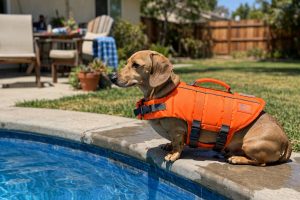

Every dog owner knows the fear of an open gate. A stubborn dog knows no gate at all. For owners of strong-willed dogs, the search for the best pet fence wireless for stubborn dogs starts the same way: with a dog that runs, a yard with no fence, and a wish for a simple answer.
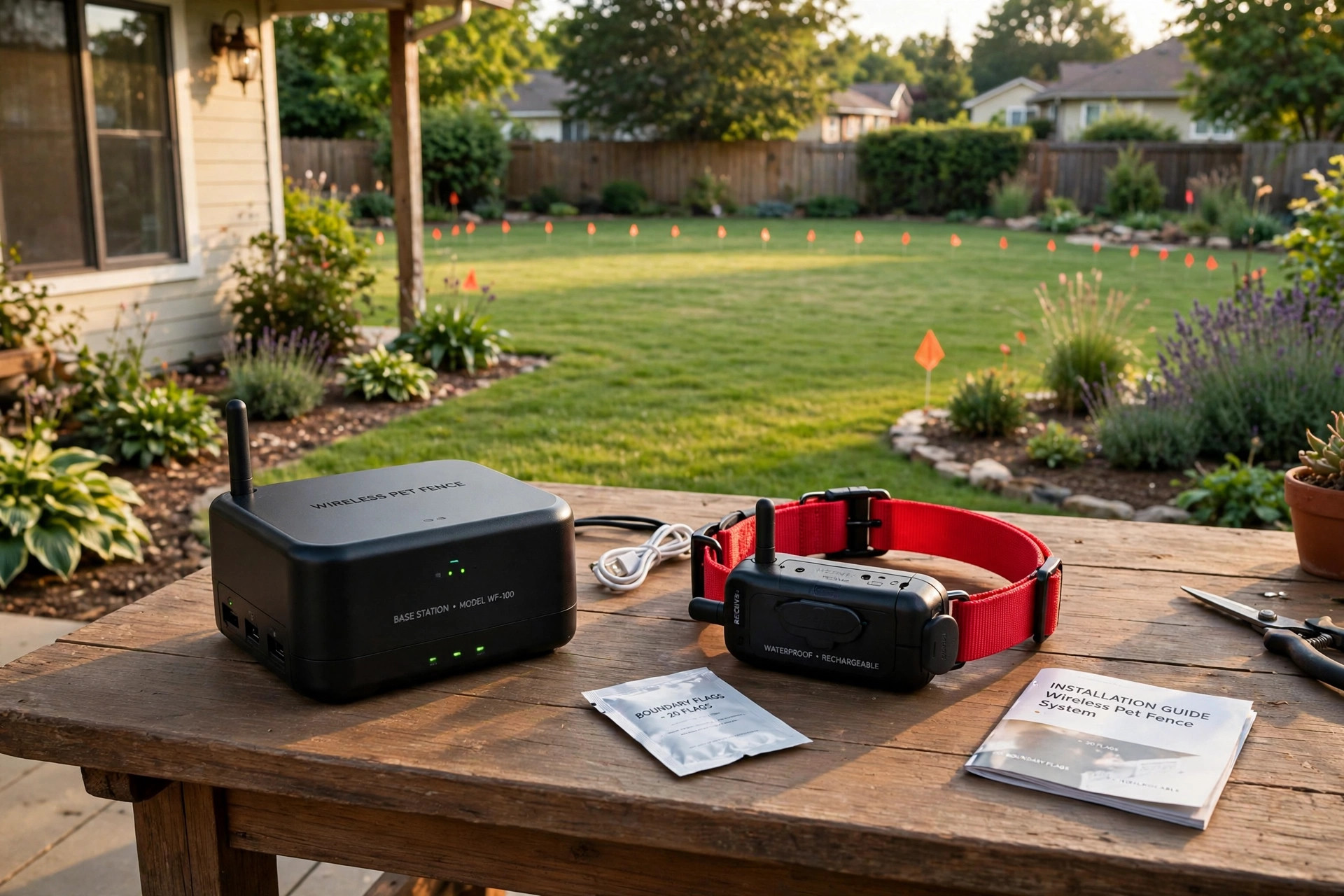
A wireless pet fence is a boundary without a wall. A small base station sits in the home. A special collar sits on the dog. When the dog nears the edge of a set area, the collar first gives a warning tone, then a brief static pulse. The dog learns to stay inside the safe zone. For many families it works well. For stubborn dogs it can still work, but only with the right system and the right training.
This guide explains how these fences work, what to look for, what they cost, and how to keep your dog safe. It is written in plain words, with no hype.
Why a Wireless Fence May Help
A traditional wood or chain-link fence costs thousands of dollars. Some neighborhoods ban tall fences outright. Some yards sit on rock or steep slopes where posts will not go in. A wireless system solves these problems at a fraction of the price. You plug in a base station, fit the collar, and train the dog. There is nothing to dig and no posts to set.
Stubborn dogs add a twist. A dog that pulls hard on a leash, bolts at squirrels, or ignores the word “come” will test any boundary. A wireless fence for a large yard with no digging gives the dog real space to run, which matters. A dog with room to burn energy is less eager to escape. That is why owners of terriers, huskies, hounds, and herding breeds look to these systems first.
Still, a fence is a tool, not a trainer. No system holds a determined dog that has never been trained. Plan to train. Plan to watch. The sections below show how.
How a Wireless Pet Fence Works: Best Pet Fence Wireless for Stubborn Dogs
The idea is simple. The base station sends a radio signal in all directions. The receiver collar on the dog reads that signal. As long as the dog stays inside the set distance, nothing happens. When the dog moves too far out, the collar responds in two stages: first a warning beep, then a mild static correction if the dog keeps going. Many models add a second “run-through” zone that gives a stronger signal to a dog that tries to sprint past the boundary.
The Base Station
The base station is a small box, about the size of a clock radio. It plugs into a wall outlet, usually on an upper floor or near the center of the home. A dial or digital panel sets the radius, often from a few yards up to about ninety feet in all directions. The signal forms a circle, which is a key point. You cannot shape it to fit a square lot. You must plan the circle so it covers the yard but stops short of the street.
The Collar
The collar holds the receiver. It must sit snug against the dog’s neck so the contact points touch skin. Most collars are waterproof and rechargeable, or use long-life batteries that last months. They weigh only a few ounces. On a very small dog the receiver can feel heavy, so check the size before you buy.
What to Look for When You Buy
Not every wireless system suits a stubborn dog. Look for these features.
Adjustable correction levels. A mild dog may need only the warning tone. A hard-headed dog may need a firmer setting. The best fence systems for stubborn dogs offer several static levels plus a tone-only mode, so you can start low and raise the level only if the dog ignores it.
A wide range. Small systems cover half an acre. Larger ones cover close to an acre or more. Measure your yard. A circle that is too small gives the dog nothing to enjoy, and a bored dog tests boundaries.
A stable signal. Radio signals drift near metal roofs, thick stone walls, or sloped ground. Read reviews from owners with land like yours. A system that holds a steady boundary is worth more than one with fancy extras.
Rechargeable batteries. Collars that run on small disposable batteries cost money over time and fail without warning. Rechargeable units with a low-battery light are easier to live with.
A fit for your dog’s size. Stubborn dogs come in all sizes, from beagles to bulldogs to giant breeds. The collar strap must fit the neck, and the receiver weight must suit the dog. Check the minimum neck size and the recommended weight range on the box.
Training guides from the American Kennel Club stress that fit and patience matter more than gadgets. A collar that slides around gives uneven signals, and an uneven signal confuses the dog.
Types and Options
Wireless systems fall into a few groups.
Standard wireless systems. These use a fixed base station and cover a circle around the home. They are the most common type and the easiest to set up. Most sell for $200 to $400 and include one collar. Extra collars cost $100 to $150 each for a second dog.
GPS-based systems. These have no base station. The collar uses satellite signals, and you draw the boundary on a phone app. They fit odd-shaped yards better than a circle system, and some track the dog’s location in real time. They cost more, often $400 to $800, and may need a monthly plan for the tracking service.
Hybrid systems. A few newer models blend a short-range radio link with GPS. They cost the most but give the steadiest boundary on large or hilly land.
For a stubborn dog, the difference between types matters less than the training. Still, GPS systems earn praise from owners of large properties because the boundary can be drawn to match the real yard. Retailers such as Chewy and Petco carry both types, with detailed specs for each model.
Training a Stubborn Dog to Respect the Boundary
Training is the part most owners skip. It is the part that decides whether the fence works. The ASPCA notes that consistent, reward-based training keeps dogs safer than any device alone. Follow this plan over two to three weeks.
Week one: flags and tones. Place the small boundary flags that come in the box around the edge of the circle. Walk the dog on a leash inside the flags. Let the dog hear the warning tone near the edge, then pull back and praise. Do this in short sessions, ten minutes at a time, two or three times a day. End every session with a treat and play inside the safe zone.
Week two: off-leash practice. Let the dog drag a long leash so you can step in if needed. When the dog nears the flags and the tone sounds, call the dog back with a happy voice and reward. If the dog crosses and feels the correction, stay calm. Walk out, bring the dog back in, and praise. Do not scold. The dog must learn that the yard is good and the edge is simply not worth it.
Week three: real life. Remove every other flag. Let the dog play as usual while you watch from the porch. Many stubborn dogs test the edge once or twice at this stage. That is normal. A firm but fair correction teaches more than ten lectures.
Sporting-breed owners at SportDOG add one rule: never let the dog out in the new collar without the base station on. The collar must mean something every single time. If the system is off and the dog roams free, the training fades.
What It Costs
A standard wireless system costs between $200 and $400. A GPS system costs between $400 and $800, plus any monthly plan, often $8 to $15 a month. Extra collars run $100 to $150. Replacement batteries or straps cost $10 to $30 a year.
Compare that with a buried-wire fence, which costs $1,000 to $2,500 installed, or a wood fence, which can pass $5,000 for an average lot. The wireless option is the cheapest way to fence a yard. The trade-off is the circle shape and the need for training. Farm supply stores like Tractor Supply often stock systems at fair prices, and their staff can explain battery options.
Care and Upkeep
A wireless fence needs little care, but it needs steady care.
Check the collar fit every week. A collar that was snug in spring may hang loose by fall. Clean the contact points with a damp cloth each month so skin oil does not block the signal. Charge or swap batteries on a schedule, not when the low-battery light appears.
Test the boundary once a month. Walk the collar on a leash to the edge and listen for the tone. If the tone starts in a new spot, move the base station or check for new metal objects, such as a shed or a parked trailer, that may bend the signal.
Move the flags only after the dog is fully trained, usually after a month of steady behavior. Some owners leave a few flags up as reminders. There is no shame in that. Dog-health writers at PetMD remind owners that a tired dog with a clear boundary is a safe dog, and small routines like these keep the system honest.
Safety Facts to Keep in Mind
No fence keeps every danger out. A wireless fence stops your dog from leaving. It does not stop other dogs, deer, or people from entering. If stray dogs roam your street, a wireless fence alone may not be enough.
The static correction is mild. Makers compare it to the sting of a rubber band snap. It startles more than it hurts. Still, it is not for every dog. Dogs under six months, very small dogs, and dogs with heart or seizure problems should not use these collars. Ask your vet first. Articles on The Spruce Pets advise a vet visit before buying any electronic collar, and that advice is sound.
Never use the collar as punishment. Never leave the collar on all day and night. Most makers say to take it off for at least a few hours a day so the neck skin can rest. Check the skin under the contact points for redness each week.
If your dog is fearful rather than stubborn, look at other options first. An outdoor dog run with a roof for the backyard gives a shy dog a safe space without any correction. A dog crate made for anxious dogs that is escape proof can help indoors. Match the tool to the dog.
Common Questions
Will a wireless fence work on a truly stubborn dog? Often yes, with training. Breeds known for independence, such as huskies and hounds, learn these boundaries every day. The key is a system with enough correction levels and two to three weeks of steady training. A dog that has never been trained at all will need basic leash manners first.
How big an area can one system cover? Most base-station systems cover a circle up to about ninety feet in radius, which is close to half an acre. Some reach a full acre. GPS systems can cover up to hundreds of acres on ranch land. Match the system to your lot size before you buy.
Can the boundary be a shape other than a circle? Standard wireless systems make only circles. If your yard is long and narrow, look at a GPS system, where you draw the boundary on a map. Buried-wire systems also allow custom shapes but cost far more to install.
Is the correction safe for my dog? For a healthy adult dog, makers and vets say the brief static pulse is safe and far milder than many shocks of daily life. It is still an aversive, which means the dog finds it unpleasant. Use the lowest level that works. Dogs that are very young, very small, pregnant, or ill should not wear the collar.
What if the power goes out? The base station needs power. When power fails, the boundary fails with it. Some owners plug the station into a battery backup. GPS collars run on their own batteries and keep working, which is one more reason large-property owners like them.
Do I still need to watch my dog? Yes. A fence is not a babysitter. Stay within earshot, especially in the first months. Watch for other animals entering the yard, and bring the dog in during storms, when stress can make any dog bolt.
A Final Word
The best pet fence wireless for stubborn dogs is not the priciest box on the shelf. It is the system that fits your yard, fits your dog, and gets two honest weeks of training behind it. Buy for the dog you have, not the dog you wish you had. Set the circle with care. Train in short, happy sessions. Check the collar, the batteries, and the boundary on a schedule. Do that, and a stubborn dog can learn what thousands have learned before: the yard is a fine place, and the best fun stays inside it. Brand comparison charts at Invisible Fence can help narrow the final choice, but the training plan above matters more than any logo.
References
American Kennel Club. (n.d.). Dog care and training resources. https://www.akc.org ASPCA. (n.d.). Pet care and animal welfare resources. https://www.aspca.org Chewy. (n.d.). Pet supplies. https://www.chewy.com Invisible Fence. (n.d.). Electronic pet containment systems. https://www.invisiblefence.com Petco. (n.d.). Pet supplies and services. https://www.petco.com PetMD. (n.d.). Pet health information. https://www.petmd.com PetSafe. (n.d.). Pet products and dog toys. https://www.petsafe.com SportDOG. (n.d.). Dog training and containment products. https://www.sportdog.com The Spruce Pets. (n.d.). Pet care guides and product reviews. https://www.thesprucepets.com Tractor Supply Co. (n.d.). Farm and ranch supplies. https://www.tractorsupply.com
Was this guide helpful?

About Emily Rodriguez
The My Garden US editorial team writes practical, in-depth home and garden guides for American homeowners — tested advice, no fluff.
You May Also Like

Cat Enclosure for Balcony Apartment Living in the USA
January 28, 2026 0 views
The Best Outdoor Cat Tree Weatherproof for Patio Life
April 25, 2026 0 views
Best Slow Feeder Bowl for Cats Whisker Friendly: A Complete Guide
January 13, 2026 0 views