
Some dogs hate being left alone. They bark. They pace. They scratch at doors. A few learn to break out of a weak crate. The best dog crate for anxious dogs escape proof design solves this problem. It keeps the dog safe inside. It also gives the dog a calm den where it can rest.
This guide explains what makes a crate escape proof. It covers the types on the market. It shows how to size a crate. It also covers training tips, prices, care, and safety rules. If your dog panics in a standard wire crate, the right upgrade can change daily life for both of you.
Why an Anxious Dog Needs a Stronger Crate
Separation anxiety is common in dogs. Rescue dogs, puppies, and high energy breeds often show it. The ASPCA notes that dogs with separation anxiety may drool, pant, or destroy objects when left alone. Some injure their teeth or claws trying to dig out of a flimsy crate.
A normal wire crate works for a calm dog. An anxious dog is different. It may bend thin bars with its jaw. It may learn to lift a single latch with its nose or paw. Once a dog escapes, it feels rewarded. Escape becomes a habit. Each new escape makes training harder.
A heavy duty crate breaks this cycle. Thick bars do not bend. Double locks do not pop open. The dog soon learns that escape is not possible. Many dogs then settle down. The crate turns into a quiet den instead of a puzzle to solve.
A strong crate is not a fix for anxiety by itself. Training still matters. But a weak crate makes every other step harder. Start with solid walls and good locks. Then work on calm habits.
What to Look For in an Escape Proof Dog Crate: Best Dog Crate for Anxious Dogs Escape Proof
Not every crate sold as strong truly is. Look at the details before you buy.
Frame and Bar Strength
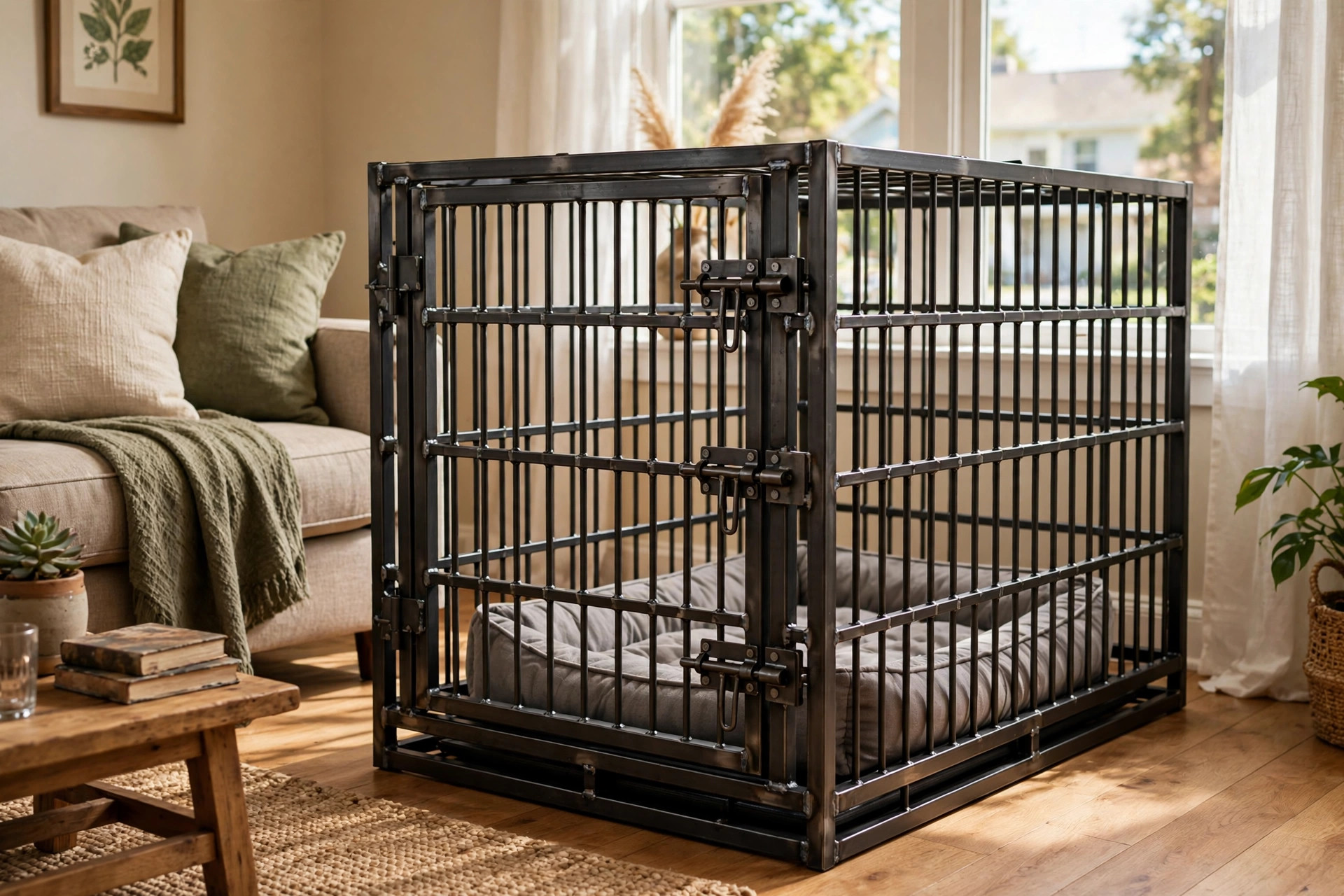
The frame should be welded steel or thick aircraft aluminum. Wire spacing should be narrow. Wide gaps let a dog push its snout through and pry bars apart. Look for bars that run both up and down and side to side. A solid grid resists bending far better than thin single wires.
Latches and Locks
This is where most cheap crates fail. A single slide bolt is easy for a smart dog to learn. Escape proof models use two latches per door. Some use a key lock or a padlock hasp. The best design needs a human hand motion the dog cannot copy, such as a squeeze and lift combo. Guides on The Spruce Pets stress that latch design matters more than raw metal for stopping escapes.
Door Design
Front doors get the most force. A full length door with hinges on one side and locks on the other spreads stress well. Some crates add a second door on top or on the side. Extra doors are fine as long as each one locks well. A door that sags or rattles invites the dog to test it.
Floor and Tray
Anxious dogs scratch. A thin plastic tray cracks fast. Look for a heavy gauge metal pan or a thick molded tray. The pan should slide out for cleaning. It should fit tight with no gap a paw can reach under.
Ventilation
Strong does not mean dark. A dog needs air flow and a view out. Bar crates give the best air flow. Solid aluminum crates add vent slots along the sides. Avoid fully closed boxes with tiny holes. Poor air flow raises stress and heat.
Types of Crates for Anxious Dogs
Four main types suit worried dogs. Each has pros and cons.
Heavy Duty Aluminum Crates
These are the gold standard for escape artists. Aircraft grade aluminum resists chewing and bending. Corners are welded, not screwed. Doors use key or slam latches. They cost more, but they last for years. They also look neat in a modern home.
Reinforced Wire Crates
These look like standard wire crates but use thicker wire and better locks. They fold flat for travel. They cost less than aluminum models. Pick one with double latches on every door. Cheap thin wire crates, the kind sold for under forty dollars, are not enough for a true escape artist.
Furniture Style Crates
These crates look like a side table or cabinet. Wood or wood composite frames hide the dog area. They suit living rooms. Make sure the inner bars are metal, not wood dowels. A strong dog chews wood fast. The door lock should be metal too. The AKC reminds owners that any crate must be safe first and pretty second.
What to Skip: Soft Sided Crates
Soft crates use fabric walls and mesh windows. They work for calm travel dogs. An anxious dog shreds mesh in minutes. Zippers pop open under clawing. Do not buy a soft crate for a dog with a history of escape.
How to Choose the Right Size
Size affects both safety and comfort. A crate that is too large lets a big dog build speed to ram the door. A crate that is too small cramps the dog and raises panic.
Measure your dog. Add four inches to the height at the shoulder. Add four inches to the length from nose to tail base. The dog should stand, turn, and lie flat with legs out. Growing puppies need a divider panel. Buy the adult size and move the divider as the pup grows.
Place the crate in a quiet corner. Keep it away from front windows where street noise spikes stress. A steady spot helps the dog learn that the crate is its own room.
How to Crate Train an Anxious Dog
A strong crate buys time. Training builds calm. Do both together.
Start slow. Leave the door open for a week. Feed meals inside the crate. Toss treats in and let the dog walk out free. Never force the dog in. The crate must feel like a prize, not a jail.
Next, close the door for short bursts. Start with five minutes while you stay in sight. Praise calm rest. Stretch the time bit by bit. PetMD advises owners to watch for signs of real distress, such as heavy drooling or self harm, and to slow down if they appear.
Add a worn shirt that smells like you. Add a safe chew toy. Some owners play soft radio music. Keep departures dull. Pick up keys, put on shoes, then sit down again. Teach the dog that these cues do not always mean you leave.
If anxiety stays high after two weeks of steady work, talk to a vet. True separation anxiety sometimes needs a trainer or short term medication. A crate is a tool, not a cure. Guides from Vetstreet explain when home training is enough and when a vet should step in.
Cost and Price
Prices vary by size and build.
– Basic reinforced wire crates: forty to one hundred twenty dollars. – Heavy duty aluminum crates: two hundred fifty to six hundred dollars. – Furniture style crates: one hundred fifty to four hundred dollars. – Replacement metal pans and locks: fifteen to fifty dollars.
A good crate lasts a decade. A cheap crate that fails costs more in vet bills and ruined doors. Big retailers like Home Depot and pet shops like Chewy both carry heavy duty models, so compare prices across stores.
Think of the crate as safety gear. You would not buy a thin bike helmet to save money. Do not buy a thin crate for a dog that panics.
Care and Upkeep
A clean crate stays strong longer.
Wipe metal bars each week with a damp cloth. Urine rusts thin spots fast. Wash the floor pan with mild soap and warm water. Rinse well and dry fully before sliding it back in.
Check latches every month. Tighten any loose bolt. Oil hinges twice a year with a drop of food safe oil. Replace a bent bar at once. One weak bar teaches the dog where to push.
Wash bedding each week. A tired anxious dog rests better on a clean pad. Keep a spare pad so the crate is never bare during laundry day.
Outdoor kennel runs need more care. If your yard setup sits near treated grass, read about pet safe lawn fertilizer before you spread anything. Winter brings its own risks, so check our guide to ice melt safe for dogs before the first freeze. A tired dog is a calmer dog, and a dog agility set in the yard burns off the nervous energy that leads to escape attempts.
Safety Rules Every Owner Should Follow
A strong crate is safe only when used right.
Never leave a dog crated more than four hours at a stretch. Puppies need breaks every two hours. Long lockups raise anxiety and can harm joints and bladders.
Remove collars before crating. Tags and buckles catch on bars. A caught collar can choke a panicking dog.
Keep the crate away from heat vents and direct sun. Metal warms fast. Make sure fresh water is near, and offer a drink right after release.
Never use the crate as punishment. The dog must see it as a den. Forcing a scared dog inside or shouting near the crate undoes weeks of training.
Watch chewers. If your dog gnaws bars, add a tough rubber toy and talk to your vet about stress. Bar chewing wears teeth down over months. The Whole Dog Journal covers safe chew options for heavy chewers in depth.
If you adopt a rescue with unknown history, groups listed on Petfinder often share crate training notes from foster homes. Ask for them. Past habits tell you how strong a crate you need on day one.
Frequently Asked Questions
Will an escape proof crate cure my dog’s anxiety?
No. It stops escape and injury. Real calm comes from training, exercise, and routine. Use the crate as one part of a full plan. If panic is severe, ask a vet for help.
Is it cruel to lock an anxious dog in a heavy crate?
It is cruel to leave a dog in panic with no plan. It is kind to give a dog a safe den plus training. Keep sessions short at first. Reward calm rest. Most dogs learn to nap in the crate within weeks.
What size crate fits a large escape artist like a husky or pit bull?
Measure the dog, then add four inches to height and length. Most huskies and pit bulls fit a 42 inch crate. Very tall breeds may need 48 inches. When in doubt, size up one step.
Can my dog hurt itself trying to escape a strong crate?
Risk drops a lot with thick bars and good locks. Still watch the first week. If the dog slams its body nonstop, stop and restart training slower. Call a vet if you see bleeding gums, broken nails, or raw paws.
Should the crate be covered with a blanket?
Many anxious dogs settle faster with a cover. It cuts visual noise. Use a breathable crate cover, not a heavy quilt. Leave the front partly open for air. If the dog pulls the cover in and chews it, skip the cover.
How long until my dog accepts the crate?
Calm dogs often accept it in days. Anxious dogs may need three to six weeks of patient work. Keep a log of session lengths. Slow steady gains beat one long forced session. Sitters and walkers can help too, and services like Rover list local helpers for mid day breaks.
A Final Word
The best dog crate for anxious dogs escape proof build is the one that matches your dog’s strength, your home, and your budget. Thick bars, double latches, and a true fit matter more than brand names. Pair the crate with slow training, daily exercise, and patience. Your dog gets a safe den. You get a home you can leave without fear. That is worth every dollar.
References
American Kennel Club. (n.d.). Dog care and training resources. https://www.akc.org ASPCA. (n.d.). Pet care and animal welfare resources. https://www.aspca.org Chewy. (n.d.). Pet supplies. https://www.chewy.com Petfinder. (n.d.). Pet adoption resources. https://www.petfinder.com PetMD. (n.d.). Pet health information. https://www.petmd.com Rover. (n.d.). Pet sitting and dog walking services. https://www.rover.com The Home Depot. (n.d.). Home improvement products. https://www.homedepot.com The Spruce Pets. (n.d.). Pet care guides and product reviews. https://www.thesprucepets.com Vetstreet. (n.d.). Veterinary advice for pet owners. https://www.vetstreet.com Whole Dog Journal. (n.d.). Dog training and care magazine. https://www.whole-dog-journal.com
Was this guide helpful?

About Emily Rodriguez
The My Garden US editorial team writes practical, in-depth home and garden guides for American homeowners — tested advice, no fluff.
You May Also Like
Dog Water Dispenser for Crate Attachment Travel: A Complete Guide
May 10, 2026 0 views
Best Pet Gate for Deck Stairs Outdoor Use
September 11, 2026 0 views
A Cat Litter Box with Top Entry for Dogs: What to Know Before You Buy
April 22, 2026 0 views