
Introduction
Lockable kids closet organizers with free shipping give parents a simple way to bring order to a child’s room. A closet that has a lock may sound odd at first. Most people think of locks for office files or gun cabinets. But a lock on a closet unit can serve a child well. It keeps small treasures safe. It keeps medicines and cleaning products out of reach. It also teaches a child to care for the things that belong to them. Many families in the United States now buy these organizers online. Sellers ship them free of charge, which keeps the total price low.
A child’s closet is often a place of chaos. Clothes pile up on the floor. Shoes sit in a heap. Toys get lost in the dark corners. An organizer changes that. It adds shelves, drawers, and hanging rods to the closet space. A lockable model adds a door or drawer that locks with a key. The child learns where each item belongs. The parent gains peace of mind.
This guide will walk through the main points. It will explain why lockable storage helps. It will show how to pick the right size and lock. It will list the common types and their costs. It will cover care, safety, and shipping. It will answer the questions that parents ask most. By the end, you will know exactly what to look for when you shop.
Why Lockable Storage Matters for a Child’s Closet: Lockable Kids Closet Organizers with Free Shipping
A child collects things. A favorite toy, a savings jar, a diary, a handheld game. These items have meaning. They also draw the interest of siblings and visitors. A lockable kids closet organizer gives the child a private spot. The child can store the things that matter most behind a small locked door. This builds a sense of trust. The parent shows the child that their property is respected.
Safety is another strong reason. Many homes keep medicines or cleaning products in a spare closet. A lockable drawer inside the closet can hold them. The key stays with an adult. This simple step can stop a poison emergency. The U.S. Consumer Product Safety Commission backs locked storage as part of childproofing a home.
Order is the third benefit. An organizer turns an empty closet into zones: one shelf for folded shirts, one drawer for socks, one bin for toys. The child sees the system and learns to sort and return things. Bedrooms stay cleaner. Morning routines move faster.
Finally, a lockable organizer protects valuables during visits and moves. The child’s items stay in one locked place. Nothing goes missing in the confusion.
How to Choose the Right Organizer
Shopping for lockable kids closet organizers with free shipping is easier when you know the key facts. Measure first. Decide on the lock. Check the build. The steps below will help you pick with confidence.
Size and Fit
Start with the closet. Measure the width, depth, and height of the inside. Write the numbers down. Many organizers are made to fit a standard reach-in closet. A standard reach-in closet in an American home is often about four to eight feet wide. Some organizers are modular. They let you add or remove parts. This is useful when the child grows.
Think about the child’s height. A small child cannot reach high shelves. Pick a unit with the main storage at a low level. Leave high shelves for out-of-season items. Some units hang from the closet rod. They are light and easy to move. Others stand on the floor. Floor-standing units hold more weight. For ideas on making the most of a small reach-in closet, Apartment Therapy shows real small-space storage solutions.
Lock Types
The lock is the heart of the product. Simple models use a key lock on a drawer or door. The maker sends two keys. This is the most common type. It is cheap and reliable. Magnetic locks are another choice. A magnetic key opens the latch from the outside. There is no keyhole to pick. This type is neat and child-safe.
Some units use a combination lock. The child sets a code, and the parent should keep a copy. A few models use a padlock loop so the buyer adds their own padlock. Avoid locks with tiny parts that a toddler could swallow. Check the lock each month. A loose lock is a false promise.
Materials and Build
The frame may be wood, metal, or plastic. Solid wood looks warm and lasts long. It also costs more. Engineered wood is lighter on the wallet. It works well when the child is small and the loads are light. Metal frames hold heavy items. They resist bumps and kicks. Fabric bins are soft and safe for young children. They cannot pinch fingers.
Look for smooth edges. A child’s room should have no sharp corners. Check that the finish is non-toxic. Many makers now state that their paint is lead-free. That claim matters. The back panel should be firm. A weak back can let the unit tip. Anti-tip straps are a wise extra. They fix the unit to the wall.
Main Types of Lockable Kids Closet Organizers
Several designs serve a child’s closet. Each has its own strengths. The right one depends on the space and the child’s age.
Lockable Drawer Units
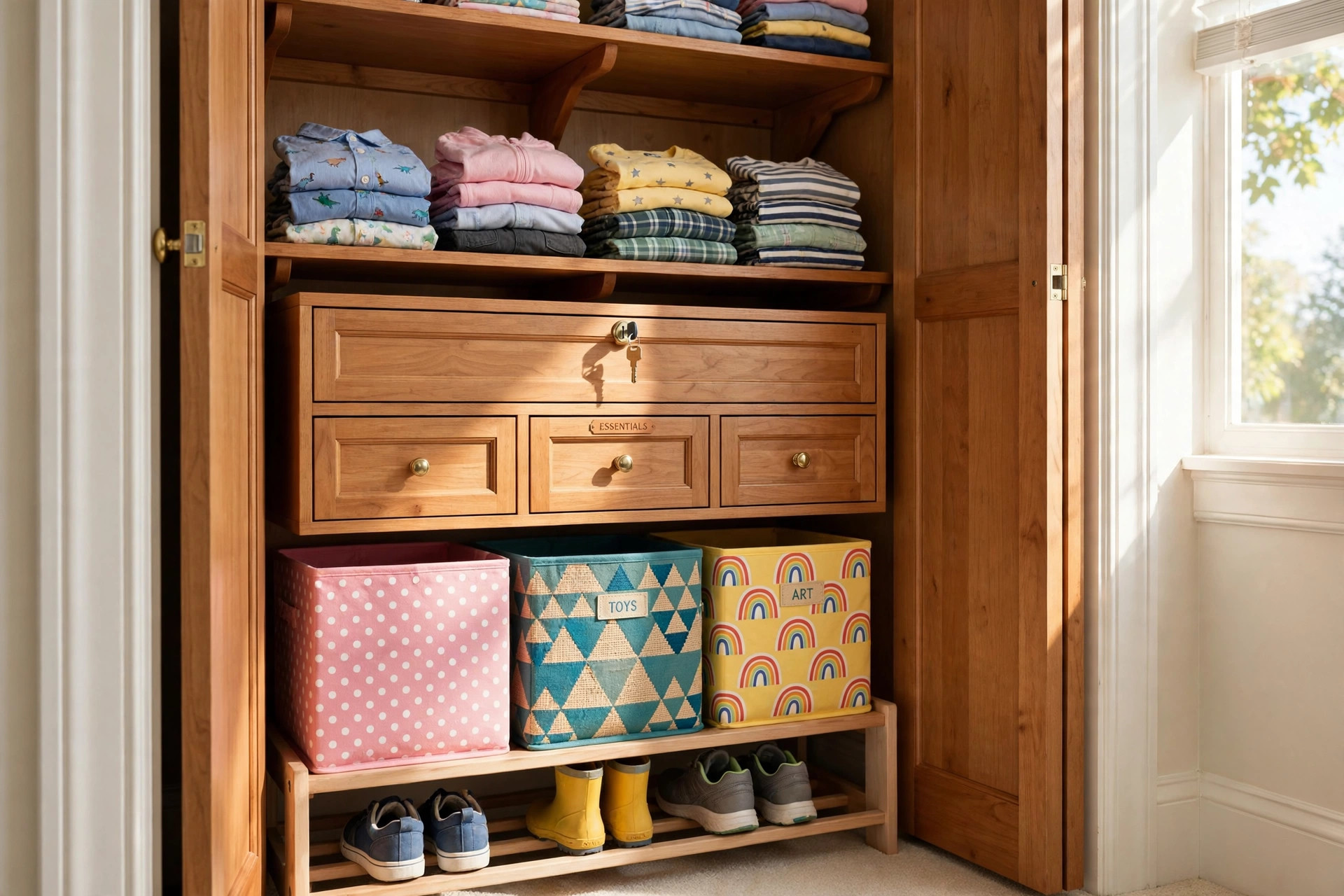
These units sit on the floor or inside the closet and hold three to six drawers. One drawer has a lock; the rest stay open for daily clothes. The lockable drawer can hold a diary or savings. A child of six can manage these units alone.
Lockable Hanging Organizers
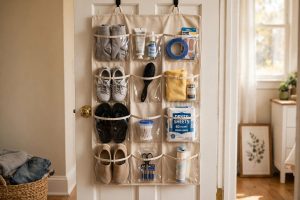
These hang from the closet rod. They are made of fabric or canvas. They hold shelves for folded clothes and shoes. Some models add a lockable pocket at the bottom. They are cheap and light. They suit renters, since they need no tools. They do not hold heavy items. Books can stretch the fabric.
Lockable Wardrobe Cabinets
A wardrobe cabinet is a tall box with lockable doors. Inside there is a rod for hanging clothes and shelves above. Some models also include drawers. These units fit large closets or rooms with no built-in closet. A similar choice is a lockable freestanding wardrobe closet, which serves the whole room.
Lockable Bin and Cubby Systems
Cubby systems use square holes, each holding a bin. One or two bins have a lockable door; the rest are open. The child can pull a bin out and carry it to play. This design suits toys and games best.
Corner and Specialty Units
Some closets have odd corners. A corner unit turns dead space into storage. It may include a lockable section at the base. These units need careful measuring. For ideas on fitting odd spaces, see this corner closet organizer guide. A corner unit pairs well with open shelves above.
Cost and Price Range
Prices vary by size and material. Fabric hanging organizers are the cheapest, often between twenty and fifty dollars. Floor drawer units in engineered wood run from sixty to one hundred fifty dollars. A good solid wood unit may run from one hundred fifty to three hundred dollars.
Lockable wardrobe cabinets are the priciest, ranging from two hundred to five hundred dollars. Metal units sit in the middle. Free shipping helps a lot. A large unit can weigh fifty pounds, and normal freight can cost forty dollars or more. When you compare two sellers, check the shipping terms. A low price with paid freight can cost more than a fair price with free shipping.
Watch for sales. Back-to-school season in August brings many deals. Holiday sales in November and December also cut prices. Some stores bundle the organizer with matching bins. A bundle can save money. Read the product page for the full list of parts. Most units include the needed tools in the box.
Retailers such as Wayfair, IKEA, Home Depot, and The Container Store all sell children’s closet storage. Check buyer reviews, and look for reviews that mention the lock.
Care and Upkeep
A lockable organizer lasts longer with simple care. Dust the shelves each week. Use a soft cloth. For wood, a damp cloth works well. Do not soak the surface. Water can swell engineered wood. For metal, wipe with a dry cloth to stop rust. Fabric bins can go in the wash. Check the label first. Cold water is safest.
Check the lock each month. Turn the key. Make sure it moves smooth. A drop of graphite powder can free a stiff lock. Do not use oil. Oil collects dust. Keep spare keys in a safe spot. A small envelope taped inside a parent’s closet works well.
Tighten screws twice a year, since wood moves with the seasons and screws can loosen. A loose unit can tip. Check the anti-tip strap at the same time, and replace any bin that cracks.
Teach the child to care for the unit. Show them how to close drawers gently. Slamming breaks the runners. Show them where each item goes. A short tidy-up each night keeps the system alive. Five minutes is enough. The Spruce publishes clear upkeep guides for home storage if you want more tips.
Safety Rules for Children
Safety comes first with any child product. A lockable kids closet organizer is safe when the family follows a few rules. The lockable section should never hold food or drink. Spills can rot the wood and grow mold. It should never hold anything sharp. Knives, scissors, and tools belong in adult storage.
Keep the lock key out of reach of very young children. A child under three should not play with keys. They can choke on small keys. For toddlers, use a magnetic lock. There are no loose parts. Anchor every tall unit to the wall. The U.S. Consumer Product Safety Commission warns that tipping furniture kills children each year. An anti-tip strap costs little. It can save a life.
Check the weight limits. Each shelf and drawer has a limit. The maker states it in the manual. Do not overload. Books are heavy. Spread them across low shelves. Let children climb only on the floor. No child should climb the shelves. A fall from a tall unit can cause real harm.
Paint and finish must be safe. Look for labels that say the product meets safety standards. If the unit smells strong when you open the box, air it out in the garage for a day. If the smell does not fade, return the unit.
Free Shipping: What to Watch For
Free shipping sounds simple, but read the terms. Some sellers offer free shipping only within the lower forty-eight states. Some set a minimum order. Some use slow freight, and the box may take three weeks to arrive.
Check the return policy. A large unit is costly to send back. Good sellers pay return freight for defects. Some charge a restocking fee. Read the fine print before you buy. Track the package, and call the carrier if the tracking stalls.
Big-box stores like Lowe’s and Target often ship small organizers free to the store. You pick the box up yourself. This saves the freight wait. It also lets you check the box for damage at the counter.
Frequently Asked Questions
Are lockable closet organizers safe for small children?
Yes, when used with care. Pick units with smooth edges and non-toxic finishes. Anchor tall units to the wall. Keep keys away from toddlers, and use magnetic locks for the youngest children. Follow the weight limits in the manual.
What age is right for a lockable organizer?
Children from age five can use a simple key lock with help. By age eight, most children manage a lock alone. For toddlers and preschoolers, the parent should hold the key. The open sections still help young children learn to sort toys and clothes.
Can I add a lock to a regular closet organizer?
In many cases, yes. Small hasp latches fit on wood doors and drawers. A drill and a screwdriver are enough. Make sure the latch is strong. For fabric organizers, add-on locks do not work well. Buy a model with a built-in lock instead.
Do these organizers fit in a standard closet?
Most do. Measure your closet first. Standard reach-in closets fit most floor units and hanging organizers. Walk-in closets fit wardrobe cabinets with ease. Corner units need exact corner depth.
How long does assembly take?
Fabric hanging units take ten minutes. They need no tools. Small drawer units take thirty to sixty minutes. Large wardrobe cabinets can take two hours. Work with a partner for tall units. Lay out all parts first. Count the screws. Follow the manual step by step. Family Handyman explains assembly and wall anchoring in plain steps.
Is free shipping really free?
Most of the time, yes. The seller builds the freight cost into the price. Still, read the terms. Remote areas may face a surcharge. Oversize units may ship by freight truck. You may need to be home for delivery. Some sellers ask you to haul the box inside yourself.
A Note on Related Storage
A lockable kids closet organizer is one part of a tidy room. Shoes often cause the worst mess. A set of stackable shoe storage boxes can sit at the base of the closet. They keep pairs together. They stack to save floor space. Together with the organizer, they make the whole closet easy to use.
Final Word
Lockable kids closet organizers with free shipping bring order, safety, and trust to a child’s room. They cost less than many parents expect, and free shipping keeps the price fair. With a little care, the organizer will serve the family for many years.
References
Apartment Therapy. (n.d.). Home design ideas and inspiration. https://www.apartmenttherapy.com Family Handyman. (n.d.). DIY home repair and maintenance. https://www.familyhandyman.com IKEA. (n.d.). Home furnishings. https://www.ikea.com Lowe’s. (n.d.). Home improvement products. https://www.lowes.com Target. (n.d.). Retail store. https://www.target.com The Container Store. (n.d.). Storage and organization products. https://www.containerstore.com The Home Depot. (n.d.). Home improvement products. https://www.homedepot.com The Spruce. (n.d.). Home and garden advice. https://www.thespruce.com U.S. Consumer Product Safety Commission. (n.d.). Product safety information. https://www.cpsc.gov Wayfair. (n.d.). Furniture and home goods. https://www.wayfair.com
Was this guide helpful?

About Emily Rodriguez
The My Garden US editorial team writes practical, in-depth home and garden guides for American homeowners — tested advice, no fluff.
You May Also Like
How to Buy Linen Closet Organizers Online in the USA
January 5, 2026 0 views
Bookcases With Storage Doors Price Comparison USA
January 22, 2026 0 views
Luxury Under Bed Storage Containers for Sale: A Plain Guide for American Homes
March 25, 2026 0 views