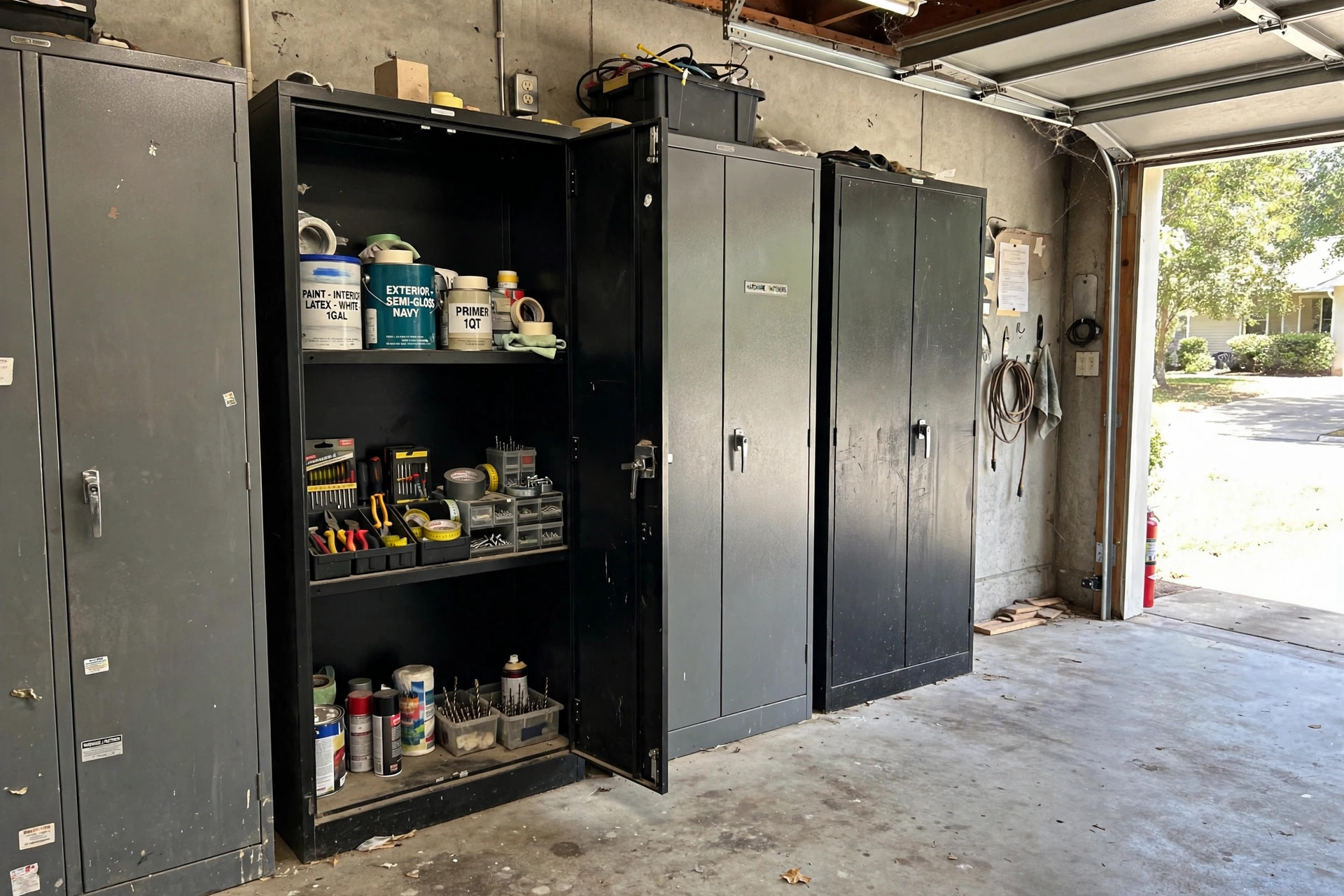

A garage storage cabinets price comparison usa shoppers can trust is worth doing before you spend a dime. A garage fills up fast. Tools, paint cans, sports gear, and holiday boxes pile up year after year. Good cabinets bring order to the mess. Bad ones sag, rust, or fall apart in two years. Prices run from under a hundred dollars to well over a thousand for a full set. This guide walks through the types, the costs, and what to check before you buy, so your money buys cabinets that last.
Why Compare Prices Before You Buy
The same style of cabinet can cost twice as much at one store as at another. Big-box retailers, warehouse clubs, and online shops all sell similar units at very different prices. A price check across three or four sellers often saves fifty to a hundred dollars on a single tall cabinet. On a full set, the savings can reach several hundred.
Price is only half the story. Two cabinets at the same price can differ a lot in steel thickness, shelf strength, and hinge quality. A fair comparison looks at both the price tag and what sits behind it. Check the weight rating of each shelf. Check whether the steel is powder-coated, which resists chips and rust. Check the warranty. A cabinet that costs twenty percent more but carries a five-year warranty may be the cheaper buy over time.
Seasonal sales matter too. Garage and storage lines often drop in price during spring cleanup season and again around Black Friday. If you are not in a hurry, watch prices for a few weeks and note the pattern. Many large stores keep sale flyers online, so you can compare without driving from store to store.
What to Look For When You Compare: Garage Storage Cabinets Price Comparison Usa
Material and Build Quality
Most garage cabinets are made of steel, heavy-duty plastic, or wood composite. Steel is the most common choice. Thicker steel, measured in gauge, holds more weight and dents less. A lower gauge number means thicker steel. Look for welded corners rather than simple folded joints. Welded frames stay square under heavy loads.
Plastic cabinets cost less and will never rust. They suit damp garages and light storage. They cannot hold as much weight as steel, and they may fade near a sunny window. Wood composite cabinets look like indoor furniture. They work fine in a dry, heated garage but swell and stain if water reaches them. Match the material to your garage. A damp coastal garage asks for plastic or coated steel. A dry inland garage can take any of the three.
Size and Fit
Measure your wall before you shop. Note the ceiling height, the width of the wall, and any doors or pipes that get in the way. Standard tall cabinets run about 72 inches high, 36 inches wide, and 18 inches deep. Low base cabinets are about 36 inches high and fit under a workbench. Wall-mounted units hang off the floor and keep the slab clear for sweeping.
Leave room for the doors to swing open. A cabinet set flush against a corner may block its own doors. Plan at least a few inches of clearance. If your garage is tight, rolling cabinets on casters can pull out into the driveway while you work, then slide back into place.
Locks, Hinges, and Shelves
Locks keep chemicals, sharp tools, and expensive gear away from children and visitors. A simple keyed lock is enough for most homes. Hinges should feel solid when you open and close the door many times. Adjustable shelves let you fit tall items like paint cans and short items like spray bottles on the same unit. Check the weight each shelf can hold, and look for shelves with a raised lip so small items do not roll off.
Common Types of Garage Storage Cabinets
Freestanding Tall Cabinets
The tall freestanding cabinet is the workhorse of the garage. It stands on the floor, needs no mounting, and holds a large amount of gear. Most have two doors, four or five shelves, and a lock. Prices for a single tall steel cabinet usually run from about $150 to $500, depending on size and gauge. Budget models use thinner steel and hold less per shelf. Premium models use thicker steel, carry heavier loads, and offer longer warranties. If you only buy one cabinet, make it a tall freestanding unit and put your least-used items on the top shelves.
Wall-Mounted Cabinets
Wall-mounted cabinets hang from the wall on rails or brackets. They keep the floor clear, which helps in small garages and makes sweeping easy. They also stay above minor flooding and damp floors. Installation takes more effort. You must anchor them into studs, not just drywall, or they can pull loose under load. Prices range from about $100 to $350 per cabinet. Sets of two or three that share a rail system often cost less per unit. If you plan to mount cabinets above a workbench, measure the bench depth so the doors can still open.
Rolling and Mobile Cabinets
Rolling cabinets ride on caster wheels and move where you need them. They work well as mobile tool storage or as a portable parts station. Heavy-duty casters lock so the cabinet stays put while you work. Prices run from about $120 to $600. Larger models with drawers cost more than simple shelf units. Rolling units pair well with a fixed set of tall cabinets, giving you one station you can pull out into the light.
Cabinet Sets and Workbench Combos
Many brands sell matching sets: two tall cabinets, one base cabinet, and a workbench that links them. Sets look tidy and cost less than buying each piece alone. A full six-piece steel set often runs from $600 to $1,500. Combo sets suit a garage that serves as a workshop. For related tool storage ideas, a side-by-side price check of tool chests can help you round out the setup without overspending.
What Garage Storage Cabinets Cost in the USA
A garage storage cabinets price comparison usa guide should lay out real ranges, so here they are. A small wall cabinet or a single plastic unit starts near $60 to $120. A basic steel tall cabinet from a big-box store runs $150 to $250. Mid-range steel cabinets with thicker gauge, better locks, and adjustable shelves run $250 to $450. Premium heavy-duty cabinets, often sold through specialty brands, run $450 to $800 per unit.
Full sets bring the unit price down. A three-piece steel set commonly sells for $400 to $800. A five- or six-piece set with a workbench runs $700 to $1,500. Delivery and assembly add cost. Many online sellers ship free, which matters because these boxes are heavy. If a store charges $80 for delivery of a $300 cabinet, that changes the math. Always compare the total delivered price, not just the shelf price.
Watch for extras that raise the real cost. Some cabinets need wall anchors, extra shelves, or a lock sold separately. Read the product page fully. A cabinet that seems cheap can turn costly once you add the missing parts. Also compare return policies. A store that takes returns for ninety days gives you room to change your mind if the cabinet does not fit your wall.
Garden and yard gear often lives in the garage too. If your cabinets will hold rakes, shears, and sprayers, a look at garden tool organizers can help you plan the full storage picture and compare costs across the whole project.
Care and Upkeep
Steel cabinets need little care but reward it. Wipe them down twice a year with a damp cloth and mild soap. Dry them fully so water does not sit in the corners. Touch up paint chips with a matching enamel pen to stop rust from starting. Keep the floor under the cabinets dry. A simple rubber mat under each unit stops moisture from wicking up from the slab.
Plastic cabinets need even less. Hose them off or wipe them down when they look dusty. Keep them out of strong direct sun, which can make some plastics brittle over years. Wood composite cabinets need a dry garage. If the garage roof leaks, fix the leak before you install them. Check door hinges once a year and tighten any loose screws. Oil sticky locks with a drop of graphite lubricant rather than oil, which can attract dust.
Load cabinets with sense. Put heavy items like toolboxes and paint cans on the lower shelves. Keep lighter boxes up high. Do not exceed the stated shelf weight. Overloading bends shelves and wears out hinges, and no warranty covers misuse. If you add shelves later, buy the brand’s own parts so the fit stays exact.
Safety Tips
Anchor tall cabinets to the wall. A tall cabinet full of tools is top-heavy. In an earthquake, or if a child climbs on it, an unanchored cabinet can tip. Most units come with a wall strap or bracket. Use it. The job takes ten minutes and costs nothing extra.
Store chemicals with care. Paint, solvents, and pesticides belong in a locked cabinet, away from the water heater and furnace. Keep them in their original containers with labels readable. Never store gasoline or propane inside the garage near ignition sources; keep fuel in approved containers in a shed or outside storage area, per local rules.
Keep a clear path to the house door and the garage door. Cabinets should line the walls, not block walkways. Leave the electrical panel clear by at least three feet on all sides. A tidy cabinet layout is a safer layout, and it makes the next price comparison easier because you will know exactly what space you have left.
Frequently Asked Questions
How much should I spend on garage storage cabinets?
Most households spend $300 to $900 for a useful setup. One tall cabinet plus one base cabinet covers a normal two-car garage. Add more as needs grow. Start with the essentials rather than buying a full wall of cabinets on day one. You can always add matching pieces later.
Are metal or plastic garage cabinets better?
Metal cabinets hold more weight and last longer under heavy use. Plastic cabinets cost less, never rust, and suit damp garages. Choose metal for tools and heavy gear. Choose plastic for light items and humid spaces. Both work well when bought from a reputable maker.
Do garage cabinets need to be mounted to the wall?
Tall freestanding cabinets should be anchored for safety, even if they stand on their own. Wall-mounted cabinets must be fastened into studs. Rolling cabinets do not need mounting, but their casters should lock. The maker’s manual states the mounting method for each model, so follow it.
What size cabinet fits a standard garage?
A 72-inch tall, 36-inch wide cabinet fits most garages with standard 8-foot ceilings. Measure first. Note garage door tracks, openers, and pipes on the wall. If space is tight, two 24-inch wide units may fit better than one 36-inch unit. Entryway projects have the same fitting questions; a look at mudroom storage benches shows how other shoppers compare sizes and prices before buying.
Where is the best place to buy garage cabinets in the USA?
Large home improvement stores offer the widest in-store selection, so you can see the build quality in person. Online retailers often beat their prices, especially during sales, and ship free to the door. Warehouse clubs sell sturdy sets at good unit prices. Compare the total delivered price across at least three sellers before you decide.
How long do garage storage cabinets last?
Steel cabinets last 10 to 20 years with basic care. Plastic cabinets last 8 to 15 years unless sun damage sets in. Wood composite lasts 10 years or more in a dry garage. Hinges and locks wear first on cheap models, so a mid-range cabinet often outlives a budget one by many years.
A Short Final Word
A careful garage storage cabinets price comparison usa buyers trust comes down to three steps. Measure your space. Compare the total delivered price across several sellers. Check the steel, shelves, and warranty behind each price. Do that, and you will end up with cabinets that keep the garage in order for a decade or more.
For more background, see The Home Depot, Wayfair, and The Spruce. For more background, see Apartment Therapy, Family Handyman, and IKEA. See The Container Store for more detail. See also Target for further detail.
References
Apartment Therapy. (n.d.). Home design ideas and inspiration. https://www.apartmenttherapy.com Family Handyman. (n.d.). DIY home repair and maintenance. https://www.familyhandyman.com IKEA. (n.d.). Home furnishings. https://www.ikea.com Target. (n.d.). Retail store. https://www.target.com The Container Store. (n.d.). Storage and organization products. https://www.containerstore.com The Home Depot. (n.d.). Home improvement products. https://www.homedepot.com The Spruce. (n.d.). Home and garden advice. https://www.thespruce.com Wayfair. (n.d.). Furniture and home goods. https://www.wayfair.com
Was this guide helpful?

About Michael Thompson
The My Garden US editorial team writes practical, in-depth home and garden guides for American homeowners — tested advice, no fluff.
You May Also Like

Slim Rolling Pantry Carts Price Comparison USA: A Plain Guide to Slim Kitchen Storage
June 26, 2026 0 views
Where to Buy Toy Storage Bins in Texas
January 7, 2026 0 views
Where to Buy Ottoman Storage Benches in Colorado: A Homeowner’s Guide
June 29, 2026 0 views