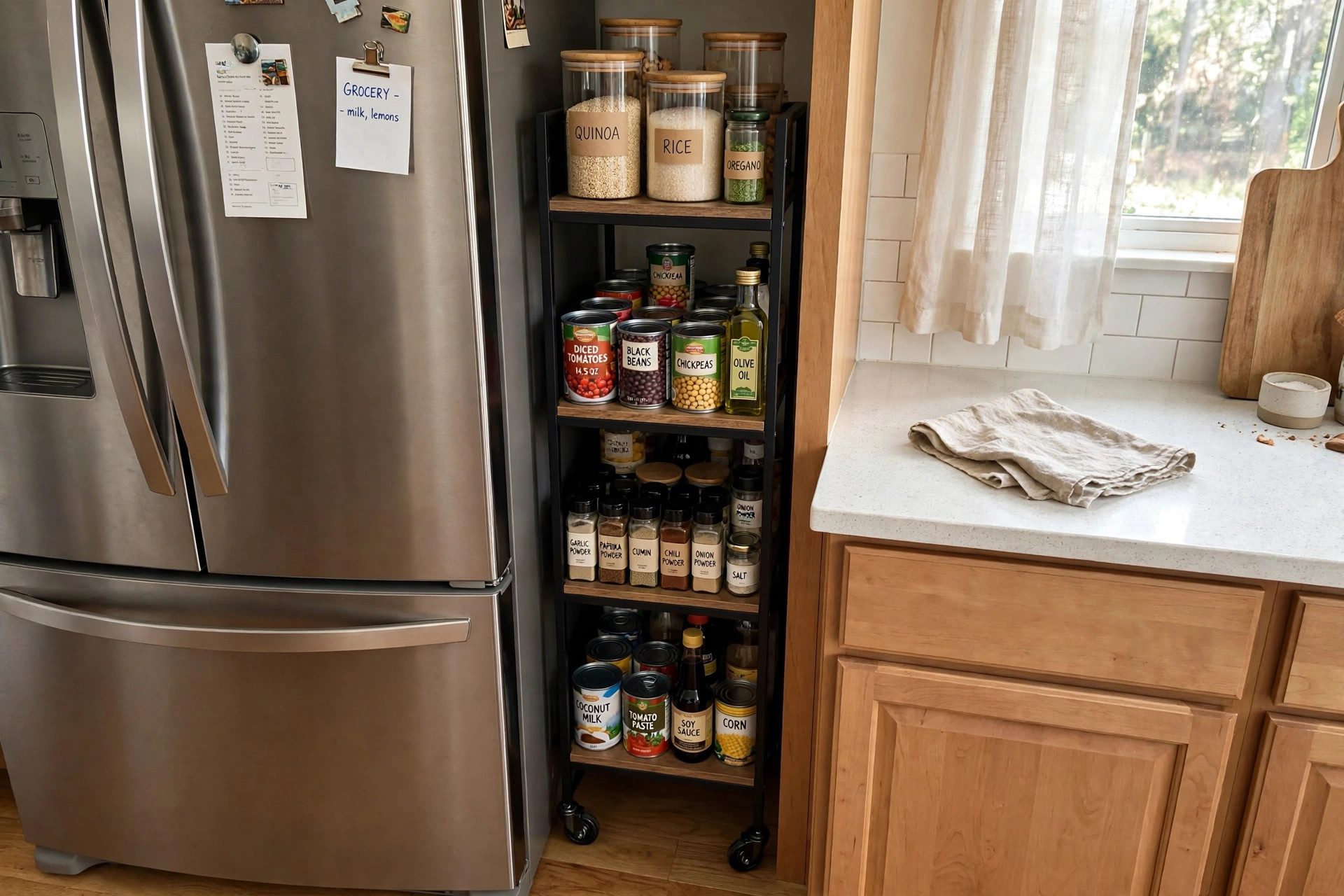

Every kitchen has a gap. It sits between the refrigerator and the wall. It runs along the side of the counter. Most people let that space sit empty. It collects dust. It collects lost lids. A slim rolling pantry cart can change that. It is a narrow shelf on wheels. It rolls into tight spaces. It rolls out when you need a can of beans. This slim rolling pantry carts reviews and buying guide explains what to look for, what types exist, what they cost, and how to keep one in good shape. By the end, you will know how to pick a cart that fits your space and your budget.
Why Slim Rolling Pantry Carts Matter
Storage is the main worry in many American kitchens. Pantries fill up fast. Cabinets get crowded. A narrow gap beside the fridge often goes to waste. A slim cart turns that dead space into a working pantry. You can store cans, jars, spice bottles, and boxed goods in it. Everything stays visible. You do not have to dig through deep shelves.
Small homes gain the most. Apartments often lack a full pantry. A slim cart can act as a pantry on wheels. Renters like them too. You do not need tools or screws. You slide the cart into the gap. If you move, it rolls out and goes with you.
They also help people stay organized. Each tier holds a group of goods. Put spices on top. Put cans in the middle. Put tall bottles below. When everything has a home, cooking gets faster. You spend less time hunting for the cumin.
What to Look For When You Shop: Slim Rolling Pantry Carts Reviews and Buying Guide
A good cart fits your space first. Measure before you buy. Write down three numbers: width, depth, and height.
Width
Width is the key number. Slim carts range from about four inches to about eight inches wide. Measure your gap at several points. Floors are not always level. Walls are not always straight. Leave about half an inch of play on each side. A cart that fits too tight will scrape. A cart with too much play will wobble.
Height and Depth
Height matters less, but do check it. Most carts stand between 24 and 32 inches tall. Taller carts hold more. Shorter carts fit under counters. Depth should match the items you plan to store. A depth of 12 to 16 inches works for most cans and jars.
Wheels and Locks
Wheels make the cart useful. Look for smooth, quiet casters. Rubber wheels run quieter than hard plastic. Four wheels are standard. At least two wheels should lock. A lock keeps the cart from drifting on a sloped floor. Test the lock with your foot. It should click on and off with ease.
Weight Capacity
Check the weight each tier can hold. Many slim carts carry five to fifteen pounds per shelf. Cans are heavy. A full tier of soup cans can weigh ten pounds or more. Pick a cart with a sturdy frame if you plan to store heavy goods. Metal frames tend to hold more than thin plastic.
Materials
Slim carts come in plastic, metal, wood, and bamboo. Plastic carts cost less. They are light and easy to clean. Metal carts are stronger. They suit heavy cans and bottles. Wood and bamboo carts look warm and natural. They fit open kitchens where the cart stays visible. Each material has trade-offs in price, strength, and care.
Assembly and Stability
Most slim carts need some assembly. Good designs use snap-fit panels. Better designs use screws for strength. Read what reviewers say about wobble. A cart that sways may tip when fully loaded. Side rails or guard lips keep jars from sliding off. These small details matter more than color.
For a broader look at wheeled storage, see our rolling storage carts reviews and buying guide.
Types and Options
Not all slim carts look the same. These are the main types you will see in stores and online.
Open Tier Gap Carts
This is the classic slim cart. Three to five open shelves. A tall narrow frame. It slides into gaps four to eight inches wide. Open sides make it easy to grab items. Guard rails keep things in place. This type suits kitchens best.
Pull-Out Pantry Racks
These look like drawers on wheels. They pull straight out of the gap. Many have wire baskets instead of flat shelves. Baskets hold round cans well. They cost more than simple tier carts. They also need exact measurements.
Tiered Tower Carts
Tower carts are wider and shorter. They hold more per tier. They work in gaps too, but they also work beside islands and counters. Many have handles on top. Some have hooks for towels or tools. This type suits craft rooms and laundry rooms as well as kitchens.
Stackable Slim Units
Some designs stack. You buy two short units. You place one on top of the other. This gives you more shelves without a taller frame. Stackable units suit odd spaces. They also let you start small and add later.
Carts With Add-Ons
Some brands sell hooks, baskets, and dividers. These add-ons fit onto the cart frame. Hooks hold scissors or small tools. Baskets hold bags of rice or pasta. Dividers keep bottles from tipping. Add-ons raise the price. They also make the cart more useful.
If you prefer fixed shelving, our pantry shelving units reviews and buying guide covers larger options.
Cost and Price
Slim rolling pantry carts are not costly. Most sell for fifteen to sixty dollars. The price depends on material, size, and brand.
Basic plastic carts with three tiers sit at the low end. Expect fifteen to twenty-five dollars. Mid-range carts with four or five tiers cost twenty-five to forty dollars. Metal and wood carts sit at the high end. Expect forty to sixty dollars or more.
Add-ons raise the price. Extra baskets, dividers, and hooks add five to fifteen dollars. Locking wheels are worth the extra cost. They keep the cart still on hard floors.
Prices vary by store. Big box retailers such as Target and Home Depot carry many models. Lowe’s stocks them in the storage aisle. Online marketplaces such as Wayfair list hundreds of styles with reviews. Specialty stores like IKEA and The Container Store focus on smart small-space designs. Watch for sales around spring cleaning season and the new year.
Before you order, check return rules. A cart that does not fit your gap is useless. Buy from a store that takes returns. Shoppers who want carts shipped fast can also read our guide on buy rolling storage carts online in florida for delivery tips.
Care and Upkeep
A slim cart needs little care. A few habits will keep it rolling for years.
Wipe spills right away. Soup, oil, and juice can stain plastic and warp wood. Use a damp cloth with mild soap. Dry the shelves after cleaning. Water left in corners can rust metal frames.
Check the wheels once a month. Hair and crumbs wrap around caster axles. Pull the debris free. A drop of light oil keeps wheels turning smooth. If a wheel cracks, replace it. Most brands sell spare casters.
Tighten screws twice a year. Daily rolling loosens joints over time. A small screwdriver is all you need. Tight frames do not wobble. Wobble leads to tipping.
Move the cart out and clean the floor under it now and then. Crumbs and grease collect in the gap. Sweep or mop the strip of floor first. Slide the cart back in with care. Do not force it.
Rotate goods when you shop. Put new cans at the back. Move old cans to the front. This habit cuts food waste. It also spreads weight in a fair way across the tiers. A cart that holds balanced goods rolls straight and lasts longer.
Keep heavy goods low. Put cans and bottles on the bottom tiers. Put light goods on top. A top-heavy cart tips when you pull it out fast. This simple rule adds years to the cart and keeps your kitchen safe.
Safety
Slim carts are safe when used with care. Follow these rules.
Always lock the wheels when the cart is parked. An unlocked cart can roll into a walkway. Someone may trip. Lock at least two wheels.
Do not overload the shelves. Stay under the stated weight limit. Overloaded shelves bow. Bowed shelves drop cans onto feet.
Keep the cart away from heat. Do not park it next to a hot oven or stove. Plastic can warp. Oil bottles can heat up. Give cooking appliances a safe gap.
Watch small children. Toddlers may try to climb a parked cart. A climbing child can tip it. Keep carts out of play areas. Store heavy goods low so a tip does less harm.
Check for sharp edges. Cheap carts may have rough plastic seams. Sand them smooth with fine sandpaper. This takes five minutes and prevents cuts.
Government and consumer sites such as the CPSC publish general home safety tips. Consumer review labs also test storage products for stability and build quality.
Frequently Asked Questions
What width should I buy?
Measure your gap first. Most gaps run four to eight inches wide. Buy a cart at least half an inch narrower than the smallest point. Popular widths are about five and a half inches and about seven inches. When in doubt, go smaller. A cart that rolls in with ease beats one that scrapes.
Will a slim cart fit between my fridge and the wall?
In most cases, yes. The gap beside a refrigerator is a classic spot. Measure the gap at the floor, the middle, and the top. Fridges vent heat from the back. Leave room for air to move. Do not block vents or coils.
How much weight can a slim cart hold?
It depends on the model. Plastic carts often hold five to ten pounds per tier. Metal carts can hold ten to fifteen pounds per tier or more. Check the product listing for the exact number. Remember that cans add up fast. Twelve soup cans can weigh over ten pounds.
Can I use a slim cart in the bathroom?
Yes. Many people do. Slim carts fit beside toilets and vanities. They hold towels, bottles, and cleaning goods. Pick a plastic or metal cart for damp rooms. Wood can swell in high moisture. Wipe the shelves dry often.
Are slim carts hard to put together?
Most are simple. Snap-fit models take ten to fifteen minutes. Screw-together models take twenty to thirty minutes. No special tools are needed. Read the manual first. Lay out all parts before you start. Home repair guides from Family Handyman also show basic assembly tips.
Do the wheels really lock?
Most models have locking casters on at least two wheels. The lock is a small pedal on the wheel. Press it with your foot. Test the lock on your floor type. On slick tile, a locked cart may still slide a little. Put a small mat under the cart if that happens.
A Short Final Word
A slim rolling pantry cart is a small buy with a big payoff. It turns a wasted gap into useful storage. Measure your space. Pick a sturdy frame. Check the wheels and the weight limits. Keep it clean and locked. With those steps, your cart will serve you well for years. Small-space living guides at Apartment Therapy and home how-tos at The Spruce offer more ideas for tight kitchens.
References
Apartment Therapy. (n.d.). Home design ideas and inspiration. https://www.apartmenttherapy.com Family Handyman. (n.d.). DIY home repair and maintenance. https://www.familyhandyman.com IKEA. (n.d.). Home furnishings. https://www.ikea.com Lowe’s. (n.d.). Home improvement products. https://www.lowes.com Target. (n.d.). Retail store. https://www.target.com The Container Store. (n.d.). Storage and organization products. https://www.containerstore.com The Home Depot. (n.d.). Home improvement products. https://www.homedepot.com The Spruce. (n.d.). Home and garden advice. https://www.thespruce.com U.S. Consumer Product Safety Commission. (n.d.). Product safety information. https://www.cpsc.gov Wayfair. (n.d.). Furniture and home goods. https://www.wayfair.com Wirecutter. (n.d.). Product reviews from The New York Times. https://www.nytimes.com/wirecutter
Was this guide helpful?

About Sarah Mitchell
The My Garden US editorial team writes practical, in-depth home and garden guides for American homeowners — tested advice, no fluff.
You May Also Like

Buy Vertical File Cabinets Online in Texas: A Full Guide
August 24, 2026 0 views
Luxury Bookcases with Storage Doors for Texas Homes
August 29, 2026 0 views
Patio Cushion Storage Bags Reviews and Buying Guide
January 25, 2026 0 views