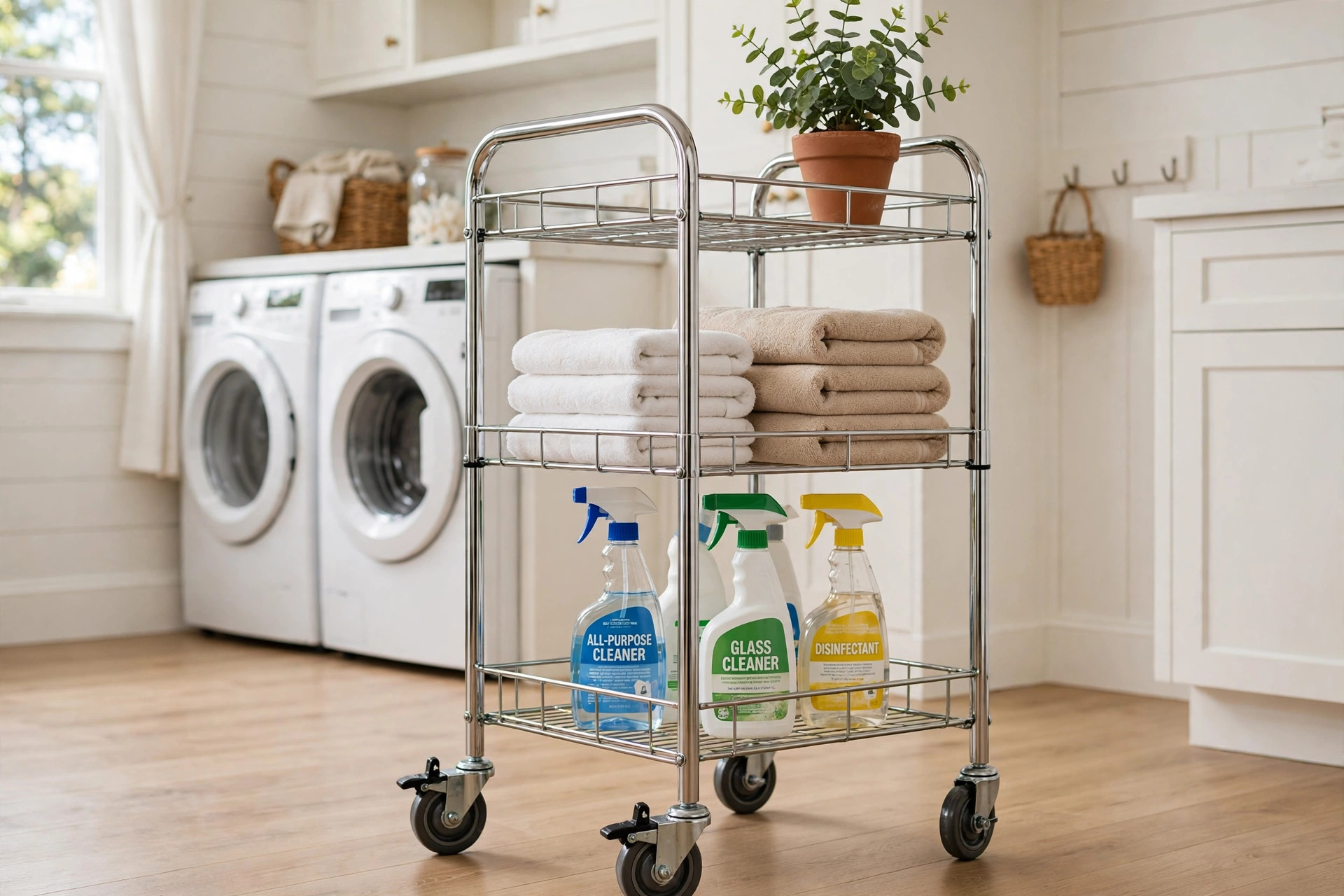

Every home has corners that waste space. A gap between the washer and the wall. A narrow strip beside the pantry shelf. A corner of the bathroom that holds nothing at all. A rolling storage cart turns those dead spaces into working storage. This rolling storage carts reviews and buying guide explains what these carts are, how to pick a good one, what they cost, and how to keep them in good shape for years.
Why Rolling Storage Carts Matter
A rolling storage cart is a small shelf unit on wheels. Most models have three or four shelves. The wheels let you pull the cart out, use it, and push it back. The design is simple. It has stayed popular for decades because it solves a common problem. American homes are full of storage spots that fixed shelves cannot reach.
Kitchens use these carts for pantry goods, spices, and small appliances. Bathrooms use them for towels, soap, and cleaning bottles. Craft rooms use them for paper, thread, and tools. Garages use them for screws, paint, and hand tools. One cart often moves from room to room as needs change. That flexibility is the main reason people buy them.
Reviews from owners point to the same strengths. The carts are easy to set up. Most models assemble in under half an hour with simple tools. They hold more than they appear to hold. A cart that is two feet tall can carry twelve jars of pantry goods without trouble. The wheels make cleaning simple. You roll the cart aside and sweep or mop under it.
There are limits. A rolling cart is not a bookcase. It cannot hold heavy paint cans on every shelf. It can tip if it is loaded top heavy. It can mark soft floors if the wheels are cheap. A careful buyer learns these limits before buying. The rest of this guide will help you do that.
For homes with limited room, carts work well with other small-space storage. Readers often pair this guide with our top rated rolling storage carts for small apartments for tight-space ideas.
What to Look for Before You Buy: Rolling Storage Carts Reviews and Buying Guide
Frame and Shelf Material
Metal carts are the most common. Steel tube frames with metal or plastic shelves are strong and last long. Chrome finish resists rust in damp rooms like bathrooms and laundry rooms. Powder-coated steel comes in colors and resists chips. Metal carts usually carry more weight than plastic ones.
Plastic carts are lighter and cheaper. They work well in bathrooms and kitchens where water splashes often. Good plastic models use thick panels that do not bow under weight. Thin plastic bends and cracks. Press the shelf in the store or check owner photos for sagging shelves.
Wood carts look warmer. They suit living rooms and home offices better than garages. Solid wood is stronger than particle board. Particle board swells when it gets wet, so wood carts belong in dry rooms. Many wood carts cost more than metal ones of the same size.
Shelf edges matter more than most buyers think. A small lip or rail around each shelf keeps jars and bottles from sliding off when the cart rolls. Flat shelves without edges work only for large items that sit flat. Look for edges at least one inch high on the upper shelves.
Wheel Quality and Locks
The wheels make or break a rolling cart. Cheap wheels stick, squeak, and mark floors. Good wheels roll smooth on tile, wood, and low carpet. Larger wheels, two inches or more, roll easier than small ones. Hard rubber wheels are kinder to wood floors than hard plastic.
At least two wheels should lock. Locking wheels keep the cart still when you work on it. In kitchens and bathrooms, a cart that rolls away while you reach for a hot pot or a glass bottle is a hazard. Test the locks if you can. They should click firm and hold the wheel still.
Check how the wheels attach. Threaded stems that screw into the frame are easy to replace. Snap-in wheels are harder to find as parts. Retailers like Home Depot and Lowe’s sell replacement caster wheels, so a broken wheel need not end the cart’s life.
Size and Weight Limits
Measure the space before you shop. Measure the width of the gap or corner. Measure the height under the counter if the cart must fit below one. Leave at least one inch of clearance on each side so the cart rolls in and out without scraping.
Check the weight limit for the whole cart and for each shelf. A common range is 40 to 80 pounds total. Divide that by the number of shelves to see the safe load per shelf. Keep heavy items low and light items high. A cart loaded with heavy items on top will tip when it rolls over a rug edge or a floor seam.
Height matters too. A cart taller than three feet can feel top heavy when full. Short carts fit under counters and desks. Tall carts work as standing storage in pantries and garages. Pick the height that matches the job.
Storage guides from The Spruce and Apartment Therapy often note that measuring first saves the most returns.
Common Types and Options
Metal Kitchen Carts
Metal kitchen carts are the classic type. They usually have three or four open shelves on a steel frame. Some add a side handle for pushing. Open shelves let you see everything at a glance. They suit dry goods, cans, and small appliances.
Reviews praise metal carts for strength and long life. The best-reviewed models carry 60 pounds or more without wobble. Weak points appear at the joints. Carts with bolts at every joint hold up better than carts that rely on snap-fit parts. Chrome models need wiping to stay shiny, but they resist rust well in normal kitchens.
Plastic Utility Carts
Plastic utility carts are light and easy to clean. They are the standard choice for bathrooms, laundry rooms, and craft tables. Water does not hurt them. Most assemble without tools, using snap-together posts and shelves.
The best plastic carts have thick shelves that stay flat under load. Weak ones bow in the middle. Owner reviews are the best guide here. Look for repeated comments about sturdiness after months of use. Consumer Reports testing methods for home goods stress long-term use, and the same idea applies to reading reviews of these carts.
Wood Serving Carts
Wood serving carts serve a different role. They act as side tables, bar carts, and extra counter space. They look better in living areas than metal or plastic. Many have a top surface plus one or two lower shelves. Some include a drawer.
These carts cost more. They also need dry rooms. A wood cart near a sink will show water marks and swelling within a year. For living rooms and dining rooms, though, nothing else looks as warm. Retailers such as Wayfair and IKEA carry wide ranges of wood carts in many styles.
Slim Rolling Carts for Narrow Gaps
Slim carts are made for the gaps between appliances and cabinets. Some are only six inches wide. They slide into spaces that no other storage can use. They hold spices, cleaning bottles, and cans in neat rows.
These narrow carts are useful but limited. They tip more easily than wide carts because the base is small. Load them evenly and keep them pushed in when not in use. Reviews are mixed for a reason. In the right six-inch gap they are perfect. Everywhere else a standard cart works better.
The Container Store is known for slim storage solutions and often stocks several widths side by side, which helps when you shop by exact measurement.
For matching storage pieces, see our wicker storage baskets reviews and buying guide for natural-fiber baskets that sit well on cart shelves.
Cost and Price
Rolling storage carts cover a wide price range. Basic plastic carts cost between 20 and 40 dollars. They do simple jobs well. Mid-range metal carts cost between 40 and 80 dollars. This range holds most of the best-reviewed models. The carts are stronger, the wheels are better, and the locks hold firm.
Wood carts and large kitchen islands on wheels cost 80 to 200 dollars or more. You pay for looks and size. Solid wood costs the most. Specialty carts, such as stainless steel medical-style carts, sit at the top of the range.
Price does not always track quality. A 50-dollar cart with thick shelves and locking wheels can outlast a 120-dollar cart with thin parts. Read reviews that describe use after six months or a year. First-day reviews praise looks. Long-term reviews reveal build quality.
Budget guides from Bob Vila and project tips at Family Handyman often remind buyers to spend on moving parts, and the wheels on a cart are exactly that.
Care and Upkeep
A rolling cart needs little care, but a few habits keep it working well. Wipe spills soon. Water left on steel can start rust at joints. Clean plastic shelves with warm soapy water. Avoid harsh cleaners on wood.
Check the bolts and screws twice a year. Rolling loosens fasteners over time. A quick turn of a screwdriver keeps the frame tight and the shelves level. Replace worn wheels rather than forcing a cart with a stuck wheel. A stuck wheel strains the frame and can scratch floors.
Store the cart in a dry spot when possible. Garages are fine for metal carts if the garage stays dry. Damp garages cause rust. If you roll a cart between indoors and outdoors, dry it before bringing it back inside.
Oil the wheel bearings once a year with a drop of household oil. The wheels will roll smooth and quiet. This small step adds years to a cart’s life.
Safety
Rolling carts are safe when used with sense. Keep heavy items on the lowest shelf. This lowers the center of gravity and stops tipping. Never climb on a cart or let children ride on one. The wheels can shoot out from under a person.
Lock the wheels when the cart is parked, especially on hard floors. An unlocked cart can roll into a hot stove, a pet, or a small child. Keep the cart away from heat sources. Plastic carts can warp near ovens and radiators.
Do not overload past the stated limit. The limit is set by the maker for a reason. Overloading bends shelves and weakens joints. A shelf that bows under weight is a warning sign. Move some items off at once.
In homes with toddlers, push carts against walls or into corners when not in use. A light cart full of bathroom bottles is a tipping risk for a small child who pulls up on it. Simple placement solves most of the risk.
Frequently Asked Questions
How much weight can a rolling storage cart hold? Most carts hold 40 to 80 pounds in total. Each shelf usually holds 10 to 20 pounds. Metal carts hold more than plastic ones. Check the maker’s stated limit and stay under it. Spread weight across shelves instead of piling it on one.
Are rolling storage carts good for small kitchens? Yes. They are one of the best tools for small kitchens. A cart adds shelf space without a remodel. You can roll it out while you cook and tuck it into a gap when done. Slim carts fit between the fridge and the counter in many kitchens. See our stackable bathroom vanity organizers buying guide for more small-space storage ideas.
Do the wheels scratch wood floors? Cheap hard-plastic wheels can scratch soft wood. Hard rubber wheels are safer. Felt pads on the cart are another option, though they collect dirt. Many owners with wood floors choose rubber-wheeled carts and report no marks after years of use.
Can I use a rolling cart in the bathroom? Yes, if you pick the right material. Plastic and chrome carts resist water well. Wood carts do not belong in wet bathrooms. Lock the wheels so the cart does not roll on wet tile. Wipe standing water off shelves after showers.
How do I stop my cart from wobbling? Tighten all bolts and screws first. Wobble usually comes from loose joints. Check that all four wheels touch the floor. A wheel that hangs short can be shimmed or replaced. If the frame itself is bent, replace the cart. A bent frame never steadies.
Which is better, three shelves or four? It depends on what you store. Four shelves suit small items like spice jars and craft supplies. Three shelves suit taller items like cereal boxes and cleaning bottles. Some carts let you set shelf heights. Adjustable shelves are worth the small extra cost because they fit more kinds of goods.
A Final Word
A rolling storage cart is a small purchase that earns its keep. It fills dead space, moves where you need it, and lasts for years with simple care. Pick a sturdy frame, good wheels with locks, and the right size for your space. Read long-term reviews before you buy. The best cart is the one that fits your room, holds your goods, and rolls smooth every day.
References
Apartment Therapy. (n.d.). Home design ideas and inspiration. https://www.apartmenttherapy.com Bob Vila. (n.d.). Home improvement advice. https://www.bobvila.com Consumer Reports. (n.d.). Product reviews and ratings. https://www.consumerreports.org Family Handyman. (n.d.). DIY home repair and maintenance. https://www.familyhandyman.com IKEA. (n.d.). Home furnishings. https://www.ikea.com Lowe’s. (n.d.). Home improvement products. https://www.lowes.com The Container Store. (n.d.). Storage and organization products. https://www.containerstore.com The Home Depot. (n.d.). Home improvement products. https://www.homedepot.com The Spruce. (n.d.). Home and garden advice. https://www.thespruce.com Wayfair. (n.d.). Furniture and home goods. https://www.wayfair.com
Was this guide helpful?

About David Wilson
The My Garden US editorial team writes practical, in-depth home and garden guides for American homeowners — tested advice, no fluff.
You May Also Like

The Best Patio Cushion Storage Bags for Humid Climates
May 3, 2026 0 views
Space Saving Mudroom Storage Benches With Free Shipping
January 8, 2026 0 views
Waterproof Laundry Room Shelving for Cold Climates
February 9, 2026 0 views