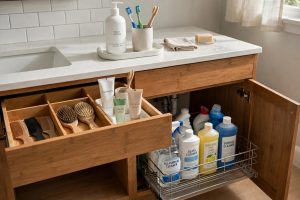
A stackable bathroom vanity organizers buying guide is the right place to start when a bathroom counter has become a crowded mess of bottles, jars, and tubes. This article is written for the home buyer in the United States who wants a simple way to choose. It explains what these organizers are, why they help, what kinds exist, what to look for, and how much they cost.
Most American bathrooms are not large. The vanity counter holds the morning routine: toothbrush, toothpaste, soap, lotion, hair products, and more. Without a plan, the counter fills up fast. Stackable organizers let the buyer use the height above the counter. They take one footprint and turn it into two or three levels of storage.
Why It Matters
A tidy bathroom saves time. In the morning, a person reaches for items without digging through a pile. At night, the counter can be wiped in seconds. That small daily saving adds up over a year.
There is also a health reason. Bathrooms are damp places. Items left flat on a wet counter sit in water. Mold can grow under bottles. Raised organizers lift items off the surface. Air moves under them. The counter dries faster.
Safety matters too. A crowded edge can push bottles onto the floor. Glass jars can break. Stackable units sit flat and steady. They keep small items inside their bins.
For guests, a neat vanity gives a good impression. For families, it gives each person a level. Parents can keep medicines and sharp items on a high level. Children use the lower level.
What Stackable Bathroom Vanity Organizers Are: Stackable Bathroom Vanity Organizers Buying Guide
The term covers many products. All of them share one idea: units that sit on top of each other. A buyer can add or remove levels. Common forms are:
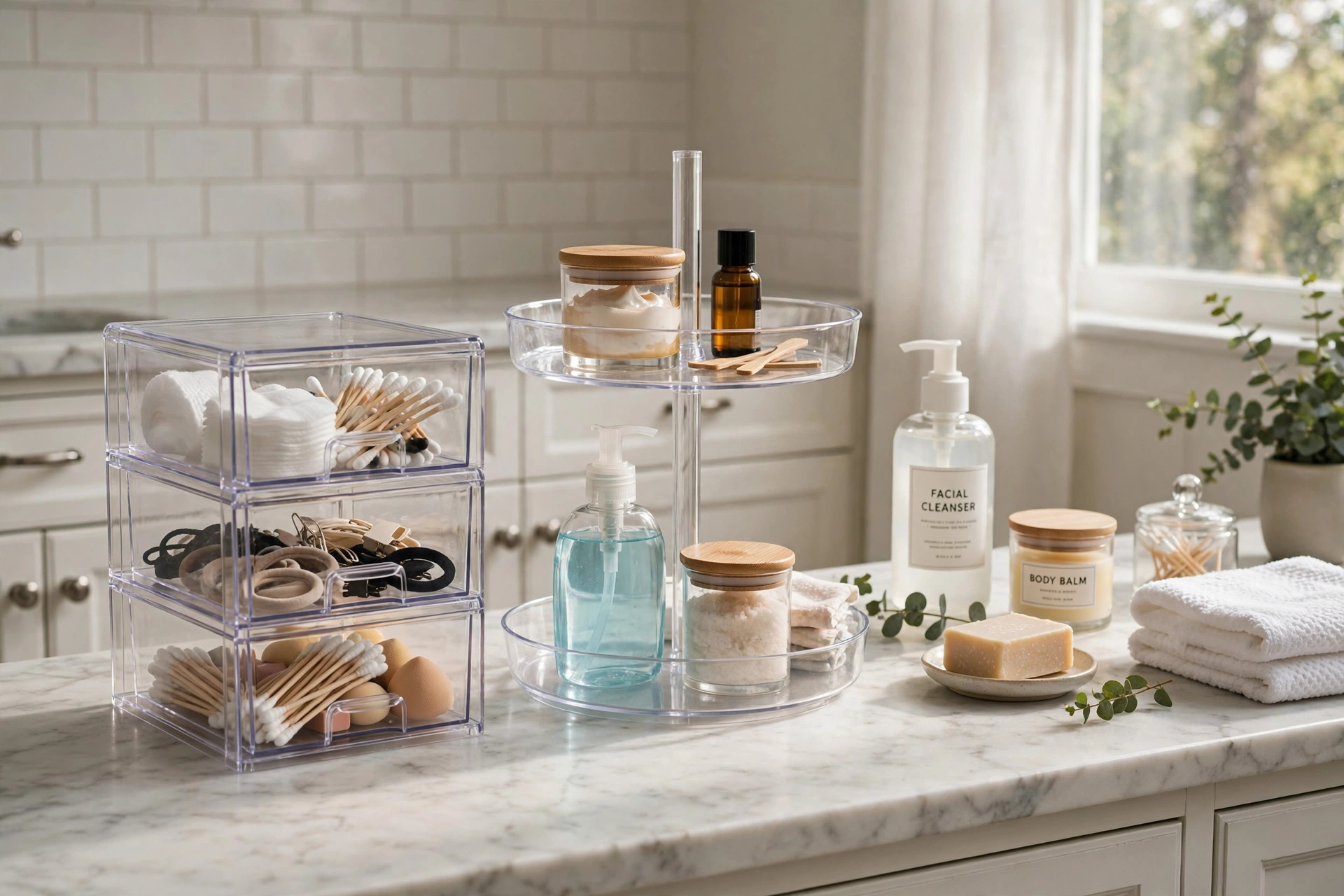
– Stackable drawers: Small pull-out drawers in a tower. Good for cotton balls, hair ties, and small tools. – Tiered trays: Two or three open trays on posts. Good for daily items that are used often. – Stacking bins: Open bins with lids that nest. Good for spare soap, razors, and bulk items. – Turntable towers: Round layers that spin. Good for corner spots where a square unit will not fit.
Many buyers pair these with other small-bathroom solutions. For people who also need cheap pieces for the whole vanity, see affordable bathroom vanity organizers with free shipping. Those who want stacking units for the makeup corner may like stackable makeup and cosmetics organizers with free shipping.
How to Choose: What to Look For
Measure First
The first step is the tape measure. Measure the depth of the vanity counter, front to back. Most vanity counters are 20 to 22 inches deep. The organizer must leave room at the front. A person needs space for hands and for a sink.
Measure the height under the medicine cabinet or mirror. A tall tower may not fit under a low cabinet. Note the faucet and backsplash. Units should not crowd the faucet handles.
Also measure the items to be stored. Tall pump bottles need taller drawers. Note the tallest bottle in the group. Add one inch for finger room.
Materials
Three main materials are sold:
– Clear plastic (acrylic or PET): The buyer can see inside. It shows wear over time and can scratch. It is light and cheap. – Bamboo or wood: Warm look. It must be sealed for bathroom use. Unsealed wood can swell in steam. – Metal with coating: Steel or aluminum with a rust-proof finish. It is strong. Check that the finish is made for damp rooms.
For a rental home, plastic is a safe low-cost choice. For an owned home, bamboo or coated metal may suit the style better. Major home stores carry all three kinds; shoppers can compare finishes at stores like Home Depot or Lowe’s before buying.
Stacking Method
Not all units stack the same way. Some lock with clips. Some sit in grooves. Some just rest on top. Locked units are safer in homes with children. They will not slide when a drawer opens. Check product photos for the lock detail.
Some sets are sold as one tower. Others are sold as single units that the buyer stacks at will. The single-unit style gives more freedom. The fixed tower is simpler to set up.
Drawer and Bin Size
Small drawers fit jewelry and hair clips. Medium drawers fit lotions and tubes. Deep bins fit towels and spare bottles. A mix of sizes works best. Many buyers start with a two-drawer unit and add one more later.
Check that drawers slide well. Cheap units may stick. Pull the drawer fully out in the store if possible. Online buyers should read reviews about drawer action.
Drainage and Cleaning
Bathroom items drip. Units with small drain holes or sloped floors dry faster. Smooth plastic wipes clean. Units with many seams trap soap scum. A simple design cleans faster than a fancy one.
Stability
A full tower can get top-heavy. Wide bases are more stable than narrow ones. Look for non-slip feet. In homes with small children, a low and wide unit is safer than a tall thin tower.
Types and Options
Under-Sink Stackables
These sit in the cabinet under the sink. They must fit around the pipes. L-shaped or U-shaped units are made for this. They keep cleaners and spare stock in reach. Buyers with more space needs can read about makeup and cosmetics organizers reviews and buying guide for ideas that also work in vanity drawers.
Countertop Towers
These are the most common. They sit beside the sink. Heights run from 6 inches to 24 inches. Two-tier units fit under most mirrors. Three-tier units give the most storage per square inch.
Wall-Mounted Stackables
Some units hook to the wall. They free the counter fully. They need screws or strong adhesive. Renters should check the lease first. Tile walls need special anchors.
Rotating Organizers
A lazy-Susan style stack spins. Each level turns on its own. These work well in deep corners. They cost a bit more than fixed trays. Users can find design ideas and small-bathroom tips at Apartment Therapy and The Spruce.
Matching Style to the Bathroom
Function comes first, but looks count too. A buyer does not need a designer eye. A few plain rules work.
Match the metal finish to the faucet. If the faucet is chrome, choose a unit with chrome posts. If it is brushed nickel, look for a similar tone. Mixed metals can look messy.
Match the color story. A white bathroom suits clear or white units. A warm bathroom with wood tones suits bamboo. A dark modern bathroom suits black coated metal. The organizer should blend in, not stand out.
Keep the shape simple. Round units suit curved sinks. Square units suit straight counters. Busy patterns on the plastic can look dated fast. Clear, frosted, or solid colors age the best.
For renters, clear plastic is the safe pick. It suits any bathroom. For owners who plan a full remodel soon, buy cheap now. Save the fine bamboo or metal set for after the remodel.
Cost and Price
Prices vary by material and size. The figures below are rough ranges seen in the United States market:
– Basic plastic two-tier tray: 8 to 20 dollars. – Stackable drawer tower, three drawers: 15 to 40 dollars. – Bamboo or wood unit: 25 to 60 dollars. – Coated metal tower: 30 to 70 dollars. – Large rotating multi-level unit: 25 to 55 dollars.
Sets sold in multi-packs often cost less per unit. Watch for shipping costs. Heavy metal units can add freight charges. Sales around holidays can cut prices by a quarter or more.
Value shoppers can compare prices at large retailers such as Target, Walmart, and Wayfair. Specialty storage stores like The Container Store and IKEA carry designs made for small bathrooms.
The cheapest option is not always the best value. A 10-dollar unit that cracks in a year costs more over time than a 30-dollar unit that lasts five years. Consumer Reports publishes tests of home storage goods that can guide buyers on build quality.
Care and Upkeep
Clean the organizers once a month. Pull out the drawers. Wash them in warm water with mild soap. Dry fully before restacking. Damp stacking traps water and can breed mold.
Wipe the counter under the unit each week. Water and soap collect there. Lift the unit and wipe the base. This takes less than a minute.
Check locks and clips twice a year. Plastic clips can wear. Replace a unit if a level wobbles. A falling tower can break glass bottles.
For wood or bamboo, apply a food-safe sealant once a year if the maker advises it. Keep the unit away from direct shower spray. Even sealed wood lasts longer in a dry spot.
How-to guides for bathroom storage upkeep appear at Family Handyman, which covers simple home care tasks in plain terms.
Safety Notes
Keep medicines in a high or locked level. Children can reach low drawers. Follow the label on any cleaning product stored in the unit. Never store bleach and ammonia near each other.
Do not overload the top level. Heavy items belong low. A top-heavy tower can tip. If the unit sits near the sink edge, move it back at least two inches from the edge.
Check weight limits on the box. Most plastic drawers hold 2 to 5 pounds each. Exceeding the limit bends the frame. When in doubt, store heavy bottles on the counter or in a cabinet.
FAQ
How many levels do I need? Most buyers do well with two or three levels. One level is just a tray. Four or more levels can get unstable. Start with two and add more if the counter still feels crowded.
Will stackable units fit a small vanity? Yes, in most cases. Units as narrow as 6 inches wide are sold. Measure the counter first. Leave room for the faucet and for daily hand washing.
Are clear organizers better than opaque ones? Clear units let the buyer see items at a glance. That speeds up the morning routine. Opaque units hide clutter and look neater. The choice is a matter of taste.
Can I use these inside a vanity cabinet? Yes. Short stackable drawers fit well on cabinet shelves. Measure the shelf height first. Units made for under-sink use fit around pipes.
Do they work for a shared family bathroom? Yes. Give each person one drawer or one bin. Label the fronts with a small sticker. This ends most fights about missing items.
How do I keep the units from sliding? Use non-slip shelf liner under the base. Cut it to size. It is cheap and works well. Some units come with rubber feet built in.
Should I buy a set or build my own stack? A ready-made set is simpler. The parts fit together by design. Building a custom stack from single units gives more choice in size. It can cost more. Beginners should start with a set.
Final Word
A stackable bathroom vanity organizers buying guide comes down to a few simple steps. Measure the space. Pick a material that suits the bathroom. Choose a stacking style that fits the daily routine. Spend a little more for a unit that will last. With the right choice, the vanity stays clear, the morning moves faster, and the bathroom looks and feels better. Small, steady order is the real reward of a well-chosen organizer.
References
Apartment Therapy. (n.d.). Home design ideas and inspiration. https://www.apartmenttherapy.com Consumer Reports. (n.d.). Product reviews and ratings. https://www.consumerreports.org Family Handyman. (n.d.). DIY home repair and maintenance. https://www.familyhandyman.com IKEA. (n.d.). Home furnishings. https://www.ikea.com Lowe’s. (n.d.). Home improvement products. https://www.lowes.com Target. (n.d.). Retail store. https://www.target.com The Container Store. (n.d.). Storage and organization products. https://www.containerstore.com The Home Depot. (n.d.). Home improvement products. https://www.homedepot.com The Spruce. (n.d.). Home and garden advice. https://www.thespruce.com Walmart. (n.d.). Everyday low prices. https://www.walmart.com Wayfair. (n.d.). Furniture and home goods. https://www.wayfair.com
Was this guide helpful?

About James Carter
The My Garden US editorial team writes practical, in-depth home and garden guides for American homeowners — tested advice, no fluff.