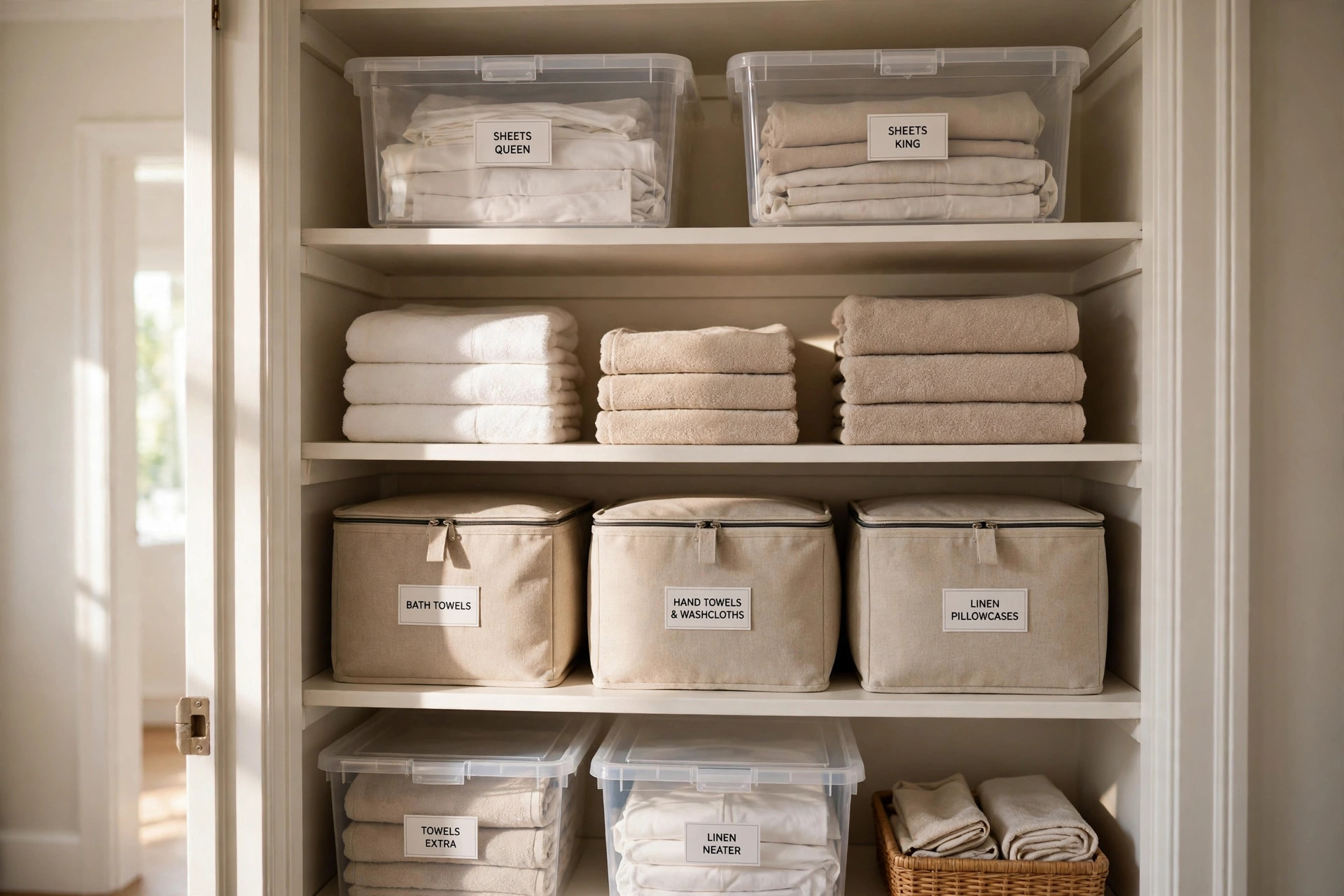

A linen closet holds some of the most used fabric in a house. Sheets, pillowcases, towels, and table linens sit there for weeks between washes. In Texas, that closet faces a steady enemy: damp air. Humidity from the Gulf Coast rolls through Houston, Corpus Christi, and Beaumont for much of the year. Inland cities like Austin and Dallas face summer months when indoor air turns heavy. Fabric stored in a plain closet can pick up that moisture and hold it. The result is a musty smell, faint spots on white sheets, and towels that never feel quite clean. Waterproof linen closet organizers for Texas homes were made to answer this exact problem. They shield stored fabric from damp air while keeping every shelf neat and easy to use.
Why It Matters in Texas
Texas homes deal with more moisture than most American homes. The Gulf of Mexico feeds warm, wet air into the eastern half of the state. Houston averages humidity levels that rarely drop below 60 percent, and summer highs in Dallas can pair heat with sticky air. Air conditioning helps, but a linen closet is often a small, shut space. Air does not move through it the way it moves through a hallway. Moisture settles on folded fabric and stays there.
Damp fabric grows mildew. Mildew stains do not always wash out. A set of good cotton sheets can be ruined by one long humid summer in a closed closet. Towels can take on a sour smell that returns even after washing with hot water. People with asthma or allergies may react to the mold that forms on stored bedding.
Storms add another risk. A summer thunderstorm can knock out power for hours. Without air conditioning, indoor humidity climbs fast. Closets on outside walls feel it first. A pipe leak in a wall behind the closet, a roof leak after hail, or a broken water heater can send water into the closet itself. A waterproof organizer keeps water off the fabric long enough for the problem to be found and fixed.
What to Look for When You Choose: Waterproof Linen Closet Organizers for Texas Homes
Start with the material. Waterproof organizers are usually made from coated polyester, vinyl-coated fabric, polypropylene, or sealed plastic. Coated polyester feels like canvas but turns water aside. Polypropylene bins are rigid and fully sealed. Vinyl-coated fabric is flexible and easy to wipe clean. All three work. What matters is that seams are closed and the weave does not wick water.
Check the closures. An open basket does not protect against moisture. Look for organizers with lids, zip tops, drawstring necks, or roll-down covers. For shelf bins, a hinged lid or a snap cover does the job. For hanging organizers, zippered compartments keep each cube sealed.
Measure the closet first. Texas homes vary. Older bungalows in San Antonio have narrow linen closets. Newer homes in the Dallas suburbs often have deep walk-in closets. Measure width, depth, and shelf height. Write the numbers down before you shop. An organizer that is half an inch too tall wastes a whole shelf.
Think about air flow. A fully sealed bin keeps moisture out, but fabric also needs some air. Many good designs use coated fabric that resists liquid water while letting a small amount of air pass. Others are fully sealed and work best when the fabric inside is clean and bone dry. If you fold towels straight from a warm dryer, let them cool first. Warm fabric gives off steam that can condense inside a sealed bin.
Look at the handles and frames. Wire or wood frames add shape but can rust or swell in damp air. Plastic or coated metal frames last longer in a humid closet. Reinforced handles make it easy to pull a bin off a high shelf without tearing the fabric.
Types of Waterproof Organizers
Sealed storage bins. These are the workhorses. A hard bin with a snug lid keeps water, dust, and insects away from folded sheets. They stack well on deep shelves. Clear sides let you see what is inside without opening the lid.
Zippered cube organizers. These fabric cubes have six sides and a zip top. They sit on closet shelves and hold a full set of sheets each. Many have a small label window on the front so you can mark “queen sheets” or “guest towels.”
Hanging shelf organizers. These hang from the closet rod and divide vertical space into cubes. Waterproof versions use coated fabric with zippered or Velcro-covered openings. They are good for small closets where shelf space is short.
Drawer dividers and trays. Shallow trays with coated bottoms sit inside closet drawers. They keep hand towels and washcloths in neat rows and guard against a slow drip from above. Related organizers such as waterproof dresser drawer dividers work on the same principle in bedrooms.
Vacuum-seal bags. These are not organizers in the usual sense, but they are fully waterproof. Squeeze the air out and they shrink flat. They suit off-season blankets stored at the top of the closet. Do not use them for everyday sheets, since opening and resealing gets old fast.
Wall-mounted shelf guards. Some organizers clip to the shelf edge and form a coated barrier under stored fabric. They pair well with shelf systems and with options like waterproof wall mounted storage shelves.
Cost and Price
Prices are modest. Small zippered cubes run from about five dollars to twelve dollars each at most home stores. A set of four usually costs between twenty and forty dollars. Hard sealed bins in the six-to-twelve-quart range cost between eight and twenty dollars each, depending on brand and lid quality.
Hanging waterproof organizers cost between fifteen and thirty-five dollars. Vacuum-seal bag sets cost between twelve and twenty-five dollars for a pack of six to ten. Drawer trays and coated dividers run between ten and twenty dollars per set. For a full closet redo, most Texas homeowners spend between fifty and one hundred fifty dollars on organizers. That is less than the cost of replacing one set of mildewed sheets.
Watch for value traps. The cheapest vinyl bins sometimes tear at the corners within a year. Spending a few dollars more on thicker material and stronger zippers usually pays off. On the other end, luxury brands charge double for the same coated polyester with a nicer label. Mid-range products from established home stores hit the sweet spot.
Where Your Money Goes
Most of the price goes to material thickness and closure quality. A bin with a gasket-style lid costs more but seals better. Hand-stitched coated fabric costs more than heat-sealed vinyl, and it lasts longer. Size also drives price: deep bins for comforters cost more than small cubes for pillowcases.
Care and Upkeep
Waterproof organizers need little care, but they are not carefree. Wipe the inside and outside with a damp cloth every few months. A mild soap solution removes dust and body oil that collect on handles. Rinse with a clean damp cloth and let the bin air-dry fully before you put fabric back in. A bin that is put away damp defeats its own purpose.
Check zippers and seams once a year. A zipper that sticks can tear the coating when forced. A dab of silicone zipper wax keeps it smooth. Look at the corners for cracks in vinyl or fraying in coated fabric. Replace a failing organizer before a humid summer, not during one.
Keep fabric dry before it goes in. Wash and fully dry sheets and towels before folding them away. In humid months, a dryer works better than a line for this purpose, since line-dried fabric can carry outdoor moisture into the closet. A small silica gel packet or moisture absorber in the closet adds extra protection, and it costs almost nothing.
Do not overload the bins. Cramming fabric into a zippered cube strains the zipper and the seams. Leave a little room so the top closes without force. Heavy loads also bow shelves over time, which is a problem in older Texas homes with thin shelf boards.
Safety
Waterproof organizers are safe when used as directed. A few points deserve care. Keep plastic bins and vacuum bags away from small children. Large plastic bags and deep bins can be a suffocation risk for toddlers, so store them on high shelves or behind closed doors. The Consumer Product Safety Commission publishes general guidance on household storage safety that applies here.
Heat is another concern. Do not place organizers near a water heater closet or a furnace vent. Vinyl softens in heat and can give off an odor. Coated polyester handles warmth better, but no storage fabric belongs next to a heat source.
Off-gassing is mild but real. New vinyl products can smell strongly for a day or two. Air them out in a garage or on a patio before loading them with clean sheets. If the smell bothers you, choose polypropylene or coated cotton organizers, which have less odor. Reviews on independent testing sites sometimes compare material odors across brands.
Fire safety matters in any closet. Waterproof organizers are not fireproof. Keep them away from candles, and do not store oily rags in them. A closet full of sealed bins can still burn.
Measuring and Fitting Your Closet
Take ten minutes with a tape measure before you buy. Measure the width of each shelf, the depth from front to back, and the clear height between shelves. Write down all three for each shelf. Many shoppers buy by eye and end up with bins that are too tall for the shelf above.
Count your sets. A typical household keeps two or three sheet sets per bed, plus guest sets and a stack of bath towels. Sort them by size before you shop. Buy one cube or bin per set, plus one extra for odds and ends. Label each one with a marker or a printed tag. Labels save more time than any organizer feature.
Leave the most-used items at chest height. Daily towels belong where they are easy to grab. Guest sheets and off-season blankets can go high. Heavy comforters belong low, where a fall cannot hurt anyone.
For awkward corners, look at corner closet organizer options that pair with waterproof bins. A fitted corner unit plus sealed cubes uses space that flat shelves waste.
Buying Tips for Texas Shoppers
Buy in person when you can. Big home stores across Texas carry these products, and you can feel the material before you buy. Check the zipper action, the lid fit, and the stiffness of the fabric. If you shop online, read the reviews that mention humidity, mildew, or Texas. A product that works in dry Colorado may fail in Houston.
Time your purchase. Storage products go on sale in January during organization sales and again in late summer during back-to-college season. Buying a full set during a sale can cut the cost by a third.
Compare sets and singles. A matched set of six cubes often costs less per cube than buying singles, and the set looks tidy on the shelf. But a set may include sizes you do not need. Buy singles when your closet has odd shelf heights.
FAQ
Will waterproof organizers stop mildew completely?
They reduce the risk a great deal, but they are not magic. Mildew needs moisture, warmth, and food. The organizer blocks moisture from the air, but fabric that goes in damp can still grow mildew inside a sealed bin. Always store clean, fully dry fabric. Good closet ventilation and a working air conditioner do the rest.
Can I use them in a closet on an outside wall?
Yes, and that is exactly where they help most. Outside-wall closets run cooler and collect condensation. A sealed bin keeps that condensation off the fabric. Leave a small gap between the bin and the wall so air can move behind it.
Do waterproof organizers make fabric smell like plastic?
Some do at first, mainly vinyl products. The smell fades after a day or two of airing out. Washing the organizer with mild soap before first use helps. Coated polyester and polypropylene have far less odor. If you are sensitive to smells, skip vinyl.
How many organizers does a normal linen closet need?
Most closets need six to ten pieces: one bin or cube per sheet set, two or three for towels, and one or two for table linens. Count your sets first, then buy. It is better to buy too few and add one later than to crowd the shelves.
Can I wash the organizers themselves?
Yes. Most wipe clean with a damp cloth. Some coated fabric cubes can be hand-washed in the sink with mild soap. Check the care label. Never put a structured bin in a washing machine, and never use bleach on coated fabric, since bleach breaks down the waterproof coating.
Are they worth it compared to plain fabric bins?
In a dry climate, plain bins do fine. In Texas, the waterproof layer earns its keep. The price difference is small, often just a few dollars per bin. When one humid summer can ruin a set of good sheets, the extra protection is cheap insurance.
A Short Final Word
A linen closet is a quiet part of the house, and it is easy to ignore until the sheets smell wrong. In Texas, humidity is a fact of life, and stored fabric pays the price. Waterproof linen closet organizers for Texas homes are a simple fix. They cost little, they install in an afternoon, and they keep towels and sheets fresh through the long humid months. Measure the closet, pick sealed cubes or bins that fit, store only dry fabric, and the problem stays solved.
For more background, see Wayfair, The Spruce, and Apartment Therapy. Buying guides are also published by Family Handyman and IKEA.
References
Apartment Therapy. (n.d.). Home design ideas and inspiration. https://www.apartmenttherapy.com Consumer Reports. (n.d.). Product reviews and ratings. https://www.consumerreports.org Family Handyman. (n.d.). DIY home repair and maintenance. https://www.familyhandyman.com IKEA. (n.d.). Home furnishings. https://www.ikea.com The Home Depot. (n.d.). Home improvement products. https://www.homedepot.com The Spruce. (n.d.). Home and garden advice. https://www.thespruce.com U.S. Consumer Product Safety Commission. (n.d.). Product safety information. https://www.cpsc.gov Wayfair. (n.d.). Furniture and home goods. https://www.wayfair.com
Was this guide helpful?

About Emily Rodriguez
The My Garden US editorial team writes practical, in-depth home and garden guides for American homeowners — tested advice, no fluff.
You May Also Like
Affordable Mudroom Storage Benches: A Buying Guide
January 16, 2026 0 views
Wicker Storage Baskets: Reviews and Buying Guide
January 28, 2026 0 views
Affordable Bathroom Vanity Organizers With Free Shipping: A Practical Buying Guide
June 3, 2026 0 views