
Why the Best Kitchen Drawer Organizers Matter for First Time Homeowners
A new house brings many boxes, and the kitchen often gets unpacked last. Knives land next to spoons. Batteries mix with bread ties. Within weeks, every drawer becomes a tangle, and finding a peeler feels like work. The best kitchen drawer organizers for first time homeowners turn that mess into order in one afternoon. They cost little, need no tools, and make daily cooking faster and calmer.
For a new owner, small wins matter. A tidy drawer sets the tone for the whole kitchen. It also protects the investment in the home. Deep drawers can scratch when metal tools slide around. A good organizer stops that wear. When the home is sold later, buyers open drawers. Clean, fitted trays give a good impression.
New owners often own fewer tools than they think. An organizer reveals what is really there. It shows doubles that can be donated and gaps that need filling. Many home improvement guides suggest starting with one drawer at a time. That habit keeps the job small and doable.
A Calm Kitchen Starts With the Drawers
Cooking is easier when every tool has a place. A chef reaches for the right spoon without looking. A new owner can have that same ease. Dividers hold spatulas upright. Small trays hold clips and corks. The drawer slides open, and the eye finds what it needs. Meals get made faster, and the kitchen stays cleaner.
What to Look for in Kitchen Drawer Organizers: Best Kitchen Drawer Organizers for First Time Homeowners
Measure first. Every American kitchen has its own drawer sizes, and standard trays do not fit all of them. Use a tape measure for the width, depth, and height of each drawer. Write the numbers on a card. Keep that card in a pocket while shopping. This one habit prevents most returns.
Depth matters more than width. A tray that is too tall will block the drawer from closing. Leave at least a finger of space above the tallest item. Shallow trays suit flatware. Deeper bins suit gadgets and lids. Many first time owners buy drawer organizers online without measuring, and they end up with trays that slide around.
Material sets the price and the feel. Bamboo is warm and lasts long. Plastic is light and easy to wash. Metal wire trays let crumbs fall through, which keeps them cleaner. Soft rubber lines stop tools from sliding. For small kitchen storage solutions, thin flexible dividers often work best because they adjust to odd spaces.
Adjustable Beats Fixed
Fixed trays come in set sizes. They work when the drawer matches. Adjustable dividers fit almost any drawer. Spring-loaded boards expand to the walls. Cut-to-fit trays can be trimmed with a knife. For a first home, adjustable pieces give more value. They move from drawer to drawer as needs change. They also survive a move to the next house.
Look for non-slip feet or rubber bases. A tray that slides defeats its own purpose. Many good trays have this built in. If yours does not, a sheet of shelf liner costs little and solves the problem. First time owners praise this trick in many organization guides.
Types of Kitchen Drawer Organizers Worth Buying
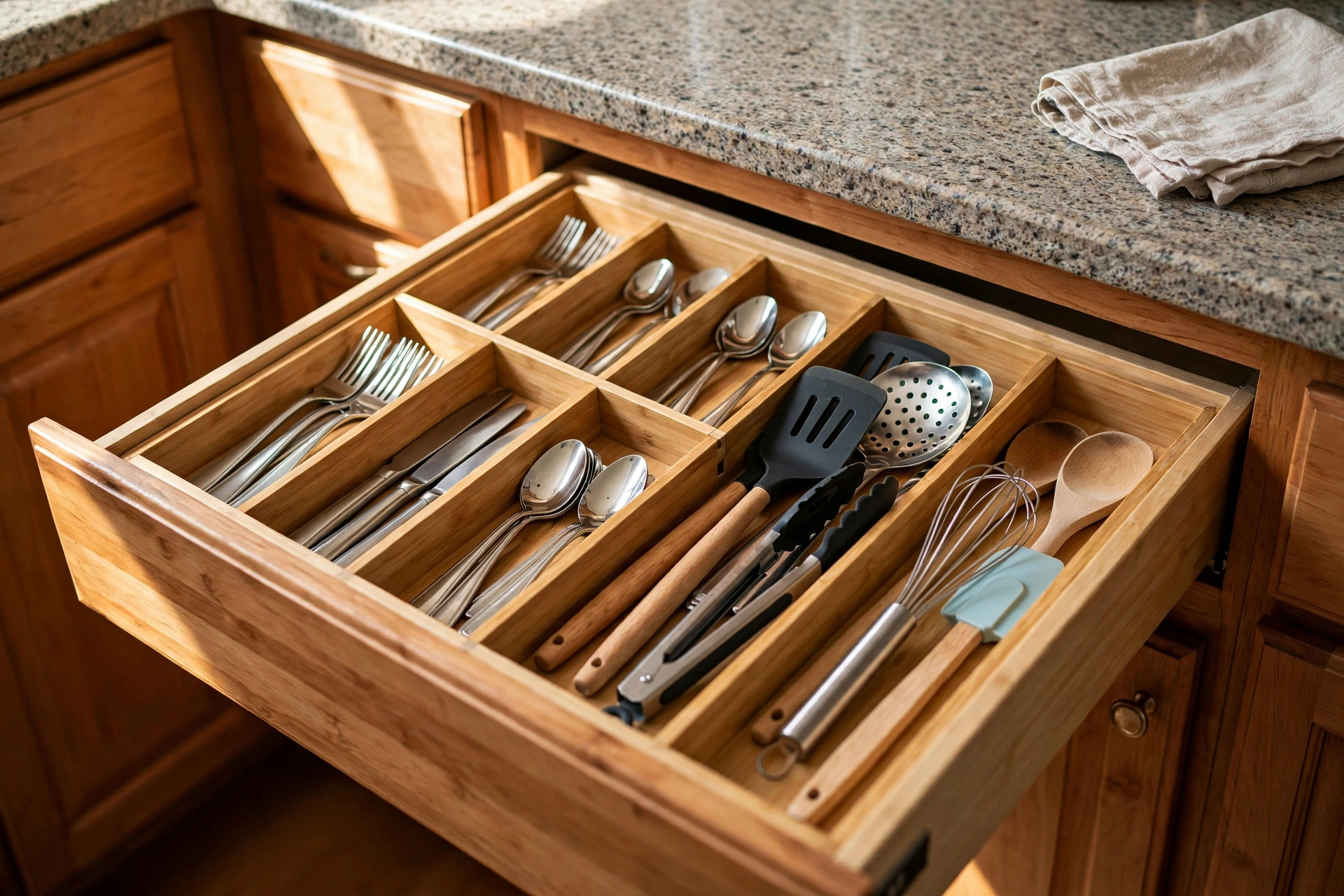
Flatware trays. The classic insert with five or six slots. It holds forks, knives, spoons, and serving pieces. Bamboo versions look rich and resist water well. Plastic versions come in many sizes and cost less. Every kitchen needs at least one.
Utensil trays. These are deeper and wider than flatware trays. They hold spatulas, ladles, tongs, and whisks. Some have diagonal slots for long handles. A tray with rounded corners cleans faster than one with sharp corners.
Expandable dividers. Two or three boards with a spring that presses against the drawer walls. They split the drawer into custom sections. They suit junk drawers best, where items come in odd shapes. Adjustable drawer dividers are a favorite of first time owners for this reason.
Spice inserts. Angled trays that hold jars in stepped rows. Labels face up. This beats digging through a drawer of rolling jars. Some versions sit flat; others stack in two tiers. Measure jar height before buying.
Knife blocks for drawers. A block with slots that lies flat inside the drawer. It keeps blades sharp and fingers safe. This is a smart buy for homes with children. It also frees counter space.
Cut-to-fit mats and sheets. Bamboo or plastic sheets that trim to size. They protect the drawer bottom and quiet rattling. Paired with small bins, they build a full system for a low price. Many budget kitchen ideas start here.
Match the Organizer to the Drawer
The flatware drawer sits nearest the dishwasher for easy unloading. The cooking drawer sits near the stove. The junk drawer, which every home has, gets dividers and small bins. A deep pantry drawer guide from one hardware retailer suggests the same logic: keep tools where they are used. When each drawer has a clear job, the organizers almost choose themselves.
Cost and Price: What New Owners Should Expect
Kitchen drawer organizers are among the cheapest upgrades a first time homeowner can buy. Most basic trays cost between five and twenty dollars. A full set for a small kitchen often totals fifty to one hundred dollars. That is less than one dinner out for two.
Plastic trays sit at the low end. A simple flatware tray may cost eight dollars. Bamboo trays run twelve to thirty dollars depending on size. Adjustable dividers often cost fifteen to twenty-five dollars for a pair. Drawer knife blocks range from twenty to forty dollars. Spice inserts fall between ten and twenty dollars.
Prices shift with brand and store. Hardware stores and online marketplaces run sales often. Many owners save by buying sets that cover several drawers at once. Bundles cost less per tray than single pieces. Waiting for a sale on a large set is a sound plan.
Where the Money Goes Furthest
Spend most on the flatware drawer and the cooking drawer. These get opened many times a day. Cheap trays here crack and slide, and they get replaced sooner. Spend less on the junk drawer and the seldom-used drawer. Basic bins do the job there.
The bedroom drawers benefit too: reviews of nightstands with storage drawers show the same one-drawer-at-a-time method works there. Do not buy organizers for every drawer at once. Live in the home for two weeks first. Note which drawers annoy you most. Buy for those first. This staged approach is kind to a new budget, and it matches how kitchen planning advice often frames the work: start with the pain points.
Setting Up Your Drawers Step by Step
Empty one drawer at a time. Pull everything out and wipe the bottom clean. Sort items into three piles: keep, donate, and trash. Broken tools and doubles leave the house. This step alone may halve what goes back in.
Group the keepers by type. Spoons with spoons. Baking tools together. Junk drawer items by use: batteries, tape, clips, small tools. When groups are clear, the tray layout follows. Put the largest group in the largest slot.
Place trays and test the fit before loading them. Slide the drawer open and shut. If a tray lifts or shifts, add shelf liner underneath. Load the items, then live with the setup for a week. Small changes beat a perfect plan that never starts.
A Sample Layout for a Standard Kitchen
The drawer by the dishwasher holds the flatware tray. The drawer by the stove holds utensils in an expandable divider. A deep drawer holds pots and lids with vertical dividers. The junk drawer holds small bins for clips, batteries, and tape. A drawer near the prep counter holds spices in an angled insert. This layout suits many first time owners, and home maintenance guides note that simple zones like these make kitchens easier to share.
Care and Upkeep Through the Years
Good organizers need little care. Wipe plastic trays with warm soapy water once a month. Oil bamboo trays twice a year with food-safe mineral oil to stop cracking. Check rubber feet once a year; worn feet let trays slide.
Empty each drawer once a year and wash the bottom. Crumbs and dust gather under trays. This is also the time to remove tools that no longer get used. A kitchen that grows children will change. Dividers move and bins get swapped. Adjustable systems handle this well.
Bamboo can darken with time. This is normal and does not harm the wood. Plastic may stain from tomato paste or curry. A paste of baking soda and water lifts most stains. If a tray cracks, replace it. Broken plastic has sharp edges and broken bamboo has splinters.
When to Upgrade
Replace trays when they no longer fit the tools. New gadgets may need deeper bins. A new set of knives may need a wider block. Moving to a new home may change drawer sizes. Adjustable pieces survive these changes better than fixed ones. Many owners keep their organizers for five to ten years before changing the set.
Safety Notes for Kitchen Drawers
Knives should never sit loose in a drawer. A blade hidden under cloths can cut a reaching hand. Use a drawer knife block or blade covers. Keep sharp tools away from the front of the drawer where small hands reach first.
Heavy items belong in lower drawers. A drawer full of cans can tip a light cabinet if it is placed too high. Locks and latches keep toddlers out of drawers with knives and cleaners. Many child safety resources list drawer locks among the first items a new family should install.
Check that dividers do not pinch. Spring boards press hard against walls. Set them firm but not forced. Keep small magnets and batteries out of reach of young children. A tidy drawer is a safer drawer because nothing hides inside it.
Frequently Asked Questions
What size drawer organizer should I buy?
Measure the inside of the drawer: width, depth, and height. Buy trays that fit those numbers with a small margin. Adjustable and cut-to-fit trays remove the guesswork when sizes are odd.
Are bamboo or plastic organizers better for a first home?
Both work well. Bamboo looks nicer and lasts longer. Plastic costs less and washes faster. Many owners use bamboo for the flatware drawer and plastic for the junk drawer.
How many organizers does a small kitchen need?
Most small kitchens need four to six pieces: a flatware tray, a utensil divider, a spice insert, a knife block, and a few small bins for the junk drawer. Start with the drawers you open most.
Can drawer organizers damage the drawers?
No, when chosen well. Rubber feet and liners protect the bottom. Avoid organizers that press too hard against the sides. Heavy metal trays can scratch, so line the drawer first.
How do I stop organizers from sliding around?
Use trays with rubber feet or add non-slip shelf liner underneath. Spring dividers should press firmly against the walls. Cut-to-fit mats also help because they cover the full bottom.
Should I organize drawers before or after unpacking fully?
Organize as you unpack. Sort items into groups as they come out of boxes. Set one drawer at a time. This keeps the work small and the result usable from day one. Related ideas like dresser drawer dividers follow the same method, and the same simple rule applies to best kitchen cabinet organizers: measure first, then buy.
A Short Final Word
The best kitchen drawer organizers for first time homeowners are not the fanciest ones. They are the ones that fit, stay put, and match how the kitchen is used. Measure the drawers. Buy a few good pieces. Sort, place, and adjust. In one weekend the kitchen will feel settled, and every morning will start with drawers that open to order instead of chaos.
References
Amazon. (n.d.). Online shopping. https://www.amazon.com Apartment Therapy. (n.d.). Home design ideas and inspiration. https://www.apartmenttherapy.com Family Handyman. (n.d.). DIY home repair and maintenance. https://www.familyhandyman.com IKEA. (n.d.). Home furnishings. https://www.ikea.com Lowe’s. (n.d.). Home improvement products. https://www.lowes.com Target. (n.d.). Retail store. https://www.target.com The Container Store. (n.d.). Storage and organization products. https://www.containerstore.com The Home Depot. (n.d.). Home improvement products. https://www.homedepot.com The Spruce. (n.d.). Home and garden advice. https://www.thespruce.com Wayfair. (n.d.). Furniture and home goods. https://www.wayfair.com
Was this guide helpful?

About Sarah Mitchell
The My Garden US editorial team writes practical, in-depth home and garden guides for American homeowners — tested advice, no fluff.
You May Also Like

Luxury Sewing Room Storage Cabinets for Sale
January 27, 2026 0 views
The Best Entryway Coat Racks for Southern States: A Plain Buyer’s Guide
February 12, 2026 0 views
Garage Ceiling Storage Racks Reviews and Buying Guide
September 23, 2026 0 views