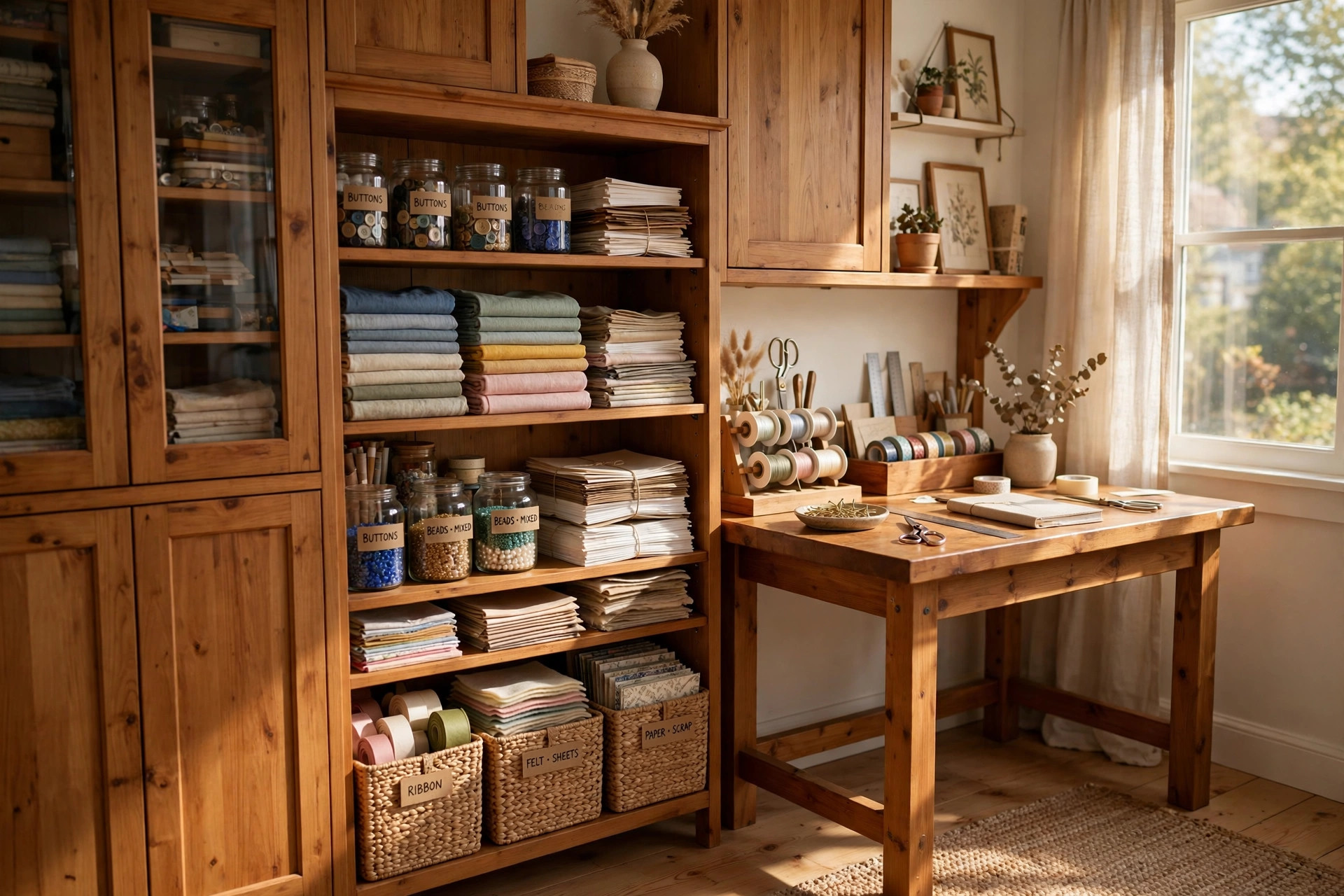

A craft room needs order. Paper, fabric, beads, paint, and tools spread fast. A good cabinet holds them all. This top rated craft room storage cabinets buying guide will help you pick the right one. You will learn what to look for, which types fit small rooms, what they cost, and how to keep them in good shape for years.
Why Good Storage Cabinets Matter in a Craft Room
Crafts make mess. A room with no storage fills with bins and loose piles. You lose scissors. You buy the same thread twice. Projects slow down. A good cabinet changes all of that. It gives every item a home. It turns a cluttered spare room into a place where you can sit down and start work in minutes.
Storage also protects your supplies. Paper warps when it lies in stacks on a table. Sun fades fabric left out on a chair. Paint dries when lids sit open in a drawer full of junk. Closed cabinets with real shelves keep dust off and light out. Your supplies last longer, and you waste less money replacing them.
A tidy room also helps you think. Many crafters say they make better work when the table is clear. Kids and guests can use the room too when sharp tools and small parts stay behind closed doors. For all these reasons, the cabinet is the most important piece of furniture in a craft room.
What to Look for When You Choose a Cabinet: Top Rated Craft Room Storage Cabinets Buying Guide
Start with your list of supplies. Write down what you own and what you plan to buy. Then match the cabinet to the list, not the other way around.
Size and Depth
Measure your wall space first. Leave at least three feet of open floor in front of the cabinet so the doors can swing open. Standard craft cabinets are 12 to 24 inches deep. Shallow cabinets, about 12 inches deep, fit paper and small jars and keep a small room open. Deep cabinets hold fabric bolts and sewing machines but eat floor space.
Height matters too. Tall cabinets use wall space and hold a lot. Short cabinets can double as a cutting table if you add a board on top. For more ideas on mobile storage, see this guide to buy slim rolling pantry carts online in colorado.
Shelves and Adjustability
Look for shelves you can move up and down. Craft supplies come in all shapes. One day you store paper packs, the next day you store a lamp. Adjustable shelves let you change the layout without buying new furniture. Peg holes spaced one inch apart give you the most options.
Drawers Versus Doors
Drawers are best for small items like beads, buttons, and ribbon. Doors with shelves behind them suit big items like fabric and paint cans. The best cabinets mix both. Shallow drawers on top hold tools you reach for often. Deep shelves below hold bulky items.
Build Quality and Materials
Solid wood costs more but lasts for decades. Medium-density fiberboard with a laminate finish is cheaper and looks fine for most rooms. Check the back panel. Cheap cabinets use thin cardboard backs that bow over time. A plywood or hardboard back holds screws for extra shelves. Pull on the drawers in the store or read the weight rating online. Full-extension drawer slides let you reach items at the back of a deep drawer.
Doors, Locks, and Lighting
Glass-front doors look nice and let you see your stock. Solid doors hide clutter and block light. Some cabinets come with interior lights or wire grommets for cords. If you have kids or grandkids, pick a cabinet with a lock so scissors and glue guns stay out of small hands. The Container Store offers many craft storage systems with locking doors and clear bins.
Types of Craft Room Storage Cabinets
There is no single best type. Each type fits a different room and a different kind of crafter.
Armoire Cabinets
Armoire cabinets are tall and narrow with two doors. Many have fold-out tables hidden inside, which makes them a strong pick for small rooms. You open the doors, pull down the table, and work. When you close the doors, the room looks clean. They cost more than basic shelves, but they replace both a desk and a cabinet.
Base Cabinets with Countertops
Base cabinets stand about 34 inches tall and often have a countertop on top. They give you work space and storage in one unit. They are great under windows or along a long wall. Some models come on casters so you can roll them where you need them. If you like the idea of rolling storage, read the reviews in this makeup and cosmetics organizers reviews and buying guide for ideas on small rolling units that pair well with craft cabinets.
Wall-Mounted Cabinets
Wall cabinets hang above a desk or work table. They keep the floor clear, which helps in small or shared rooms. Make sure they mount into wall studs. Craft supplies are heavy. Paper and paint add up fast. A cabinet that pulls off the wall is a real hazard. Many wall cabinets are only 12 inches deep, which is perfect for jars, thread, and small boxes.
Cabinet and Drawer Towers
Narrow towers with many drawers suit beaders, quilters, and model builders. Each drawer can hold one color or one project. Labels on the fronts make it easy to find things. Plastic drawer towers cost the least but can tip if you pull out several heavy drawers at once. Anchor tall towers to the wall.
Specialty Sewing and Scrapbook Cabinets
Sewing cabinets have a cutout or lift for a sewing machine. Scrapbook cabinets have 12-inch square cubbies made for paper packs. These specialty units cost more, but they fit the gear perfectly. If you do one craft most of the time, a specialty cabinet can be worth the price. JOANN carries storage made for sewing rooms and paper crafters.
Cost and Price Ranges
Prices vary widely. A simple plastic drawer tower may cost 40 to 80 dollars. A basic laminate cabinet with doors runs 150 to 400 dollars. Solid wood cabinets start around 500 dollars and can pass 1,500 for large armoire units with fold-out tables. Specialty sewing cabinets often land between 600 and 1,200 dollars.
Set your budget before you shop. Then compare value, not just price. A 300-dollar cabinet that lasts ten years costs less per year than a 120-dollar cabinet that falls apart in two. Check what is included. Some units ship with baskets and dividers. Others charge extra for every accessory. Delivery fees and assembly time count too. Many buyers browse Wayfair and IKEA to compare prices across brands, while Home Depot stocks sturdy options you can see in person.
Watch for sales around back-to-school season and the winter holidays. Floor models and open-box units at local stores can save you 20 to 40 percent. Buying used can work, but inspect the shelves for sag and the hinges for wear before you pay.
Remember the hidden costs. Flat-pack cabinets need assembly time. A large armoire may take two people two hours to build. Some stores offer assembly for a fee, which can be worth it if you are not handy. Delivery for heavy cabinets can add 50 to 150 dollars. Factor these into your budget so the final price does not surprise you.
Care and Upkeep
Good care keeps a cabinet looking new and working well. Dust the top and shelves once a month. A damp cloth removes most dirt. Dry the surface right away so moisture does not soak into laminate edges.
Tighten screws and hinges once a year. Doors go out of line with daily use. A small turn of a hinge screw fixes most sagging doors. Wax the drawer slides with a candle stub or a bit of paste wax if drawers start to stick.
Keep the cabinet out of damp basements unless it is made for them. Wood and fiberboard swell with moisture. Do not pile weight on top beyond what the maker lists. If shelves start to bow, add a center support bracket or move heavy items to lower shelves. For more upkeep tips, Family Handyman has plain guides on simple furniture repair.
Label everything. Small labels on drawers and bins save time and keep the system working. When you can see what is inside, you put things back where they belong.
Safety Tips
Safety is easy to forget in a craft room, but it matters. Anchor every tall or narrow cabinet to the wall with the hardware that comes in the box. Children climb. Pets bump into things. An anchored cabinet will not tip over.
Do not store flammable liquids like paint thinner or spray adhesive in a closed cabinet near a heat source. Keep a small fire extinguisher in the room if you use heat guns or irons often. Ventilate the room when you work with strong glues or paints.
Keep sharp tools in locked drawers if children visit. Heavy items belong on low shelves so they cannot fall on anyone. Do not overload a wall cabinet. Check the weight limit in the manual and stay under it. Consumer Reports tests furniture for tip-over risks and publishes clear safety ratings worth reading before you buy.
Frequently Asked Questions
How deep should a craft room storage cabinet be?
Twelve inches is the most common depth and works for paper, thread, and jars. Choose 18 to 24 inches if you store fabric bolts, sewing machines, or bulky bins. Deeper cabinets hold more but make small rooms feel cramped.
What is the best cabinet material for a craft room?
Solid wood is the strongest and lasts longest. Laminate over fiberboard costs less and works well in dry rooms. Avoid bare particle board in damp spaces because it swells. Check that shelves are at least three-quarters of an inch thick to resist sagging.
Can I use kitchen cabinets in a craft room?
Yes. Kitchen base cabinets are sturdy, deep, and often cheaper than specialty craft furniture. Many crafters pair them with a long countertop to make a work surface. You can find more storage pairing ideas in this best garage workbench with storage for sale guide, which covers sturdy work surfaces for home workshops.
How do I organize supplies inside the cabinet?
Group like items together. Give each craft its own shelf or drawer. Use clear bins so you can see stock levels. Label the fronts. Keep the items you use daily at eye level and the rarely used items up high or down low.
Do I need a cabinet with a lock?
A lock helps if children, grandkids, or pets share the home. Scissors, rotary cutters, glue guns, and small parts can hurt a child. A simple key or magnetic lock on one cabinet keeps the risky tools separate from the safe supplies.
Where can I read more about organizing a craft space?
Decorating sites publish room tours and storage ideas that are easy to copy. Apartment Therapy and The Spruce both run regular craft room makeover features with photos and product lists.
A Final Word
The best cabinet is the one that fits your room, your budget, and your crafts. Measure first. List your supplies. Pick strong shelves and drawers you can adjust. Anchor it to the wall, label your bins, and enjoy a craft room that stays neat between projects. With the right storage, you spend your time making things instead of hunting for them. Visit a store to open the doors and test the drawers before you order. A few minutes of hands-on checking can save you years of regret.
References
Apartment Therapy. (n.d.). Home design ideas and inspiration. https://www.apartmenttherapy.com Consumer Reports. (n.d.). Product reviews and ratings. https://www.consumerreports.org Family Handyman. (n.d.). DIY home repair and maintenance. https://www.familyhandyman.com IKEA. (n.d.). Home furnishings. https://www.ikea.com JOANN. (n.d.). Fabric and craft supplies. https://www.joann.com The Container Store. (n.d.). Storage and organization products. https://www.containerstore.com The Home Depot. (n.d.). Home improvement products. https://www.homedepot.com The Spruce. (n.d.). Home and garden advice. https://www.thespruce.com Wayfair. (n.d.). Furniture and home goods. https://www.wayfair.com
Was this guide helpful?

About Lisa Anderson
The My Garden US editorial team writes practical, in-depth home and garden guides for American homeowners — tested advice, no fluff.
You May Also Like
Closet Organizer Systems Reviews and Buying Guide
March 23, 2026 0 views
Stackable Toy Storage Bins for Sale: A Practical Guide for American Homes
May 29, 2026 0 views
A Guide to Stackable Makeup and Cosmetics Organizers with Free Shipping
June 9, 2026 0 views