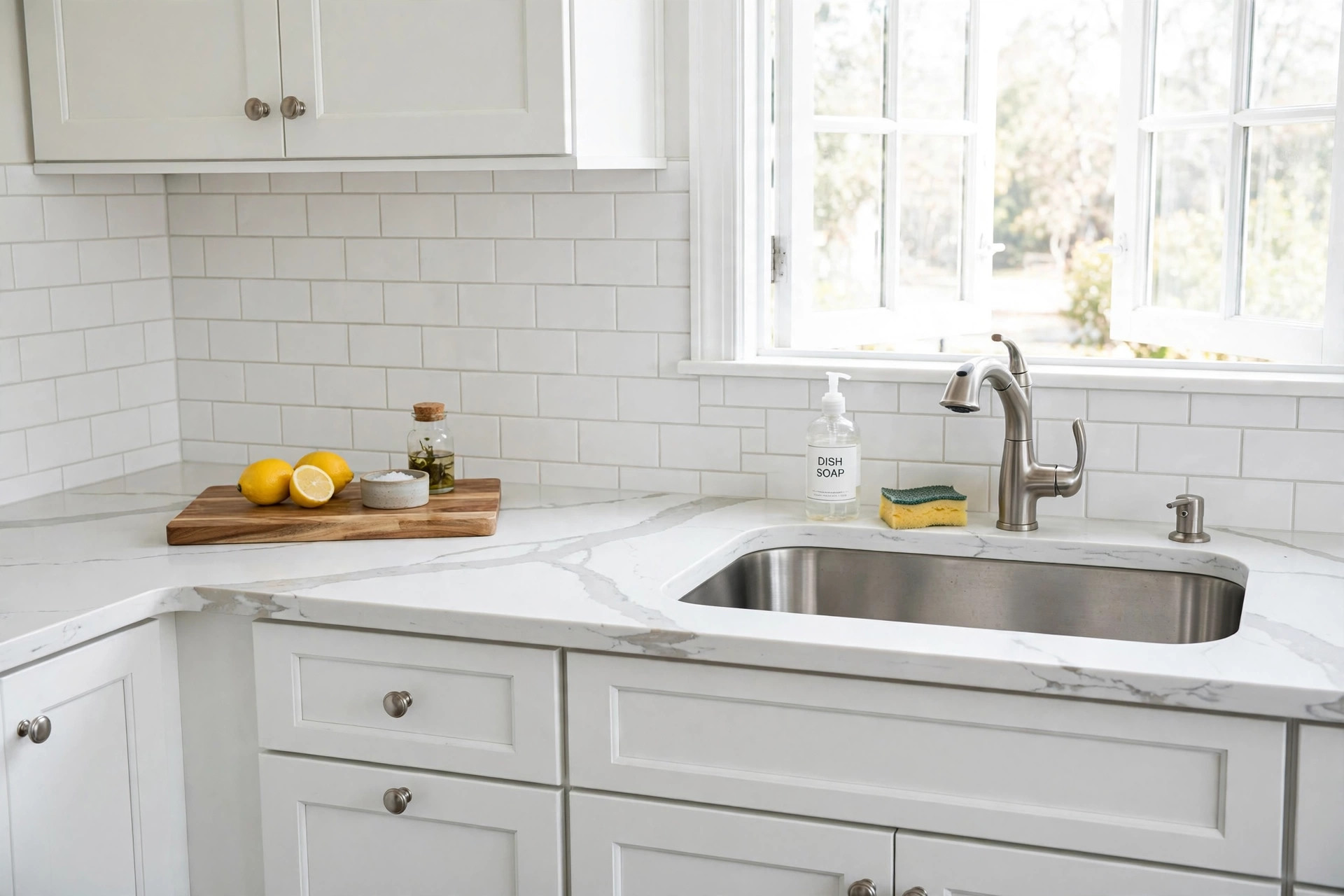

A search for quartz countertop installation for sale USA usually starts with one simple need. The old counters are worn, stained, or out of style. The homeowner wants a surface that looks clean and stays strong for years. Quartz fits that need better than most other choices. It is hard, calm in color, and easy to keep clean. This guide explains what quartz is, what to look for, what it costs, how the work is done, and how to find an installer in the United States.
Why Quartz Countertops Matter
The kitchen counter takes more wear than any other surface in the home. Hot pans sit on it. Knives slip. Coffee spills. Children draw on it. A good counter must stand up to all of this and still look fine at the end of the day.
Quartz is a man-made stone. Makers mix about nine parts crushed quartz with one part resin and color. The result is a slab that is very hard and nearly solid through. Stains cannot sink in the way they sink into granite or marble. The surface does not need yearly sealing. It keeps the same look year after year.
For many families this matters more than beauty alone. A kitchen is a work room. The counter should work first and look good second. Quartz does both. That is why retailers such as Home Depot and Lowe’s now stock dozens of quartz colors in their kitchen showrooms.
What to Look for When You Shop: Quartz Countertop Installation for Sale Usa
Not all quartz is the same. Slabs differ in thickness, finish, color pattern, and brand name. A careful shopper checks a few points before paying.
Thickness
Most slabs are two centimeters or three centimeters thick. Two centimeters is lighter and costs less. Three centimeters looks bolder at the edge and feels more solid. Most American kitchens use three centimeters.
Finish
Polished is the common finish. It has a soft shine and wipes clean. Honed has a dull, matte look. It hides fingerprints but shows marks a little more. Leathered has a light texture. Choose the finish that fits the room.
Color and Pattern
Quartz comes in plain white, light gray, and many marble looks. Dark colors such as black and deep gray are also sold. A plain color suits a small kitchen because it looks calm. A marble look suits a larger room where the pattern has space to show.
Edge Style
The edge is cut by the fabricator. Common edges are eased, bevel, bullnose, and ogee. Eased is simple and modern. Ogee has a classic curve. The edge costs extra in some shops, so ask about it early.
Brand Name and Warranty
Known makers stand behind their slabs. Brands like Caesarstone and Cambria offer warranties of ten years or more. Ask the seller what the warranty covers. Keep the paper in a safe place. Warranty details are often listed on maker sites, including Whirlpool partner pages and Consumer Reports buying guides, which compare counter materials side by side.
Types and Styles to Choose From
Shops group quartz into a few style lines. Knowing the groups helps you narrow the choice.
– Solid colors. Clean whites, grays, and beiges. Easy to match with any cabinet. – Marble looks. White with gray veins. They copy the look of marble without its upkeep. – Granite looks. Dark slabs with small flecks. Good with wood cabinets. – Concrete looks. Gray and dull. Popular in modern farmhouse kitchens. – Bold colors. Rare but sold. Blue, green, or red slabs for a strong accent island.
Pair the counter with the right cabinets. White quartz goes well with shaker cabinet doors, a classic American style. You can read more about cabinet styles in our guide to shaker cabinet doors buying guide usa. The back wall also matters. A simple subway tile keeps the eye on the counter, and our piece on kitchen backsplash tiles buying guide usa walks through the best choices.
Cost and Price
Price is the first question for most shoppers. Quartz is not cheap, but it costs less than high-end natural stone.
Across the United States, installed quartz usually runs from about fifty dollars to one hundred dollars per square foot. A normal kitchen needs about forty to sixty square feet. That puts the full job near two thousand to six thousand dollars. Material, edge cuts, sink cutouts, and old counter removal all add to the bill.
What changes the price?
– Color grade. Plain white is cheapest. Marble looks with deep veins cost more. – Slab brand. Top brands charge a premium. Lesser-known brands can cut the bill by twenty percent. – Sink cutout. An undermount sink needs a polished cutout. That is an extra charge. – Old counter removal. Some installers include it. Others charge a few hundred dollars. – Region. Labor costs more in big cities on the coasts and less in the middle of the country.
Get at least three written quotes. Each quote should list the slab brand, thickness, edge style, sink cutout charge, and removal fee. A quote that hides these details is a warning sign. The This Old House renovation guides suggest the same rule: compare line items, not just the bottom line.
Also ask about the slab itself. Some sellers offer “installation for sale” packages that bundle the slab and the labor in one price. Others sell the slab and let you hire your own fabricator. Bundles are simpler. Separate deals can be cheaper if you know a good fabricator. Remodeling advice at Bob Vila notes that bundle deals often include measurement and delivery, which saves time.
How Installation Works
The work follows a set order. It usually takes one to three weeks from first visit to finished counter.
Step 1: Template. The installer visits your home and makes a template of the counter shape. Some use wood strips. Others use a laser tool. This step takes about an hour.
Step 2: Fabrication. The shop cuts the slab to the template. Sink and cooktop holes are cut. Edges are shaped and polished. This takes one to two weeks.
Step 3: Old counter removal. On install day the old counter comes out. The crew checks that the cabinets are level and sound.
Step 4: Setting the slab. The new slab is set in place with adhesive. Seams are joined with colored epoxy. The crew levels the pieces so the seam is nearly invisible.
Step 5: Sink and finish. The sink is mounted. Faucet holes are drilled. Caulk is run along the wall. The crew cleans the surface and checks every edge.
Most jobs finish in one day once the slab is cut. A large kitchen with an island may take two days. Ask the installer how long the dust and noise will last so you can plan meals. If your remodel includes new floors too, our guide to vinyl plank flooring buying guide usa can help you plan the full order of work.
Seam Placement and Layout
Seams are the thin joints where two slab pieces meet. A good fabricator plans them so they are hard to see.
Long counters almost always need at least one seam. Slabs come in fixed sizes, and few kitchens fit in one piece. Ask the installer to place seams away from the sink and the cooktop, where water and heat are strongest. A seam near the sink can weaken over time.
Look at the vein pattern before cutting starts. On marble-look quartz, the veins should flow across the seam like one stone. Good shops book-match the pieces so the pattern lines up. This small detail makes a big difference in how fine the finished counter looks.
Corners also need care. An inside corner should be cut round, not sharp. Sharp inside corners can crack under stress. A trained fabricator knows this and cuts accordingly. When you check the installer’s past work, look closely at the seams and corners. They tell you more about skill than any sales talk.
Care and Upkeep
Quartz asks for little care. That is one of its main selling points.
– Wipe spills with a damp cloth and mild soap. – Use a cutting board. Knives can scratch the surface. – Use a trivet or pad under very hot pans. Quartz resists heat, but sudden high heat can mark it. – Do not use harsh cleaners, bleach, or oven cleaner. They can dull the resin. – Clean dried food with a plastic scraper, not a metal blade.
Unlike granite, quartz never needs sealing. A yearly sealant coat is one chore you can forget. Energy-conscious buyers sometimes pair quartz with efficient appliances; the ENERGY STAR program rates many kitchen appliances for home use. And if you are choosing new machines to go with the new counters, GE Appliances and Bosch both publish care guides for modern kitchens.
Safety
Quartz is safe in the home, but a few points deserve care.
The slab is heavy. A full slab can weigh several hundred pounds. Let trained crews move it. Do not try to carry it yourself.
Cutting quartz makes fine dust. Good shops cut with water and masks. Ask your installer how they control dust. A clean shop is a safe shop.
The resin in quartz is cured and stable once the slab is made. Food contact is safe. Still, keep cutting boards between raw meat and the counter, as with any surface.
Check local rules for sink and dishwasher hookups. A licensed plumber should connect the drain. This keeps your warranty valid and your home up to code.
Questions People Ask
How long does a quartz counter last? With normal care, twenty years or more. The color does not fade. The surface does not wear thin. Many makers back it with a long warranty.
Can I put hot pans on quartz? Brief contact is fine, but do not set a red-hot pan straight from the burner on the slab. Use a trivet. Repeated high heat can discolor the resin over time.
Does quartz stain? Almost never. Coffee, wine, and tomato sauce wipe off. Long sitting of strong dyes, such as turmeric or hair dye, may leave a mark. Wipe spills soon and you will have no trouble.
Is quartz cheaper than granite? Often yes. Installed quartz usually costs about the same as mid-grade granite and less than marble. It also saves the cost of yearly sealing.
Can quartz be repaired if it chips? Small chips can be filled with color-matched epoxy by a pro. Large breaks may need a new piece. Ask your installer about their repair policy before the work starts.
Should I choose quartz or butcher block? It depends on the use. Quartz is harder and needs less care. Wood is warmer to the touch and can be sanded fresh. If you like a natural wood look, see our guide to butcher block countertops buying guide usa before you decide.
Final Word
A quartz counter is a long-term buy. Take time to compare slabs, get written quotes, and check the installer’s past work. Ask for the warranty in writing. Plan the install date around your daily routine. Done right, the new counter will serve your kitchen for decades with little more care than a daily wipe. For shoppers across the country, quartz countertop installation for sale USA is a market full of choice. A calm, step-by-step approach will find the right slab at a fair price.
References
Bob Vila. (n.d.). Home improvement advice. https://www.bobvila.com Bosch. (n.d.). Home appliances. https://www.bosch-home.com Consumer Reports. (n.d.). Product reviews and ratings. https://www.consumerreports.org ENERGY STAR. (n.d.). Energy efficient products. https://www.energystar.gov GE Appliances. (n.d.). Kitchen and home appliances. https://www.geappliances.com Lowe’s. (n.d.). Home improvement products. https://www.lowes.com The Home Depot. (n.d.). Home improvement products. https://www.homedepot.com This Old House. (n.d.). Home renovation guidance. https://www.thisoldhouse.com Whirlpool. (n.d.). Home appliances. https://www.whirlpool.com
Was this guide helpful?

About Jennifer Lee
The My Garden US editorial team writes practical, in-depth home and garden guides for American homeowners — tested advice, no fluff.
You May Also Like
Dishwasher Third Rack: USA Online Deals and a Plain Buying Guide
April 20, 2026 0 views
Where to Find Dual Fuel Ranges Deals Near Me
August 5, 2026 0 views
Under Sink Filters USA Online Deals: A Complete Buying Guide
February 19, 2026 0 views