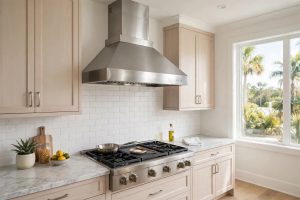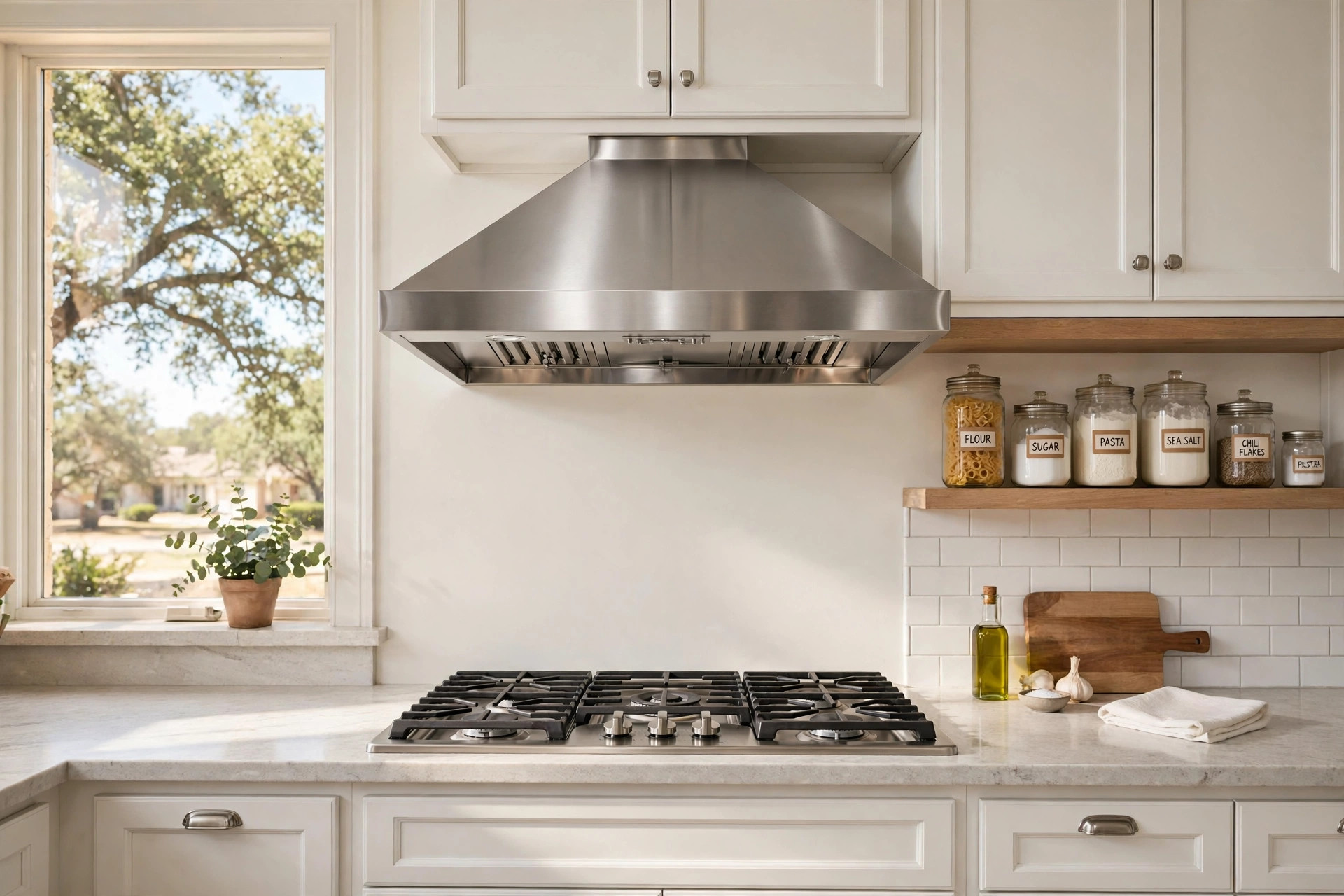

A range hood is the fan that hangs over a kitchen stove. It pulls smoke, grease, steam, and cooking smells out of the air. In Texas, where summers run hot and heavy cooking is common, stainless range hoods texas homes usa searches show that many buyers want a unit that is strong, easy to clean, and built to last. This guide gives the plain facts: what the hood does, which types exist, how to size and vent one, what it costs, and how to keep it working well.
Why a Range Hood Matters in a Texas Kitchen
Texas kitchens face two extra demands. The first is heat. Gas burners, frying pans, and big pots of chili or gumbo throw a great deal of heat into the room. The second is grease. Frying chicken, searing meat, and cooking with oil send fine drops of grease into the air. Without a hood, that grease settles on cabinets, walls, and ceilings. Over time it turns into a sticky film that is hard to wash off.
A good hood captures the smoke and grease before they spread. It pulls the hot air up and sends it outside through a duct. The kitchen stays cooler. The air stays cleaner. Cabinets and walls stay free of grease. In homes with open floor plans, which are common in Texas, this matters even more. Smoke from the stove can drift into the living room in minutes. A hood stops it at the source.
A hood also helps with smells. Strong cooking odors can linger in a house for a whole day. A hood vents them out of the home. For families who cook daily, this is one of the most valued features of a range hood.
There is a health point too. Gas stoves give off small amounts of gases such as nitrogen dioxide. Studies have linked these gases to breathing problems, above all in children. A hood that vents to the outside removes much of these gases along with the smoke. For a fuller look at how to pick the right size and power, see our stainless range hoods buying guide.
What to Look For When You Buy: Stainless Range Hoods Texas Homes Usa
The most important number on a hood is CFM. CFM stands for cubic feet per minute. It tells how much air the fan can move each minute. A small electric cooktop may need only 300 CFM. A large gas range with high-heat burners may need 600 to 1,200 CFM. Gas ranges need more power than electric ones because they give off more heat and fumes.
Duct size is the second key point. Most hoods use round or rectangular ducts, often six, seven, or eight inches across. A wider duct lets air leave with less noise and less strain on the motor. Long runs of duct, or runs with many bends, need a stronger fan. Short, straight runs work best.
Noise is measured in sones. A rating near 1 sone is very quiet. A rating above 6 sones is loud. In a quiet home, aim for a hood that runs at low speed under 3 sones. Many hoods have four or more speeds. Low speed handles light cooking. High speed handles searing and frying.
The filter matters as well. Most stainless hoods use baffle filters made of curved metal plates. They trap grease well and can go in the dishwasher. Some small hoods use mesh filters, which are lighter but need cleaning more often. Avoid hoods whose filters are hard to remove. You will clean them often, and hard jobs get skipped.
Check the lighting. Most hoods have built-in lights that shine down on the cooktop. LED lights are best. They use little power, give clear light, and last for years. Two or three bulbs are common on wide hoods.
Last, look at the steel itself. Good stainless steel has a clean brushed finish and feels solid. Thin, cheap metal dents with ease and may show stains. A hood is a long-term fixture. It should feel like one. Reviews from independent testing groups can help you compare build quality; see Consumer Reports and The Spruce for buyer guides.
Types of Stainless Range Hoods
Wall-mount hoods are the most common type. They hang on the wall over a range that stands against the wall. The hood has a chimney shape that runs up to the ceiling. They suit most Texas kitchens and come in many widths, from 24 to 48 inches. A wall of ideas from This Old House shows how these hoods fit into full remodels.
Island hoods hang from the ceiling over a cooktop set in a kitchen island. They need strong fans because there is no wall to help catch the rising smoke. They also cost more and need careful duct work through the ceiling. But they look striking in open kitchens.
Under-cabinet hoods slide under the cabinet above the stove. They are small and plain. They cost less than wall-mount hoods. They work fine for light cooking, but they may struggle with big gas ranges. In many Texas homes with standard cabinets, these are a low-cost upgrade.
Insert or liner hoods sit inside a custom wood surround. The liner is the working part, and the surround matches the kitchen cabinets. This gives a clean, built-in look. Inserts cost more, but they let the hood blend with the room.
Professional-style hoods are large, heavy, and very strong. They pair with professional-style gas ranges. They often need 900 CFM or more. They are a fine match for cooks who sear, wok-fry, and cook with high heat often. Check sizing advice from maker guides such as GE Appliances and Whirlpool when you plan one.
Sizing and Venting in Texas Homes
Width comes first. The hood should be as wide as the cooktop, or a little wider. A 30-inch range needs a 30-inch hood. A 36-inch range needs a 36-inch hood. Wider hoods catch smoke that rises and spreads at the edges.
Mounting height comes second. For a gas range, most makers advise 24 to 30 inches between the cooktop and the bottom of the hood. For an electric cooktop, 20 to 24 inches is common. Too high, and the hood misses smoke. Too low, and it may be a fire risk or block your view of the pans.
Venting to the outside is the best choice. The duct should run as short and straight as possible. In many Texas ranch-style homes, the duct can go straight up through the roof. In two-story homes, it may run out a side wall. Keep bends few. Each sharp bend cuts air flow.
Some kitchens cannot have a duct. Then a ductless hood with charcoal filters is an option. These hoods pull air in, pass it through a filter, and blow it back into the room. They catch some grease and smells, but they cannot remove heat or gases. In a Texas kitchen with heavy cooking, a ducted hood is worth the extra work.
Hood height and ceiling height matter too. Texas homes often have nine- or ten-foot ceilings, and some have vaulted ceilings. A wall-mount hood with a tall chimney cover can fill the gap. Island hoods need ceiling support and a long duct. Plan this before you buy. Home project guides at Bob Vila walk through venting choices in detail.
Local codes may set rules. Some Texas cities require a hood over a gas range, or set minimum CFM for new builds. A permit may be needed when you cut a new roof vent. Check with your city before work starts.
Cost and Price Ranges
A basic under-cabinet stainless hood costs about 150 to 400 dollars. It will serve a small kitchen with light cooking. Mid-range wall-mount hoods cost 400 to 1,200 dollars. They have stronger fans, better lights, and thicker steel. High-end and professional-style hoods cost 1,200 to 3,000 dollars or more.
Installation adds to the bill. A simple swap of one hood for another may cost 200 to 400 dollars. Adding a new duct through a wall or roof can cost 500 to 1,500 dollars, based on length and roof type. Electrical work, if a new outlet is needed, adds more. For current prices, check retailer listings at Lowe’s and Home Depot, and compare models at our stainless range hoods for sale page.
Running cost is small. A hood uses little power. Even a strong fan may draw less than 300 watts on high. LED lights add almost nothing. Over a year, most hoods cost only a few dollars to run. Look for models with an ENERGY STAR mark for the best efficiency.
Warranties run from one to five years. Longer warranties often cover the motor. Keep the receipt and register the product with the maker.
Care and Upkeep
A range hood works hard, and grease builds up fast. Clean the grease filters every one to three months. If you fry often, clean them each month. Baffle filters can go in the dishwasher. Mesh filters can too, but check the manual first. Do not wait until grease drips. Dripping grease is a fire risk.
Wipe the outside of the hood each week with a soft cloth and mild dish soap. Wipe with the grain of the brushed steel. Never use steel wool or harsh scrub pads. They scratch the finish. For tough grease spots, use a kitchen degreaser made for stainless steel. Rinse with a damp cloth and dry at once. Water spots form when drops dry on steel.
If you have a ductless hood, change the charcoal filters every three to six months. They cannot be washed. Old charcoal stops catching smells.
Check the duct once a year. Look for loose joints or built-up grease inside the duct. A blockage cuts power and raises noise. If the fan sounds loud or moves little air, the duct may be the cause.
Clean the lights when you wipe the hood. Grease on a light cover dims the light. Most covers pop off with a gentle press. Replace burned-out bulbs with the same type the maker advises.
A hood that is cleaned often lasts longer and runs quieter. The job takes only minutes. Make it part of your normal kitchen routine.
Safety Points
Keep a safe distance between the hood and the cooktop. Follow the maker numbers, not a guess. Too close can be a fire risk. Too far lets smoke escape.
Clean filters matter for safety. Grease is fuel. A filter thick with old grease can catch fire if a pan flares up. Monthly cleaning of filters is the best guard.
Never leave hot oil unattended. Even the best hood cannot stop a grease fire once it starts. Keep a lid or a sheet pan near the stove. If a small pan fire starts, slide the lid on and turn off the heat.
Turn the hood on before you light the burners. Let it run a few minutes after cooking ends. This clears the last smoke and heat from the air.
If the hood plugs into an outlet, do not run the cord near hot surfaces. If it is hardwired, have an electrician do the wiring. A bad wire in a greasy hood is a hazard.
Watch for back-drafting. A very strong hood can pull air down a gas water heater vent in the same home. This can bring fumes into the room. In airtight homes, a make-up air vent may be needed for hoods over 400 CFM. An HVAC pro can advise.
Frequently Asked Questions
How many CFM does a stainless range hood need in Texas?
It depends on the cooktop. For a standard 30-inch gas range, 300 to 600 CFM is common. For a 36-inch gas range or a professional-style range, 600 to 1,200 CFM fits better. Electric cooktops need less. Long duct runs need more power.
Should the hood vent outside or use a ductless filter?
Venting outside is better. It removes heat, smoke, grease, and gases. A ductless hood with charcoal filters only catches some grease and smells. It cannot remove heat. In a Texas kitchen with heavy cooking, a ducted hood is the right choice when it is possible.
How wide should the hood be?
As wide as the cooktop, or wider by a few inches. A 30-inch range needs at least a 30-inch hood. A 36-inch range needs a 36-inch hood. For island cooktops, go a little wider, since there is no wall to help catch smoke.
How often should I clean the grease filters?
Every one to three months for normal cooking. Every month if you fry often. Wash baffle filters in the dishwasher. Let them dry fully before you put them back. Clean filters cut fire risk and keep the fan strong.
Can I install a range hood myself?
A simple swap of one under-cabinet hood for another is a fair do-it-yourself job for a handy homeowner. New ducts through a wall or roof, new wiring, or a heavy island hood should be done by a licensed pro. Gas and roof work carry real risks. If you pair the hood with a new cooktop, read our gas kitchen ranges buying guide as well.
A Final Word
A stainless range hood is a working tool, not just a kitchen ornament. In Texas homes, where the cooking is bold and the summers are hot, it keeps the kitchen cooler, cleaner, and safer. Pick the right width and CFM. Vent to the outside when you can. Keep the filters clean. Do these plain things, and the hood will serve the home well for many years.
References
Bob Vila. (n.d.). Home improvement advice. https://www.bobvila.com Consumer Reports. (n.d.). Product reviews and ratings. https://www.consumerreports.org ENERGY STAR. (n.d.). Energy efficient products. https://www.energystar.gov GE Appliances. (n.d.). Kitchen and home appliances. https://www.geappliances.com Lowe’s. (n.d.). Home improvement products. https://www.lowes.com The Home Depot. (n.d.). Home improvement products. https://www.homedepot.com The Spruce. (n.d.). Home and garden advice. https://www.thespruce.com This Old House. (n.d.). Home renovation guidance. https://www.thisoldhouse.com Whirlpool. (n.d.). Home appliances. https://www.whirlpool.com
Was this guide helpful?

About Robert Taylor
The My Garden US editorial team writes practical, in-depth home and garden guides for American homeowners — tested advice, no fluff.
You May Also Like
Garbage Disposal Installation for Texas Homes: A Practical Guide
September 20, 2026 0 views
Kitchen Pantry Cabinets: A Guide for American Homes
February 19, 2026 0 views
Undermount Stainless Sinks: Finding the Best USA Online Deals
July 6, 2026 0 views