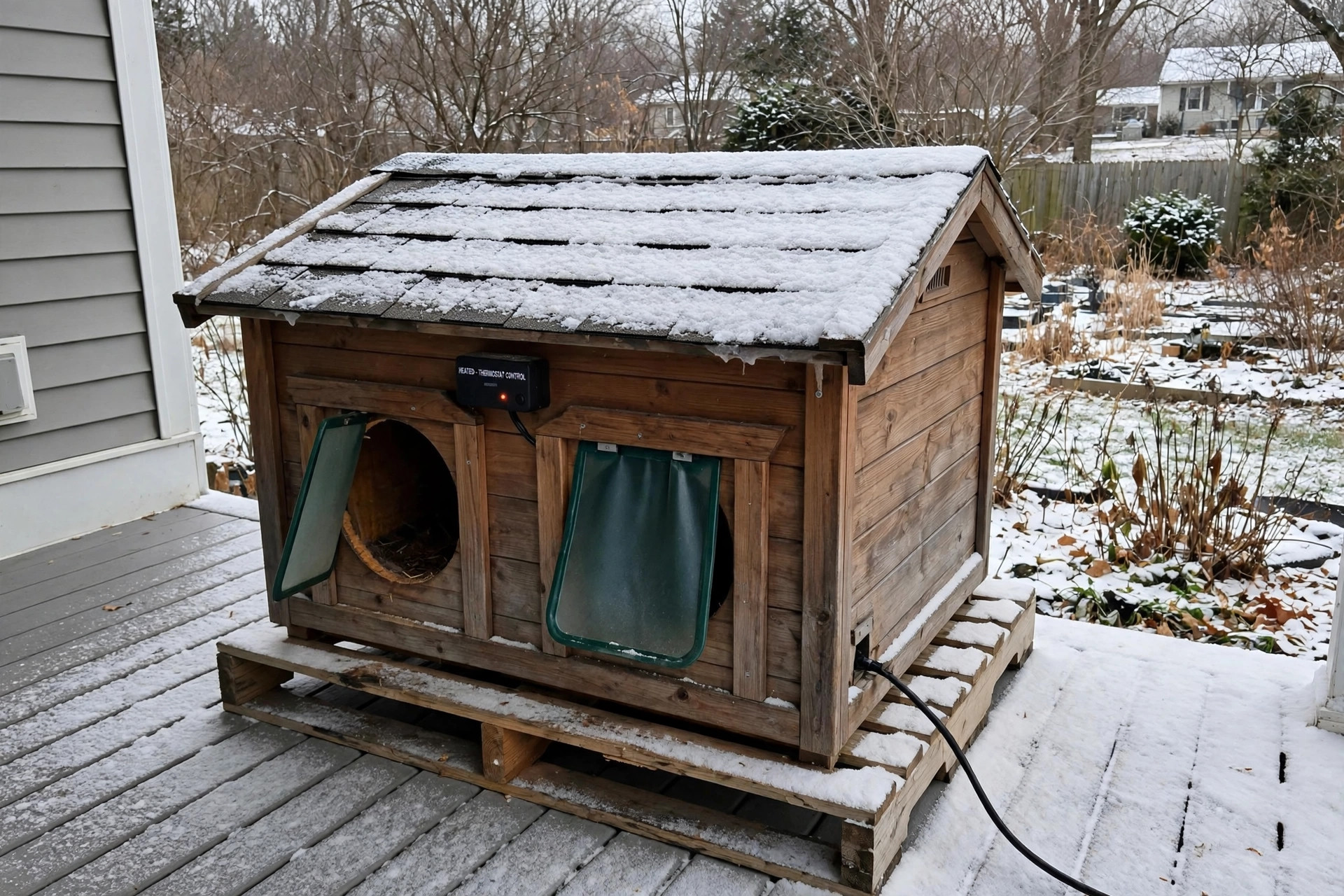

Winter is hard on outdoor cats. Feral cats, stray cats, and barn cats face snow, ice, and bitter wind. Many have no warm place to go. A heated outdoor cat house for multiple cats gives them shelter. It provides steady warmth in one shared space. This guide explains how these houses work. It shows what to look for when you buy one. It covers types, costs, care, and safety. By the end, you will know how to pick the right house for your colony.
Why a Heated Outdoor Cat House for Multiple Cats Matters
Cats can survive cold weather. But cold takes a toll. A cat that spends all winter outside burns extra energy to stay warm. It may lose weight. Its ears and tail may suffer frostbite. Water freezes. Food gets scarce. Kittens and old cats face the greatest risk.
A heated outdoor cat house for multiple cats answers these problems. The heat pad inside keeps the floor warm. The walls block wind and rain. Several cats can share body heat. This lowers the strain on each animal. One large house costs less than several small ones. It also takes up less room on a porch or in a yard.
People who feed community cats know the pattern. The same cats return night after night. A warm shelter keeps them in one spot. This makes feeding easier. It makes trap-neuter-return work easier too. Caregivers can check the house each day. They can see which cats are using it. They can spot illness early.
What to Look For When You Choose: Heated Outdoor Cat House for Multiple Cats
Not all heated shelters are equal. Look at size first. A house for multiple cats needs room. Each cat should have space to curl up. The cats should not be forced to pile on top of each other. For two cats, a house of about two feet by three feet works. For three or four cats, go larger. A bigger house holds heat better. But it must not be so big that warmth escapes.
Check the heating element. Most models use an electric heated pad. The pad should turn on only when a cat sits on it. This is called pressure activation. It saves power. It prevents overheating. The pad should hold a steady temperature. Around 100 degrees Fahrenheit is normal. It should never get hot to the touch.
Look at the materials. The house should be weatherproof. Solid wood with a shingled roof lasts well. Heavy plastic resins also work. Avoid thin plastic. It cracks in the cold. Avoid fabric-only houses for outdoor use. They soak through in rain.
Insulation matters. Foam insulation in the walls and floor keeps heat in. Some houses use reflective linings. These bounce heat back toward the cats. A door flap helps too. It keeps wind out while cats can still enter. Two exits are best. A second door gives a scared cat a way out. This makes shy cats more willing to use the house.
Types of Heated Houses for Several Cats
Several designs exist. Each suits a different setting.
Electric wooden houses. These are the classic choice. They look like small cabins. They often hold two to four cats. They use a low-wattage heating pad. They need a nearby outlet. They work well on porches and decks.
Insulated plastic houses. These are lighter than wood. They are easy to move. Many have two rooms inside. This lets cats spread out. The plastic wipes clean. Some models stack. These suit caregivers with growing colonies.
Extra-large barn shelters. These hold five or more cats. They often look like small sheds. They may have several heated pads. They work well on farms. They cost more. They need more space.
Converted storage boxes. Some people build their own. They cut door holes in large plastic bins. They add straw and a heated pad. This is the cheapest path. It works. But a purpose-built house is sturdier and safer.
For a single feral cat, a smaller model may do. See our guide to a heated cat house for outdoor feral cats for one-cat options. If your cats also need a safe outdoor run, read about an outdoor cat enclosure for safe garden roaming.
Cost and Price
Prices vary by size and build. Small electric heated houses start near forty dollars. Mid-size models for two or three cats run from eighty to one hundred fifty dollars. Large multi-cat houses cost from one hundred fifty to three hundred dollars. Barn-size shelters can reach four hundred dollars or more.
Running costs are low. Most pads use twenty to forty watts. That is less than a light bulb. Running one pad all winter adds a few dollars to the electric bill. Pressure-activated pads use even less. They draw power only when a cat is inside.
Think about long-term value. A well-built house lasts several winters. Cheap models may need replacement each year. Spending more up front often saves money. It also spares the cats a mid-winter failure.
Buy from a trusted pet retailer. Stores like Chewy and PetSmart carry heated shelters from known brands. Local shops listed on Petco may stock them too. For building materials to make your own, Home Depot has insulation and weatherproof wood.
How to Set Up the House
Place the house in a sheltered spot. A porch is ideal. A deck with an overhang works too. Face the door away from the wind. Raise the house off the ground. A pallet or a few bricks will do. This keeps meltwater out.
Plug the pad into an outdoor-rated outlet. Use a cord rated for outdoor use. Keep the cord where cats cannot chew it. Run it along a wall. Tape it down if needed. Some caregivers use a timer. A timer limits heat to night hours. This is when cats need it most.
Put a little straw inside at first. Straw insulates well. It does not hold moisture. Do not use blankets or towels. They get wet and freeze. Once the cats find the house, you can leave the straw or remove it. Many cats prefer the bare heated pad.
Give the cats time. Shy cats may sniff the house for days before entering. Do not force them. Place food a few feet away. Move it closer over several days. The cats will learn the house is safe.
Care and Upkeep
Check the house each week. Look at the pad. Make sure it still warms up. Feel it with your hand. It should feel warm, not hot. Check the cord for chew marks. Replace a damaged cord at once.
Clean the inside once a month. Remove old straw. Wipe the floor with a mild soap solution. Rinse and dry it well. Wash any removable pad covers. A clean house attracts fewer pests. It also smells better to the cats.
Before winter, inspect the roof. Fix leaks. Check the door flaps. Replace torn flaps. Flaps keep most of the wind out. In fall, test the heating pad. Plug it in. Press on it with your hand. It should start to warm within minutes.
Keep fresh water near the house. Water bowls freeze fast. A heated water bowl for outdoor cats solves this. Many caregivers pair a water fountain with the shelter. Our page on the best pet water fountain for multiple cats lists good options. Change the water daily in deep cold.
Safety
Safety comes first. Buy only pads made for pets. Human heating pads get too hot. They can burn a cat. Pet pads are pressure-activated and low-wattage. They are built for long use.
Check the product for safety marks. Look for UL or ETL listing. These marks mean the pad passed safety tests. The CPSC does not exist for this category, but national testing labs do the same job. Keep the cord away from water. Use a ground-fault outlet if you can. A ground-fault outlet cuts power if a short occurs.
Watch for signs of trouble. A pad that smells hot is bad. A pad with cracked wires is bad. Unplug it and replace it. Do not repair electric pads yourself.
Keep the house away from hazards. Do not place it near a road. Do not place it where dogs roam loose. A fence or enclosure adds safety. The ASPCA offers advice on feral cat care and colony management. The Humane Society of the United States also publishes guides for winter shelter.
Fire risk is low but real. Use only the pad that came with the house. Do not add extra heaters. Do not drape blankets over electric pads. Keep straw away from the cord plug. Straw is safe on the pad itself. It is the wiring that needs care.
Placing the House for Feral Colonies
Feral cats are wary. Place the house where the cats already go. Near a feeding station is best. Keep it a few feet from the food. Cats like a little distance between food and shelter. This feels natural to them.
Use more than one house for large colonies. Six cats need at least two houses. Cats have ranks. A low-ranking cat may avoid a house where a dominant cat sleeps. Extra houses give every cat a place.
Face doors toward a wall or fence. Leave a small gap. This gives cats a private entrance. It blocks the wind at the same time. In snow country, shovel a path to the house. Cats will not wade through deep drifts.
Mark the houses. A small sign that says “feral cat shelter” helps. Neighbors may wonder what the boxes are. A sign stops complaints. It may even win you a helper. Many people want to help. They just do not know how.
Health Notes for Multi-Cat Shelters
Sharing a house means sharing germs. Keep the house clean. Watch the cats for sneezing or runny eyes. A sick cat should see a vet if you can catch it. Trap-neuter-return programs often include basic health checks.
Spay and neuter every cat in the colony. Fixed cats fight less. They roam less. They are calmer in shared spaces. Local low-cost clinics can help. PetMD explains common cat illnesses and when to seek care. The American Kennel Club focuses on dogs, but its general pet safety tips apply to outdoor setups too.
Fleas and ticks bother outdoor cats. Ask a vet about safe treatments. Do not spray insecticide inside the house. The fumes harm cats. Clean bedding controls pests better than chemicals.
FAQ
How many cats can share one heated house? Most multi-cat houses hold two to four cats. The maker will state a number. Go by the floor space. Each cat needs room to lie down alone. When in doubt, buy the larger size.
Do heated cat houses use a lot of electricity? No. Most pads use twenty to forty watts. That is less than most light bulbs. A pad that runs all winter costs only a few dollars in power. Pressure-activated pads use less. They turn on only under a cat’s weight.
Can I use a heated cat house without an outlet nearby? Most heated houses need power. A few use microwavable heat discs. These stay warm for several hours. They work for mild cold. They are not enough for deep winter. An outdoor outlet or an extension cord is the best answer.
Is straw better than blankets inside the house? Yes. Straw repels moisture. Blankets absorb water and freeze. Frozen bedding chills cats. Use straw, not hay. Hay molds. Replace the straw when it looks flat or dirty.
Will raccoons or possums move into the house? They might. This happens with any outdoor shelter. A door flap sized for cats helps. Some caregivers feed at set times and remove food at night. This keeps wildlife away. The house itself rarely causes trouble.
Should the house have one door or two? Two doors are better. A second exit lets a timid cat escape. Cats will not enter a space that feels like a trap. Two doors make the house feel safe. Face the doors in different directions.
A Short Final Word
A heated outdoor cat house for multiple cats is a small gift with a large effect. It turns a cruel season into a bearable one. The cats sleep warm. They save energy. They stay near the food you provide. Pick a sturdy house. Size it for your colony. Keep it clean and check the pad. The cats will do the rest. They will find the warmth. They will come back each night. And you will know that, out in the cold, your cats have a warm place to call home.
References
American Kennel Club. (n.d.). Dog care and training resources. https://www.akc.org ASPCA. (n.d.). Pet care and animal welfare resources. https://www.aspca.org Chewy. (n.d.). Pet supplies. https://www.chewy.com Petco. (n.d.). Pet supplies and services. https://www.petco.com PetMD. (n.d.). Pet health information. https://www.petmd.com PetSmart. (n.d.). Pet supplies and services. https://www.petsmart.com The Home Depot. (n.d.). Home improvement products. https://www.homedepot.com The Humane Society of the United States. (n.d.). Animal protection and care. https://www.humanesociety.org The Spruce Pets. (n.d.). Pet care guides and product reviews. https://www.thesprucepets.com U.S. Consumer Product Safety Commission. (n.d.). Product safety information. https://www.cpsc.gov
Was this guide helpful?

About James Carter
The My Garden US editorial team writes practical, in-depth home and garden guides for American homeowners — tested advice, no fluff.
You May Also Like
Outdoor Rabbit Hutch for Cold Weather Climates: A Plain Guide
February 3, 2026 0 views
Dog Anxiety Vest for Thunderstorms and Fireworks: A Complete Guide
April 16, 2026 0 views
The Best Cat Brush for Long Haired Shedding Control: A Complete Grooming Guide
August 11, 2026 0 views