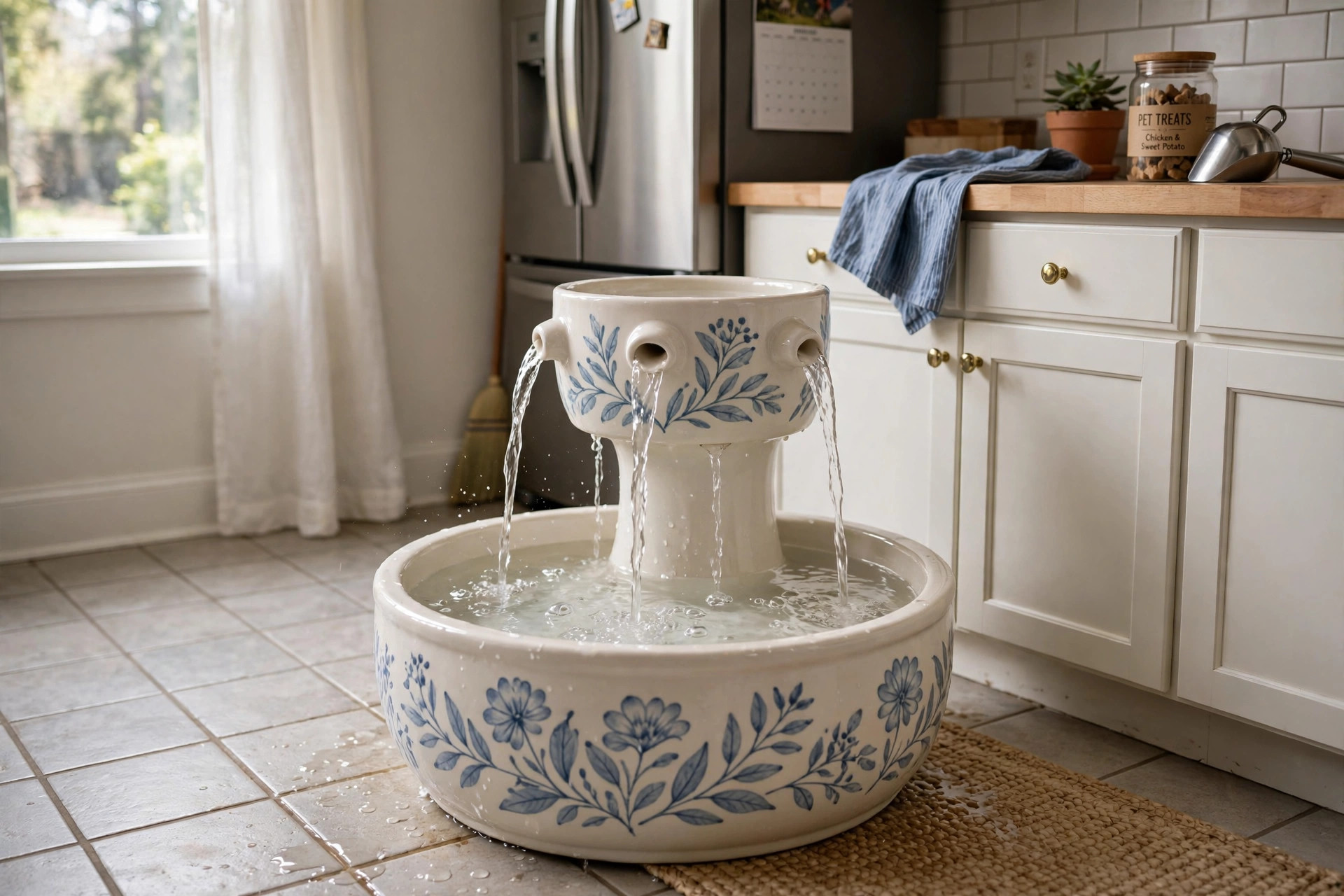

Why a Water Fountain Matters for a Multi-Cat Home
Cats do not drink enough water. This is a known fact among pet owners and vets. A regular bowl sits still. Still water can grow stale and collect dust. Many cats will walk past a full bowl and drink from a tap instead. They prefer moving water.
The best pet water fountain for multiple cats solves this problem. It keeps water in motion. Moving water stays fresh. It also holds more water than a bowl. That matters when you own two, three, or four cats.
Cats are at risk of urinary and kidney problems. These problems are common in older cats. Drinking more water helps the kidneys. It helps the urinary tract too. A vet source like PetMD notes that fresh water access is one of the simplest ways to support a cat’s health. A fountain makes fresh water easy.
With more than one cat, the need is bigger. One bowl empties fast. Two cats can drain a bowl by the afternoon. A fountain with a large tank can hold a gallon or more. That is enough for several cats for a full day.
There is another reason. Fountains add air to the water. The pump moves the water up and lets it fall. This adds oxygen. Oxygen keeps the water tasting fresh. Cats notice the taste. They drink more when the water tastes good.
What to Look for When You Shop: Best Pet Water Fountain for Multiple Cats
Not every fountain works well for a house with many cats. A small fountain made for one cat will not last. You need to check a few key points before you buy.
Capacity
Capacity is the most important point. A good multi-cat fountain holds at least half a gallon. Many good models hold a full gallon or more. One cat drinks about half a cup of water a day. Four cats need two cups a day. But cats waste water. They splash. Water also evaporates. A large tank gives you a margin of safety.
Look for a water level window if you can. It lets you see the level at a glance. You will know when to refill.
Pump Strength and Noise
A strong pump keeps the water flowing. It also resists wear. But some pumps are loud. Cats dislike loud noise. A loud fountain can scare a shy cat. The cat may refuse to drink from it.
Look for a pump that is marked quiet or ultra-quiet. A good pump hums softly. You should be able to hold a normal talk near the fountain. If you need to buy a new pump later, the pump should be easy to replace. Stores like Chewy sell spare parts for many brands.
Filter System
Most fountains use a carbon filter. The filter sits in the water path. It pulls out hair, dust, and bad tastes. In a multi-cat home, the filter works harder. More cats mean more hair and more use. You will need to change the filter every two to four weeks.
Some fountains use a foam filter too. The foam filter catches large bits before they reach the pump. This keeps the pump clean. It helps the pump last longer.
Material: Plastic, Ceramic, or Steel
Fountains come in three main materials. Each has a trade-off.
Plastic fountains cost less. They are light and easy to move. But plastic can scratch. Scratches hold germs. Some cats get chin acne from plastic dishes. A retailer like Petco carries plastic models at low prices.
Ceramic fountains are heavy and stable. A heavy base does not tip when a cat leans on it. Ceramic cleans well and does not hold odors. But ceramic can chip or break if dropped. It costs more.
Steel fountains are strong and clean. They resist germs. They look neat in a kitchen. Some cats dislike the metal taste at first. Most adjust in a day or two.
Ease of Cleaning
You must clean a cat fountain each week. Slime builds up in the pump and the tray. The cleaning should take less than ten minutes. Fountains with many small parts take longer. Fountains that come apart by hand are best. Dishwasher-safe parts are a plus.
Types of Cat Water Fountains
There are a few main designs. Each works in a different way.
Top-Flowing Fountains
Water flows from a spout at the top and falls into the tray. This design mimics a tap. Cats that like tap water love this type. The falling stream adds air. It is easy for cats to drink from the stream or the tray.
Free-Falling or Tiered Fountains
Water falls from one tier to another, like a small water feature. This gives cats two or three drinking levels. Tall cats and short cats can each find a good spot. These hold more water in most cases.
Bubble-Up Fountains
Water rises from a dome in the center. Cats drink from the dome or the rim. This design is quiet. The water does not fall far, so it makes little sound. It suits nervous cats.
Gravity Water Dispensers
These are not true fountains. A tank feeds a bowl as the level drops. There is no pump and no filter. They hold a lot of water. But the water does not move. They cost less. A store like Walmart sells them for a few dollars. They work as a backup, not as a first choice.
Cost and Price
Prices range from about 20 dollars to over 100 dollars. Here is what you get at each level.
Under 30 dollars. Basic plastic fountains. Small to medium size. They work for two cats. Filters are cheap. The pumps may be louder. These are fine to start with.
30 to 60 dollars. The sweet spot for most owners. Larger tanks. Better pumps. Quieter sound. Steel and ceramic options appear in this range. Most of the best multi-cat models sit here.
Over 60 dollars. Premium fountains. Large capacity. Very quiet pumps. Steel or ceramic build. Smart features like water level alerts appear here. These suit homes with four or more cats.
Do not forget the running cost. Replacement filters cost about 5 to 15 dollars for a pack. You will need a pack every one to two months. A new pump costs about 10 to 20 dollars. It lasts about a year or more with cleaning.
Care and Upkeep
A fountain needs care. This is the part many owners skip. Skipping it ruins the fountain.
Clean once a week. Take the fountain apart. Wash the tray, the spout, and the tank with warm water. Use a small brush for corners. Do not use soap on plastic parts unless you rinse well. Soap taste can keep cats away.
Change the filter every two to four weeks. In a multi-cat home, change it closer to two weeks. A used-up filter does not clean. It can even release what it caught.
Clean the pump. The pump has an impeller, a small spinning part. Hair wraps around it. Once a month, open the pump and pull out the impeller. Rinse it. This takes two minutes. It can double the life of the pump.
Use fresh water. Top up the tank each day. Once a week, empty it fully and refill. This keeps the water fresh. It also stops hard water scale.
If you go away for a weekend, fill the tank to the top. For longer trips, ask someone to check it. A fountain can run low in three days with four cats.
Safety Tips
A fountain runs on power. Water and power need care.
– Place the fountain away from walls where cords can get wet. The cord should run up and over, not down into water. – Keep the cord where cats cannot chew it. Use a cord cover if needed. – Never let the pump run dry. A dry pump burns out fast. Fill the tank before you plug it in. – Put the fountain on a flat, steady surface. Cats push fountains. A mat under the fountain catches spills. – The ASPCA reminds owners that clean water is a basic need. Check the water level each day, just like you would check food.
For outdoor setups, safety matters more. If your cats use a heated outdoor cat house for multiple cats in winter, do not put the fountain inside the house. Keep water in a sheltered spot nearby. Cold water freezes. A heated bowl may be safer in freezing weather.
Common Problems and Fixes
The pump is loud. The water may be low. Fill the tank. If it stays loud, the impeller may have hair on it. Clean it.
Slime in the tray. This is normal. Clean the tray each week. A brush works well. If slime returns fast, change the filter.
A cat will not use it. Put the fountain next to the old bowl. Let the old bowl run low. Most cats switch in a few days. Try a different flow setting if the fountain has one.
One cat guards the fountain. In a multi-cat home, a bossy cat may sit by the water. Add a second fountain or a backup bowl in another room. This is also why some owners add a cat enclosure for balcony apartment living usa to give cats more space and separate areas.
Water on the floor. Cats splash. Put a waterproof mat under the fountain. Keep it away from wood floors.
Related Long-Tail Phrases Worth Knowing
When you shop or search, these phrases can help you find the right model:
– large capacity cat water fountain for 4 cats – quiet ceramic cat fountain multi cat household – stainless steel pet water fountain with replaceable pump
These phrases match what real sellers use. A pet care guide at The Spruce Pets uses similar terms when it reviews fountains. Reading such guides helps you compare models side by side.
If you also own dogs, note that dog needs differ. A outdoor dog shower for muddy paws cleaning is a separate item for yard care. Cats and dogs can share a large fountain, but dogs drink much more. You will refill it more often.
FAQ
How big a fountain do I need for three cats?
Look for at least a half-gallon tank. A gallon is better. Three cats drink about a cup and a half a day, plus waste and splash. A gallon tank lasts two to three days.
How often should I change the filter?
Every two to four weeks. With three or more cats, change it every two weeks. The filter clogs faster with more cats. A clogged filter slows the flow.
Are plastic fountains safe for cats?
Yes, if you clean them well. Food-grade plastic is safe. But plastic scratches hold germs. Some cats get chin acne from plastic. If your cat has chin spots, switch to ceramic or steel.
Do cats really drink more from a fountain?
Most do. Cats like moving water. Studies and vet reports agree that cats drink more when water flows. The AKC also notes that fresh water habits matter for all pets, not just dogs. More water means healthier kidneys.
Can the fountain stay on all day?
Yes. That is how it is meant to run. The pump uses very little power. Keep the tank full. Never let it run dry.
What if I have a shy cat that fears noise?
Pick a bubble-up or free-falling model with a quiet pump. Place it in a calm spot. Let the cat approach on its own. Turn it on only when the cat is used to the sight of it. Some owners leave it off for a day so the cat can sniff it first.
A Short Final Word
The best pet water fountain for multiple cats is the one your cats will use and you will clean. Pick a large tank. Pick a quiet pump. Pick a material you can scrub in minutes. Change the filter on time. Do these simple things and your cats will drink more water each day. That is a small change with a large payoff. Their kidneys will thank you.
Retailers like PetSmart and Home Depot carry many models, so you can see them in person before you buy. Read the box. Check the tank size. Lift the unit to feel its weight. Then pick the one that fits your home and your cats.
References
American Kennel Club. (n.d.). Dog care and training resources. https://www.akc.org ASPCA. (n.d.). Pet care and animal welfare resources. https://www.aspca.org Chewy. (n.d.). Pet supplies. https://www.chewy.com Petco. (n.d.). Pet supplies and services. https://www.petco.com PetMD. (n.d.). Pet health information. https://www.petmd.com PetSmart. (n.d.). Pet supplies and services. https://www.petsmart.com The Home Depot. (n.d.). Home improvement products. https://www.homedepot.com The Spruce Pets. (n.d.). Pet care guides and product reviews. https://www.thesprucepets.com Walmart. (n.d.). Everyday low prices. https://www.walmart.com
Was this guide helpful?

About Jennifer Lee
The My Garden US editorial team writes practical, in-depth home and garden guides for American homeowners — tested advice, no fluff.
You May Also Like

Heated Dog House for Winter Cold Climates: A Complete Buyer’s Guide
June 7, 2026 0 views
Outdoor Chicken Coop for Backyard Hens USA: A Practical Guide
February 9, 2026 0 views
Best Cat Calming Diffuser for Multi Cat Homes
February 22, 2026 0 views