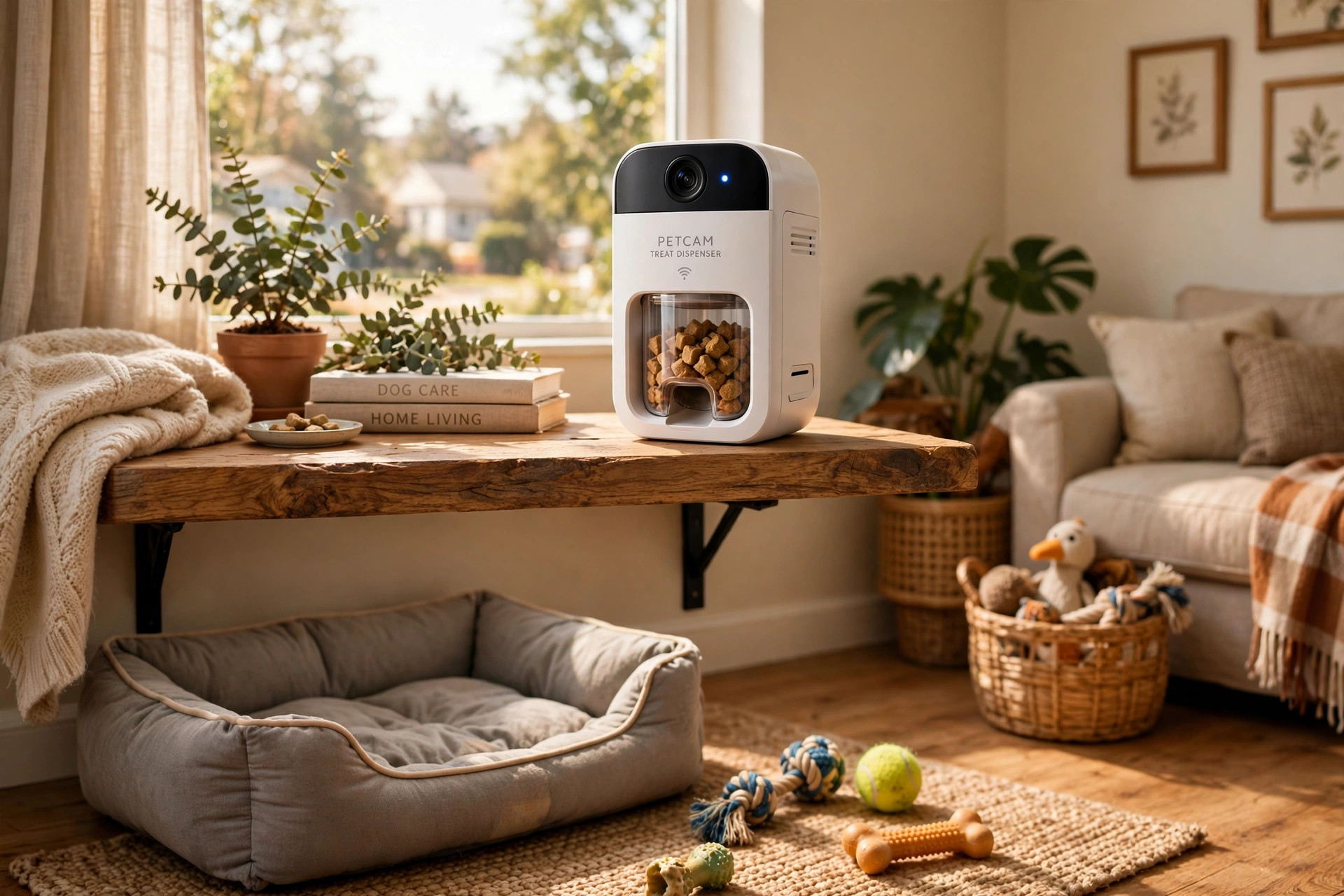

Many pet owners leave home each day with one question on their minds. How is the dog doing? Is the cat bored? A camera that also tosses treats can answer that question. The best pet camera with treat dispenser WiFi lets you see your pet live on your phone. It also lets you speak to your pet. With one tap, you can send a treat across the room. This guide explains what these devices do, how to pick one, and what to expect on cost and care.
Why It Matters
Dogs and cats spend long hours alone. A bored dog may chew shoes. A bored cat may scratch the couch. Worse, some pets show signs of stress when left alone for long. They bark. They pace. They wait by the door.
A camera with a treat dispenser does not replace a human. It does replace silence. When your dog hears your voice at noon, the day feels shorter. When a treat lands near the rug, the afternoon feels like play. Many trainers say short moments of contact help pets feel calm. A WiFi pet camera makes those moments possible from the office.
These devices also help with training. You can reward quiet behavior in real time. When your dog lies down instead of jumping at the window, you can send a treat at once. Timing matters in training. A camera that dispenses treats gives you perfect timing from miles away.
There is a safety side as well. If you see your pet chewing something risky, you can speak and stop it. If your pet looks sick or hurt, you can call a neighbor at once. The American Kennel Club notes that many common household items are dangerous to dogs, so seeing trouble early has real value.
What to Look for and How to Choose: Best Pet Camera with Treat Dispenser Wifi
Not every model works the same. Start with video quality. Look for at least 1080p video. The picture should be clear enough to read your pet’s mood. Night vision matters too. Pets move around after dark. Infrared night vision lets you check on them without turning on a light.
Two-way audio is a must. You need to hear your pet, and your pet needs to hear you. Cheap models give tinny sound. Read reviews to learn how the speaker sounds in real homes. Some models add a laser pointer for cats or a bark alert that pings your phone when it hears noise.
The treat dispenser is the heart of the device. Check the size of the treat bin. Small bins need filling every day. Large bins last a week. Check what treat sizes fit. Many units work only with round, firm treats about half an inch wide. Soft treats can jam the motor. Also ask how far the unit tosses treats. A good model throws treats ten to fifteen feet.
WiFi strength decides how well it all works. These cameras need a steady signal. Place the unit within range of your router. Some models use 2.4 GHz WiFi only. That is fine for most homes. Models with 5 GHz support give smoother video when the signal is strong.
Look at the app. You will use it every day. The app should load video fast. The treat button should be easy to tap. Test the app’s ratings before you buy. The PetMD site offers general pet health guidance that pairs well with daily check-ins through your camera.
Storage is another choice. Many brands store video clips in the cloud for a fee. Others include a slot for a memory card. Cloud plans often run two to five dollars a month. Local storage costs nothing after the card purchase. If you want to keep clips of cute moments, pick the option that fits your budget.
Types and Options
Three main types exist on the market today.
The first type is the countertop unit. It sits on a table or shelf. It has a wide lens and a large treat bin. These suit dogs well. They toss treats far, which dogs love to chase. Popular countertop models often add bark alerts and multi-pet recognition.
The second type is the wall-mounted unit. It screws into the wall at chest height. This keeps the camera safe from curious paws. Wall units work well in small apartments where table space is short. The trade-off is a smaller treat bin and a shorter toss range.
The third type is the compact cube for cats. It is small and quiet. It often has a lower treat toss, so treats land near the base. Many cat models add a laser toy. The Spruce Pets guide to pet cameras covers several of these compact designs.
Some buyers ask about a wifi dog camera with two way audio as a stand-alone device without treats. Those cost less. But the treat feature is what turns a camera into a reward tool. If training is your goal, the dispenser earns its price.
Outdoor models also exist. They watch the yard and toss treats on the patio. They cost more and need weather proofing. For most owners, an indoor unit aimed at the main room is enough.
Cost and Price
Prices span a wide range. Basic indoor pet cameras with treat dispensers start near 100 dollars. These have 1080p video, two-way audio, and a small treat bin. Mid-range models run 150 to 200 dollars. They add night vision, bark alerts, and larger bins. Premium units cost 200 to 300 dollars or more. They add features like pet recognition, activity tracking, and cloud video plans.
Cloud storage adds a monthly fee. Basic plans run about two dollars a month. They store a few days of clips. Larger plans cost five to ten dollars a month. They store weeks of video and add smart alerts.
Treats are a real cost too. Buy firm, round training treats that fit the dispenser. A bag of suitable treats runs six to twelve dollars. One bag can last two to four weeks with daily use. The Chewy store lists many treat brands sized for dispensers.
Compare the full first-year cost before you buy. A 150 dollar camera plus a three dollar monthly plan plus treats comes to about 220 dollars in year one. A 250 dollar premium unit with a five dollar plan lands near 350 dollars. Retailers like Petco often run sales that cut these prices by twenty percent or more.
If you are setting up a full pet corner at home, you may also want a comfortable rest area for cold months. See our guide to the best outdoor dog house insulated for winter for shelter ideas that pair well with an indoor camera setup.
Care and Upkeep
A treat dispenser needs regular cleaning. Crumbs build up in the bin. Oils from treats coat the chute. Once a week, empty the bin. Wipe it with a damp cloth. Let it dry fully before you refill. A damp bin can make treats soft. Soft treats jam the motor.
Check the toss wheel once a month. Hair and dust wrap around moving parts. Pull off what you see. A clean wheel throws treats farther and lasts longer.
Keep the lens clean. A dusty lens makes night vision blurry. Wipe it with a soft, dry cloth. Do not use glass cleaner on the lens. It can damage the coating.
Update the app and the camera firmware. Brands push updates that fix bugs and add features. Turn on auto-update in the app if the option exists. Also change your WiFi password now and then, and reconnect the camera. Old passwords left in apps are a weak spot.
Place the camera away from direct sun. Heat can warp plastic bins and melt soft treats. A shelf in the living room, three to five feet off the floor, works well. Keep the cord out of reach. Puppies chew cords. The ASPCA warns that chewed cords are a leading cause of pet burns and shocks in the home.
If your pet spends time outside in cold weather, a camera inside is not enough. A warm shelter matters more. Our notes on the heated dog house for winter cold climates explain what to look for in winter housing.
Safety
Safety comes first with any plugged-in device. Buy from known brands. Cheap no-name units may skip safety tests. Look for a UL or ETL mark on the box. That mark means the electronics passed standard safety tests.
Keep treats pet-safe. Only use treats made for your species. Dog treats can harm cats and the reverse. Check treat size against the manual. Treats that are too large jam the motor. A jammed motor can overheat.
Watch the sound level. Some speakers play loud by default. A sudden loud voice can scare a shy pet. Start at low volume. Raise it slowly over a few days. Let your pet learn that the box brings good things.
Think about privacy. The camera films inside your home. Use a strong, unique password for the app. Turn on two-step login if the brand offers it. The Consumer Reports site reviews connected home devices and often flags weak privacy practices.
Never leave the treat feature running while you are home and training in person. Mixed signals confuse pets. Use the camera only when you are away.
If your home has a pool and your dog swims, camera safety extends outdoors. Our guide to the dog life jacket for small breeds pool safety covers water safety gear worth having nearby.
Frequently Asked Questions
Can a pet camera with a treat dispenser work without WiFi? No. These devices need WiFi to send video to your phone. They also need WiFi to receive your treat command. Without a connection, the camera may still record to a card, but remote features stop working.
What treats work best in the dispenser? Firm, round, dry treats about half an inch wide work best. Soft or sticky treats jam the motor. Crumbly biscuits break apart and clog the chute. Always check the manual for the exact size range.
Will the treat tossing scare my cat? Some cats startle at the toss sound. Let the cat explore the unit while it is off. Toss a treat by hand near it. Turn the unit on at low volume. Most cats learn within a week that the box means food. If your cat stays fearful, place treats by hand instead and use the camera only for watching.
How much data does a WiFi pet camera use? A 1080p stream uses about one to two gigabytes per day if left on all day. Most owners check in for short visits. Ten short visits a day use far less. If your internet plan has a data cap, use the motion-alert clips instead of a live stream.
Can I use one camera for a dog and a cat? Yes, but place it with care. Dogs chase tossed treats across the room. Cats prefer treats near the base. Set the unit where both can reach it safely. Watch the first week on video to make sure one pet does not guard the treats.
Do I need a subscription to use the camera? No. Core features work without a plan. You can watch live video, talk, and toss treats with no fee. A plan only adds cloud clip storage and smart alerts. Many owners skip the plan and use a memory card.
A Short Final Word
The best pet camera with treat dispenser WiFi is the one that fits your home, your pet, and your budget. Pick clear video and good night vision. Pick a treat bin that matches your pet’s size. Keep the unit clean and the app updated. Used well, it turns a long workday into a day with a few warm hellos in the middle. Your pet will learn the sound of the toss. You will learn the look on your pet’s face when a treat lands. That is worth the price.
For help comparing models side by side, the PCMag and CNET review pages test pet cameras each year. The Home Depot site stocks several indoor pet camera models with customer ratings. The Spruce home section also covers pet tech in plain buying guides.
References
American Kennel Club. (n.d.). Dog care and training resources. https://www.akc.org ASPCA. (n.d.). Pet care and animal welfare resources. https://www.aspca.org Chewy. (n.d.). Pet supplies. https://www.chewy.com CNET. (n.d.). Technology news and reviews. https://www.cnet.com Consumer Reports. (n.d.). Product reviews and ratings. https://www.consumerreports.org PCMag. (n.d.). Technology product reviews. https://www.pcmag.com Petco. (n.d.). Pet supplies and services. https://www.petco.com PetMD. (n.d.). Pet health information. https://www.petmd.com The Home Depot. (n.d.). Home improvement products. https://www.homedepot.com The Spruce. (n.d.). Home and garden advice. https://www.thespruce.com The Spruce Pets. (n.d.). Pet care guides and product reviews. https://www.thesprucepets.com
Was this guide helpful?

About James Carter
The My Garden US editorial team writes practical, in-depth home and garden guides for American homeowners — tested advice, no fluff.
You May Also Like
Pet Water Fountain Filter Replacement Pack USA: A Plain Guide for Pet Owners
January 2, 2026 0 views
Best Dog Paw Balm for Winter Salt Protection: A Complete Guide
June 15, 2026 0 views
Dog Raincoat for Large Breeds: A Waterproof USA Buying Guide
June 10, 2026 0 views