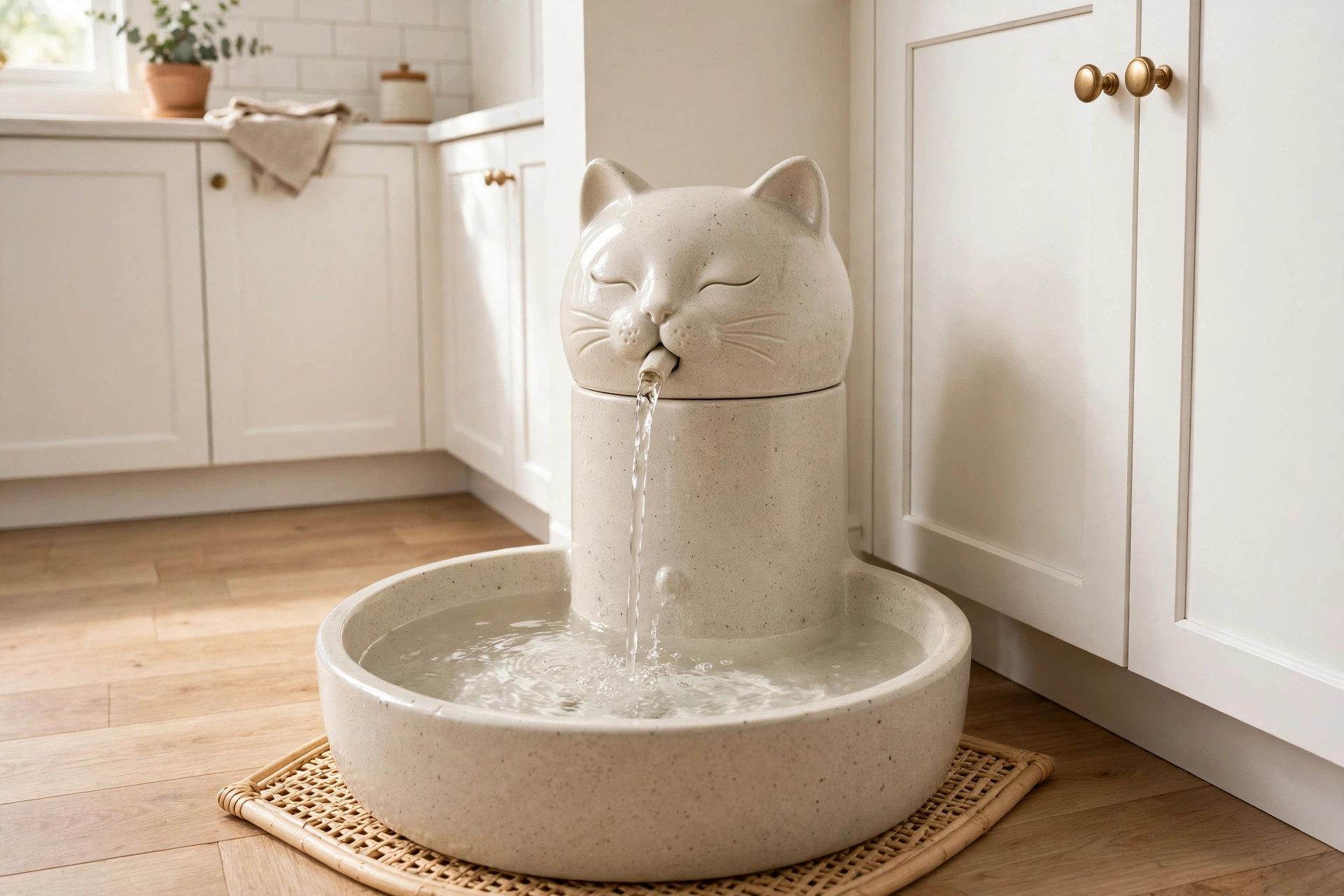

Many cat owners watch their pet turn away from a still bowl of water. Cats in the wild get much of their water from prey. House cats on dry food get far less water than their bodies want. Low water intake can lead to hard stools, a dry coat, and in some cats, urinary trouble. A cat water bowl fountain combo for hydration joins two ideas in one item: a wide drinking bowl and a small fountain that keeps water moving. The moving water catches the eye and the ear of a cat. Many cats drink more from a fountain than from a still bowl.
This guide explains how these units work, what types exist, how to pick one, what they cost, and how to keep one clean and safe.
Why Good Water Matters for Your Cat
Water is the most needed nutrient for a cat. A cat’s body is more than sixty percent water. Every cell uses water. Blood, joints, and the kidneys all need a steady supply.
Cats have a low thirst drive. They do not feel thirst the way people do. In the wild this works well, because fresh kill is full of water. A house cat fed on dry kibble may drink less than it needs. Over years, low water intake can raise the risk of urinary stones and kidney strain. Many pet care writers advise owners to tempt cats to drink more water in small daily ways.
A fountain helps because cats prefer running water. Running water in nature is more likely to be fresh than still water. Pet behavior notes often say that the sound and sight of moving water pull a cat’s interest. A cat water bowl fountain combo for hydration uses that instinct. The bowl part gives a wide, calm drinking area. The fountain part adds a stream or a bubbling spout. Together they give the cat a choice of still or moving water in one place.
Veterinary health sites such as PetMD note that good hydration supports urinary health in cats. Feeding and hydration advice from animal welfare groups stresses fresh, clean water each day. Adding a fountain is one of the simplest ways to lift daily water intake.
How a Cat Water Bowl Fountain Combo for Hydration Works
The idea is simple. A small electric pump sits inside the base or in a hidden well. It draws water up and sends it out through a spout, a ramp, or a raised faucet shape. The water falls back into the bowl in a steady stream. As the water moves, it passes through a filter that traps hair, dust, and loose food bits.
The Pump, the Filter, and the Flow
Most home units use a small submersible pump that runs on low voltage. The pump is quiet by design, since a loud hum can scare a shy cat. Water first reaches the filter. Many filters use activated carbon with a thin foam pad. The carbon helps take out odors and odd tastes. The foam pad catches hair and crumbs.
The stream then flows over the spout and back into the bowl. This movement adds oxygen to the water. It also keeps the surface from sitting still, which slows dust from settling. The bowl part is wide and shallow. A wide bowl keeps the cat’s whiskers from brushing the sides. Many cats dislike deep bowls for this reason.
Most pumps run day and night. They are made for long use and draw very little power. Some models plug into a wall outlet through an adapter. Others run on batteries or a rechargeable cell. Plug-in models are more common and more steady.
Types and Options
Stores carry several forms of the cat water bowl fountain combo for hydration. The main differences are material, flow style, and size.
Ceramic units. Ceramic bowls look like plain dishware. They clean well and hold up over years. They do not scratch easily, and scratches matter because rough spots can hold germs. Ceramic units cost more and can break if dropped.
Stainless steel units. Steel bowls resist odors and stand up to claws. They are a good pick for homes with more than one pet. Some steel models use a plastic pump housing inside.
Plastic units. Plastic fountains are light and cheap. The best ones use food-safe plastic. Cheap plastic can scratch over time, and scratched plastic may hold germs. Many owners who start with plastic move to ceramic or steel later.
Gravity-fed combos. Some combos have a water tank that fills the bowl by gravity, with a small pump that only runs the fountain part. These hold more water and need less filling, which helps in a home with several cats.
Multi-spout fountains. A few models offer two or three spouts or a wide waterfall. These suit homes with several cats, since more than one animal can drink at once. Pet product review guides at Consumer Reports compare fountain noise and filter life across brands.
Flow styles also differ. A bubbling top makes a soft sound and little splash. A free-falling stream makes more sound and draws more interest. A gentle ramp flow is the quietest and splashes least.
What to Look for When You Choose
Start with size. One cat does well with a unit that holds two to four cups. Two or three cats need a larger tank so the pump never runs dry. A dry pump can burn out fast.
Next, look at the filter. Filters need changing every two to four weeks. Check the price of new filters before you buy the unit. A cheap fountain with costly filters is no bargain. Fountain care guides on pet care sites walk through filter schedules in plain steps.
Noise matters more than most buyers expect. Read owner notes on pump hum. A loud pump will sit unused in a closet. Quieter pumps cost a little more and are worth it.
Pick a material you can clean with ease. The unit should come apart in simple parts: bowl, lid, spout, filter tray, pump. If it needs tools to open, cleaning will slip, and slipped cleaning leads to slime.
Look for a cord that is short and tough, with the joint well above the water line. Some cords come with a cord cover so a teething kitten cannot chew the wire.
Consider your cat’s habits. A shy cat may do better with a quiet bubbling model. A bold cat that bats at taps may love a tall stream. If you already feed from a best elevated cat bowl stand for neck comfort, look for a fountain of similar height so meals and water feel alike.
Home size matters too. A large home may need two water stations. Cats do not like to walk far for water. Place one unit near the feeding area and one in a quiet room the cat favors.
Cost and Price
Prices run from low to high. A basic plastic combo costs about fifteen to thirty dollars. A mid-range ceramic or steel model costs about thirty to sixty dollars. Large multi-cat units with tanks can cost sixty to one hundred dollars or more.
Filters add to the cost over time. A set of two filters may cost eight to fifteen dollars. With monthly changes, plan for roughly fifty to ninety dollars a year in filters. Some brands sell larger value packs that cut the yearly cost.
Power use is small. A small pump draws only a few watts, which adds pennies to a monthly electric bill. Compare prices and filter costs on pet retail sites such as Chewy before you buy.
Replacement pumps are worth a thought. Pumps wear out after a year or two of steady use. Some brands sell spare pumps at a fair price. Buying a brand with spare parts on hand beats buying a whole new unit each time.
Care and Upkeep
Clean water is the whole point. A fountain that is not cleaned will grow a slick film called biofilm. Biofilm is a thin layer of germs on wet surfaces. It is safe to touch but should not build up in a drinking bowl.
Weekly cleaning. Once a week, take the unit apart. Wash the bowl, lid, and spout in warm soapy water. Rinse well so no soap stays behind. Wipe the pump housing and the impeller, the small spinning part inside. Hair wraps around the impeller and slows it down. A small bottle brush reaches into corners.
Daily habits. Each day, top up the water so the pump stays under the surface. Scoop out any food bits or toys. Cats love to drop toys in water.
Monthly deep clean. Once a month, soak the parts in a mix of one part plain white vinegar to three parts water. The vinegar helps loosen mineral scale. Rinse every part well before you put the unit back together. Replace the filter on the same day so cleaning and filter changes stay on one simple schedule.
Filter changes. Most filters last two to four weeks. In a home with several cats or a dog that shares the bowl, change them more often. Mark the date on a calendar near the sink.
If you travel with a pet, a dog water bowl no spill for car travel serves a different job than a home fountain. Use the fountain at home and a spill-proof bowl on the road.
Hard water leaves white scale on the spout and bowl. A vinegar soak each month keeps scale from building up. If scale is heavy in your area, distilled or filtered water in the fountain can slow it down.
Safety
Electricity and water sit side by side in these units, so buy with care. Choose a fountain from a known maker with a low-voltage pump and a proper safety mark on the adapter. Keep the cord where the cat cannot chew it. Many owners run the cord behind the unit and along the wall.
Do not let the water level drop below the pump. A pump that runs dry can overheat and fail. A low-water shutoff feature stops the pump when the level falls. This is a useful feature for busy homes.
Keep the unit away from food bowls by a few feet. Cats often drop crumbs in water. A small gap keeps the fountain cleaner for longer.
Wash your hands before you clean the unit and after. If more than one pet drinks from it, clean it more often. For general product safety tips, the U.S. Consumer Product Safety Commission offers guidance on home product hazards. Dog-friendly homes can shop for home pet goods at stores like Home Depot, but check that any unit you pick is made for cats, since dog units run louder and splash more.
Watch a new fountain for the first few days. Most cats take to it at once. A few need time. Leave the old still bowl next to the new unit for a week, then take the old bowl away once the cat drinks well from the fountain.
Frequently Asked Questions
Will my cat really drink more from a fountain? Most cats do. The moving water draws their eye and ear. Studies and owner reports often show higher intake with fountains than with still bowls. It is not a promise for every cat, but the odds are good.
Is a fountain better than a plain bowl? For many cats, yes. Moving water stays fresher, holds more oxygen, and tempts a low-thirst cat to drink. A combo unit gives both still and moving water, so the cat can pick.
How often must I clean the fountain? Give it a full wash once a week and a deep vinegar soak once a month. Change the filter every two to four weeks. Daily top-ups keep the pump safe.
Can kittens use a water fountain? Yes. Pick a low, quiet model so a small kitten can reach the water and is not scared by the sound. Keep the cord out of reach of chewing.
My cat plays with the stream instead of drinking. Is that normal? Very normal. Young cats often bat at the water first. Most settle down and drink within a few days. A bubbling top that splashes less can help a playful cat.
Can I use a fountain for more than one cat? Yes. Choose a larger tank and change filters more often. For several cats, the article on the best pet water fountain for multiple cats may help you compare roomy models.
A Short Final Word
A cat water bowl fountain combo for hydration is a small item with a real job. It gives a cat fresh, moving water all day and takes one worry off the owner’s mind. Pick a quiet model in a material you can clean, keep up with weekly washing and monthly filter changes, and watch the water level. Animal care resources such as the ASPCA and the AKC both stress that clean water and steady habits are the base of good pet care. For most homes, this one purchase leads to a cat that drinks more and an owner who worries less.
References
American Kennel Club. (n.d.). Dog care and training resources. https://www.akc.org ASPCA. (n.d.). Pet care and animal welfare resources. https://www.aspca.org Chewy. (n.d.). Pet supplies. https://www.chewy.com Consumer Reports. (n.d.). Product reviews and ratings. https://www.consumerreports.org PetMD. (n.d.). Pet health information. https://www.petmd.com The Home Depot. (n.d.). Home improvement products. https://www.homedepot.com The Spruce Pets. (n.d.). Pet care guides and product reviews. https://www.thesprucepets.com U.S. Consumer Product Safety Commission. (n.d.). Product safety information. https://www.cpsc.gov
Was this guide helpful?

About Michael Thompson
The My Garden US editorial team writes practical, in-depth home and garden guides for American homeowners — tested advice, no fluff.
You May Also Like
Pet Water Fountain for Small Dogs and Cats: A Complete Guide
January 24, 2026 0 views
Outdoor Rabbit Hutch for Cold Weather Climates: A Plain Guide
February 3, 2026 0 views
Best Elevated Cat Bowl Stand for Neck Comfort
September 8, 2026 0 views