
Why Dogs Get Bad Breath
Bad breath in dogs is common. It is also easy to ignore. A quick whiff of a foul mouth is unpleasant. It is often a sign of something deeper. The best dog toothpaste enzymatic for bad breath can help. It does more than cover up the smell. It works against the cause.
Most bad breath in dogs comes from the mouth itself. Plaque builds up on the teeth each day. Plaque is a soft film of bacteria and food bits. If it stays, it hardens into tartar. Tartar is hard and rough. It gives bacteria a place to hide. The bacteria release gases. Those gases smell bad.
Gum disease often follows. It starts with red, swollen gums. Then the gums pull back from the teeth. Pockets form. Infection sets in. By the age of three, many dogs show signs of gum disease. Studies of vet records point to this pattern again and again. Early care makes a big difference.
Other causes exist too. A dog may have a rotten tooth. It may have chewed something foul. Stomach trouble or kidney trouble can also change the breath. When the smell is sudden or very strong, a vet visit is wise. Brushing handles daily odor. It does not replace medical care.
Regular brushing is the single best habit for a clean mouth. It removes plaque before it hardens. The American Veterinary Medical Association notes that home dental care supports professional cleanings. A good paste makes the habit easier. An enzymatic formula works even after the brush is down.
How Enzymatic Dog Toothpaste Works: Best Dog Toothpaste Enzymatic for Bad Breath
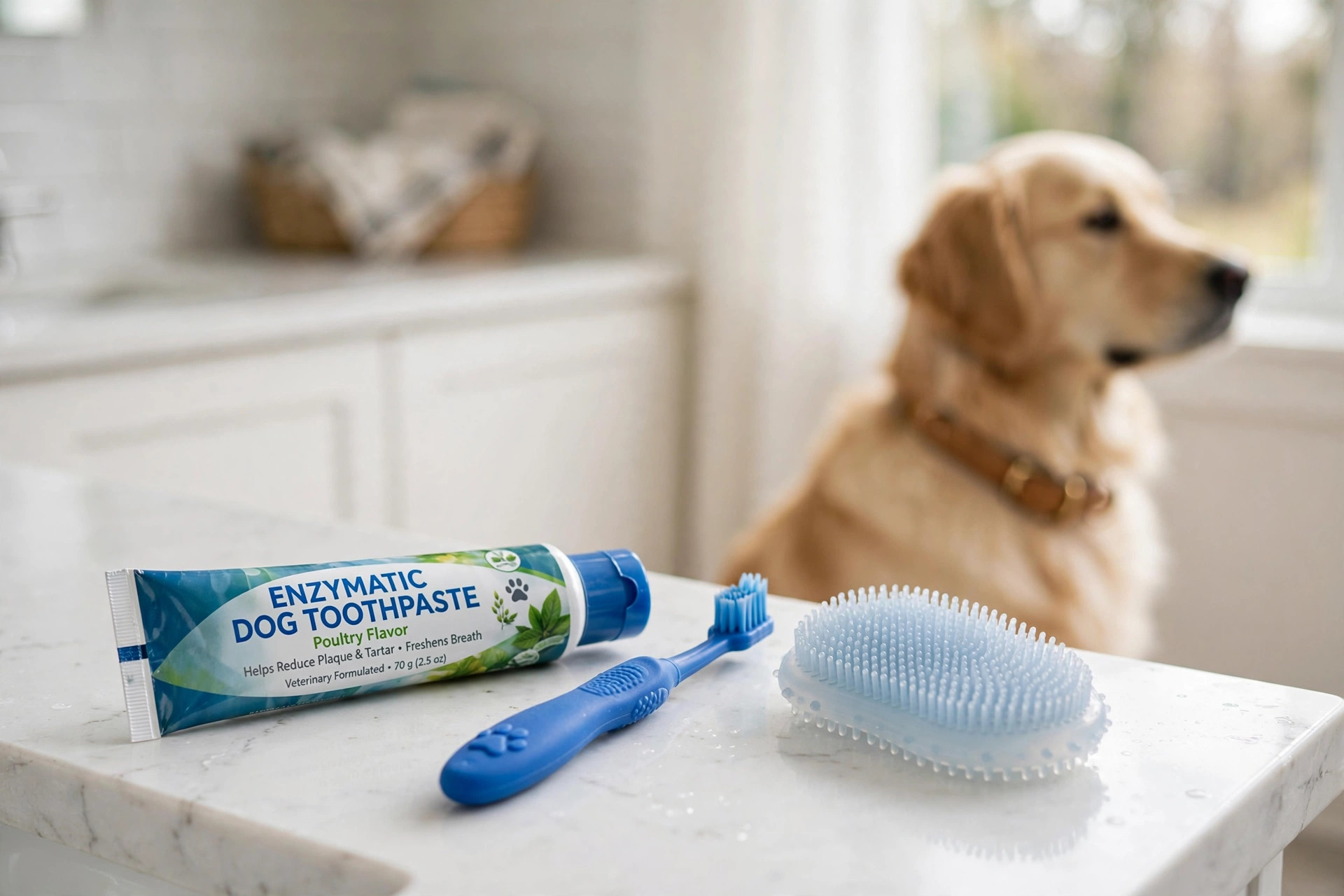
Enzymatic dog toothpaste uses natural proteins to break down plaque. The main enzymes are glucose oxidase and lactoperoxidase. They work as a team. Glucose oxidase turns sugar into hydrogen peroxide. Lactoperoxidase then uses that to form a mild antibacterial agent. This process slows the growth of bacteria in the mouth.
The key point is simple. Regular paste cleans by scrubbing. Enzymatic paste keeps working after the brushing ends. The enzymes stay active in the saliva. They keep fighting bacteria for hours. This is why the best dog toothpaste enzymatic for bad breath is often an enzymatic type. It treats odor through the whole day.
Enzymatic formulas are safe to swallow. Dogs do not spit. They cannot rinse. Every paste made for dogs must be safe if eaten. Most enzymatic pastes have no fluoride. Fluoride is fine for people in small amounts. It is not safe for dogs. Never use human toothpaste on a dog. It can cause stomach pain and worse.
Flavor matters for dogs. Most pastes come in poultry, beef, or malt flavors. A flavor the dog likes turns brushing into a treat. The dog cooperates. The owner keeps up the habit. That daily habit is what keeps breath fresh.
How to Choose the Right Product
Choosing a dog toothpaste for bad breath takes some care. Many products claim big results. Look at the label first. Then think about your dog.
Read the Label
Check for the words “enzymatic” on the front. Look at the active ingredients list. Glucose oxidase and lactoperoxidase are the most common. Some brands use protease or amylase too. These break down food debris and biofilm.
Avoid xylitol. Xylitol is a sweetener used in some human products. It is toxic to dogs. Even a small amount can be dangerous. Reputable dog pastes do not contain it. Still, check every new tube.
Match the Product to Your Dog
Small dogs need a gentle paste and a small brush. Large dogs can use a full-size brush. Puppies need a mild formula made for young mouths. Older dogs with sore gums need a soft touch and a mild flavor.
If the dog has heavy tartar already, paste alone may not be enough. Hard tartar needs a professional cleaning. Ask a vet about scaling. After the cleaning, daily brushing keeps new tartar away. The best dog toothpaste enzymatic for bad breath then works as maintenance.
Pick a Flavor Your Dog Accepts
Poultry is the most popular flavor. Many dogs take to it at once. Vanilla mint is another option. Mint may help the breath smell fresher to the owner. Some dogs dislike strong mint. Try a small tube first. If the dog turns away, switch flavors.
Types of Dog Toothpaste and Dental Tools
Enzymatic paste is one type. Others exist. Each has a use.
Enzymatic paste. The most common choice for daily brushing. It fights bacteria for hours. Good for bad breath and plaque control.
Non-enzymatic paste. Cleans by mild abrasives and detergents. Works during brushing only. Fine for dogs that are brushed twice a day without fail.
Water additives. These go in the drinking bowl. They reduce bacteria in the mouth. They do not replace brushing. They can help on days when brushing is skipped.
Dental wipes. Pre-soaked pads wiped over the teeth. Easier than a brush for nervous dogs. Less thorough than brushing.
Dental chews. Hard treats that scrape the teeth as the dog chews. They help the back teeth most. Choose a size that fits the dog. Oversized chews can break teeth in small dogs.
Tools matter as much as paste. A best dog toothbrush kit for dental health gives you the right brush for the job. Finger brushes fit over a fingertip. They are gentle and easy to control. Long-handled brushes reach the back molars. Dual-headed brushes clean both sides of the tooth at once.
Start with a finger brush for a new dog. It feels less strange in the mouth. Move to a long brush once the dog is used to the routine.
Cost and Price
Dog toothpaste is not costly. Most tubes run from about four to fifteen dollars. A tube lasts one to three months with daily use. Enzymatic brands sit in the middle of the range. They cost a little more than plain paste. The extra cost is small over a year.
Toothbrush kits add a few dollars. A kit with a finger brush and a long brush often costs under ten dollars. Dental chews cost more over time. A month of daily chews can run ten to twenty dollars. Water additives cost about the same as a tube of paste per month.
Professional dental cleaning is the big expense. It can cost several hundred dollars. It often needs anesthesia. That is why home care pays off. Daily brushing with an enzymatic paste delays or reduces the need for deep cleanings. The VCA Hospitals network notes that prevention is far cheaper than treatment in dental care.
Buy from trusted stores. Chewy and Petco carry full dental lines with clear labels. PetSmart also stocks many brands in store and online. Compare the ingredient list, not just the price.
Brushing and Daily Care
A routine works better than a rare deep clean. Brush every day if you can. Three times a week is a fair minimum. The back teeth need the most attention. Plaque builds fastest there.
Start slow with a new dog. Let the dog taste the paste from your finger. Praise the dog. The next day, rub a little paste on the front teeth. Build up over a week. Keep each session short. Two minutes is plenty.
Use a pea-sized amount of paste. Lift the lip. Brush in small circles where the tooth meets the gum. That line is where plaque hides. Work from the front to the back on each side. End with praise and a small reward.
Watch the mouth as you brush. Red gums, bleeding, or broken teeth need a vet. Loose teeth in an adult dog are not normal. A sudden change in breath can signal infection. Daily brushing lets you catch these early.
Pair brushing with other care. A clean coat and clean ears go with a clean mouth. Pet owners who handle grooming often also need a best dog nail grinder quiet for nervous dogs for paw care and a best pet vacuum for dog hair on furniture for the house. Good habits in one area tend to spread to others.
Fresh water helps too. Change the bowl daily. Clean the bowl each week. Old water grows bacteria that end up back in the mouth.
Safety
Dog toothpaste is safe when used as directed. Keep these rules in mind.
Never use human toothpaste. Human paste has fluoride and foaming agents. Dogs swallow what is in their mouth. Swallowed fluoride can poison a dog. Xylitol, found in some human pastes, is even more dangerous.
Store tubes out of reach. Dogs chew tubes. A chewed tube can mean a large dose at once. Keep dental products in a closed cabinet.
Watch for allergies. Some dogs react to certain flavors or proteins. Signs include drooling, pawing at the mouth, or redness. Stop use and call a vet if this happens. It is rare, but worth knowing.
Brush gently. Hard scrubbing hurts the gums. Bleeding gums need a lighter touch or a vet check. The goal is clean teeth, not force.
The ASPCA poison control resources remind owners that many human products are unsafe for pets. The same caution applies to dental care. Buy products made for dogs. Read labels. When in doubt, ask a vet before trying a new product.
Frequently Asked Questions
How often should I brush my dog’s teeth?
Daily brushing is best. Plaque hardens into tartar in about two to three days. Daily brushing removes it in time. If daily is too much, aim for at least three times per week. Enzymatic paste helps on off days, since it keeps working after brushing.
Does enzymatic toothpaste really fix bad breath?
It helps a great deal. It does not mask odor with perfume. It reduces the bacteria that cause odor. For mild to moderate bad breath from plaque, results show in one to two weeks of daily use. Severe odor from infection or rotten teeth needs a vet visit first.
Can puppies use enzymatic toothpaste?
Yes, with a puppy formula. Puppy mouths are small and tender. Use a pea-sized amount of a mild paste. Start handling the mouth early. Puppies that learn young accept brushing for life. The American Kennel Club offers guidance on early dental habits for puppies.
What if my dog hates having its teeth brushed?
Start slow. Let the dog lick paste off your finger as a treat. Then rub the teeth with your finger. Then move to a finger brush. Keep sessions under a minute at first. End with praise. Most dogs accept the routine within two weeks. Dental wipes are a backup for dogs that never accept a brush.
Is enzymatic toothpaste safe if my dog swallows it?
Yes. Dog toothpaste is made to be swallowed. It has no fluoride and no rinsing agents that harm dogs. A normal pea-sized amount is safe. The full tube at once is too much, so store it away from the dog. If a dog eats a whole tube, call a vet or poison control.
Can toothpaste replace professional dental cleaning?
No. Paste controls plaque. It cannot remove hard tartar. It cannot treat gum disease that is already advanced. Think of brushing as daily maintenance. Professional cleaning is the deep service. PetMD explains the difference between home care and veterinary dental work. Both have a place.
A Final Word
Bad breath is a message. It says the mouth needs care. The best dog toothpaste enzymatic for bad breath answers that message well. It cleans. It keeps fighting bacteria after brushing. It is safe to swallow. It comes in flavors dogs enjoy.
Pick a trusted brand. Read the label. Brush a little each day. Watch the gums. See a vet when something looks wrong. These simple steps keep the mouth healthy and the breath sweet.
The Spruce Pets and Banfield sites both publish plain guides on pet dental care for owners who want to learn more. Good information supports good habits. Your dog will thank you with a cleaner smile and fresher breath.
References
American Kennel Club. (n.d.). Dog care and training resources. https://www.akc.org American Veterinary Medical Association. (n.d.). Pet care resources. https://www.avma.org ASPCA. (n.d.). Pet care and animal welfare resources. https://www.aspca.org Banfield Pet Hospital. (n.d.). Veterinary care and pet health. https://www.banfield.com Chewy. (n.d.). Pet supplies. https://www.chewy.com Petco. (n.d.). Pet supplies and services. https://www.petco.com PetMD. (n.d.). Pet health information. https://www.petmd.com PetSmart. (n.d.). Pet supplies and services. https://www.petsmart.com The Spruce Pets. (n.d.). Pet care guides and product reviews. https://www.thesprucepets.com VCA Hospitals. (n.d.). Veterinary hospitals and pet health. https://www.vcahospitals.com
Was this guide helpful?

About Lisa Anderson
The My Garden US editorial team writes practical, in-depth home and garden guides for American homeowners — tested advice, no fluff.
You May Also Like
Pet Carrier for Cats Airline Approved Soft Sided: A Complete Travel Guide
January 10, 2026 0 views
Dog Ramp for SUV and High Bed Access: A Simple Buying Guide
May 15, 2026 0 views
The Best Cat Litter Box Cabinet for Hiding Litter in Your Home
April 6, 2026 0 views