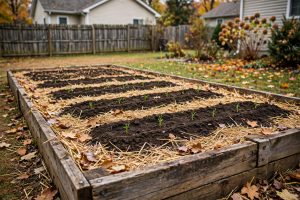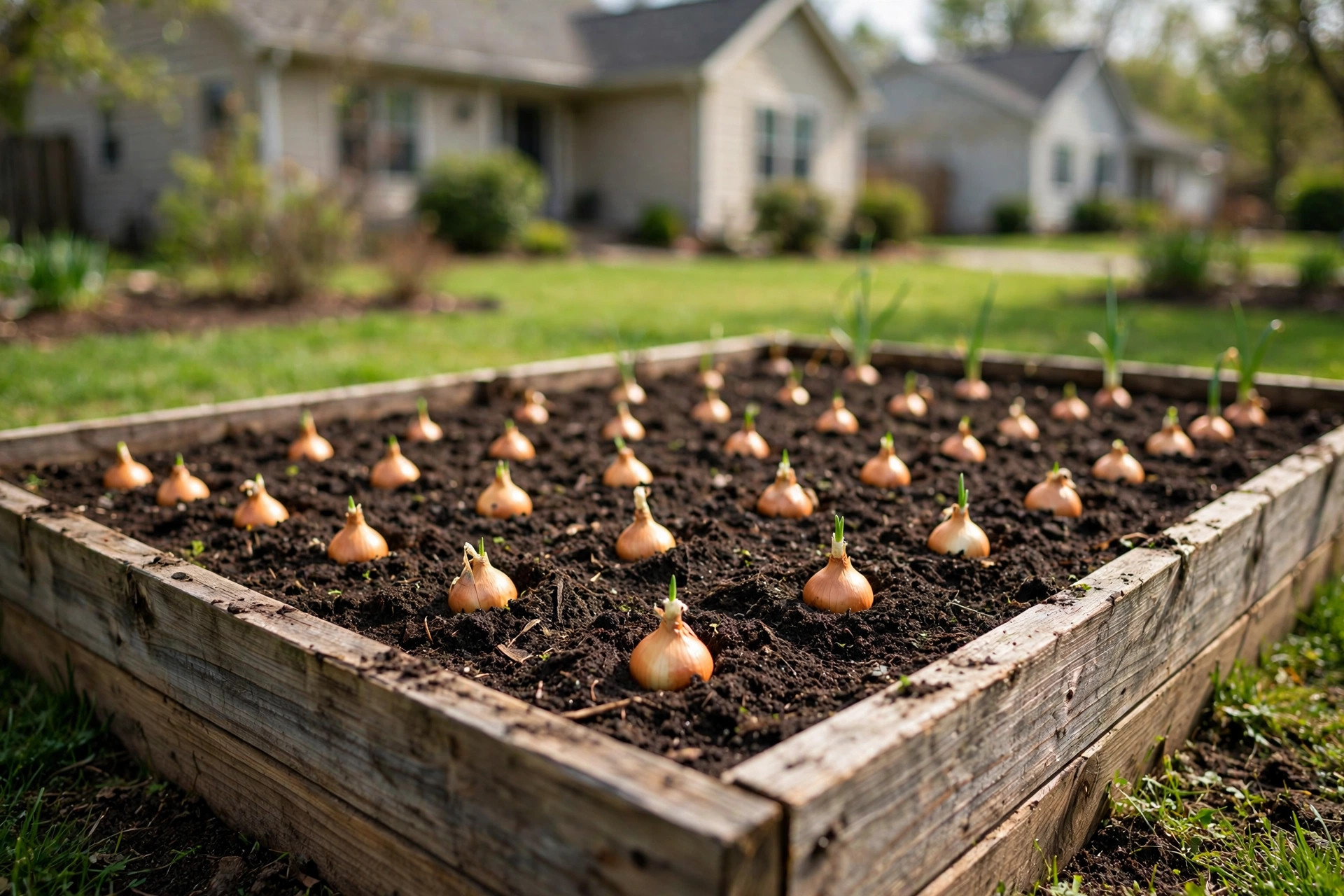

Few crops give as much pleasure for so little work as the onion. This onion sets planting buying guide usa will help you buy the right sets for your region, plant them at the right time, and raise a strong crop. Onion sets are small, immature onion bulbs grown the year before. You plant them in spring. They grow into full bulbs by summer. Because they start ahead of seed, they mature sooner and give surer results for new gardeners.
Millions of home gardens across the United States grow onions from sets each year. The method is old. Farmers used it long before seed packets lined store shelves. It still works today because it is simple. You push a small bulb into the soil. You water it. In a few months you pull a large one. This guide covers everything a buyer in the United States needs to know: types of sets, day length, prices, planting steps, care, and safe storage.
Why It Matters
Growing onions from sets matters for three reasons. First, it saves time. Onion seed takes long to grow and asks for care indoors. Sets skip that slow stage. Second, it cuts risk. Each set already holds stored food. It roots fast even in cool soil. Third, it fits small gardens. You can grow a family supply in one short row. A bag of sets costs only a few dollars. The harvest can fill your kitchen for months.
This onion sets planting buying guide usa aims to make the choice simple. The wrong set in the wrong place gives thin necks and small bulbs. The right set in the right place gives heavy, sweet bulbs that store well. The difference comes down to day length. That is the single most important fact in onion growing.
What to Look for When Buying Onion Sets: Onion Sets Planting Buying Guide Usa
Firmness and Health
Good sets feel firm and dry. They should be about the size of a marble or a small grape. Avoid sets that are soft, wet, or sprouting long green tops in the bag. Soft spots mean rot. Mold means the bag was stored damp. A few papery skins are fine. That is natural.
Size
Smaller sets usually give the best bulbs. Large sets, wider than a nickel, tend to bolt. Bolting means the plant sends up a flower stalk. The bulb then turns tough. Buy sets no larger than about three quarters of an inch across when you can.
Variety and Day Length
Onions form bulbs in answer to daylight hours. This is the key rule. Short-day onions bulb up with ten to twelve hours of light. They grow best in the South, where winters are mild. Long-day onions need fourteen to sixteen hours of light. They grow best in the North. Intermediate or day-neutral types suit the middle states.
Look for the day length on the bag or in the catalog listing. If the seller does not state it, ask. Planting a long-day set in the deep South gives small bulbs. Planting a short-day set in the far North does the same. Match the set to your zone. The Almanac offers zone maps that help gardeners place their crops.
Yellow, White, and Red
Yellow sets are the workhorses. They store well and cook well. White sets are mild and crisp. They suit fresh eating. Red sets add color to salads. They keep a shorter time in storage. Many gardeners plant a row of each. You can learn which your soil favors.
Types of Onion Sets Sold in the United States
Yellow Onion Sets
Stuttgarter and similar yellow types lead sales across the country. They make round, firm bulbs with strong skins. They store for months in a cool shed. For most families, yellow sets are the safest first buy.
White Onion Sets
White sets grow fast and mild. They are the choice for slicing fresh over salads. They do not keep as long as yellow kinds. Eat them first after harvest.
Red Onion Sets
Red sets give sweet, mild bulbs with bright skins. They look fine on the table. Their storage life is the shortest of the three. Plant them in modest amounts unless you eat many fresh.
Specialty Sets
Some sellers offer sweet types like Vidalia-style or Walla Walla-style sets. These suit short-day and intermediate regions. They grow large and sweet. They store poorly, so use them within weeks of harvest. The Burpee catalog lists many specialty onion types with growing notes.
Sets, Seeds, or Transplants
Sets are not the only start. Seed costs less per plant but takes weeks longer. Transplants, sold as small green plants in bunches, give very large bulbs. They cost more and need gentle handling. For most home plots, sets strike the best balance of price, speed, and ease. Readers also shop our garlic bulbs planting buying guide usa for a crop that grows much the same way.
Cost and Price
Onion sets are among the cheapest starts in the garden. In the United States, a one-pound bag of sets holds roughly eighty to one hundred bulbs. Prices run from one to six dollars a bag at most garden centers and farm stores in 2026. Larger bulk bags for big rows cost more but drop the price per bulb.
Mail-order sets may cost a little more because of packing and shipping. They often offer named varieties you cannot find locally. That is worth the cost if you want a special type. Local bags often carry no variety name. They still grow well in the region where they are sold.
A single bag can fill a row twenty to thirty feet long. That row can yield fifty to eighty pounds of onions in a good year. Few garden dollars stretch further. Compare prices with our onion sets planting for sale usa page before you buy.
How to Plant Onion Sets
When to Plant
Plant sets as soon as the soil can be worked in spring. That means the ground is thawed and not muddy. In the South, that can be January or February. In the North, it may be April. Cold soil does not hurt sets. They root at temperatures just above freezing. Early planting gives the plants more leaves before bulb formation starts. More leaves mean larger bulbs.
Where to Plant
Pick a spot with full sun. Onions need at least six hours of direct light each day. The soil should drain well. Heavy clay holds water and rots sets. Loose, sandy loam is best. Work compost into the top six inches before planting. A soil test helps, but onions grow in most garden soils with a pH between 6.0 and 7.0.
Planting Depth and Spacing
Push each set into the soil pointy end up. Set it about one inch deep. The tip should just show above the surface. Space sets four to six inches apart in rows twelve to eighteen inches apart. Tight spacing gives smaller bulbs. Wide spacing gives larger ones. The Gardening Know How library has clear planting depth charts for onion growers.
Watering After Planting
Water the row well right after planting. Keep the soil moist but not soaked through the spring. Onions have shallow roots. They suffer fast in dry soil. An inch of water a week is a good rule. Mulch with straw to hold moisture and stop weeds.
Care and Upkeep Through the Season
Feeding
Onions feed heavily on nitrogen early in the season. Side-dress with a balanced fertilizer or composted manure three to four weeks after planting. Stop feeding once bulbs start to swell. Late feeding grows thick necks that store poorly.
Weeding
Weeds are the worst enemy of onions. Shallow roots lose the fight for water and food. Weed by hand or with a hoe. Do it often. Do it shallowly so you do not cut the roots. Mulch helps, but do not bury the necks of the plants.
Watching for Pests
Onion maggots and thrips cause the most trouble. Maggots are small white worms that attack the base. Thrips are tiny insects that silver the leaves. Rotate your crop so onions do not follow onions. Floating row covers keep maggot flies off young plants. The National Institute of Food and Agriculture publishes research on vegetable pest control that home growers can use.
Knowing When to Harvest
Onions tell you when they are ready. The tops fall over and turn yellow. That is the signal. Stop watering at that point. Let the bulbs cure in the field for a few days if the weather is dry. Then pull them and spread them in a warm, airy place out of direct sun for two to three weeks. Good curing seals the necks and extends storage.
Storage
Store cured onions in a cool, dry, dark place. A garage or basement near fifty to sixty degrees works well. Do not store them in plastic bags. They need air. Mesh bags or braided strings hung from a beam work best. Yellow storage types keep four to six months. White and sweet types keep a few weeks. Check the stored bulbs often. Use any that soften first.
Safety
Onion growing is safe work, but a few cautions help. Wear gloves when handling fertilizer. Keep fertilizer off the leaves and wash your hands after use. Read every product label before you spray anything. Store garden chemicals where children and pets cannot reach them. The Park Seed growing guides remind gardeners to follow label rates on all garden products.
Fresh soil can harbor bacteria. Wash onions well before eating. Wash your hands and tools after working the bed. If you use manure, use only composted manure, and apply it weeks before planting. These simple steps keep your crop clean and your family safe.
Frequently Asked Questions
How many onion sets do I need for a family of four?
A one-pound bag, about eighty to one hundred sets, gives a good start. Plant two bags if your family eats many onions. A single row of one hundred sets can yield more than most families use fresh. The rest store well.
Can I plant onion sets in containers?
Yes. Use a pot at least ten to twelve inches deep with drainage holes. Fill it with good potting soil. Space sets three to four inches apart. Water often, since pots dry fast. Container onions grow a bit smaller, but they taste the same.
Why did my onions grow flower stalks?
That is bolting. It happens when large sets meet a cold snap after planting. The plant thinks winter has passed and flowers. Buy smaller sets and plant them at the right time for your area. Snap off any flower stalk you see, but use those bulbs first. They will not store well.
Do onion sets need full sun?
They do. Give them six to eight hours of direct sun each day. Shade gives thin tops and small bulbs. If your yard is partly shaded, plant onions in the sunniest bed you have. The White Flower Farm notes stress the value of full sun for bulb crops.
Can I save my own sets for next year?
You can, but it takes work. Grow small bulbs from seed late in summer. Store them cool and dry through winter. Plant them as sets in spring. Most home gardeners find it easier to buy fresh sets each year. Bought sets are graded for size and checked for disease.
Where is the best place to buy onion sets in the USA?
Garden centers, farm stores, and hardware stores sell sets in spring. Mail-order sellers offer more named varieties. Buy from a seller in your region when you can. Local stock is already matched to your day length. Our onion sets planting deals near me page can help you compare local offers.
A Short Final Word
Onion sets remain the easiest path to a full onion harvest. Choose firm, small sets matched to your day length. Plant early in loose, sunny soil. Water steadily, weed often, and harvest when the tops fall. This onion sets planting buying guide usa has laid out each step in plain order. Follow it, and your pantry will hold the proof. The Proven Winners and Monrovia sites, along with the Spruce, offer more plant guidance for the home garden.
References
Burpee. (n.d.). Seeds, plants, and gardening supplies. https://www.burpee.com Gardening Know How. (n.d.). Gardening guides and plant care. https://www.gardeningknowhow.com Monrovia. (n.d.). Plants for home gardens. https://www.monrovia.com National Institute of Food and Agriculture. (n.d.). Agricultural research and extension. https://www.nifa.usda.gov Park Seed. (n.d.). Seeds, plants, and gardening supplies. https://www.parkseed.com Proven Winners. (n.d.). Plants and gardening inspiration. https://www.provenwinners.com The Old Farmer’s Almanac. (n.d.). Gardening calendars and advice. https://www.almanac.com The Spruce. (n.d.). Home and garden advice. https://www.thespruce.com White Flower Farm. (n.d.). Plants, bulbs, and garden supplies. https://www.whiteflowerfarm.com
Was this guide helpful?

About Robert Taylor
The My Garden US editorial team writes practical, in-depth home and garden guides for American homeowners — tested advice, no fluff.
You May Also Like
Lavender Seed Packets Deals Near Me: A Guide to Finding Them
July 12, 2026 0 views
Monstera Plants Sale Texas Homes USA: A Practical Buying Guide
January 13, 2026 0 views
Lavender Seed Packets Texas Homes USA: A Plain Guide
January 7, 2026 0 views