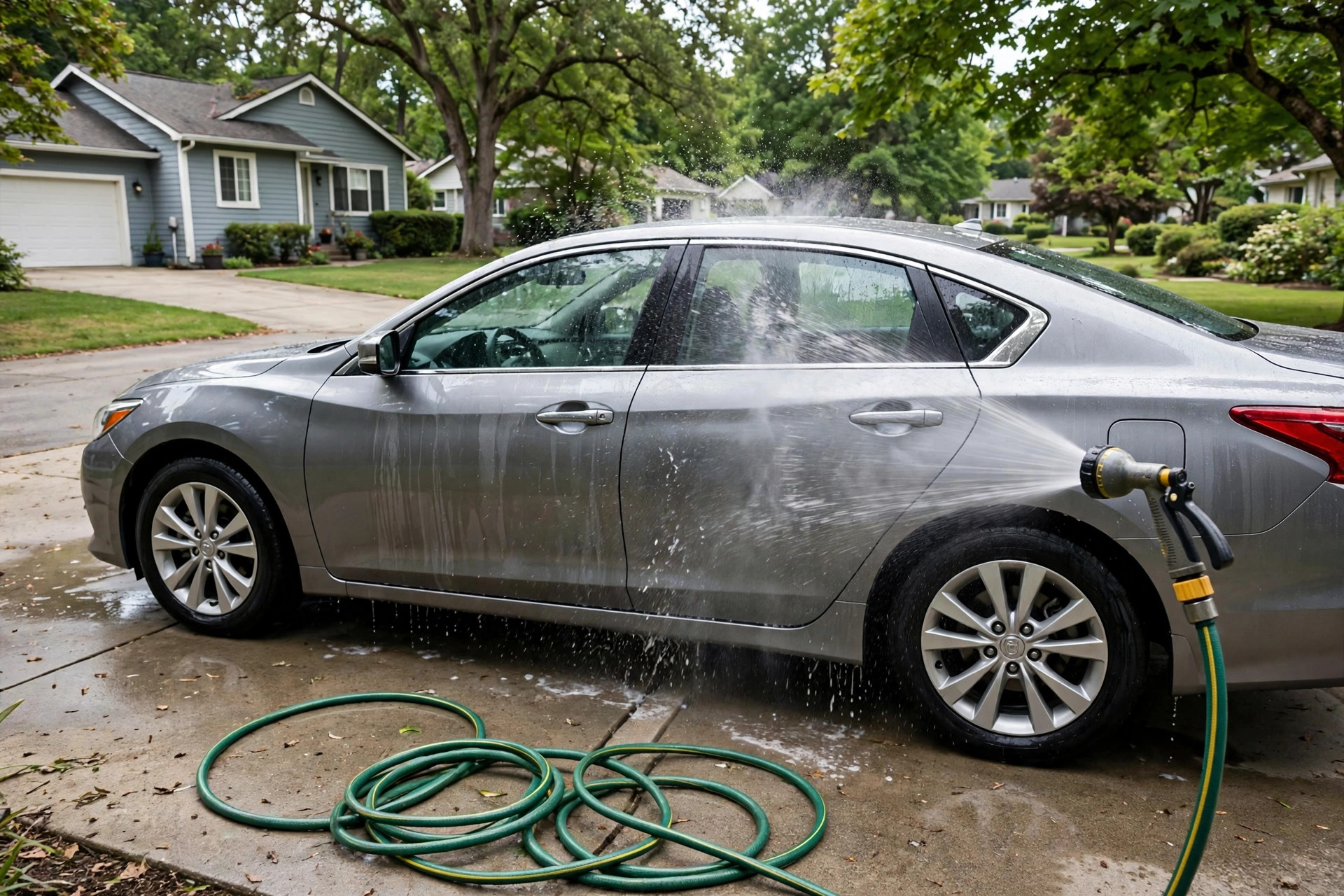
A good wash starts with the right tool. The best garden hose for washing car work is not always the most expensive one on the shelf. It is the one that fits your car, your driveway, and your water supply. Many drivers use whatever hose they have for the lawn. Then they wonder why the paint shows fine scratches or why the rinse takes so long. A little care at the store can save years of damage to the finish.
Car paint is soft by design. It marks easily under dirt and grit. The hose you choose controls how much water reaches the car and how gently you can deliver it. This guide explains what to look for, what to avoid, and how much to spend. It is written for the home car owner who wants a clean car without a trip to the car wash.
Why a Good Hose Matters for Car Washing
Paint damage often comes from bad tools, not bad intentions. A hose that kinks every few feet forces you to drag the nozzle across the car to get pressure. A hose with sharp metal ends can strike the fender when you move it. A weak stream will not push soap and dirt off the panels. Then you rub harder with the mitt, and that is where scratches start.
The right hose gives you three things. First, steady water flow. Second, a safe reach from the spigot to the car without pulling tight. Third, ends and fittings that will not harm the finish. With these three things, washing the car becomes a calm job instead of a fight.
Water pressure from the hose also matters for the final rinse. A full, even sheet of water lifts most of the soap away. That means less wiping and fewer swirl marks. Guides at The Spruce often point out that gentle rinsing is the safest step in any car wash. The hose is the heart of that step.
How to Choose the Right Hose: Best Garden Hose for Washing Car
Choice comes down to four parts: diameter, length, material, and fittings. Each part is simple on its own. Together they decide how well the hose will work for your car.
Diameter and Water Flow
Garden hoses come in three common inside diameters: half inch, five eighths inch, and three quarters inch. For car washing, five eighths inch is the best all-around pick for most homes. It carries enough water to rinse well without being heavy to drag.
A three quarters inch hose moves more water, but it is heavy and stiff. That extra weight is hard to manage around a car. A half inch hose is light, but it can feel slow on a big truck or SUV. If you want strong flow without the heavy hose, read our guide to the best garden hose for high pressure for ways to get more out of a standard line.
Check your home water pressure too. Most American homes deliver between 40 and 60 pounds per square inch at the spigot. That is plenty for car washing. A hose cannot make more pressure than the spigot gives. It can only waste less of it.
Hose Length
Measure from your spigot to the farthest point of the car. Add ten feet. That is the length you need. Most driveways need 50 feet. A few need 75. Longer is not better. Every extra foot drops pressure a little and adds weight you must drag around the car.
Short hoses have one hidden benefit. They kink less and drain faster after the job. If your spigot sits close to the driveway, a 25 or 50 foot hose will serve you well. Buyers comparing models at The Home Depot often test length by walking the store aisle with the coil. A rough walk at home works just as well.
Material and Build
Three materials dominate the market. Rubber hoses are the oldest type. They are heavy and tough. They resist kinks and last many years in the sun. Many long-time car owners swear by rubber for driveway work.
Vinyl hoses are the lightest and cheapest. They kink easily and crack sooner in heat. They can still work for car washing if the run is short and you handle them with care.
Reinforced hybrid hoses mix plastic and rubber layers. They stay flexible in cold weather and resist kinks better than plain vinyl. They are a good middle ground for a hose that must serve both the car and the lawn.
Look for crush-proof brass or aluminum couplings at the ends. Plastic ends crack and cross-thread. Good fittings save you from leaks that spray your shoes every time you wash.
The Nozzle
The nozzle matters more than most people think. A bare hose end throws water in one rough stream. That is fine for watering a bush. It is too harsh for a soapy car panel. A proper spray nozzle lets you choose a soft shower for rinsing and a firm jet for wheel wells.
Pairing your hose with a garden hose nozzle with multiple settings gives you the most control. A fan setting rinses large panels fast. A mist setting is gentle near trim and badges. A stream setting cuts through mud on the lower doors. One nozzle with several settings replaces a whole drawer of old single-pattern tips.
Types of Garden Hoses Compared
Not every hose design suits car washing. Here is how the common types compare for this one job.
Standard rubber or vinyl hose. The classic coil in most garages. Pros: simple, cheap to replace, works with every nozzle. Cons: kinks, heavy in long lengths, must be drained and coiled by hand. Best for owners who wash on a fixed spot near the spigot.
Expandable hose. These shrink when empty and grow when full of water. Pros: very light, easy to store, easy to carry around the car. Cons: thinner walls, lower flow, shorter life, and they can feel flimsy at full stretch. Fine for small cars and light duty. Not the pick for large trucks.
Flat or soaker hose. Made for gardens, not cars. They weep water along their length. Skip these for washing. They cannot deliver a directed stream.
Retractable reel hose. The hose lives on a spring reel mounted on the wall. Pros: no coiling by hand, neat storage, less tripping hazard. Cons: higher cost, and cheaper reels retract with a snap that can pull the nozzle toward the car. Our roundup of the best garden hose reel retractable reviews covers which models rewind smoothly and which ones to avoid.
Drinking-water-safe hose. Made for RVs and boats, with linings free of lead and harsh chemicals. Not needed for car paint. But some owners like them because the materials feel cleaner for the final rinse. Lowe’s carries several RV-grade hoses if you want to compare.
Cost and Price
Prices run in clear bands. A basic 50 foot vinyl hose costs 20 to 35 dollars. A five eighths inch reinforced hybrid hose runs 35 to 60 dollars. A heavy duty rubber hose runs 50 to 80 dollars. A wall-mount retractable reel set can run 90 to 160 dollars.
For car washing, the sweet spot sits between 40 and 70 dollars. That buys a kink-resistant hose with brass fittings and a decent nozzle included or bought nearby. Spending more does not buy a cleaner car. Spending too little buys leaks, kinks, and a short life.
Watch the real cost, which includes the nozzle. A cheap hose with a ten dollar nozzle often beats a costly hose with a weak tip. Testers at Consumer Reports have long judged hoses on flow, kinking, and burst strength rather than price alone. Flow and kink resistance are the two measures that matter most at the driveway.
Buy once if you can. A hose that lasts ten years costs less per wash than a hose you replace every two summers. Store it out of the sun and drain it after use, and even a mid-price hose will last.
Care and Upkeep
A hose that is cared for will serve the car for many seasons. A hose that is left in the sun will crack and leak. The routine is simple and takes five minutes.
Drain the hose after every wash. Lift one end and walk toward the other, letting the water run out. Water left inside adds weight and breeds algae in warm months. It also freezes in winter and can split the wall.
Coil the hose in wide loops, not tight knots. Tight loops stress the wall and create memory kinks. A wall hook or a simple reel keeps the coil round and off the ground. Hardware stores like The Home Depot sell basic hose hangers for a few dollars.
Keep the hose out of direct sun when it is not in use. Sunlight is the main killer of hose walls. Shade under the eave or inside the garage adds years of life.
In cold states, bring the hose inside before the first hard freeze. Drain it, coil it, and hang it in the garage. Frozen water expands and splits fittings. A spring check of the washers costs pennies and stops the slow drip at the spigot.
Wipe the couplings now and then. Grit in the threads makes them cross-thread. A dab of silicone grease on the washer keeps the seal tight. Family Handyman has covered these small upkeep steps for years, and they work.
Safety
Car washing looks harmless, but a few rules keep it safe. Water and cars mix fine. Water and certain other things do not.
Never run the hose near a garage door opener motor or outdoor outlet without a weather cover. Keep the nozzle stream away from open electrical boxes. If your spigot shares a wall with the breaker box, wash from the other side.
Backflow is the main hidden risk. A hose left in a bucket of soapy water can suck that water back into the home pipes if pressure drops. Use a simple vacuum breaker on the spigot. Most new spigots have one built in. Old ones can be fitted with a screw-on breaker for a few dollars.
Avoid hot engine parts with cold water. A sudden cold stream on a hot exhaust can stress metal. Let the engine cool before you wash. Also keep the stream out of the tailpipe and away from open windows.
Wear shoes with grip. Wet driveways are slick, and soap makes them slicker. This sounds small until the first slip. Corona Tools and other tool makers remind users that most yard injuries come from slips, not from the tools themselves.
Frequently Asked Questions
What size hose is best for washing a car? Five eighths inch inside diameter is the best pick for most homes. It gives strong flow without heavy weight. Fifty feet covers most driveways. Measure from the spigot to the far car corner and add ten feet before you buy.
Can I use my regular garden hose to wash my car? Yes. Any clean garden hose works. The keys are a soft spray nozzle, good flow, and fittings that will not scratch the paint. If your lawn hose kinks badly, a new kink-resistant hose will make the job much easier.
Is more water pressure better for car washing? Not always. Very high pressure can force grit into the paint or strip wax. A steady medium flow with a fan or shower setting rinses best. Save the hard jet for wheel wells and lower panels, where mud is thick and paint is less delicate.
Should I buy an expandable hose for car washing? It depends on the car. Expandable hoses are light and easy to handle. But they give less flow and wear out sooner. For a small car washed often, they are fine. For a large SUV or truck, a standard reinforced hose gives a better rinse.
Do I need special fittings for car washing? Brass quick-connect fittings help. They let you swap the nozzle on and off without threading and unthreading each time. Keep the metal ends away from the paint. Drape the hose over a fender cover or keep it on the ground while you move around the car.
How often should I replace my car wash hose? With basic care, a good hose lasts five to ten years. Replace it when you see cracks, bulges, or leaks at the fittings that new washers cannot fix. A hose that kinks in the same spot every wash is also ready for retirement.
A Final Word
The best garden hose for washing car duty is the one that fits your space and your habits. Pick five eighths inch diameter, enough length without extra, kink-resistant walls, and brass fittings. Add a multi-setting nozzle so you can rinse gently and blast where needed. Spend 40 to 70 dollars, drain and coil the hose after each wash, and keep it out of the sun. Do that, and the humble garden hose will give you years of clean, scratch-free cars. Advice from Bob Vila and the buying guides at Gardener’s Supply Company point to the same conclusion: buy for flow, fittings, and care, not for brand names. And if your lawn tools need the same level of care, makers like Fiskars publish simple guides that apply the same lessons to every tool in the shed.
References
Bob Vila. (n.d.). Home improvement advice. https://www.bobvila.com Consumer Reports. (n.d.). Product reviews and ratings. https://www.consumerreports.org Corona Tools. (n.d.). Garden and landscape tools. https://www.corona-tools.com Family Handyman. (n.d.). DIY home repair and maintenance. https://www.familyhandyman.com Fiskars. (n.d.). Garden and cutting tools. https://www.fiskars.com Gardener’s Supply Company. (n.d.). Gardening tools and supplies. https://www.gardeners.com Lowe’s. (n.d.). Home improvement products. https://www.lowes.com The Home Depot. (n.d.). Home improvement products. https://www.homedepot.com The Spruce. (n.d.). Home and garden advice. https://www.thespruce.com
Was this guide helpful?

About Michael Thompson
The My Garden US editorial team writes practical, in-depth home and garden guides for American homeowners — tested advice, no fluff.