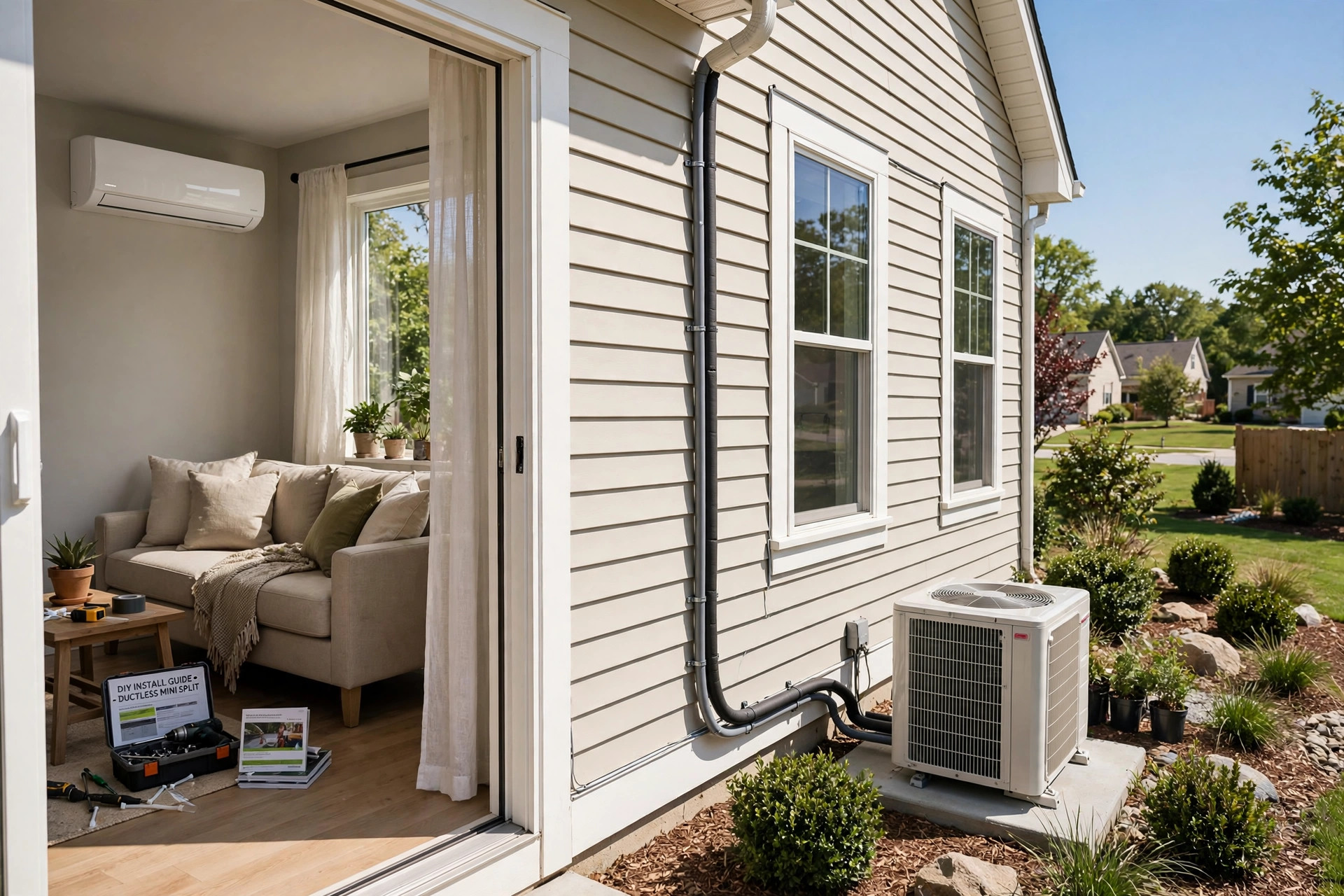

More homeowners are asking for the best DIY mini split systems reviews USA shops and forums can offer. A mini split is a ductless heating and cooling unit. It has two parts. An indoor air handler hangs on a wall. An outdoor condenser sits on a pad or a bracket. A slim line set joins the two through a small hole. Some brands sell these units in a kit form that a handy homeowner can install. The refrigerant line comes pre-charged and the fittings connect with simple wrench work. No vacuum pump is needed on some models.
This guide explains how these kits work. It covers what to check before you buy. It looks at costs, care, and safety. It does not push one brand over another. It gives you the facts so you can read any review with a clear head.
Why DIY Mini Splits Matter
Central air is a big job. It needs ducts in the walls and attic. Many older homes lack ducts. Garages, sheds, bonus rooms, and home offices also lack ducts. A mini split fills this gap. It gives one room its own temperature control. The rest of the house keeps its own system.
DIY kits bring the price down. A contractor install often costs two to three times the price of the unit. When you do the work yourself, you pay for the hardware only. That is why searches for the best diy mini split systems reviews usa have grown so fast.
Zoning is another gain. Each indoor head has its own remote. You cool the bedroom at night and the office by day. You stop paying to cool empty rooms. Many owners report lower bills after the switch.
Heat pumps warm as well as cool. Most DIY kits are heat pumps. They move heat out in summer and move heat in during winter. One box does both jobs. For mild climates this can replace window units and space heaters at once.
What to Look For in a DIY Kit: Best Diy Mini Split Systems Reviews Usa
Start with size. Cooling power is rated in BTUs. A 9,000 BTU head suits a bedroom or small office. A 12,000 BTU head covers a larger bedroom or den. An 18,000 BTU head fits a great room. A 24,000 BTU head fits an open plan space. A rule of thumb is 20 BTU per square foot. Measure your room before you shop.
Next, check the cold climate rating. Standard heat pumps lose punch below freezing. Cold climate models keep working down to minus 5 or minus 13 degrees. If you live where winters are harsh, this rating matters more than any other spec. Reading the best mini split for cold climates reviews usa will show how units behave in real cold snaps.
Check SEER2 and HSPF2 ratings. SEER2 measures cooling efficiency. HSPF2 measures heating efficiency. Higher numbers mean lower bills. The federal minimum is around 14 SEER2 in most states. DIY kits often range from 17 to 22 SEER2. Look for the ENERGY STAR label as a quick trust mark.
Check the warranty terms. Some makers cut the warranty for self-installed units. Others keep the full term if you register online. A seven-year parts warranty is common on the better kits. Read the fine print before the box arrives.
Check what is in the box. A full kit should include the indoor head, the outdoor unit, the line set, the drain hose, the wall sleeve, mounting brackets, the remote, and the install manual. Some kits add a 25-foot pre-charged line set. Longer runs may need an extra charge of refrigerant by a licensed tech.
How to Read Reviews Like a Pro
Reviews are useful but uneven. Focus on reviews from buyers who installed the unit six months or more ago. First-week reviews praise the fast shipping. Six-month reviews tell you about the drain, the noise, and the remote.
Watch for patterns. One complaint about a weak remote is noise. Twenty complaints about the same error code is a signal. Also note the reviewer skill level. A hard job for a first-timer may be easy for someone who has wired a subpanel before.
Types of DIY Mini Split Options
Single zone wall mounts. One indoor head and one outdoor unit. This is the most common DIY kit. It is the simplest to install and the cheapest to buy.
Multi zone systems. Two to five indoor heads share one outdoor unit. Each room gets its own control. These cost more and the line sets are longer. They suit homes with several rooms to treat at once. Some makers now sell multi zone kits with pre-charged quick-connect lines for the home installer.
Ceiling cassettes. The indoor unit sits flush in the ceiling. It blows air in four directions. It looks clean in finished basements and offices. Install is harder because you cut into the ceiling grid or drywall.
Floor consoles. The unit sits low on the wall near the floor. It suits rooms with low ceilings or sloped attic walls. It also suits homes where a wall mount would look wrong.
Garage and shop units. These are single zone heads sized for 400 to 800 square feet. They often pair with a cold climate outdoor unit so the shop stays warm in winter. A mini split for garage heating and cooling is one of the most common DIY projects in this space.
Cost and Price Guide
Unit prices vary by size and brand. A 9,000 BTU DIY single zone kit often runs between 700 and 1,200 dollars. A 12,000 BTU kit runs between 900 and 1,600 dollars. An 18,000 to 24,000 BTU kit runs between 1,400 and 2,500 dollars. Multi zone kits run from 2,500 to 6,000 dollars depending on head count.
DIY saves on labor. A pro install adds 1,500 to 3,000 dollars per zone in most markets. That is why the do-it-yourself route appeals to handy owners. But know the ductless mini split installation cost per zone before you decide. Some towns require a permit and an inspection even for DIY work.
Running costs are modest. A 12,000 BTU unit draws about 1,000 watts at full load. At 15 cents per kWh, that is 15 cents per hour of full cooling. Real bills are lower because the inverter ramps down once the room reaches temp. Many owners add 20 to 50 dollars a month to the electric bill in peak season.
Compare against the old gear. Window units are cheap to buy but loud and drafty. Space heaters are cheap but dear to run. A mini split vs central ac cost comparison usa shows the mini split winning on install cost where no ducts exist. Where ducts already exist, central air often wins on whole-house cost.
Federal tax credits may apply. Heat pumps that meet efficiency tiers can qualify for a 30 percent credit up to 2,000 dollars. Check current rules with the Department of Energy before you file.
Installation Basics for the Homeowner
Most owners finish a single zone install in one long day. You need basic tools: a drill, a hole saw, a level, wrenches, a torque wrench, and a stud finder. You also need a solid outdoor spot with clear air flow on all sides.
The steps are steady work, not tricks. Mount the indoor bracket on an exterior wall. Drill a three-inch hole to the outside, angled down so water drains out. Run the line set, drain hose, and control wire through the hole. Set the outdoor unit on a level pad. Connect the quick-connect fittings with the torque wrench. Open the service valves to release the pre-charged refrigerant. Seal the wall hole with caulk and a line set cover.
Electrical work is the part that gives pause. Most units need a dedicated 220-volt circuit. If your panel has space, you run the wire and mount a disconnect box near the outdoor unit. If you are not sure about panel work, hire an electrician for that one task and do the rest yourself. Many DIY owners take this hybrid path.
Brand Landscape at a Glance
Two names lead the DIY shelf. A mrcool vs pioneer mini split comparison usa will show you the trade-offs. One brand built its name on the pre-charged quick-connect line that made DIY installs simple. The other built its name on value and wide retail reach. Both sell through big home stores and online sellers.
Big HVAC makers also sell mini splits. Names like Mitsubishi, Daikin, Fujitsu, and LG lead the pro-installed market. You can browse their full lines on sites like Trane, Carrier, Lennox, and Rheem. Their units are top rated but most need a licensed tech to keep the warranty. Some now offer DIY-friendly lines, so check the warranty page before you assume.
Care and Upkeep
Mini splits ask for little but reward routine care. Wash or vacuum the indoor filters every month in heavy use. Clogged filters cut air flow and raise bills. Most filters slide out and rinse in the sink.
Keep the outdoor unit clear. Pull leaves, grass, and snow away from the coil. Hose the coil down once a season. Do not blast the fins with a pressure washer. Bent fins choke air flow.
Flush the drain line once a year. A clogged drain sends water down the indoor wall. A cup of white vinegar poured in the drain port clears most slime.
Watch the line set covers. Sun breaks down cheap plastic covers in a few years. Paint them or replace them before the insulation cracks. Cracked insulation sweats and drips.
Plan a pro check every two to three years. A tech can check refrigerant pressure, clean the blower wheel, and test the drain pan. The mini split maintenance cost per year usa is low, often under 200 dollars for a yearly visit.
Safety Notes
Refrigerant is safe inside sealed lines. It is not safe to vent on purpose. Never cut a charged line. If a fitting leaks, shut the unit off and call a tech.
Electrical rules still apply. Shut off the breaker before you touch wires. Use the correct wire gauge for the run length. Mount the disconnect where the code book says it must go.
Mind the wall hole. A sloppy hole lets in rain, mice, and cold air. Angle it down to the outside. Seal it with outdoor caulk. Fit a cover over the line set.
Ladder safety counts. The indoor unit mounts high on the wall. Use a stable ladder and keep three points of contact. Do not lean out from the top rung.
Check local rules. Some cities want a permit for any new 220-volt circuit. Some want a pressure test record for the lines. A quick call to the building office clears this up.
Energy Efficiency and the Home
The federal government tracks this gear closely. The Department of Energy publishes buying guides for ductless heat pumps. ENERGY STAR lists models that beat the minimum bar. Both sites help you sort real efficiency from label hype.
Home repair guides add the hands-on view. This Old House walks through sizing and placement. Family Handyman covers the install steps with photos. Big makers like Goodman post manuals and spec sheets free to all.
Frequently Asked Questions
Can a beginner really install a DIY mini split? A handy beginner can do it. If you have mounted a TV, drilled through a wall, and wired a light switch, you have the core skills. The quick-connect lines remove the hardest step, which is charging the refrigerant. Give yourself a full weekend the first time.
How long does a mini split last? Most last 12 to 20 years with basic care. The inverter compressor is the heart of the unit. Clean filters and clear coils keep it from working too hard. Units in salty coastal air may age faster.
Will one head cool my whole house? One head cools one open space. It will not push air down a hall into closed bedrooms. For whole-house comfort you need a multi zone set or one head per main room.
Are DIY kits as good as pro-installed units? The hardware can be just as good. The difference is the install. A pro sizes the unit with a load calc and checks the charge with gauges. A careful DIY owner who reads the manual gets close to the same result. Sloppy line routing and poor sealing cause most DIY trouble.
Do I need a permit to install one myself? It depends on your town. Many places require a permit for the new electrical circuit. Some require an inspection of the finished work. Call the local building office before you start. The permit fee is small and the inspection catches mistakes.
What size do I need for a 400 square foot room? Use the 20 BTU per square foot rule as a start. A 400 square foot room needs about 8,000 BTU, so a 9,000 BTU unit fits. For a room with high ceilings, big west windows, or poor insulation, step up to 12,000 BTU. An energy efficient mini split for 1500 sq ft would need several heads or a large multi zone set instead.
A Final Word
The best DIY mini split systems reviews usa buyers write share one theme. The units work well when sized right and installed with care. The happy owners measured twice, read the manual, and took their time with the wall hole and the wiring. The unhappy owners rushed.
Pick your size from the room, not the sale price. Check the cold rating if winters bite. Register the warranty the day the box lands. Clean the filters on a schedule. Do these simple things and a DIY mini split will give you quiet, zoned comfort for many years.
References
Carrier. (n.d.). Heating and cooling systems. https://www.carrier.com ENERGY STAR. (n.d.). Energy efficient products. https://www.energystar.gov Family Handyman. (n.d.). DIY home repair and maintenance. https://www.familyhandyman.com Goodman. (n.d.). Heating and cooling equipment. https://www.goodmanmfg.com Lennox. (n.d.). Heating and cooling systems. https://www.lennox.com Rheem. (n.d.). Heating, cooling, and water heating. https://www.rheem.com This Old House. (n.d.). Home renovation guidance. https://www.thisoldhouse.com Trane. (n.d.). Heating and air conditioning. https://www.trane.com U.S. Department of Energy. (n.d.). Energy efficiency and renewable energy. https://www.energy.gov
Was this guide helpful?

About Emily Rodriguez
The My Garden US editorial team writes practical, in-depth home and garden guides for American homeowners — tested advice, no fluff.
You May Also Like

Best Thermal Curtains for Winter Reviews USA
April 26, 2026 0 views
A Guide to Ceiling Fan Direction for Summer in the USA
March 8, 2026 0 views
Geothermal Heat Pump Cost Per Ton USA: A Plain Guide for Homeowners
May 6, 2026 0 views