
Many homes in the United States have a basement. It gives extra space for storage, a work room, or a family room. But basements often hold too much moisture in the air. That damp air can lead to mold, mildew, and a musty smell. It can also harm wood, drywall, and stored goods. These basement humidity control tips for USA homes will help you measure the problem, find the source, and keep the air in a safe range.
Why Basement Humidity Matters
The basement sits below the soil line. Soil holds water after rain and snow melt. That water pushes against the walls and floor. Some of it seeps in as liquid. Much of it enters as water vapor through tiny cracks and pores in the concrete. Warm air inside the home also moves down into the cool basement and releases its moisture there. For these reasons the basement is often the dampest part of the house.
Air that is too damp causes trouble. The U.S. Department of Energy notes that high indoor humidity makes a home less comfortable and can harm its parts. When the relative humidity stays above 60 percent, mold can grow on wood, drywall, carpet, and stored boxes. Dust mites also thrive in damp air. Metal parts can rust. Paint can peel. A damp basement may smell bad and make the rooms above feel clammy too.
Low humidity causes trouble of its own. When indoor air drops below 30 percent, wood floors can shrink and crack. Skin and eyes may feel dry. But low humidity is rare in a basement. Most basement owners fight too much moisture, not too little. The healthy target for a basement is a relative humidity between 30 and 50 percent.
How to Measure Basement Humidity: Basement Humidity Control Tips for Usa Homes
Start with a simple tool called a hygrometer. It reads temperature and relative humidity. Small digital units cost little and work well. Place one in the center of the basement, away from the dryer vent and from any open water. Leave it for a day or two and read the numbers. Check it again in the evening and in the morning. The number will move up and down with the weather.
If the reading stays between 30 and 50 percent, the basement air is in a good range. If it stays above 60 percent for days at a time, you have a moisture problem. If it sits between 50 and 60 percent, take steps to bring it down before mold gets a foothold. Also look for signs that confirm the reading. Watch for water stains on walls, white crusty salts on concrete, peeling paint, rust on metal shelves, and any mold spots. Sniff the air. A musty smell is a strong sign of hidden mold.
Measure in more than one season. Summer air is warm and holds more water, so basements are often dampest in July and August. Spring brings rain and snow melt. A basement that feels dry in January may be damp in August. Keep a small log of the readings so you can see the pattern.
Find the Source of the Moisture
Before you buy equipment, find out where the water comes from. Water can enter from outside or from inside the home. Each source needs its own fix.
Outside sources are common. Rain water that pools next to the foundation pushes through cracks. Gutters that clog or downspouts that end too close to the house make this worse. Soil that slopes toward the house sends water straight at the wall. A sump pit that does not drain well leaves standing water. In some areas the water table is high, and water presses up through floor cracks.
Inside sources matter too. A clothes dryer that vents into the basement dumps a large load of moist air with every cycle. Showers and baths add steam. Unvented gas heaters and indoor drying of laundry do the same. Even breathing and cooking add moisture over time.
Run a simple check on each source. Walk around the house during a rain and watch where water lands. The ground should slope away from the walls. Downspouts should carry water at least six feet away. Clean the gutters twice a year. Fix grading with soil where needed. For the dryer, check that the vent hose runs to the outside and has no tears or loose joints. Advice on venting and moisture from This Old House and the Family Handyman home guides can help you plan these basic repairs.
Dehumidifiers: The Main Tool for Basement Air
A dehumidifier pulls water from the air and holds it in a tank or sends it to a drain. For most basements this is the single best tool. Look at guides to the best dehumidifier for basement 2026 usa to compare current models and features.
Portable Units
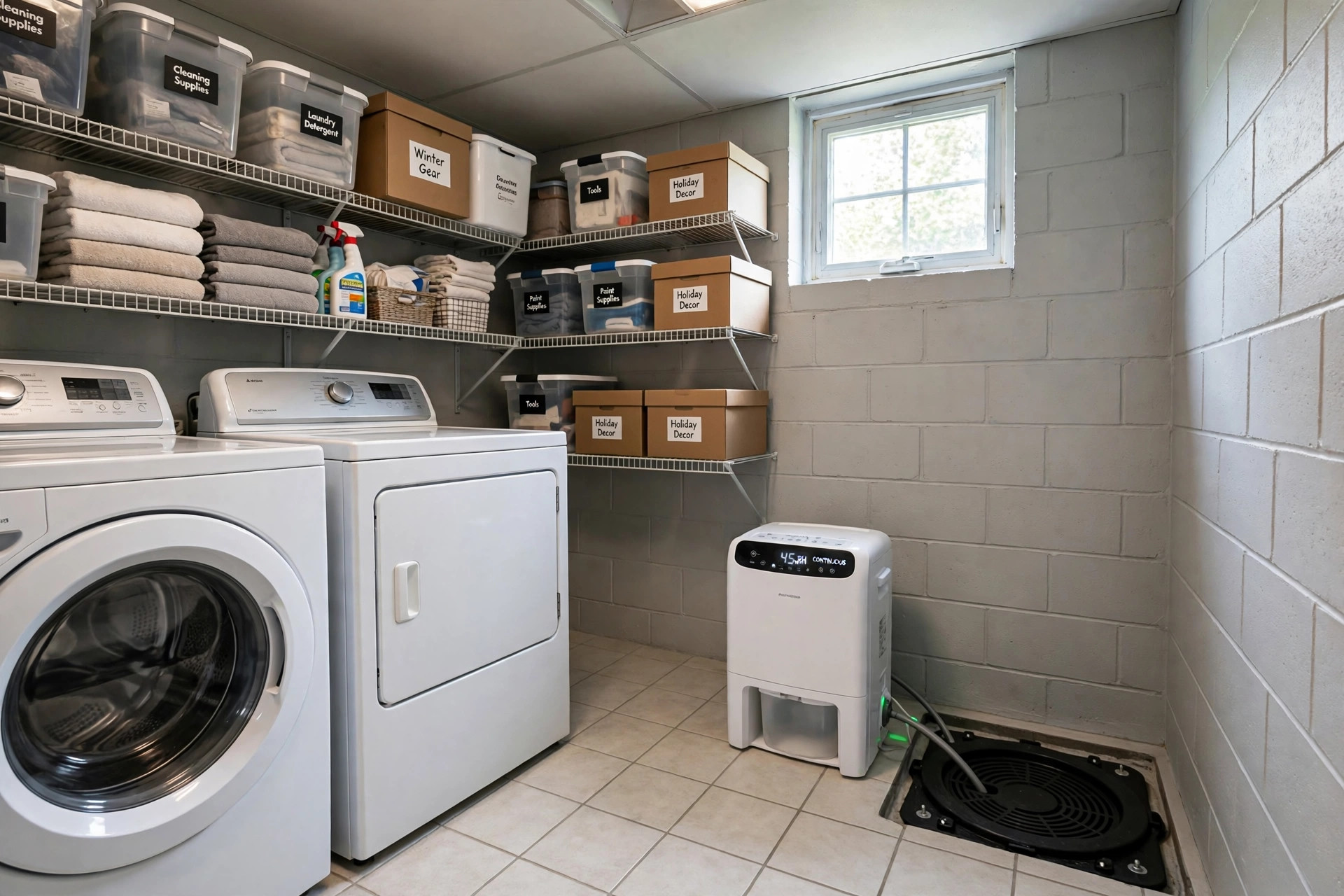
A portable unit stands on the floor and can be moved from room to room. Most basement units hold 50 to 70 pints. The pint number tells you how much water the unit can pull from the air in one day. A 70 pint dehumidifier suits most medium and large basements. Set it in the dampest area, but keep it a few feet from the wall so air flows around it. Empty the tank each day, or run a hose to a floor drain or sump pit so the unit drains on its own. Self-draining saves time and lets the unit run while you are away.
Whole-House Units
A whole-house dehumidifier ties into the home heating and cooling ducts and dries air for the whole house, not just the basement. It costs more up front. Learn more about the whole house dehumidifier installation cost usa before you decide. This option suits homes where damp air spreads through the ducts and where a portable unit cannot keep up. It runs quietly and needs no tank to empty. A heating contractor can size it to the home.
Tips for Best Use
Run the dehumidifier with the basement doors and windows closed so it does not fight the outside air. Clean the air filter each month. Wipe the tank with a mild bleach mix now and then to stop mold inside the tank. Set the target at 45 to 50 percent relative humidity. A unit that is too small will run all day and never reach the goal, so size the unit to the space and the dampness level. Maker sites such as Carrier, Trane, Lennox, Rheem, and Goodman publish sizing charts and product guides that can help you match the unit to the job.
Improve Air Flow and Ventilation
Stale air holds moisture. Moving air dries surfaces and helps the dehumidifier do its work. Add a small exhaust fan if the basement has a bath or laundry area. Let the furnace fan run now and then to mix basement air with house air. In summer, do not open basement windows on hot humid days. That lets more damp air in. In cool dry weather, a short cross breeze can help, but watch the hygrometer.
If the basement has ductwork, check that the joints are sealed. Leaky ducts can pull damp air from wall gaps and spread it. A little duct mastic or foil tape on the joints helps. Keep supply registers in the basement open so conditioned air reaches the space. Cool dry air from the furnace or air handler fights dampness on its own.
Seal Cracks and Stop Water Entry
No dehumidifier can win if water keeps flowing in. Seal small wall cracks with concrete caulk made for basements. For larger cracks or spots where water seeps in, call a foundation repair firm. Paint-on sealers can help with light seepage through bare walls, but they will not stop water that comes through a true crack or a floor joint.
Check the sump pump. Pour a bucket of water in the pit and make sure the pump starts and clears it fast. A pump that runs slow or sticks can flood the basement in a storm. Many owners add a battery backup so the pump keeps working in a power cut. Cover the sump pit with a tight lid. An open pit lets damp air rise into the room all day.
Wall and Floor Choices That Fight Dampness
Some finishes stand up to damp air and some do not. Paper-backed drywall and wall-to-wall carpet feed mold when they stay damp. If you finish a basement, use mold-resistant drywall or cement board in wet spots. Choose hard floors such as tile, sealed concrete, or vinyl plank over carpet. Leave a small gap behind baseboards so air can move.
Insulate basement walls with care. Foam board glued to the wall keeps the surface warm, which stops condensation. Do not trap damp fiberglass batts between studs and a cold wall. That can grow mold out of sight. The ENERGY STAR program offers guides on home energy upgrades that cover insulation and moisture together.
Cost and Price Ranges
Costs vary by home and region. A good portable dehumidifier runs from about 200 to 450 dollars. A whole-house unit with install often costs 1,500 to 3,500 dollars. Sealing small cracks yourself costs under 50 dollars. A foundation repair firm may charge 500 to several thousand dollars for major crack work. A new sump pump costs 150 to 400 dollars, plus labor. A battery backup adds 200 to 500 dollars.
Running costs are modest. A 70-pint unit uses about as much power as a few light bulbs on a dimmer, though it adds up if it runs all summer. Check the ENERGY STAR label to find units that use less power. Compare the yearly running cost with the cost of mold cleanup, which can run into the thousands. Most owners find the dehumidifier pays for itself.
Care and Upkeep Through the Year
Spring is the time to check gutters, downspouts, and grading before the rains. Test the sump pump. In summer, keep the dehumidifier running and watch the hygrometer. Empty or drain the tank as needed. In fall, clean the gutters again and seal any new cracks you find. In winter, dampness often drops, and you may be able to rest the dehumidifier. Wipe down the unit, clean the filter, and store it if you will not use it for months.
Set a monthly habit. Walk the basement once a month. Look at the walls and floor for new stains. Smell the air. Check the hygrometer. Catching a small leak early saves a big repair later. Keep the area around the foundation clear of stored goods and leaves so water can drain away.
Safety Notes
Mold can bother the lungs, eyes, and skin. Wear a dust mask, gloves, and eye wear when you clean moldy spots. Small patches can be wiped with soap and water or a mild bleach mix. Do not try to clean a large mold patch yourself. Call a mold cleanup firm for any area larger than about ten square feet.
Electric tools and standing water do not mix. Keep the dehumidifier and any cords out of puddles. Use a ground-fault outlet in the basement. If the basement floods, shut off power to the area before you step in.
Never block vents or flues to fight dampness. Gas heaters, water heaters, and furnaces need air to burn safe and vent fumes outside. If you seal the basement tight, make sure each fuel-burning unit still gets the air it needs. When in doubt, ask a licensed contractor.
Frequently Asked Questions
What humidity level is best for a basement?
Keep it between 30 and 50 percent. Above 60 percent, mold and dust mites grow fast. Below 30 percent, wood and some goods may dry out, but that is rare in a basement.
Do I need a dehumidifier if my basement feels dry?
Feeling dry is not enough. Hidden dampness can sit in wall cavities. Run a hygrometer for a week in summer. If the reading stays under 50 percent, you may not need one. If it climbs past 60 percent, get a unit.
Why does my basement smell musty?
Musty smells usually mean mold or mildew is growing somewhere. Check behind stored boxes, under stairs, and in dark corners. Find the damp source, dry it, and clean the spot. The smell often fades once the humidity drops below 50 percent.
Can opening windows lower basement humidity?
Sometimes, but only when the outside air is dry and cool. On a hot humid day, open windows let more damp air in and make things worse. Watch the hygrometer and close the windows if the number climbs.
How long should a dehumidifier run each day?
As long as it takes to hold 45 to 50 percent. In a damp summer that may be all day. In winter it may rest. A unit with a built-in humidistat turns itself on and off as needed, which saves power.
Should I run the dehumidifier in winter?
Many owners can rest it in winter when the air is dry. But some basements stay damp all year, near the water table or in mild climates. Keep the hygrometer in place. If the number stays above 55 percent, keep the unit running.
A Short Final Word
Damp basements are common in USA homes, but they are not something you must live with. Measure the air, find where the water comes from, and fix the source first. Add a well-sized dehumidifier, keep air moving, and choose finishes that resist mold. With steady care through the seasons, your basement can stay dry, clean, and safe to use.
References
Carrier. (n.d.). Heating and cooling systems. https://www.carrier.com ENERGY STAR. (n.d.). Energy efficient products. https://www.energystar.gov Family Handyman. (n.d.). DIY home repair and maintenance. https://www.familyhandyman.com Goodman. (n.d.). Heating and cooling equipment. https://www.goodmanmfg.com Lennox. (n.d.). Heating and cooling systems. https://www.lennox.com Rheem. (n.d.). Heating, cooling, and water heating. https://www.rheem.com This Old House. (n.d.). Home renovation guidance. https://www.thisoldhouse.com Trane. (n.d.). Heating and air conditioning. https://www.trane.com U.S. Department of Energy. (n.d.). Energy efficiency and renewable energy. https://www.energy.gov
Was this guide helpful?

About Michael Thompson
The My Garden US editorial team writes practical, in-depth home and garden guides for American homeowners — tested advice, no fluff.
You May Also Like
Best HVAC Companies Near Me Reviews 2026
May 6, 2026 0 views
Best Patio Heater for Winter Reviews USA: A Plain Guide to Warm Outdoor Nights
June 4, 2026 0 views
Best Electric Fireplace TV Stand Reviews USA: A Buyer’s Guide
July 15, 2026 0 views