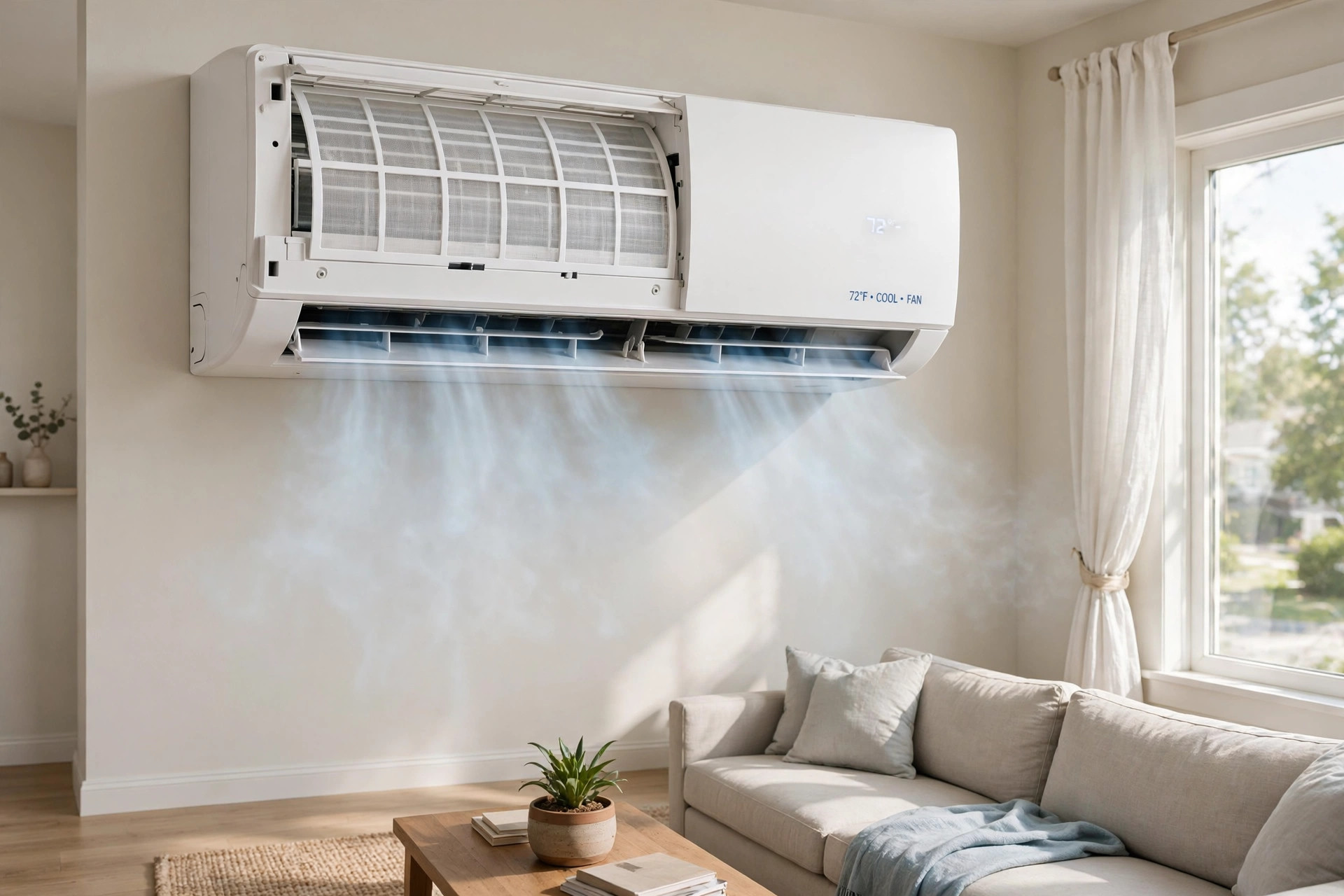

Many homeowners ask what the mini split maintenance cost per year USA families can expect will be before they buy a ductless system. A mini split is a popular way to heat and cool one room or a whole house without ducts. Like any machine, it needs care to run well. This guide explains the yearly cost in plain terms. It covers what a service visit includes, what makes the price go up or down, and how to keep your own costs down.
Why Yearly Mini Split Service Matters
A ductless mini split has an indoor head and an outdoor unit. The two parts share refrigerant lines and electric wires. Dust, mold, leaves, and dirt build up over time. Filters clog. Coils get dirty. Drains clog. When this happens, the system works harder and uses more power.
Regular service keeps the system clean and safe. It also protects the warranty. Most makers ask for yearly pro service to keep the warranty valid. A missed year can void it. For homes in hot or humid states, two visits a year may be wise.
Small problems found early cost little to fix. A dirty coil caught in spring may cost only the visit fee. A dead compressor in July costs far more. Yearly care is the cheap insurance your system needs.
What Is Included in a Mini Split Tune-Up: Mini Split Maintenance Cost Per Year Usa
A standard tune-up from a pro covers the indoor and outdoor units. Here is what a good tech will do.
Indoor Unit Checks
The tech removes and washes the filters. He wipes the coil and the fan wheel. He checks the drain line and the drain pan. He looks for mold or slime in the pan. He tests the remote and the thermostat. He checks that each head blows cold air in summer and warm air in winter. Learning how to clean mini split filters between visits keeps the indoor unit in top shape.
Outdoor Unit Checks
The tech clears leaves and trash from around the outdoor unit. He washes the coil with a gentle spray. He checks the fan motor and the blades. He tightens electric wires. He checks the refrigerant pressure. He looks for oil stains that hint at a leak. He makes sure the unit sits level on its pad.
System-Wide Tests
The tech runs the system in both modes. He checks the temperature drop across the coil. He listens for odd sounds. He tests the condensate pump if the home has one. He gives you a short report on what he found.
Some firms offer a deep clean for an extra fee. This includes a full wash of the indoor coil and a drain treatment. It is worth it every two or three years in dusty homes.
Types of Mini Split Systems and How They Affect Cost
Not all systems cost the same to service. The type and the number of heads matter.
A single-zone system has one indoor head. It is the cheapest to maintain. A multi-zone system has two to five heads. Each extra head adds time to the visit, so the bill rises.
Wall-mounted heads are the most common and the easiest to reach. Ceiling cassette heads cost more to service. The tech must work on a ladder and remove ceiling panels. Floor-mounted units sit low and can trap more dust.
Older systems may need more care. A ten-year-old unit may need part checks that a new one does not. Heat pump models that run all year see more wear than cooling-only models.
How Much Does Mini Split Maintenance Cost Per Year
The mini split maintenance cost per year USA homeowners pay most often falls between $100 and $400 for one annual visit. A single-head system at a fair local rate often costs $100 to $150. A two-head system often costs $150 to $250. Systems with three to five heads often cost $250 to $400.
Many firms sell yearly plans. A plan may cost $150 to $300 a year for one system. It often includes one or two visits and a small discount on repairs. Plans can save money if you would pay for two visits anyway.
These are service prices only. Parts cost extra. A new filter set may cost $20 to $40. A drain pump may cost $150 to $300 installed. A refrigerant refill can cost $200 to $600. A new fan motor can cost $300 to $600. This is why yearly care matters. It keeps small issues from becoming big bills.
Prices vary by state and by city. Labor rates are higher in large coastal cities. Rural areas may have fewer techs, which can also raise the price. Get two or three quotes before you pick a firm.
What Drives the Yearly Cost Up or Down
Several factors move the mini split maintenance cost per year USA owners pay up or down.
First is the number of indoor heads. Each head takes time to open, clean, and test. Five heads can take two to three hours.
Second is ease of access. A head over a stairwell or a high ceiling takes longer. An outdoor unit buried in bushes takes longer too. Clear access saves the tech time and saves you money.
Third is the age of the system. New units are quick to check. Old units may need more tests and more cleaning. Very old units may need hard-to-find parts.
Fourth is the climate. Homes near the coast face salt air that corrodes parts. Homes in dusty farm country face clogged filters. Homes with pets face pet hair in the coil. All of these add work.
Fifth is the service plan. A plan with two visits costs more than one visit. But it may cut the per-visit price by 15 to 20 percent.
Sixth is the time of year. Spring and fall are the slow months for HVAC firms. They may offer tune-up deals then. Summer and deep winter are busy. Prices may be higher and wait times longer.
When you plan a new install, it helps to know the ductless mini split installation cost per zone too. The install price and the yearly care price together show the true cost of the system.
DIY Care and Upkeep Between Pro Visits
You can do a lot yourself between pro visits. This keeps costs down and keeps the air clean.
Wash the filters every four to six weeks. Slide them out, rinse them with warm water, and let them dry fully before you put them back. Clogged filters cut airflow and raise power bills. In homes with pets, wash them every three weeks.
Keep the outdoor unit clear. Trim bushes back at least two feet on all sides. Pull weeds and leaves out of the coil fins. Do not stack boxes or tools against it. A clear unit breathes easy and runs cool.
Wipe the indoor head with a damp cloth every few months. Dust on the vents and the case can blow into the room. Check the drain line outside. A slow drip on a hot day is normal. No drip at all may mean a clog.
Listen to your system. New rattles, buzzes, or hums are early warnings. A musty smell from the head often means mold in the drain pan. Call a pro when you notice these signs. Do not open the refrigerant lines or the electric panel yourself. Those jobs need a licensed tech.
Set the thermostat with care. Big swings between hot and cold wear the system out. A steady set point keeps parts calm and bills low. Use the fan-only mode on mild days to move air without running the compressor.
Safety Notes for Mini Split Owners
Mini splits are safe when they are kept in good shape. A few safety points are worth knowing.
Electric shock is the main risk. The outdoor unit holds high-voltage parts. Turn the power off at the breaker before you touch anything beyond the filters. If you are unsure, leave it to the pro.
Refrigerant is sealed inside the lines. You should never see or smell it. A sweet or chemical smell near a head may mean a leak. Open a window and call a tech. Do not try to fix it yourself.
Mold can grow in a dirty drain pan. It can send spores into the room air. Regular filter washing and yearly drain cleaning stop this. If you see black spots on the vents, book a deep clean.
Water damage is another risk. A clogged drain can back water into the wall. Check the drain pan and the line each season. Make sure water flows freely out of the drain hose.
For general home safety guidance on heating and cooling gear, the U.S. Department of Energy publishes free tips. The Consumer Product Safety Commission also lists recalls for HVAC equipment.
How Mini Splits Compare to Other Systems
Some buyers wonder if a ductless system is worth the upkeep. A mini split vs central AC cost comparison shows the full picture. Central air needs duct cleaning and larger tune-ups. Mini splits skip the ducts but need more frequent filter care.
Mini splits often cost less to run each month. They heat and cool only the rooms you use. They avoid the energy loss that ducts cause. The yearly service cost is close to that of a central system. Over ten years, the lower power bills often pay back the install cost.
Heat pumps work well in mild winters. In cold states, a cold-climate model keeps heat down to very low temps. Ask your tech if your model needs extra winter care. The ENERGY STAR program lists efficient models that cost less to run.
Getting the Best Price on Yearly Service
A few simple steps can cut the mini split maintenance cost per year USA service firms charge.
Book in the off season. March through May and September through November are the slow months. Many firms run tune-up specials then. You may save $20 to $50 a visit.
Ask about multi-system discounts. If you have two systems, some firms cut the price on the second. Ask about neighbor deals too. Some techs will service two homes on one trip for less.
Compare written quotes. A quote should list each head and each task. Vague quotes hide extra fees. Ask if the quote includes tax and a service fee.
Keep your own records. Write down each visit date and what was done. Show it to the next tech. Good records stop repeat work and speed up each visit.
Consider a plan only if it fits. A plan is good if it includes two visits and a repair discount. It is poor if it locks you in with fees. Read the fine print before you sign.
For product background and owner manuals, maker sites help. Carrier and Trane publish care guides for ductless units. Rheem and Lennox list certified local dealers. Goodman posts warranty terms that stress yearly service. For how-to repair articles, This Old House and Family Handyman both run HVAC sections.
FAQ
How often does a mini split need pro service?
Once a year is enough for most homes. Book it in spring before cooling season. Homes with pets, heavy dust, or coastal salt air do better with two visits a year, one in spring and one in fall.
What is the average mini split maintenance cost per year in the USA?
Most single-head owners pay $100 to $150 a year for one pro visit. Multi-head systems cost $150 to $400 a year. Yearly plans run $150 to $300. Parts and deep cleans cost extra.
Can I service a mini split myself?
You can wash filters, wipe the case, and keep the outdoor unit clear. Leave coil washing, refrigerant checks, and electric work to a licensed tech. DIY mistakes can void the warranty and pose shock risks.
Does skipping service void the warranty?
Often yes. Most makers require proof of yearly pro service to honor warranty claims. Keep every receipt and service report. One missed year can cost you a free compressor or coil later.
Why does my mini split smell musty?
A musty smell usually means mold or slime in the drain pan or on the coil. Wash the filters first. If the smell stays, book a deep clean. A pro will wash the coil and treat the drain line.
How long do mini splits last with good care?
A well-kept mini split lasts 15 to 20 years. Regular filter washing and yearly tune-ups are the two biggest factors. Neglected units often fail in 10 to 12 years.
A Final Word
The mini split maintenance cost per year USA homeowners face is modest next to the comfort these systems give. Plan on $100 to $400 a year for pro care, based on the size of your system. Wash filters yourself, keep the outdoor unit clear, and book each spring visit on time. Your system will run quiet, use less power, and last many more years.
References
Carrier. (n.d.). Heating and cooling systems. https://www.carrier.com ENERGY STAR. (n.d.). Energy efficient products. https://www.energystar.gov Family Handyman. (n.d.). DIY home repair and maintenance. https://www.familyhandyman.com Goodman. (n.d.). Heating and cooling equipment. https://www.goodmanmfg.com Lennox. (n.d.). Heating and cooling systems. https://www.lennox.com Rheem. (n.d.). Heating, cooling, and water heating. https://www.rheem.com This Old House. (n.d.). Home renovation guidance. https://www.thisoldhouse.com Trane. (n.d.). Heating and air conditioning. https://www.trane.com U.S. Consumer Product Safety Commission. (n.d.). Product safety information. https://www.cpsc.gov U.S. Department of Energy. (n.d.). Energy efficiency and renewable energy. https://www.energy.gov
Was this guide helpful?

About Michael Thompson
The My Garden US editorial team writes practical, in-depth home and garden guides for American homeowners — tested advice, no fluff.
You May Also Like

What Does Attic Fan Installation Cost Near Me?
January 13, 2026 0 views
Best Gas Furnace Brands 2026 Reviews USA: A Plain Guide for Homeowners
April 28, 2026 0 views
Boiler Replacement Cost Near Me 2026: What Homeowners Should Know
July 25, 2026 0 views