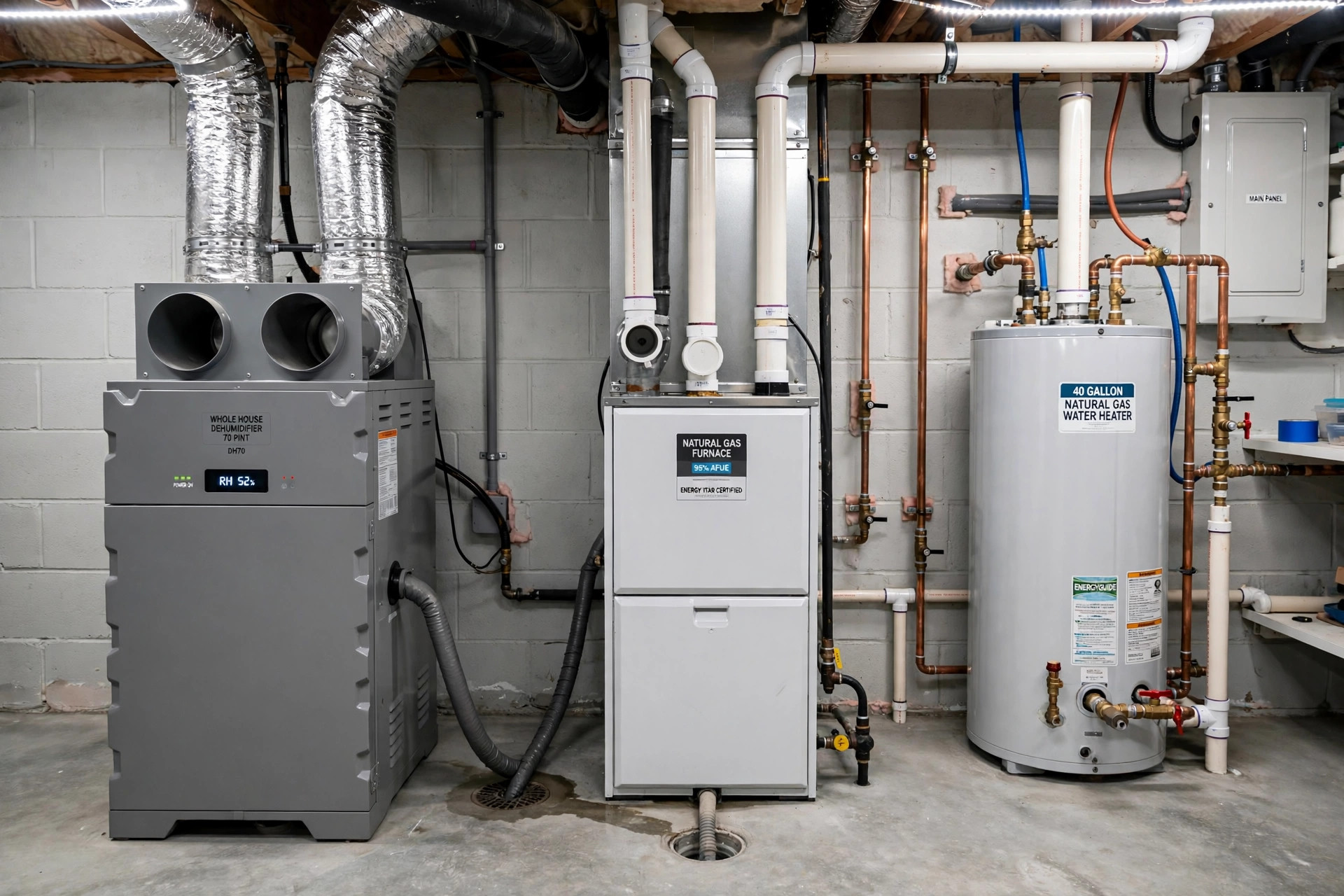

A whole house dehumidifier pulls damp air out of your entire home, not just one room. It works with your heating and cooling system and keeps every floor at a steady, healthy humidity. For many families in the USA, the real question is not whether the machine works, but what a whole house dehumidifier installation costs in the USA. This guide walks through prices, types, sizing, and care, so you can make a calm, informed choice before you call a contractor.
Why a Whole House Dehumidifier Matters
Moisture is a quiet problem. It does not bang pipes or trip breakers. It creeps in through the crawl space, settles in the basement, and drifts up into the living rooms. When indoor air holds too much water, wood floors can cup, doors swell, and wallpaper peel at the seams. Musty smells gather in corners. Clothes in the closet feel damp to the touch.
The health of a home matters too. High humidity lets dust mites thrive and gives mold a place to grow. Many people notice that their nose stuffs up at night or that their eyes itch in certain rooms. Keeping indoor moisture in the healthy range, around 40 to 50 percent, solves much of this.
A single portable unit in the basement can only do so much. It treats one room, and the rest of the house stays damp. Homeowners who need a best dehumidifier for basement 2026 usa learn quickly that portable models ask for constant bucket emptying and noisy operation. A whole house unit, on the other hand, ties into your ductwork and serves every room at once. It drains on its own and runs quietly in the background. That whole-home approach is the main reason families make the switch.
How a Whole House Dehumidifier Works: Whole House Dehumidifier Installation Cost Usa
The idea is simple. The unit sits near your furnace or air handler. Air from the home flows through it. Inside, cold coils pull moisture from the air, much like the cold side of a glass on a hot day. The water drips into a pan and drains away, often into the same drain your air conditioner uses. The drier air then warms back up a little and flows through your ducts to every room.
Most units wire into your existing thermostat or use their own humidistat control. You set a target, often around 45 percent, and the machine runs on its own. Some models talk to your furnace fan so air keeps moving even when heating or cooling is off. This steady circulation is what makes whole house systems work better than room units.
In warm months, your air conditioner already removes some moisture. But in the shoulder seasons, when it is humid outside and not hot enough to run the air conditioner, humidity climbs indoors. That is when a whole house dehumidifier earns its keep.
Types and Options for Whole House Dehumidifiers
Whole house dehumidifiers come in a few main types. Each suits a different home and budget.
Ducted systems are the most common. The unit ties directly into your heating and cooling ducts. It treats all the air the system moves. These cost more to install but give the most even results. Makers of home comfort equipment publish sizing charts and guides that help contractors match a unit to your ducts and square footage.
Standalone whole house units sit in the basement or a utility room and blow dry air into the space. They do not tie into ducts. They suit homes without ductwork, such as houses heated by baseboards or radiators. A portable 70 pint dehumidifier reviews for basements page can help you compare large portables, but a true standalone whole house unit moves much more air per day.
Crawl space units are built low and flat to fit in tight spaces. They keep crawl space air dry, which protects the floor framing above. If your crawl space is the main source of moisture, a dedicated unit there may be the right call, and you may also want to read about the best crawl space dehumidifier 2026 usa before you decide.
Units are also rated by capacity, in pints per day. Common sizes run from 70 pints per day up to 155 pints per day for large or very damp homes. A contractor sizes the unit from your square footage, climate, and how damp the home runs. Bigger is not always better. An oversized unit may run in short bursts and waste energy, while a right-sized unit holds humidity steady.
What to Look for When You Choose
Before you sign a quote, look at a few key facts about the machine itself.
Capacity. Match the pints per day to your home. A 2,000 square foot home in a humid climate may need 90 to 120 pints per day. Your contractor should run a load calculation rather than guess.
Energy use. Look for units that carry the federal energy efficiency label. They cost a little more up front but use less power for years. Efficiency ratings for dehumidifiers are listed in liters per kilowatt hour, and higher is better. The EPA maintains the national efficiency program and publishes the mark shoppers see on qualifying equipment.
Noise. Check the decibel rating. A unit near living space should run quietly, close to the hum of a refrigerator. Ducted units hide in the utility room, so noise matters less, but it still pays to ask.
Drainage. Gravity drains work when a floor drain or sump pit sits nearby. If the unit must push water uphill, you need a built-in or separate condensate pump. Know which one your home needs before the installer arrives.
Filter type and cost. Most units use a washable or replaceable filter. Ask the price of replacements and how often to change them. A cheap filter that costs forty dollars every three months adds up.
Warranty. Look for at least five years on the compressor and sealed parts. Some brands offer longer coverage when a licensed dealer installs the unit. Register the warranty in the first month.
Brand reputation. Names like Carrier, Trane, Lennox, Goodman, and Rheem all make whole house dehumidifiers or the HVAC systems they tie into. Their websites list dealer locators, product specs, and warranty terms that help you compare before you buy.
Whole House Dehumidifier Installation Cost in the USA
Now to the heart of the matter: what does a whole house dehumidifier installation cost in the USA? Prices vary by region, home size, and the type of unit, but most homeowners fall into a clear range.
The unit itself typically costs 1,000 to 2,500 dollars. Basic ducted units start near the low end. High-capacity models with smart controls and built-in pumps run higher.
Installation labor usually adds 500 to 1,500 dollars. A simple install, where ductwork is easy to reach and a drain sits nearby, lands at the low end. A hard install, with long duct runs, new wiring, or a condensate pump, costs more.
Total installed cost for most American homes runs 1,500 to 4,000 dollars. In the humid Southeast and Gulf Coast, where larger units and longer duct runs are common, quotes can reach 4,500 dollars. In dry or mild regions, totals stay nearer 1,500 to 2,500 dollars.
Several things push the price up or down. Ductwork condition matters most: if your ducts need sealing or new branches, labor climbs. Electrical work matters too: the unit needs its own circuit in many cases. Permit fees add 50 to 200 dollars in many towns. Some contractors bundle a humidistat upgrade or a smart thermostat at the same visit, which saves a second service call.
Get at least three written quotes. Ask each contractor to list the unit model, the capacity, the labor hours, and any extras separately. A low quote that skips duct sealing or drainage work often costs more in repairs later. Home improvement guides published by This Old House and Family Handyman remind readers to check that a contractor holds a license and carries insurance before any HVAC work begins.
Running costs matter over the life of the unit. A whole house dehumidifier adds roughly 10 to 25 dollars a month to the electric bill, depending on local rates and how hard it runs. ENERGY STAR rated models trim that figure. Federal energy resources at Energy.gov and the ENERGY STAR program publish guides on cutting moisture control costs and on picking efficient home equipment.
Care and Upkeep
A whole house dehumidifier asks for little, but it does ask for something. Regular care keeps it running strong for ten to fifteen years.
Clean or replace the filter every one to three months. A clogged filter chokes airflow and forces the machine to work harder. Most filters wash out with warm water and mild soap, then dry fully before you put them back.
Check the drain line twice a year. Pour a cup of white vinegar through it to keep algae from growing. A blocked drain can send water across the basement floor, so this small habit prevents a big mess.
Once a year, have the coils and pan cleaned. Many homeowners fold this into their annual furnace or air conditioner tune-up. The technician can check the refrigerant, the humidistat, and the condensate pump in the same visit.
Watch for signs of trouble. Ice on the coils, water pooling under the unit, or a machine that runs all day without lowering humidity all call for a service visit. Catching these early keeps repair bills small.
Safety
Dehumidifiers are safe machines, but a few rules protect your home.
Make sure the unit is installed on its own electrical circuit or on a circuit that can handle the load. Extension cords are not safe for a hard-working compressor. A licensed electrician should handle any new wiring.
Keep the drain clear. Standing water in a pan or on the floor invites mold, which defeats the whole purpose of the machine.
If the unit uses a condensate pump, test it once a season. A failed pump can overflow in a day. Many pumps have a safety switch that shuts the dehumidifier off if the tank fills; ask your installer to confirm this feature is wired in.
Finally, do not set the target humidity below 40 percent. Air that is too dry cracks wood, irritates skin, and wastes energy. The healthy band of 40 to 50 percent protects both the home and the people in it.
Frequently Asked Questions
How long does installation take? Most installs take four to eight hours for a crew of one or two. Simple ducted installs in homes with easy basement access can finish in half a day. Complex jobs with new wiring or long duct runs may take a full day.
Can I install a whole house dehumidifier myself? This is not a good do-it-yourself project. The work involves sheet metal ductwork, electrical circuits, and sometimes refrigerant lines. A licensed HVAC contractor handles all three safely and keeps the warranty valid. A poor install can void the warranty and damage your ducts.
Will it work with my existing furnace and air conditioner? In most cases, yes. Ducted units are made to tie into standard American heating and cooling systems. The installer may add a control board or a dedicated humidistat. Homes without ductwork need a standalone unit instead, which sits in the basement and treats the air directly.
How much does it cost to run each month? Expect 10 to 25 dollars a month in electricity for a typical home. Homes in very humid areas run longer each day and land at the high end. Energy-efficient models cost less to run. The unit pays back part of this cost because your air conditioner runs less once the air is drier.
What size unit does my home need? Size depends on square footage, climate, and dampness. A moderately damp 2,000 square foot home usually needs 90 to 120 pints per day. A very damp or larger home may need 130 to 155 pints per day. Ask the contractor to size the unit from a written calculation, not a guess.
Does a whole house dehumidifier need a drain? Yes. It pulls many pints of water from the air every day, so it must drain somewhere. The best setups tie into a floor drain or a condensate pump line. Gravity drains are simple and reliable when the layout allows. If no drain is near, the installer adds a pump.
A Final Word
Damp air costs money and comfort. It wears out wood, feeds mold, and makes summer heat feel worse. A whole house dehumidifier solves the problem at its root, treating every room at once instead of fighting one damp corner at a time.
The whole house dehumidifier installation cost in the USA runs 1,500 to 4,000 dollars for most homes, a fair price for a machine that lasts a decade or more and protects the whole house. Get three quotes, choose a right-sized efficient unit, and keep up with simple filter and drain care. Your home will feel cooler, smell cleaner, and stay sound for years to come.
References
Carrier. (n.d.). Heating and cooling systems. https://www.carrier.com ENERGY STAR. (n.d.). Energy efficient products. https://www.energystar.gov Family Handyman. (n.d.). DIY home repair and maintenance. https://www.familyhandyman.com Goodman. (n.d.). Heating and cooling equipment. https://www.goodmanmfg.com Lennox. (n.d.). Heating and cooling systems. https://www.lennox.com Rheem. (n.d.). Heating, cooling, and water heating. https://www.rheem.com This Old House. (n.d.). Home renovation guidance. https://www.thisoldhouse.com Trane. (n.d.). Heating and air conditioning. https://www.trane.com U.S. Department of Energy. (n.d.). Energy efficiency and renewable energy. https://www.energy.gov
Was this guide helpful?

About Michael Thompson
The My Garden US editorial team writes practical, in-depth home and garden guides for American homeowners — tested advice, no fluff.
You May Also Like

What Does Attic Fan Installation Cost Near Me?
January 13, 2026 0 views
Best Line Voltage Thermostat Reviews USA: A Plain Guide to Smart, Simple, and Reliable Heating Control
January 11, 2026 0 views
Blown In vs Batt Insulation Cost Comparison
September 21, 2026 0 views