
A crawl space is the low, closed area under many American homes. It sits between the ground and the first floor. Most people never go down there. Yet what happens in that dark space matters a great deal. Damp air in a crawl space can rot floor joists. It can feed mold. It can push musty air up into the rooms where a family lives. The best crawl space dehumidifier 2026 usa shoppers can buy is the one that keeps that hidden space dry year after year. This guide walks through the choice in plain terms. It covers why the unit matters, what to look for, what types exist, what prices look like, how to keep the machine in good order, and what safety rules to follow.
Why a Crawl Space Needs a Dehumidifier
Water moves up from bare soil. It comes through vents in the foundation. It seeps in after heavy rain. In warm states, summer air is thick with moisture, and that moisture settles in cool crawl spaces. In cold states, snowmelt and spring rain keep the ground wet for months. Once damp air is trapped, it does not leave on its own.
The harm builds slowly. Wood that stays damp softens. Floor joists and beams lose strength. Mold grows on damp lumber and on paper-faced insulation. Mold spores drift up through small gaps into the living area. Many homeowners first learn of the problem when they smell a musty odor, or when a home inspector finds soft wood during a sale.
A dehumidifier made for crawl spaces pulls moisture out of the air and holds the relative humidity at a safe level. Most experts point to a range between 30 and 50 percent. At that level, mold finds it hard to grow. Wood stays dry. The air that rises into the home is cleaner.
There is a second gain. Dry air is easier to heat and cool. Many homeowners notice that their whole-house system runs less hard once the crawl space is dry. Guides on home energy use from the U.S. Department of Energy note that moisture control is a real part of energy waste in homes. Pairing a dehumidifier with good insulation can make a difference in monthly bills.
What to Look for When You Choose: Best Crawl Space Dehumidifier 2026 Usa
Choosing the best crawl space dehumidifier 2026 usa stores carry starts with size. Units are rated in pints per day, which means how much water they can pull from the air in 24 hours. A small crawl space under 1,000 square feet may need a 50-pint unit. A large or very damp space may need 90 pints or more. A unit that is too small will run all day and still fail to dry the air.
Drainage comes next. Crawl space units should drain on their own. Most models use a gravity hose or a built-in pump that pushes water to a sump pit or to the outside. A hose is simple and has few parts to fail. A pump is useful when the drain point sits higher than the unit. Either way, the owner should never have to crawl down to empty a bucket.
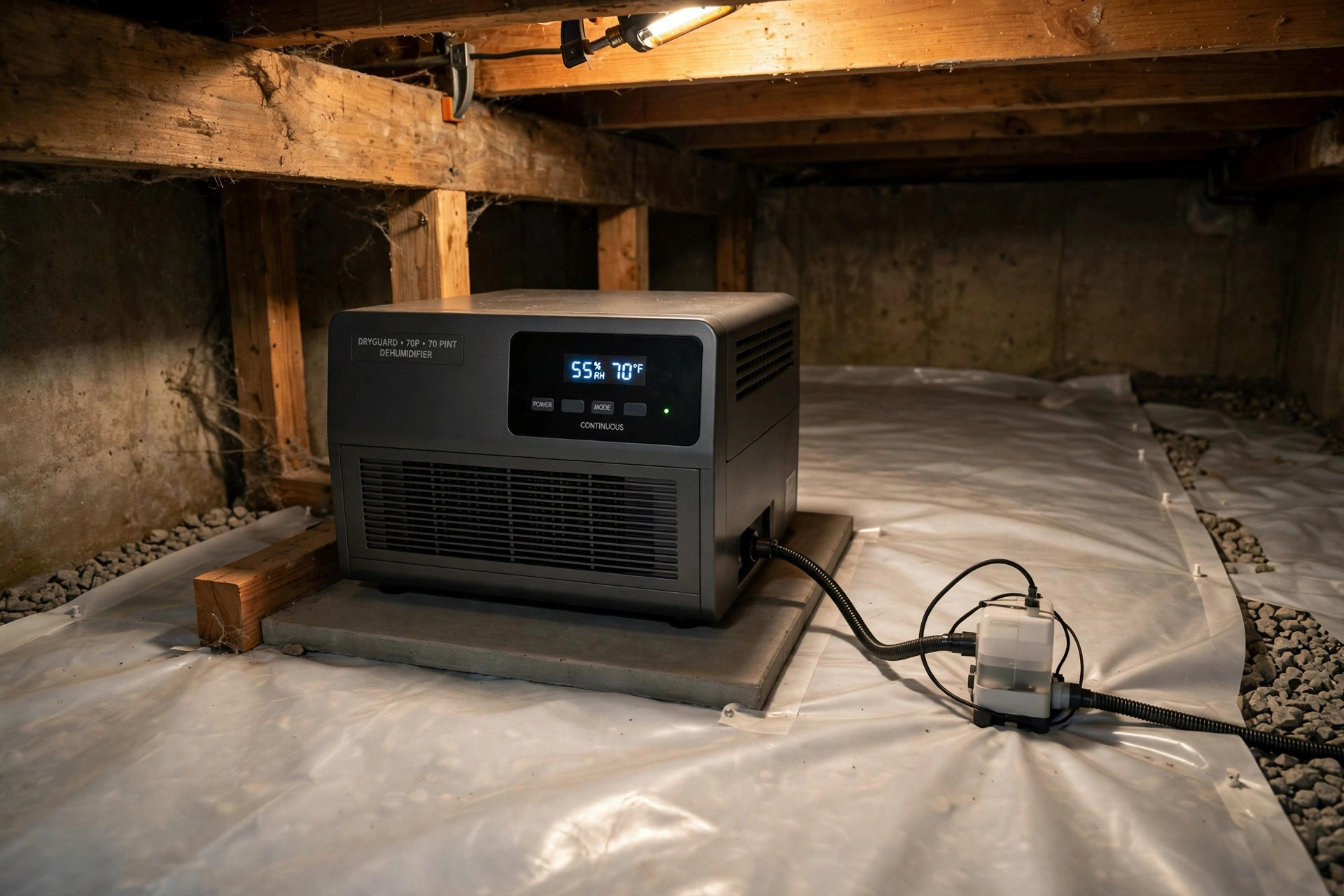
Low-profile design matters because crawl spaces are short. Many top models stand only 12 to 14 inches tall. They slide between joists and sit flat on the ground or on a low pad. Check the height of your space before you buy. Measure twice.
Look for a control that sets a target humidity level. A simple humidistat lets you choose, say, 45 percent, and the machine turns on and off to hold it. Some units add a remote control or a display that can sit upstairs. That is a real comfort, since no one wants to crawl down just to check a reading.
Build quality counts in a rough space. A steel or heavy plastic case lasts longer than a light shell. A good filter is also worth the money. It keeps dust out of the coils and keeps the machine efficient. A washable filter saves the cost of replacements.
Noise is less of a worry in a crawl space than in a bedroom. Still, a quieter unit is a sign of good design. And check the warranty. Two to five years is common on better models. A maker that stands behind its product tells you something about its trust in the build.
Types of Crawl Space Dehumidifiers
Three main types serve crawl spaces. Each has strengths.
Portable home dehumidifiers are the units sold at hardware stores for basements. They are light and cheap. They are not built for crawl spaces. They use gravity drains that need emptying, and they quit working well in cool air. For a small, mild job they can help for a time, but they are not the answer for a real crawl space problem.
Dedicated crawl space dehumidifiers are the right tool. They are low, wide, and made to run in cool, damp air. Most use a pump or hose drain. Many work down to about 40 degrees Fahrenheit. They cost more than portable units, but they last longer and do the job with far less fuss. When shoppers search for the best crawl space dehumidifier 2026 usa brands sell, these dedicated units are what the search results show.
Whole-house dehumidifiers tie into the duct system. They dry the entire home at once, including the crawl space if the ductwork reaches it. They are the most costly option and usually need a professional to install them. They suit owners who want one system to manage humidity everywhere. Reviews of whole-house setups from Carrier and Trane describe how these units work beside a furnace or air handler.
For most homes, a dedicated crawl space unit is the sweet spot. It is made for the space, drains on its own, and runs for years with simple care.
Cost and Price in 2026
Prices for crawl space dehumidifiers in 2026 fall into clear bands. A dedicated crawl space unit runs from about 800 to 2,000 dollars for the machine alone. Larger units with pumps and remote controls sit at the top of that range. Portable units cost far less, often 250 to 400 dollars, but they are not built for the job and often fail early in a crawl space.
Installation adds to the bill. A simple drop-in install with a hose drain can cost 200 to 500 dollars. A full job with a pump, a new drain line, and a vapor barrier over bare soil can run 1,000 to 3,000 dollars or more. Many owners do the full job at once, since a vapor barrier makes the dehumidifier work much less hard. Sealing foundation vents and laying thick plastic over the soil are the classic first steps, and repair guides at Family Handyman walk through both tasks for do-it-yourself owners.
Operating cost is modest. A typical unit uses about the same power as a small window air conditioner. Expect 20 to 50 dollars a month in extra electricity during damp months. ENERGY STAR rated models use less. Shoppers can compare efficient models through ENERGY STAR, which lists certified dehumidifiers and their energy use.
Watch for repair bills on cheap machines. A low price can hide weak parts. Spending more up front on a solid unit often costs less over ten years. Maker pages from Lennox and Rheem show how indoor air equipment is built to last, and the same idea holds for a good crawl space unit.
Homeowners who are weighing other moisture fixes may also read about a bathroom fan with humidity sensor for wet bathrooms, compare central air conditioner brands for whole-house cooling, or look at multi zone mini split cost when adding cooling to rooms with no ducts. Each of these projects touches indoor moisture in its own way.
Care and Upkeep
A crawl space dehumidifier needs little care, but it does need some. Plan on a quick check twice a year, in spring and in fall.
Clean or replace the filter first. A clogged filter chokes airflow and makes the machine work too hard. Most filters slide out and rinse clean with water. Let the filter dry fully before you slide it back in.
Check the drain line next. A hose can kink. A pump line can clog with slime or mineral crust. Pour a cup of water through the line and watch it flow. If the unit has a pump, listen for the pump to kick on. Stagnant water in a line is a breeding ground for mold, so keep it clear.
Wipe down the case and look for rust or damage. Check the power cord for wear. Make sure the unit still sits level. A unit that tips can leak water onto the ground instead of into the drain.
Watch the humidity reading. If the display shows rising numbers even though the machine runs, something is wrong. It may be a blocked filter, a dead drain pump, or a leak in the crawl space that is letting in more water than the unit can handle. Fix the cause. Do not just buy a bigger machine.
Keep the crawl space itself tidy. Move stored items away from the unit so air can flow. Check the vapor barrier for tears. Small tears can be patched with tape made for the job. A sound barrier and a dry unit work as a team.
Safety
Crawl spaces are tight and dark. Take care when you go down.
Turn off the power to the unit before you touch it for cleaning. Water and electricity do not mix. Use a grounded outlet, never a long extension cord running from the house. If there is standing water in the crawl space, do not enter until the water is gone and the power is off. Flood water may hide live wires.
Wear a dust mask and gloves. Mold is common in damp crawl spaces, and the air can carry spores. A headlamp leaves both hands free. Tell someone in the house that you are going down, and take a phone.
Keep drain lines clear of electrical boxes. Do not let the unit blow warm exhaust air onto wood that is already soft. And follow the maker guide. Goodman and other equipment makers print clear safety notes in their manuals, and the same habits apply here.
If mold covers a large area, or if floor joists look soft and sag, call a professional. Some jobs are not for a homeowner with a mask and a flashlight.
Frequently Asked Questions
How long should a crawl space dehumidifier last? A well-made unit lasts eight to twelve years with basic care. Cheap portable units may fail in two or three years in a rough crawl space. Regular filter cleaning and a clear drain line do more for long life than anything else.
What humidity level should I set? Aim for 30 to 50 percent relative humidity. Most owners set 45 percent. Below 30 percent the air feels too dry and wood can shrink. Above 60 percent mold grows freely. A steady 45 percent is the common middle ground.
Do I still need vents in my crawl space? Many building experts now favor sealed crawl spaces with a vapor barrier and a dehumidifier over open vents. Open vents let damp summer air in and do little good. Check local codes before you seal vents, since rules differ by state and county.
Can I install the unit myself? A handy owner can set a unit with a hose drain in an afternoon. Jobs that need a pump, new electrical outlets, or a full vapor barrier are better left to a contractor. When in doubt, get a quote. A bad install costs more to fix than a good install costs to buy.
Will a dehumidifier lower my energy bills? It can. Dry air takes less energy to heat and cool. Homes with wet crawl spaces often see their heating and cooling systems run longer than needed. Drying the space eases that load, though the unit itself uses some power.
How do I know the unit is working? Check the humidity reading after a week of running. Numbers should fall and hold near your set point. The ground under the vapor barrier should feel dry. Musty smells should fade. If readings stay high, look for a water leak or a failed drain before you blame the machine.
A Short Final Word
A dry crawl space is a quiet kind of wealth. It guards the wood that holds up the house. It keeps mold out of the air a family breathes. It helps heating and cooling do their jobs. The best crawl space dehumidifier 2026 usa buyers can choose is the one sized for the space, built for cool damp air, and able to drain on its own. Pick it with care, set it at 45 percent, and check on it twice a year. The house will thank you in ways you never have to see.
References
Carrier. (n.d.). Heating and cooling systems. https://www.carrier.com ENERGY STAR. (n.d.). Energy efficient products. https://www.energystar.gov Family Handyman. (n.d.). DIY home repair and maintenance. https://www.familyhandyman.com Goodman. (n.d.). Heating and cooling equipment. https://www.goodmanmfg.com Lennox. (n.d.). Heating and cooling systems. https://www.lennox.com Rheem. (n.d.). Heating, cooling, and water heating. https://www.rheem.com Trane. (n.d.). Heating and air conditioning. https://www.trane.com U.S. Department of Energy. (n.d.). Energy efficiency and renewable energy. https://www.energy.gov
Was this guide helpful?

About Emily Rodriguez
The My Garden US editorial team writes practical, in-depth home and garden guides for American homeowners — tested advice, no fluff.
You May Also Like
How Much Does an Outdoor Wood Boiler Cost Installed in the USA?
October 5, 2026 1 views
Best Insulation for Crawl Space Walls USA: A Complete Homeowner Guide
October 1, 2026 0 views
Best Line Voltage Thermostat Reviews USA: A Plain Guide to Smart, Simple, and Reliable Heating Control
January 11, 2026 0 views