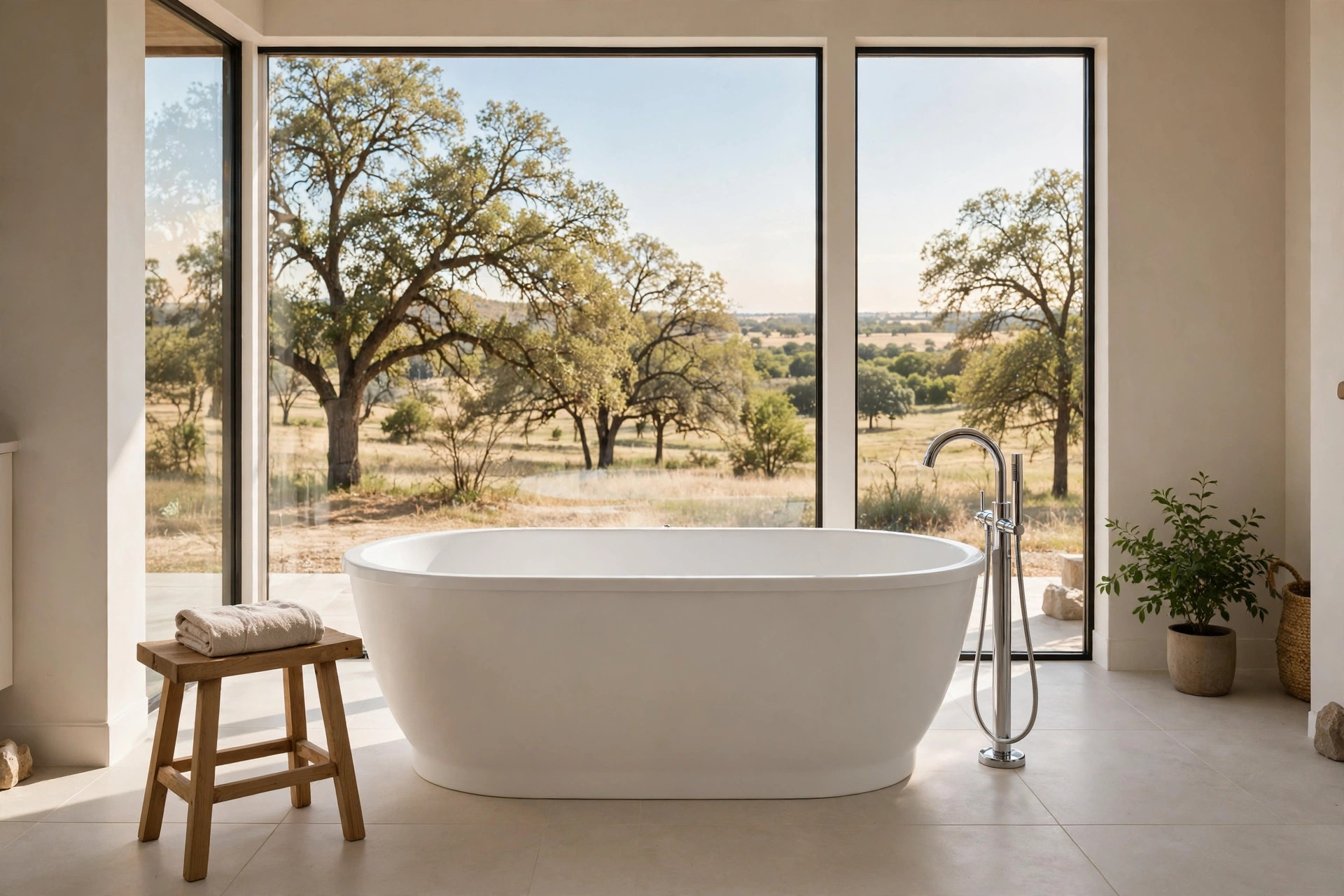

A deep bath at the end of a long day is a small luxury. For many people in Texas, freestanding soaking tubs texas homes usa buyers search for have become the centerpiece of the bathroom. These tubs stand alone, away from the wall. They are deeper than common tubs. They let a bather sit upright, covered in warm water up to the shoulders. No shower, no jets required. Just still, deep water.
Texas homes come in many shapes. A ranch house outside Austin, a brick colonial in Dallas, a new build in the Houston suburbs. Each one can hold a freestanding tub if the floor and the space allow it. This guide walks through why these tubs matter, what to look for, the main types, the costs, and how to keep one in good shape. It is written for regular homeowners, not for trade workers. Every point is kept plain and practical.
Why a Freestanding Soaking Tub Matters
A standard alcove tub holds about fourteen inches of water. A soaking tub holds twenty or more. That extra depth changes the whole bath. The back rests against a sloped wall. The shoulders stay under the warm water. Muscles loosen. The day’s tension eases.
In Texas, heat is a fact of life. Summer days run hot for months. A deep, cooler soak in the evening can cool the body down. In winter, when a cold front drops the temperature, a hot soak warms the bones. The tub works in both seasons.
There is also the matter of the room itself. A freestanding tub changes how a bathroom feels. It draws the eye. It makes a plain room feel like a spa. Homeowners who plan to sell often find that a well-set tub adds appeal to a listing. Buyers in Texas master suites expect a touch of luxury. A freestanding soaking tub delivers that at a lower cost than a full remodel.
Health benefits are modest but real. Warm water helps tight muscles relax. A quiet soak before bed helps some people sleep better. Doctors often suggest warm baths for sore joints. The tub is not a medical device, but it supports a calm routine.
What to Look For When You Choose: Freestanding Soaking Tubs Texas Homes Usa
Buying a freestanding soaking tub is a bigger decision than it looks. The tub must fit the room, the floor, and the plumbing. Start with the basics.
Measure the Space First
A freestanding tub needs clearance on all sides. Most models need at least six inches of free space around the shell for cleaning and for the floor-mounted faucet. Measure the room from wall to wall. Then subtract the tub’s length and width plus the clearance.
Common tub lengths run from fifty-five to seventy-two inches. A person over six feet tall needs a longer tub. Widths run from twenty-eight to thirty-six inches. Check the door swing too. A tub should not block the bathroom door or the path to the toilet.
Texas homes often have large master bathrooms. New builds in the suburbs can have rooms of two hundred square feet or more. That is plenty of space. Older homes may have tighter rooms. In a small room, a compact fifty-five-inch tub still works. It simply needs careful placement.
Check the Floor
Water is heavy. A gallon weighs over eight pounds. A soaking tub can hold sixty to eighty gallons. Add the tub itself and the bather, and the total can pass one thousand pounds. That weight presses on a small area of floor.
Most slab-on-grade Texas homes handle this without trouble. Homes with pier-and-beam foundations or upper-floor bathrooms need a check. A carpenter or contractor can tell you if the joists need extra support. This is a normal step. Do not skip it.
Drain and Faucet Placement
Freestanding tubs drain through the floor. The drain pipe must line up with the tub’s drain hole. Some tubs have the drain at the center. Others place it at one end. Know the drain location before the plumber roughs in the pipes.
The faucet stands on the floor beside the tub or mounts on the wall behind it. Floor-mounted fillers are the common choice. They need a water line run under the floor. A wall-mounted filler needs a finished wall behind the tub. Plan this early. Moving pipes after the floor is set costs far more.
Material Choices
The shell material sets the price, the weight, and the feel of the water.
Acrylic is the most common choice. It is light, warm to the touch, and holds heat well. A fiberglass layer backs the acrylic for strength. Acrylic tubs cost less than most other types. They resist chips and scratches. With care, they last for decades.
Cast iron is the old standard. It is coated with enamel. It holds heat the longest of any material. It is also very heavy, often over three hundred pounds empty. The floor must be strong. Cast iron tubs cost more. They suit buyers who want a tub that lasts a lifetime.
Stone resin, sometimes sold as solid surface, mixes crushed stone with resin. The result is smooth, heavy, and modern in look. It holds heat well and resists stains. Prices sit between acrylic and cast iron.
Copper tubs are rare and costly. They look striking. They develop a patina over time. They need special care. For most Texas homeowners, copper is a design choice, not a practical one.
Shape and Style
Oval tubs are the classic pick. They fit most rooms and suit most bodies. Rectangular tubs look modern and sharp. Slipper tubs have one raised end, like an old-fashioned bath, and let the bather lean back at a steep angle. Double-ended tubs slope at both ends, so two people can sit facing each other.
Pick a shape that matches the room. A modern farmhouse bath suits a clean oval or a rectangle. A traditional home suits a slipper tub with classic lines.
Types of Freestanding Soaking Tubs
Soaker tubs are the basic type. Deep water, sloped back, no jets. They cost the least and need the least care. Most buyers start here.
Air tubs add small jets that push warm air into the water. The bubbles are gentle. They suit people who want motion without the hard push of a whirlpool. Air tubs cost more and need a blower motor and an electrical line.
Whirlpool tubs use water jets. The massage is stronger. They are less common as freestanding models, but they exist. They need more cleaning, since jets can hold residue.
Japanese-style deep tubs are small in footprint but very deep. The bather sits upright with knees bent. They suit small bathrooms. Some Texas homeowners like them for a spa corner.
When you compare freestanding soaking tubs buying guide usa resources, you will see these same types listed again and again. The names change little from brand to brand.
Cost and Price in Texas
Prices vary widely. A basic acrylic freestanding soaking tub starts around eight hundred dollars at a home center. Mid-range models from known bath brands run from one thousand five hundred to three thousand dollars. Cast iron and stone resin models run from three thousand to seven thousand dollars. Designer and copper tubs can pass ten thousand.
The tub is only part of the bill. A floor-mounted faucet filler costs from three hundred to one thousand two hundred dollars. Plumbing rough-in for the drain and the filler line can run from five hundred to two thousand dollars, depending on how far the pipes must travel. Floor reinforcement, if needed, adds a few hundred more. Delivery of a heavy tub may need two workers and a special fee.
In Texas cities, contractor labor rates sit in the middle of the national range. A full install of tub, filler, and drain often totals between one thousand and three thousand dollars in labor, on top of the fixtures. Get two or three written quotes. Ask each contractor to list the tub set, the filler, the drain assembly, and the labor as separate lines.
Budget tip: buy the tub and the filler from the same brand family when you can. The finishes match, and the drain assembly often fits with fewer adapters.
Installation Notes for Texas Homes
Texas has its own building rules. Each city adopts a plumbing code, often based on the International Plumbing Code with local changes. A permit is usually required when new drain lines or water lines are added. The plumber normally pulls the permit.
Water pressure matters. Freestanding fillers pour a large volume of water fast. Check that the home’s supply lines and water heater can keep up. A fifty-gallon water heater fills most soaking tubs once. A tankless heater rated for the home’s flow works too. If the heater is old, plan a replacement at the same time.
Hard water is common in parts of Texas, especially in the Hill Country and West Texas. Mineral scale builds up on fixtures and inside the tub. A whole-house softener helps. If you already have one, the tub will stay cleaner with less work.
Slab foundations make drain work harder. Cutting into a slab to move a drain is loud, dusty, and costly. If the tub sits where an old tub or shower stood, try to keep the drain in the same spot. Pick a tub whose drain lines up with the existing pipe.
Care and Upkeep
A freestanding soaking tub is easy to keep clean because every side is open. Wipe the shell with a soft cloth and a mild, non-abrasive cleaner after each use. This stops soap film from building. Rinse well.
Acrylic shells scratch if scrubbed with harsh pads. Use a soft sponge. For dull spots, a plastic polish made for acrylic restores the shine. Cast iron enamel can chip if a heavy object drops in. Small chips can be repaired with an enamel repair kit.
Clean the overflow and the drain cover once a month. Hair and soap gather there. A simple lift of the cover and a wipe is enough.
Check the caulk or seal where the tub meets the floor once a year. Freestanding tubs do not need wall caulk, but the base seal keeps water from creeping under the shell. Re-seal if you see gaps.
For air tubs, run the blower for a few minutes after draining. This blows water out of the air lines and stops mildew. Whirlpool jets need a monthly flush with hot water and a small amount of dish soap, then a clean rinse.
Pair the tub with other bath upgrades for a full refresh. Many homeowners add double sink vanities buying guide usa picks to the same remodel, since the vanity and the tub set the tone of the room together. A matching finish on the faucet, the vanity hardware, and the rain shower heads buying guide usa choice ties the whole space into one design.
Safety Points
Deep water and smooth surfaces need respect. Place a non-slip mat inside the tub. Older adults and small children need a hand getting in and out. A sturdy floor-mounted filler can serve as a grab point, but it is not a grab bar. If balance is a concern, add a wall-mounted grab bar near the tub during the remodel.
Water temperature matters. Keep the heater set at or below one hundred twenty degrees Fahrenheit. Test the water before stepping in. Hot water scalds fast, and deep tubs hold heat longer than shallow ones.
Never leave small children alone in a filled tub. This rule holds for every tub, but deep soakers fill higher, so the caution is greater.
Electrical parts need care. Air tub blowers and whirlpool pumps must connect to a ground-fault protected circuit. A licensed electrician should wire them. Keep radios and phones away from the tub edge.
Frequently Asked Questions
How much does a freestanding soaking tub cost in Texas?
The tub itself runs from about eight hundred dollars for basic acrylic to over seven thousand for cast iron or stone resin. With the filler, plumbing, and labor, most Texas homeowners spend between two thousand five hundred and eight thousand dollars all in.
Can I put a freestanding tub on the second floor?
Often yes, but the floor must carry the weight. A filled tub with a bather can weigh over one thousand pounds. Have a contractor check the joists. Extra blocking or sistered joists are a normal fix and cost a few hundred dollars.
Do freestanding tubs need special plumbing?
The drain goes through the floor instead of the wall, and the filler needs its own supply lines. The work is normal for a plumber, but it is easiest during a remodel when the floor is open. Moving a drain in a concrete slab is the costly part, so keep the drain location if you can.
How do I clean an acrylic freestanding tub?
Use a soft cloth or sponge with mild liquid soap. Rinse well. Avoid abrasive powders and scouring pads, which scratch the surface. A plastic polish made for acrylic removes dull spots.
Will a soaking tub raise my water bill?
A deep soak uses sixty to eighty gallons. For a household that soaks a few times a week, the added water cost is small. The bigger cost is heating the water. A well-insulated shell, like acrylic or cast iron, holds heat longer and needs less topping up.
Are freestanding tubs good for small bathrooms?
They can work if you pick a compact model. Fifty-five-inch tubs fit rooms that hold a standard sixty-inch alcove tub. Keep six inches of clearance on each side for cleaning. In very tight rooms, a deep Japanese-style tub gives the soak in a smaller footprint.
A Short Final Word
Freestanding soaking tubs texas homes usa shoppers choose come down to three things: the right size for the room, a floor that can carry the weight, and a material that fits the budget. Get those three right and the rest is detail. Measure twice. Plan the drain and the filler early. Buy from a brand with a clear warranty.
Helpful starting points include the product and planning pages at Kohler, American Standard, and Moen, the fixture guides at Delta, the big-box selection at Home Depot and Lowe’s, and the how-to libraries at This Old House, The Spruce, Bob Vila, and HGTV. With steady research and a good plumber, a deep, quiet soak is closer than you think.
References
American Standard. (n.d.). Bathroom and kitchen products. https://www.americanstandard.com Bob Vila. (n.d.). Home improvement advice. https://www.bobvila.com Delta Faucet. (n.d.). Kitchen and bathroom faucets. https://www.deltafaucet.com HGTV. (n.d.). Home and garden ideas. https://www.hgtv.com Kohler. (n.d.). Bathroom and kitchen fixtures. https://www.kohler.com Lowe’s. (n.d.). Home improvement products. https://www.lowes.com Moen. (n.d.). Faucets and plumbing fixtures. https://www.moen.com The Home Depot. (n.d.). Home improvement products. https://www.homedepot.com The Spruce. (n.d.). Home and garden advice. https://www.thespruce.com This Old House. (n.d.). Home renovation guidance. https://www.thisoldhouse.com
Was this guide helpful?

About Emily Rodriguez
The My Garden US editorial team writes practical, in-depth home and garden guides for American homeowners — tested advice, no fluff.
You May Also Like
Brushed Nickel Faucets for Sale USA: What to Know Before You Buy
March 1, 2026 0 views
Freestanding Soaking Tubs: Reviews and Buying Guide for USA Homes
August 19, 2026 0 views
Bathroom Towel Warmers USA Online Deals: A Plain Buyer Guide
March 2, 2026 0 views