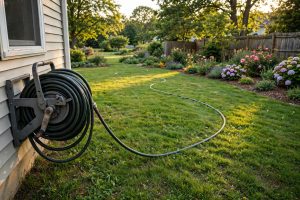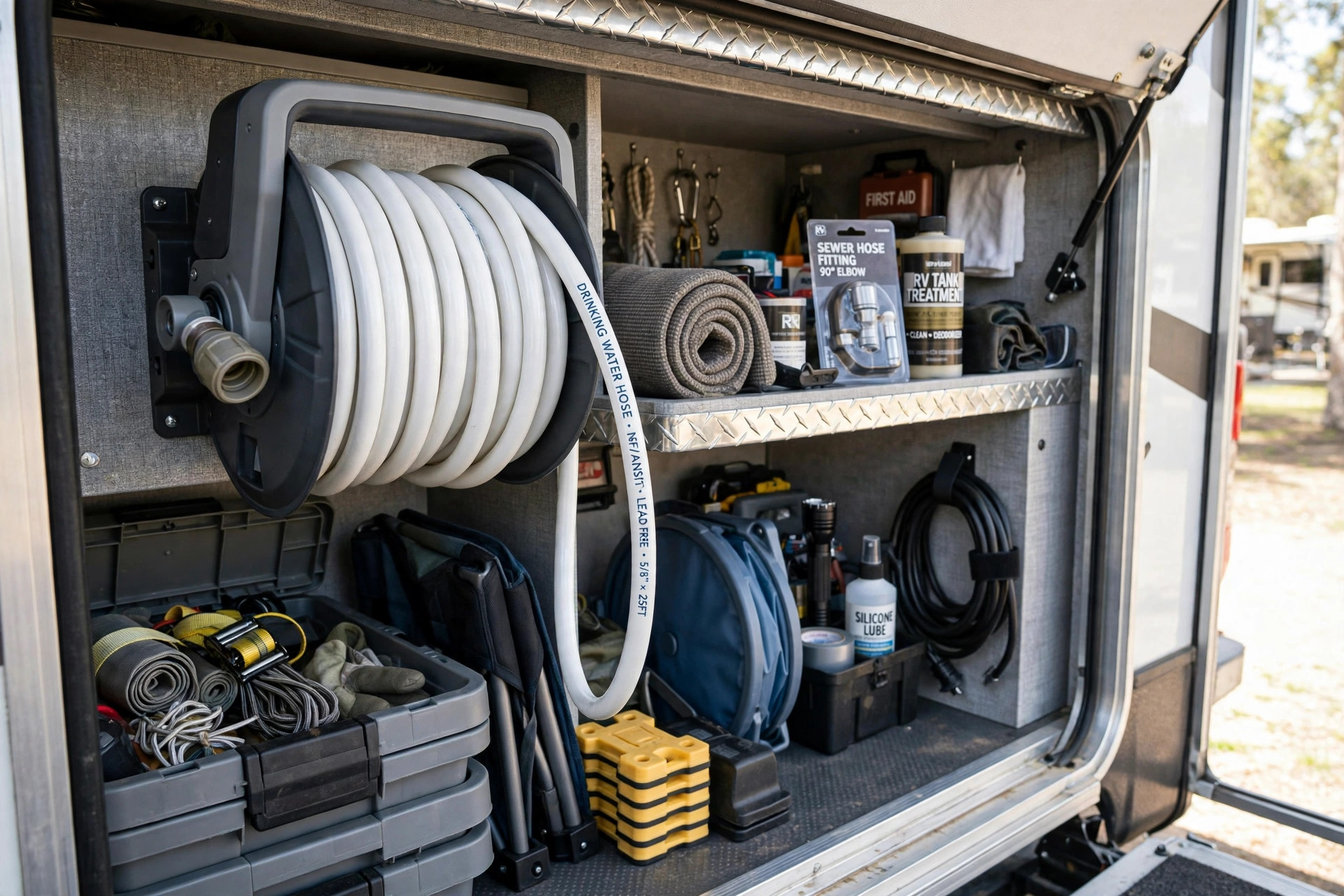

Travel by recreational vehicle is a lesson in small spaces. Every tool must earn its place. The water hose is one of the bulkiest items in the storage bay, and a tangled hose wastes time and temper at every stop. That is why the search for the best garden hose reel for rv owners is worth the trouble. A good reel turns a thirty-foot coil of rubber into a neat package the size of a dinner plate, and it keeps the ends off the ground where dirt and germs wait.
This guide walks through the choice in plain terms. It covers why a reel matters on the road, what to look for before you buy, the main types that suit a camper or motorhome, what you can expect to pay, how to care for the reel, and a few safety points. It ends with answers to common questions. No jargon is needed. If you can coil a garden hose, you already understand the whole idea.
Why a Hose Reel Matters on the Road
Life in a fixed house is forgiving. The hose can sit on a hook by the garage all summer. On the road, every hookup is a new campsite with new hookups and new ground. You pull the hose out, connect it to the spigot, fill the tank or run the line straight to the rig, and then you must pack it all away again before you roll on.
A loose hose invites trouble. It drags on gravel and picks up grit that grinds into the fittings. It folds into kinks that cut water flow and weaken the hose wall. It takes up a big slice of a wet bay that could hold leveling blocks or a sewer kit. Worse, a hose that lies in mud can pick up bacteria on its mouthpiece, and that matters when the hose feeds your drinking water.
A reel solves all of this at once. The hose winds on a drum instead of folding on itself, so kinks are rare. The drum keeps the hose off the ground. The whole unit packs into a small, fixed spot. Many travelers say the reel was a small purchase that changed the feel of setup day. Ten minutes of wrestling with a coil becomes one minute of smooth winding.
What to Look for Before You Buy: Best Garden Hose Reel for Rv
Not every reel built for a home yard fits a rolling home. The right choice for an RV has its own set of demands. Keep these points in mind.
Size and Weight
Space is the first filter. Measure your wet bay or storage locker before you shop. A wall-mounted reel needs a flat surface and room for the drum to turn. A portable cart needs floor space but can also serve at home. Watch the weight too. A reel with fifty feet of hose plus fittings can weigh over fifteen pounds. On a travel trailer with a strict tongue weight limit, that matters.
Hose Capacity and Length
Most campsites put the spigot within twenty-five feet of the rig. A reel that holds twenty-five to fifty feet of hose covers nearly every case. Longer hoses add weight and bulk. Shorter ones leave you stretching. Many RVers carry a twenty-five-foot white drinking-water hose as their main line and keep a short extra section for the rare long reach. Choose a reel sized for the hose you actually carry, not the one you dream of owning.
Mount Style
Reels come in three mount styles for the road. A fixed wall mount bolts inside the storage bay and is always ready. A removable mount lets you lift the reel off its bracket and carry it to the spigot. A freestanding portable unit needs no bracket at all. Fixed mounts are the tidiest. Removable mounts give more freedom. Portable units are the simplest. Pick the one that matches how you park and hook up.
Reel Type: Manual or Retractable
Manual reels use a hand crank. They are simple, cheap, and nearly unbreakable. Retractable reels use a spring to pull the hose in with a tug. They cost more and have more parts that can wear out, but they save real effort. On a small RV with limited bay depth, a retractable unit can be the difference between an easy day and a hard one. If you read garden hose reel retractable reviews, you will see that road travelers favor strong springs and lockable positions.
Materials and Weather Resistance
The reel will ride in heat, cold, rain, and road spray. Powder-coated steel and UV-stabilized plastic hold up best. Brass fittings outlast plastic ones. Check that the drum spins on sealed bearings or at least on smooth bushings. Cheap wheels and thin metal rust fast under a rig that sees salt air on coastal trips.
Leader Hose and Fittings
The leader hose is the short piece that connects the reel drum to the water source. For RV use, it should be a drinking-water-safe hose, the same white or blue type you would drink through. Standard garden hoses can leach rubber taste and chemicals. Make sure the reel you pick accepts standard hose threads, because many replacement hoses and quick-connect fittings follow that size.
Types of RV Hose Reels
Shops sell many shapes. For the road, they fall into four families.
Wall-Mounted Reels
These bolt to the wall of a storage bay or to the back of a bumper. They stay put in transit and take no floor space. The best models pivot so you can aim the hose toward the spigot. The weak point is installation. You must drill into solid framing, not thin paneling, or the mount will work loose on rough roads. If your bay is lined with thin luan panels, add a backing board first.
Portable Cart Reels
A cart reel rolls on two wheels and stands in a corner of the bay. It needs no mounting hardware. It doubles as a yard tool at home. The trade is size. Even a small cart is bulkier than a wall unit, and it can tip in a moving rig unless you strap it down. Travelers who split time between a house and an RV often favor this type.
Retractable Enclosed Reels
These hide the drum inside a plastic case. You pull the hose out to the length you need, and a tug retracts it. The case keeps dirt off the hose and looks tidy. For RV bays, the enclosed body also protects the hose from sharp tools in the same locker. Prices run higher, and the spring mechanism needs occasional care, but many owners call it the most pleasant type to use.
Compact Manual Reels
The simplest type is a small flat reel you wind by hand. It weighs little, costs little, and breaks rarely. It lacks the comfort of a crank or a spring, but for a twenty-five-foot hose it is fast enough. Full-timers who value low weight often keep one of these as a backup even when they own a larger reel.
How the Choice Connects to Your Hose
A reel is only half the system. The hose itself must suit the road. The best garden hose for rv use is usually a short, light, drinking-water-safe line. Heavy rubber hoses last for years but tire the arms and strain small reels. Newer polyurethane hoses are lighter and kink less, though they cost more.
Match the hose diameter to the reel drum. A drum made for half-inch hose will struggle with a fat five-eighths line, so size the reel for fifty feet of half-inch hose when in doubt.
Also think about storage of the open ends. Good reels include clips or caps for the hose ends. Capped ends stay clean between trips. If your reel lacks caps, buy simple thread caps. They cost little and keep road dust out of the drinking line.
Cost and Price
Prices vary with type and build quality. A basic compact manual reel sells for under thirty dollars. A solid wall-mounted crank reel with brass fittings runs from forty to eighty dollars. Retractable enclosed reels start near seventy and climb past one hundred and fifty for large, heavy-duty models. Portable cart reels sit in the middle, often between fifty and one hundred dollars.
Do not judge by price alone. A cheap reel with thin metal can fail in one season of sun and rain. Look for warranties of at least one year, and read what owners say about the spring, the crank, and the mount after months of travel. Spending twenty dollars more on a reel with a sturdy bracket often beats buying a second cheap reel next year.
Remember the total system cost. You may also need a drinking-water-safe leader hose, thread caps, a mounting board, and a strap to hold the reel still in transit. Budget another twenty to forty dollars for these small extras.
Care and Upkeep
A hose reel is a simple machine, and simple care keeps it working for years.
Drain the hose before winter or before long storage. Water left inside can freeze, split the hose, or grow stale. Pull the hose fully out once or twice a season and check it for cracks, soft spots, and worn fittings. Replace tired washers in the couplings. They are cheap and stop most small leaks.
Oil the moving parts once a year. A drop of light machine oil on the crank axle and the pivot points keeps the reel turning smoothly, and wiping the hose clean as it rewinds keeps grit out of the guides.
Inspect the mount after rough roads. Bolts can loosen. A quick check with a wrench takes a minute and prevents the reel from tearing free on the highway. If you remove the reel for winter, store it indoors in a dry place with the hose drained.
Those who compare garden hose reel cart reviews often note the same lesson. The owners who rinse, drain, and oil their reels get many seasons from them. The owners who toss a wet hose into a dark bay get rust and mildew. The habit matters more than the brand.
Safety
Water safety comes first. Use only hoses marked safe for drinking water for the fresh line. A reel meant for garden irrigation may come with a standard rubber hose that is not meant for drinking. Swap it out.
Keep the fresh-water hose away from the sewer hose. Store them in separate bays if you can. If they must share space, keep the fresh line on its reel, capped, and stored above the sewer kit. Never let the open end of the fresh hose touch the ground at a dump station.
Mind the mount. A wall reel with fifty feet of hose is heavy when full. Bolt it to framing or to a solid backing board. Test it by pulling hard before you trust it on the road. Strap portable reels so they cannot shift in a sudden stop.
Finally, relieve pressure before you disconnect. Turn off the spigot, open a faucet inside the rig to bleed pressure, then unhook the hose. This small habit protects the reel seals and keeps you from getting soaked.
Frequently Asked Questions
What size reel do I need for an RV?
A reel rated for fifty feet of half-inch hose fits most travelers. It holds the standard twenty-five-foot drinking-water hose with room for a leader hose and a little slack. Measure your bay before you buy, and favor compact wall-mounted or enclosed models if space is tight.
Can I use a regular garden hose on an RV reel?
You can, but only for washing and outdoor chores. For the fresh-water connection, use a hose labeled safe for drinking water. Standard garden hoses can give water a rubber taste and may contain materials not meant for drinking.
Are retractable reels reliable on rough roads?
Good ones are. Look for a strong spring, a lock that holds the hose at any length, and a sturdy case. Read long-term owner reports before you buy. A weak spring is the most common complaint, so favor brands with solid warranties and replaceable parts.
How do I keep the hose from freezing in the reel?
Drain it fully before cold weather. Pull the hose out, hold the end low, and let gravity empty it. Some travelers blow it out with low-pressure air. Store the reel indoors during hard freezes. Never leave a full hose in an unheated bay overnight in freezing weather.
Is a wall mount or a portable reel better?
It depends on your rig. Wall mounts save floor space and are always ready, but they need solid framing to bolt into. Portable reels need no installation and work at home too, but they take floor space and must be strapped down in transit. Many full-timers choose wall mounts. Many weekenders choose portable units.
How often should I replace the hose on the reel?
A good drinking-water hose lasts three to five seasons with care. Replace it sooner if you see cracks, bulges, or a persistent bad taste. Replace coupling washers every year or two. They cost pennies and stop most drips.
A Final Word
The best garden hose reel for rv travel is the one that fits your bay, holds your hose, and gets used without a second thought. It need not be fancy. A compact wall unit with a smooth crank, a drinking-water-safe leader hose, and a solid mount will serve most rigs for years. A retractable enclosed reel adds comfort for those who hook up often.
Start with your measurements. Then choose the mount style that fits your parking habits. Then pick the build quality that matches your climate and your miles. Keep the hose clean, capped, and drained, and the reel will repay the small price many times over in saved time and cleaner water. For those who want a tidy backup option, a simple garden hose storage box can hold an extra hose or a coiled spare without taking much room.
For more background, see The Home Depot, Lowe’s, and Gardener’s Supply Company. For more background, see Corona Tools, Burpee, and The Spruce. See Bob Vila for more detail.
References
Bob Vila. (n.d.). Home improvement advice. https://www.bobvila.com Burpee. (n.d.). Seeds, plants, and gardening supplies. https://www.burpee.com Consumer Reports. (n.d.). Product reviews and ratings. https://www.consumerreports.org Corona Tools. (n.d.). Garden and landscape tools. https://www.corona-tools.com Gardener’s Supply Company. (n.d.). Gardening tools and supplies. https://www.gardeners.com Lowe’s. (n.d.). Home improvement products. https://www.lowes.com The Home Depot. (n.d.). Home improvement products. https://www.homedepot.com The Spruce. (n.d.). Home and garden advice. https://www.thespruce.com
Was this guide helpful?

About Lisa Anderson
The My Garden US editorial team writes practical, in-depth home and garden guides for American homeowners — tested advice, no fluff.
You May Also Like

Best Garden Knife for Harvesting Reviews: What Buyers Say and What Matters
July 27, 2026 0 views
Cold Frame Plans for DIY Builders: A Practical Guide to Designing and Building Your Own
October 4, 2026 1 views
How to Grow Chives Indoors Pots
June 28, 2026 0 views