
Introduction
The best outdoor range hood for grill areas can change how you cook outside. A hot grill makes a lot of smoke. Fat drips on the burners and flares up. Wind can push that smoke right back into your face. Under a patio cover, the smoke has nowhere to go. It hangs in the air. It sticks to your clothes. It stains the ceiling over time. A good outdoor range hood pulls that smoke away at the source. It draws in the heat, the grease, and the smell. Then it sends them up and out through a vent. The result is clean air and a more pleasant place to cook. Guests can stand near the grill without tears in their eyes. Furniture stays cleaner. The whole outdoor kitchen feels more like a real kitchen. This guide explains what to look for in the best outdoor range hood for grill use. It covers size, power, types, cost, care, and safety. By the end, you will know exactly which features matter and how to pick the right unit for your setup.
Why an Outdoor Range Hood Matters: Best Outdoor Range Hood for Grill
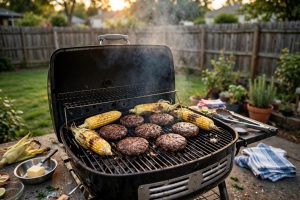
Most people think of range hoods as indoor tools. Outdoors, they matter even more. A grill puts out far more smoke than a stove. Charcoal grills and smokers make thick clouds of it. Even a gas grill flares when fat drips down. Without a hood, all of that smoke rises and spreads.
A covered patio makes the problem worse. Many outdoor kitchens sit under a roof or pergola. The cover traps heat and smoke. Over months, grease settles on the ceiling. Paint may turn yellow. Wood can absorb the smell of old smoke. Cleaning that mess is hard work.
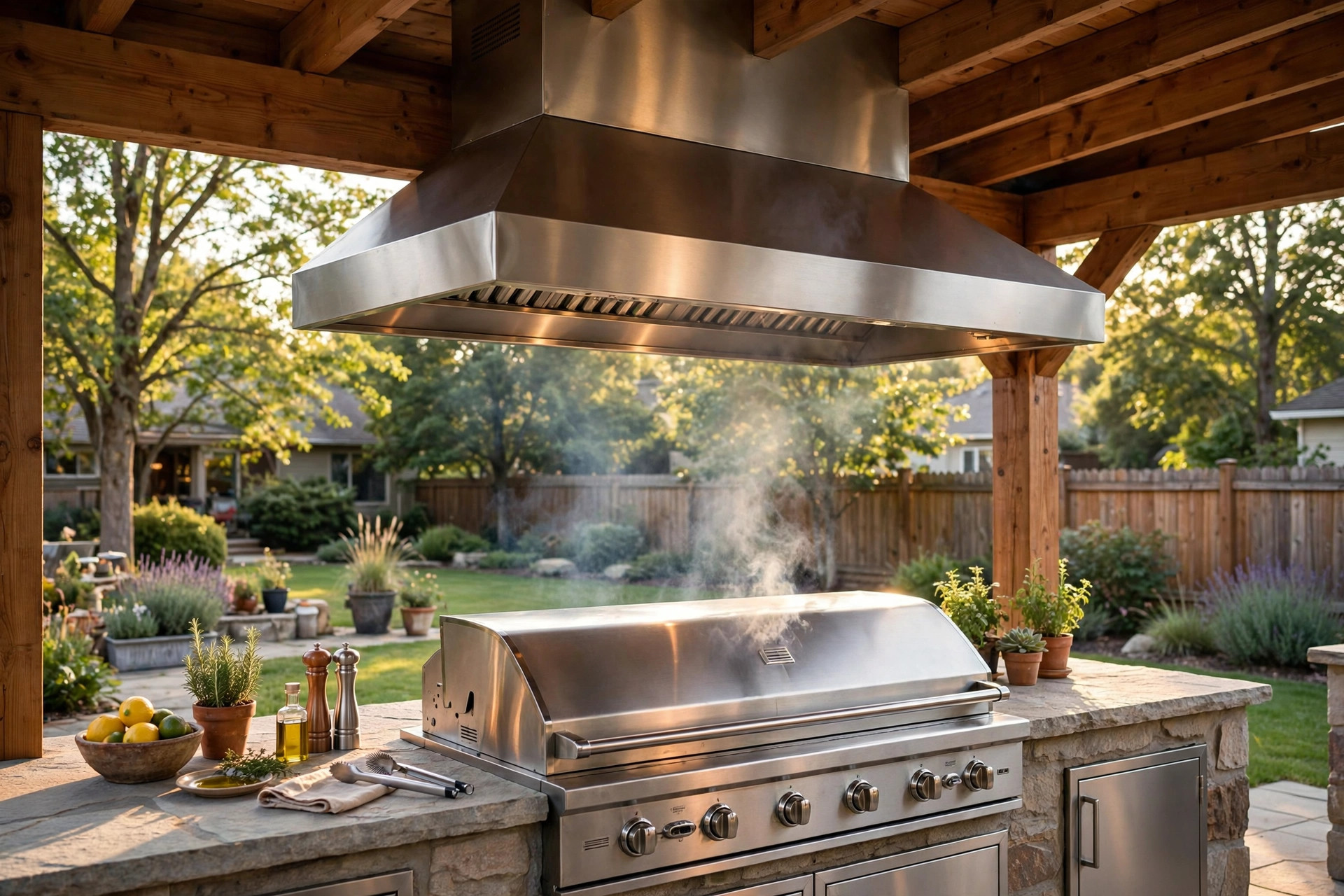
An outdoor range hood fixes this at the start. It sits right above the grill. Its fan draws the rising smoke into the hood. Baffle filters catch the grease. The duct sends the rest outside, above the roof line. Air around the cook stays fresh. You can sear steaks at high heat without filling the patio with smoke.
There is also a comfort factor. When smoke drifts into your eyes, cooking stops being fun. You step back. You cannot watch the food. A hood keeps the air clear so you can stay close to the grill. That means better control and better food. Many grill owners who add a hood say it is the best upgrade they made to their outdoor space, more useful than a new side burner. Guides to outdoor kitchen planning often list ventilation as a key part of the design.
How to Choose the Right Hood
Choosing the best outdoor range hood for grill use comes down to a few key facts. Each one matters. Get them right and the hood will work for years.
Size Comes First
The hood must cover the grill. As a rule, buy a hood that is at least as wide as your cooking surface. Wider is better. A 36-inch grill needs a 36-inch hood at minimum. Many experts suggest going six inches wider. Extra width catches smoke that drifts to the sides in a breeze.
Depth matters too. Outdoor hoods are often 24 to 30 inches deep. Deeper hoods catch more smoke before wind can scatter it. Measure your grill from front to back. Then add a few inches.
Mounting height is part of sizing. Most outdoor hoods mount 30 to 36 inches above the grill. Too high and smoke escapes around the edges. Too low and the hood blocks your view and may sit too close to the heat. Check the maker’s guide for the exact range.
Power and CFM
CFM stands for cubic feet per minute. It tells you how much air the fan moves. For the best outdoor range hood for grill setups, power is critical. Outdoor grills make more smoke than indoor ranges. Wind fights against the fan.
A common rule is 100 CFM for each foot of hood width. A 3-foot hood needs at least 300 CFM. But that rule fits indoor kitchens. Outdoors, you need more. A gas grill under a hood should have at least 600 to 900 CFM. Charcoal grills, smokers, and high-heat sear burners need 900 to 1,200 CFM or more.
Variable speed helps a lot. You do not always need full power. A low simmer or a small batch of burgers needs less air. Look for a hood with at least three fan speeds. A quiet low setting keeps the patio calm during long cooks.
Ducted or Ductless
Ducted hoods send smoke outside through a duct. Ductless hoods filter the air and blow it back out. For outdoor use, ducted is almost always better. Ductless filters cannot handle the volume of grease from a grill. They clog fast. They also blow warm, smelly air back toward you.
A ducted hood needs a path to the roof or wall. Plan the duct run before you buy. Short, straight runs work best. Every bend cuts airflow. Use rigid metal duct, not the thin flexible kind. Rigid duct moves air with less noise and less loss.
Material and Build
Outdoor hoods live in the weather. Rain, sun, and salt air attack cheap metal. The best outdoor range hood for grill duty uses 304 stainless steel. This grade resists rust and stands up to heat. Thicker steel, around 18 gauge, feels solid and lasts longer.
Baffle filters are the right choice outdoors. Mesh filters clog fast with grill grease. Baffles are metal channels that trap grease and let air pass. They can go in the dishwasher. Many cooks clean them once a month during grilling season.
Look for sealed lights and sealed controls. Rain must not reach the wiring. A good outdoor hood carries an outdoor or damp-location rating. Heat lamps are a nice extra. They keep food warm while the rest of the meal finishes.
Types of Outdoor Range Hoods
Several styles fit different outdoor kitchens. Each has its place.
Wall-mount hoods attach to an outside wall or the back of a grill island. They have a chimney that runs up to the roof. This style is common and easy to install. It works well when the grill sits against a wall.
Island or ceiling-mount hoods hang from above over a freestanding island. They look clean and modern. They need strong ceiling support. The duct runs up through the patio cover. This style suits large open islands where the grill sits in the middle.
Under-cabinet and insert hoods hide inside a custom enclosure. You see only the bottom of the unit. This style fits built-in outdoor kitchens with stone or stucco work. The enclosure must be heat-rated and sized for the hood.
Outdoor-rated inserts are liners with fans that drop into a wood or stone hood you build yourself. They give a custom look. They cost more because of the custom work around them.
Portable or recirculating units are rare outdoors. They filter and return the air. They do not vent smoke outside. For a grill, they are a poor choice. Skip them unless venting is truly impossible.
When you plan the full cooking area, think about the grill itself too. Many cooks pair a new hood with a flat top grill for outdoor kitchens because flat tops make steady, even heat with less flare-up.
Cost and Price
Outdoor range hoods cost more than indoor models. Outdoor ratings, thick steel, and strong fans add to the price.
Entry-level outdoor hoods start around 300 to 500 dollars. These are small, often 30 inches wide, with modest CFM. They suit small gas grills in mild climates.
Mid-range hoods run 600 to 1,200 dollars. This is the sweet spot for most buyers. You get 36 to 42 inches of width, 900 or more CFM, baffle filters, and 304 stainless steel. Most family outdoor kitchens land in this range.
High-end hoods cost 1,500 to 3,000 dollars or more. These are wide, powerful units with custom finishes, heat lamps, and very quiet fans. Large built-in kitchens with multiple burners need this level.
Installation adds to the total. A simple wall-mount swap may cost 200 to 400 dollars in labor. A new duct run through a patio roof can add 500 to 1,500 dollars. Electrical work for a new circuit adds more. Always get the install quote before you buy the hood. The duct path often decides which model fits.
Care and Upkeep
A range hood needs regular care to work well. Grease builds up fast over a grill. A dirty hood moves less air and can drip grease.
Clean the baffle filters often. In heavy grilling season, wash them every two to four weeks. Most baffle filters are dishwasher safe. Soak them in hot soapy water first if the grease is thick. Dry them fully before you put them back.
Wipe the inside of the hood monthly. Use a degreaser made for stainless steel. Wipe with the grain of the metal to avoid scratches. Empty the grease cup or grease tray each time you clean. A full cup can overflow onto the grill.
Check the duct once a year. Look for grease buildup, bird nests, or damage. A blocked duct cuts airflow and raises fire risk. If you grill with a lot of charcoal, check twice a year.
Cover the grill when not in use, but leave the hood open to the air. Do not wrap the hood in plastic for winter. Trapped moisture causes rust even on stainless steel. A breathable cover made for the unit is fine.
Safety
Heat and grease demand respect. Follow these safety rules.
Keep the right clearance above the grill. Most makers call for 30 to 36 inches between the burners and the hood. Gas grills with sear burners may need more. Read the manual for both the grill and the hood. When in doubt, mount higher and buy a stronger fan.
Never leave a flaming grill alone under the hood. Flare-ups can shoot high. If flames reach the filters, turn off the grill and let the fire die. Do not use water on a grease fire. Keep a fire extinguisher rated for grease fires near the outdoor kitchen.
Use a GFCI-protected circuit for the hood. Outdoor wiring must be weather rated. Hire a licensed electrician for new circuits. Water and electricity are a bad mix.
Clean filters on schedule. Grease-soaked filters are fuel. A clean hood is a safe hood.
Make sure the duct vents well above the roof or away from windows and doors. You do not want smoke blowing back into the house. Check local codes too. Some towns have rules about outdoor kitchen vents, gas lines, and clearances from fences. A quick call to the building office saves trouble later.
Good lighting also helps safety. You must see what you are cooking after dark. A grill light for night grilling pairs well with the lamps built into many hoods.
Frequently Asked Questions
Do I really need a range hood over my outdoor grill?
You need one if the grill sits under any kind of cover. A roof, pergola, or awning traps smoke and grease. An open grill with no cover above it can get by without a hood. But most outdoor kitchens have some cover, and a hood keeps that space clean and comfortable.
What CFM do I need for an outdoor grill hood?
Plan for more power than an indoor kitchen needs. A standard gas grill does well with 600 to 900 CFM. Charcoal grills, smokers, and sear stations need 900 to 1,200 CFM or more. Wind and open sides steal airflow, so extra power is not wasted.
Can I use an indoor range hood outside?
No. Indoor hoods are not built for rain, humidity, or grill-level heat. They rust. Their wiring is not sealed. Their fans are too weak for a grill. Always buy a unit rated for outdoor use. The rating is printed on the box and in the manual.
How wide should the hood be?
Match or exceed the width of the grill. A 36-inch grill needs at least a 36-inch hood. Going six inches wider catches side drift from wind. Depth of 24 to 30 inches works for most grills.
Is ductless ever okay outdoors?
Rarely. Ductless hoods recirculate air through charcoal filters. They cannot handle grill grease and smoke volume. They clog quickly and push warm air back at you. Choose a ducted hood whenever a vent path exists.
How often should I clean the filters?
Wash baffle filters every two to four weeks in grilling season. Dishwasher cleaning works for most. Empty the grease cup at the same time. Wipe the hood interior monthly. Yearly duct checks round out the routine.
A Short Final Word
The best outdoor range hood for grill cooking is the one sized and powered for your setup. Measure the grill. Pick a hood as wide or wider. Choose 304 stainless steel with baffle filters. Buy enough CFM for your fuel type, and vent it with a short, straight duct. Install it at the right height with safe wiring. Then keep the filters clean. Do these things and your outdoor kitchen will stay clear, clean, and pleasant for years. Resources from grill makers like Weber and Char-Broil can help you match a hood to your grill model, while Napoleon and Broil King offer strong options for built-in setups. Pellet grill owners can check Traeger for outdoor cooking guidance, and AmazingRibs has deep dives on smoke management. For buying and install parts, Home Depot stocks ducts and fittings, The Spruce Eats covers outdoor kitchen planning, and Consumer Reports tests ventilation gear.
References
AmazingRibs.com. (n.d.). Barbecue and grilling science. https://www.amazingribs.com Broil King. (n.d.). Gas and charcoal grills. https://www.broilkingbbq.com Char-Broil. (n.d.). Gas and charcoal grills. https://www.charbroil.com Consumer Reports. (n.d.). Product reviews and ratings. https://www.consumerreports.org Napoleon. (n.d.). Fireplaces, grills, and heating products. https://www.napoleon.com The Home Depot. (n.d.). Home improvement products. https://www.homedepot.com The Spruce Eats. (n.d.). Recipes and cooking guides. https://www.thespruceeats.com Traeger. (n.d.). Wood pellet grills. https://www.traeger.com Weber. (n.d.). Grills and outdoor cooking. https://www.weber.com
Was this guide helpful?

About Lisa Anderson
The My Garden US editorial team writes practical, in-depth home and garden guides for American homeowners — tested advice, no fluff.
You May Also Like
Charcoal Grill Deals Near Me USA: Where to Find the Best Bargains
August 18, 2026 0 views
Best Smoker Thermometer Dual Probe Reviews
June 17, 2026 0 views
Best BBQ Seasoning for Chicken Wings: A Plain Guide to Great Flavor
March 16, 2026 0 views