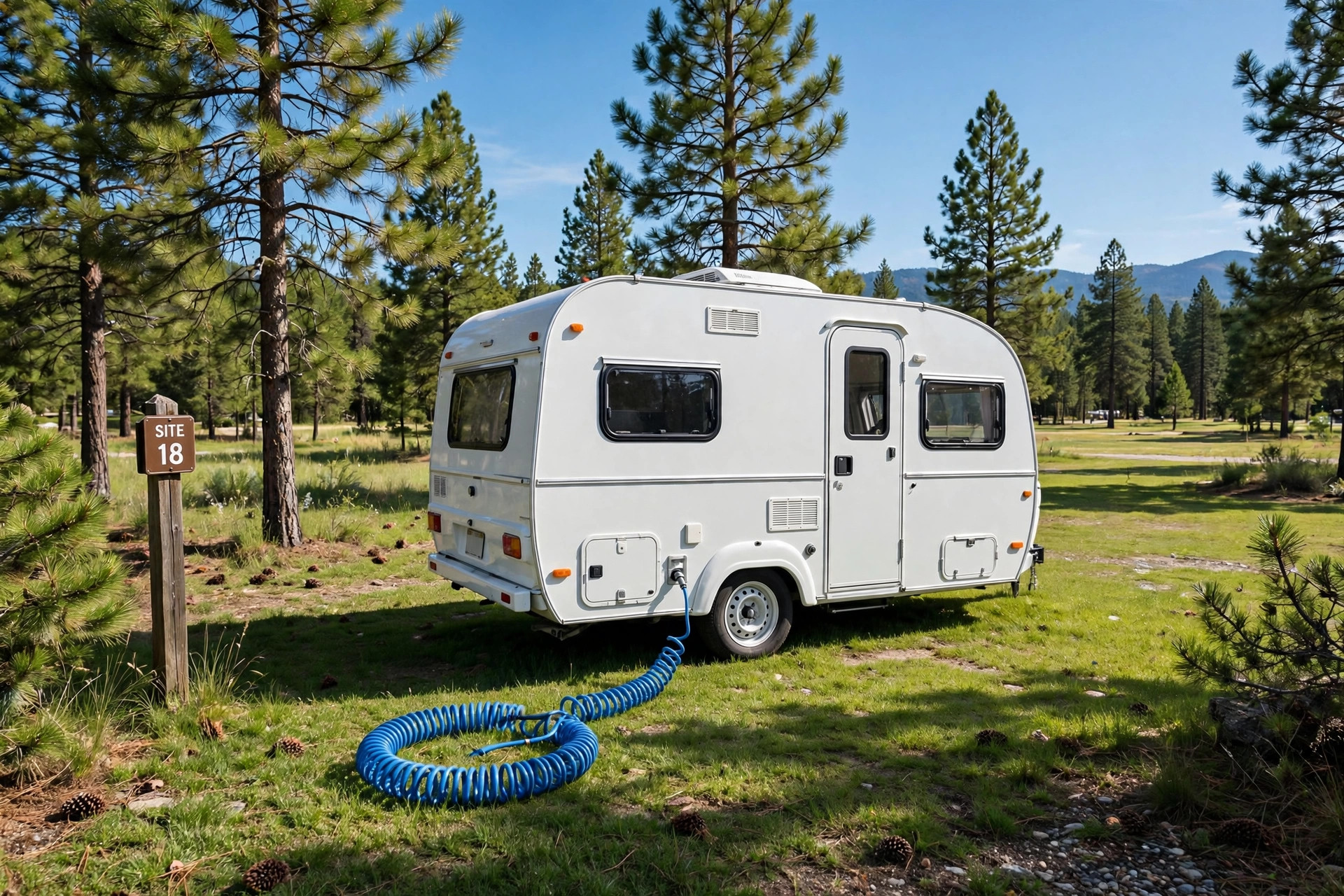

Life on the road has its own set of small daily tasks. One of them is fresh water. Every RV has a tank that must be filled. A camp shower needs a steady line. A quick rinse of the campsite gear takes a hose too. The best garden hose for RV use is not the same as the hose you drag across a backyard. It must be short enough to carry, light enough to coil, and safe enough for drinking water. This guide walks through the full picture in plain terms.
Why the Right Hose Matters for RV Life
A house hose stays in one place. An RV hose travels. It rides in a wet bay or a storage tube. It is unrolled and re-rolled dozens of times a year. That repeated coiling wears out cheap hoses fast. Cracks form near the fittings. Kinks flatten the walls. A leak at a fitting can flood a storage bay overnight.
There is also the matter of drinking water. RV owners fill tanks they will drink from. A hose that is not rated for potable water can lend an odd taste or smell. Some older hoses use materials no one wants in a glass of water. The right hose is built for drinking water from the start.
Weight matters as well. Full-time RVers watch every pound. A stiff rubber hose in a 50-foot run can weigh more than you think. A lighter hose is easier on hands and backs, and it stores in a smaller space. Small space is the whole game in an RV.
What to Look for When You Choose: Best Garden Hose for Rv Use
Length
The most common length for the best garden hose for RV use is 25 feet. That covers most campsite spigots. Some sites need more, so many owners carry a second 25-foot length and join them only when needed. A 50-foot single hose is heavy and hard to coil in a small bay. Short runs keep water pressure higher too, which helps tank fills go faster.
Material and Build
Hoses come in rubber, vinyl, and newer hybrids.
Rubber is the old workhorse. It handles hot sun and cold mornings. It coils without fighting. It weighs the most.
Vinyl is light and cheap. It kinks more easily and stiffens in cold weather. In warm climates it can hold up for a season or two of weekend trips.
Hybrid and expandable hoses sit in the middle. They are light and flexible. They coil into a small space. Check the pressure rating before you buy, since some thin-walled designs burst at lower pressures than standard hoses.
Fittings and Couplings
Brass fittings are the safe pick. They resist corrosion and thread smoothly onto spigots. Plastic couplings crack over time, especially where the hose meets the spigot. Look for full-flow fittings with a good washer seal. A swivel fitting at one end stops the hose from twisting as you coil it.
Drinking Water Safety
Look for the mark “drinking water safe” or “potable water” on the package. This means the materials meet standards for drinking water contact. A white or blue hose is the common color for fresh-water RV lines. Never use a green garden hose meant for yard work to fill a drinking tank. Keep one hose for drinking water and a separate cheap hose for rinsing tanks and washing gear.
Weight and Coil
Pick up the coiled hose in the store. If it feels heavy in your hands, it will feel twice as heavy on a rainy morning at a dump station. Lighter hoses made from hybrid materials can weigh half as much as rubber at the same length. They also roll into a tighter coil, which fits better in the shallow trays many RVs use for water gear.
Types of RV Hoses
Standard fresh-water hose. A 25-foot, drinking-water-safe hose with brass fittings. This is what most owners buy first. It does the job for fills and city-water hookups.
Expandable hose. This type grows long under pressure and shrinks when drained. It stores in a tiny space and weighs almost nothing. It can be handy for quick rinses, but it should not be your only hose. Flow is weaker, and it is not always rated for drinking water.
Heated hose. For winter camping, a heated hose keeps water flowing when nights drop below freezing. It plugs into a standard outlet. It is expensive and heavy, but full-time winter travelers swear by it. Store it only when fully dry.
Sanitation rinse hose. This is the second hose every RV should carry. A short, cheap 15-foot hose for flushing the black tank and rinsing sewer gear. Never mix it up with the drinking-water hose. Many owners buy a different color on purpose.
For tips on keeping your whole yard setup in good shape, see our guide to the best garden fork for turning compost, which covers tool care basics that apply to hoses too.
Cost and Price
Prices run in clear bands.
– Basic drinking-water-safe vinyl hose, 25 feet: 20 to 40 dollars. – Hybrid mid-range hose, 25 feet: 40 to 70 dollars. – Heavy-duty rubber hose, 25 feet: 60 to 100 dollars. – Heated hose for winter, 25 feet: 100 to 200 dollars.
Reviews of product tests at Consumer Reports can help you compare value before you spend. A mid-range hybrid is the sweet spot for most weekend and seasonal travelers. Full-timers who move every week often step up to rubber or heated designs because replacements cost more than the upgrade.
Buying a kit can save money. Some stores sell a starter set with a drinking-water hose, a rinse hose, a regulator, and washers in one box. The kit price is usually lower than the sum of the parts. Watch for sales in spring, when camping gear lines are refreshed, and in fall, when stores clear stock.
Do not forget the small parts. A good brass Y-splitter costs about 10 dollars. A pack of spare washers costs a few dollars. A simple pressure regulator, which protects your RV plumbing from high campground pressure, runs 10 to 30 dollars. Buying these with the hose saves a second trip.
Care and Upkeep
A hose lasts far longer with small habits.
Drain it after each use. Walk the length and lift it to let water run out. Water left inside feeds mold and adds weight in storage.
Coil it loose. Tight loops kink the walls and crack the inner lining. A figure-eight coil on a reel or a wide loop over your arm both work. How-to guides at Family Handyman show coiling methods that prevent twists.
Keep it out of the sun when parked. Ultraviolet light breaks down vinyl and rubber over time. A mesh bag or a simple hose tote shades the coil in the storage bay.
Flush it before the first fill of the season. Run water through for a minute. This clears dust and stale water. Check the washers each spring and replace any that are flat or cracked.
Wipe down brass fittings now and then. A light coat of silicone grease on the threads keeps them turning smooth. Tool makers like Corona sell maintenance supplies that work just as well on hose fittings as on garden tools.
In winter, store the hose inside where it will not freeze. Water left in a coil can split the walls when it expands. Heated hoses go in their own storage bag, dry and loose.
For seasonal yard projects at home between trips, our article on how to prune blueberry bushes fall walks through fall garden care step by step.
Safety
Safety around RV water gear is simple but worth stating.
Never drink from a hose that is not rated for drinking water. This is the single most important rule. The rating is printed on the package and often on the hose itself.
Use a pressure regulator at every hookup. Some campgrounds run water at 80 pounds of pressure or more. RV plumbing is built for about 50. Without a regulator, a spike can burst a line inside the walls, and that repair is not cheap.
Keep the drinking-water hose off the ground where you can. Hose bibs at campgrounds sit near sewer connections. A few inches of clearance avoids splash contact. A simple hose support or a spare crate works fine.
Watch for heat. A hose lying in full sun can deliver scalding water for the first minute of flow. Run it for a few seconds before filling a tank or rinsing hands. Store hoses away from furnace exhausts and engine heat in the bay.
Retire a hose that shows bubbles, soft spots, or cracks near the fittings. A burst at the spigot soaks the whole bay. Retailers like Home Depot carry replacements in every common length, so a worn hose should never stay in service long.
Frequently Asked Questions
What length is the best garden hose for RV use?
For most owners, 25 feet is the best choice. It reaches nearly every campsite spigot and coils into a small space. Carry a second 25-foot hose for the rare long run instead of dragging one heavy 50-foot hose.
Can I use a regular garden hose for my RV?
You can for rinsing and washing, but never for drinking water. Yard hoses are not rated as drinking water safe. Buy a hose marked for potable water for all tank fills and hookups.
What is the best RV hose length for full-time travel?
Full-timers often carry two 25-foot drinking-water-safe hoses. That covers tight state-park spigots and far-flung hookups alike. The pair also gives a backup if one hose fails mid-trip.
Are expandable hoses good for RVs?
They are light and store tiny, which is tempting in an RV. But flow is weak and many are not drinking-water rated. Use one as a rinse helper, not as your main fresh-water line. Gardening suppliers such as Gardeners and Burpee also note that expandable designs wear out faster than standard builds.
How do I keep my RV hose from kinking?
Coil it loose in wide loops, and use a swivel fitting at the spigot end. Lay it in a gentle curve rather than a sharp bend when hooked up. If kinking is a constant fight, switch to a rubber or hybrid hose, which resists kinks better than cheap vinyl. Project guides at The Spruce cover hose storage setups for small spaces.
Do I need a heated hose for winter RVing?
If you camp where nights fall below freezing and you want running water, yes. A heated hose keeps the line open so the tank stays filled. Without one, you will be filling from jugs by hand. Tool and equipment brands like Fiskars remind readers that cold-weather gear needs extra care, and the same holds for heated hoses.
A Short Final Word
The best garden hose for RV use is the one that fits your travel style. Weekend campers do well with a 25-foot drinking-water-safe hybrid. Full-timers may add a second length and a heated hose for winter. Keep a separate rinse hose, use a pressure regulator, and retire worn hoses before they fail. Water is the lifeblood of the RV. A good hose keeps it clean, safe, and easy to reach. Choose once, buy well, and you will not think about water gear again for years.
If you are planning a garden at your home base too, our piece on how to grow lettuce indoors winter shows how to keep fresh greens coming year-round.
References
Burpee. (n.d.). Seeds, plants, and gardening supplies. https://www.burpee.com Consumer Reports. (n.d.). Product reviews and ratings. https://www.consumerreports.org Corona Tools. (n.d.). Garden and landscape tools. https://www.corona-tools.com Family Handyman. (n.d.). DIY home repair and maintenance. https://www.familyhandyman.com Fiskars. (n.d.). Garden and cutting tools. https://www.fiskars.com Gardener’s Supply Company. (n.d.). Gardening tools and supplies. https://www.gardeners.com Lowe’s. (n.d.). Home improvement products. https://www.lowes.com The Home Depot. (n.d.). Home improvement products. https://www.homedepot.com The Spruce. (n.d.). Home and garden advice. https://www.thespruce.com U.S. Environmental Protection Agency. (n.d.). Protecting human health and the environment. https://www.epa.gov
Was this guide helpful?

About Lisa Anderson
The My Garden US editorial team writes practical, in-depth home and garden guides for American homeowners — tested advice, no fluff.
You May Also Like
Compost Bin for Kitchen Scraps Reviews: What to Buy and Why
June 20, 2026 0 views
The Best Garden Sprayer for Deck Staining: A Plain Guide
February 12, 2026 0 views
How to Build a Compost Bin Cheap: A Simple Guide for Any Yard
May 8, 2026 0 views