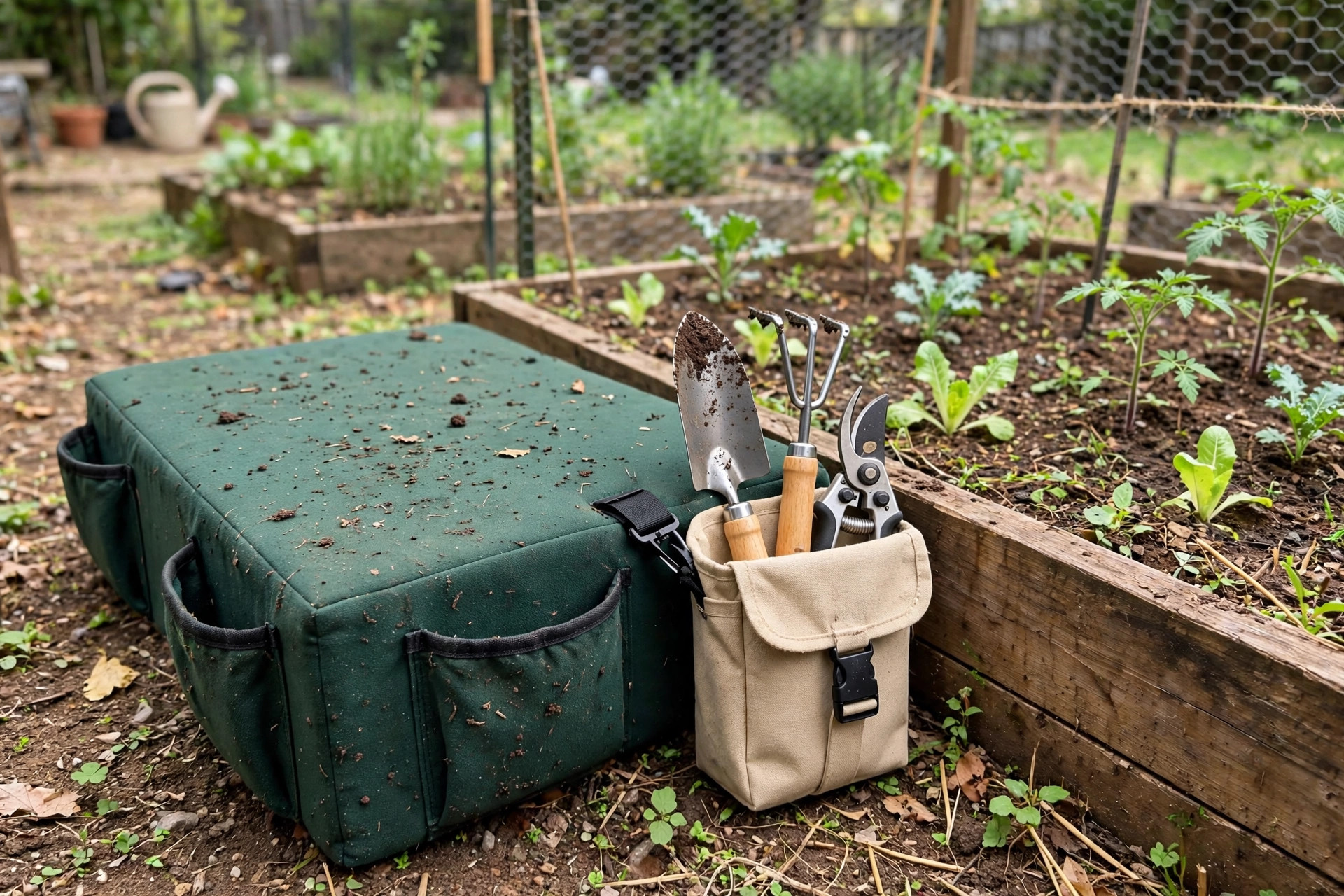
A best garden kneeler with tool pouch turns hard, sore work in the yard into easy, calm work. Most gardeners spend hours on their knees. They weed, plant, and dig close to the soil. After a while the knees hurt. The back aches. The work stops being fun. A kneeler gives the knees a soft pad to rest on. A tool pouch keeps hand tools right where the hands are. Together they save time, cut pain, and let the gardener work longer in comfort.
Why It Matters
Knees take a beating in the garden. Bare soil, mulch, and stone paths press hard against the joints. Over weeks and months, that pressure adds up. Older gardeners feel it first. So do people with bad knees, weak joints, or back trouble. A thick foam kneeler spreads the pressure over a wide pad. It keeps small stones from digging into the skin. It keeps wet ground away from pants. The result is simple: the gardener can stay on the ground longer without pain.
The tool pouch adds a second kind of help. Without a pouch, tools end up scattered around the bed. The gardener sets down a trowel, turns to plant, and then must hunt for the trowel again. That wastes time and breaks the flow of the work. A pouch holds the trowel, the hand fork, the scissors, and the plant ties. Each tool has its own slot. The gardener reaches down, grabs what is needed, and puts it back. Nothing gets lost in the leaves.
For beginners this small piece of gear makes gardening less tiring. For older gardeners it can be the difference between keeping the hobby and giving it up. Many guides to garden tool sets for beginners point out that comfort gear matters as much as cutting tools.
What to Look For: Best Garden Kneeler with Tool Pouch
A good kneeler has a few key parts. Each part should be checked before buying.
The Pad
The pad is the heart of the kneeler. It should be thick, at least two inches, and made of dense foam. Cheap thin foam goes flat after a few uses. Memory foam or EVA foam holds its shape longer. The pad should be wide enough to fit both knees with room to spare. A narrow pad forces the knees together and feels cramped.
The cover of the pad matters too. It should be water proof or at least water resistant. Garden work means damp soil and morning dew. A cover that soaks up water will turn cold and heavy. Look for a vinyl or coated fabric cover that wipes clean.
The Tool Pouch
Pouches come in two styles. Some kneelers have pockets built into the sides of the pad. Others come with a separate pouch that hangs from a belt or clips onto the frame. Side pockets are quick to reach while kneeling. A belt pouch can be carried to the shed or the compost pile.
Count the pockets and slots. A useful pouch holds at least four hand tools: a trowel, a cultivator, pruning snips, and a weeder. It should also have a small zip pocket for plant ties, seeds, or a phone. Deep pockets keep long tools from falling out when the kneeler is moved.
The Frame and Legs
Many kneelers are foldable and have legs that double as handles. When flipped over, the kneeler becomes a low seat. The legs can then help the gardener stand up again. This two-in-one design is popular for good reason. It helps people with weak knees get up from the ground without strain.
Check the frame material. Steel frames are strong but heavy. Aluminum frames are lighter but cost more. The hinges should feel solid and lock in place with a click. A wobbly frame is a sign of poor build.
Weight and Carry
A kneeler should be light enough to carry with one hand. Most good models weigh between five and eight pounds. Some have a carry strap or a handle cut into the frame. Since the pouch adds weight once filled with tools, a light frame is even more welcome.
Types and Options
Garden kneelers with tool pouches come in three main types.
Flat pads. These are simple foam mats with pockets on the sides. They cost the least and weigh the least. They do one job well: cushioning the knees. They do not help the gardener stand up. They are a fine pick for short sessions and small beds.
Folding kneeler-seats. These are the most common type. They fold flat for storage. Opened one way, they are a kneeler with a tall frame to lean on. Flipped over, they are a low garden seat. Many have a removable tool pouch that clips to the frame. This is the best choice for most gardeners because it does two jobs in one tool.
Knee pads with belts. These strap directly onto the knees. Some versions include a small belt pouch for tools. They are the most mobile option. The gardener can walk around the yard with them on. But the pads are thinner than a kneeler, and the pouch holds fewer tools. They suit quick jobs like deadheading flowers.
Gardeners who do a lot of pruning may also want to read about best pruning shears for rose bushes to pair with their new pouch.
Cost and Price
Prices range from about ten dollars to about eighty dollars. Flat foam pads with side pockets sit at the low end, around ten to twenty dollars. They wear out faster but are cheap to replace.
Folding kneeler-seats with a tool pouch form the middle of the market. Most sell for twenty-five to fifty dollars. At this price the frames are sturdy, the foam is thick, and the pouch has real pockets with stitching that holds. This is the sweet spot for most buyers.
Premium models run fifty to eighty dollars. They often have aluminum frames, thicker memory foam, and larger pouches with extra loops and zipped pockets. They suit gardeners who work in the yard almost every day. Reviews on sites like Consumer Reports often show that mid-range models give the best value for the money.
Price is not the whole story. A cheap kneeler that flattens in one season costs more over five years than a solid one that lasts. Check the warranty. A one-year warranty is common. A longer warranty is a sign the maker trusts the build.
How to Choose the Right One
Start with the body. Taller gardeners need a wider pad and a taller frame to lean on. Shorter gardeners may find tall frames hard to grip. People with very bad knees should pick a thick pad first and worry about the pouch second.
Next, think about the garden. A small flower bed near the house needs only a flat pad with pockets. A large vegetable garden spread over the yard calls for a folding model with a big pouch, since the gardener walks farther and needs more tools on hand. Raised beds call for a seat-style kneeler that can sit on the bed edge.
Then check the tools that will live in the pouch. Line up the hand tools on a table. Measure the longest one. Make sure the pouch pockets are deep enough to hold it. Wide tools like a hand cultivator need wide slots. Testing fit before buying avoids disappointment.
Finally, read reviews from real gardeners. Look for comments about the foam going flat, the hinges breaking, or the pouch tearing at the seams. One bad review means little. Ten bad reviews about the same weak point mean a lot. Guides at The Spruce and Bob Vila often list common weak points for popular models.
Care and Upkeep
A kneeler lasts longer with basic care. After each use, brush off soil and leaves. Wipe the pad with a damp cloth. Let it dry fully before storing. Damp foam stored in a closed shed can grow mold.
Keep the kneeler out of harsh sun when not in use. Strong sun breaks down foam and fades fabric. A cool, dry shed or garage is the best home for it. Hang it on a hook so it does not sit in a puddle.
Check the pouch now and then. Empty the pockets and shake out dirt and seeds. Look at the seams. Small tears can be fixed with a needle and strong thread before they grow. Oil the hinges of a folding frame once a year with a drop of light oil. This keeps the fold smooth and stops rust.
Clean tools before they go back in the pouch. Dirty, wet tools stain the fabric and dull each other. A quick wipe keeps both the tools and the pouch in good shape. Gardeners who want their tools to last can also learn how to sharpen garden tools properly as part of regular care.
Safety
A kneeler is a safety tool in itself, but it should be used with care. Set the kneeler on flat ground. A pad on a slope can slide. Test the lock on folding models before putting full weight on them. If the lock does not click into place, do not use it.
When using the seat side of a folding kneeler, sit back fully and keep both feet flat. Do not lean far to one side. The frame is narrow and can tip. When rising from the kneeler, push up on the side handles with both arms. Let the legs do the work slowly.
Keep the pouch balanced. A pouch stuffed heavy on one side can tip a light kneeler. Spread the tools across the pockets. Sharp tools like snips should go blade-down or in a sheath. This protects the pouch fabric and the fingers that reach in.
Work gloves are a good partner for a kneeler. They protect the hands from thorns and rough soil. A hat and water matter on hot days. Gardening should never hurt, and small safety habits keep it that way. More safety tips for garden work appear in the project guides at Family Handyman.
Frequently Asked Questions
How thick should a garden kneeler pad be? Two inches is the minimum for real comfort. Pads between two and three inches thick suit most gardeners. Thicker pads cost more but protect the knees better on hard ground like gravel or dry clay.
Can a garden kneeler with a tool pouch hold long-handled tools? No. The pouch is made for hand tools: trowels, weeders, snips, and cultivators. Long-handled tools like rakes and hoes are too long. They should lean against a fence or rest on the ground nearby.
Is a folding kneeler-seat worth the extra money? For most gardeners, yes. It works as both a kneeler and a low seat. The frame helps with standing up. That feature alone is worth the price for anyone with knee or back trouble.
How do I clean a dirty tool pouch? Empty all pockets. Shake out loose dirt. Scrub with warm water and mild soap using a brush. Rinse and hang it to dry in the shade. Do not put it in a washing machine unless the maker says it is safe.
Will the foam go flat over time? All foam softens with use, but dense EVA or memory foam lasts much longer than cheap foam. A good pad keeps its shape for three to five years of regular use. When the knees start to feel the ground through the pad, it is time for a new one.
Can children use a garden kneeler? Yes, with care. The pad is fine for children. But folding frames have pinch points at the hinges. Teach children to keep fingers away from the hinges when opening and closing it.
A Final Word
The best garden kneeler with tool pouch is the one that fits the body, the garden, and the budget. Comfort comes first. A thick pad, a solid frame, and a pouch with real pockets will serve for years. The gardener who is comfortable works longer, enjoys the work more, and gets more done. For a large yard, pair the kneeler with the right watering gear; a guide to the best garden hose for large yards can help finish the setup. Start with the checklist above, compare a few models at a trusted store like Lowe’s or The Home Depot, and pick the one that feels right. The knees will thank you. Specialty garden suppliers such as Gardener’s Supply Company, Fiskars, and Corona Tools also carry models worth a look.
References
Bob Vila. (n.d.). Home improvement advice. https://www.bobvila.com Consumer Reports. (n.d.). Product reviews and ratings. https://www.consumerreports.org Corona Tools. (n.d.). Garden and landscape tools. https://www.corona-tools.com Family Handyman. (n.d.). DIY home repair and maintenance. https://www.familyhandyman.com Fiskars. (n.d.). Garden and cutting tools. https://www.fiskars.com Gardener’s Supply Company. (n.d.). Gardening tools and supplies. https://www.gardeners.com Lowe’s. (n.d.). Home improvement products. https://www.lowes.com The Home Depot. (n.d.). Home improvement products. https://www.homedepot.com The Spruce. (n.d.). Home and garden advice. https://www.thespruce.com
Was this guide helpful?

About Sarah Mitchell
The My Garden US editorial team writes practical, in-depth home and garden guides for American homeowners — tested advice, no fluff.