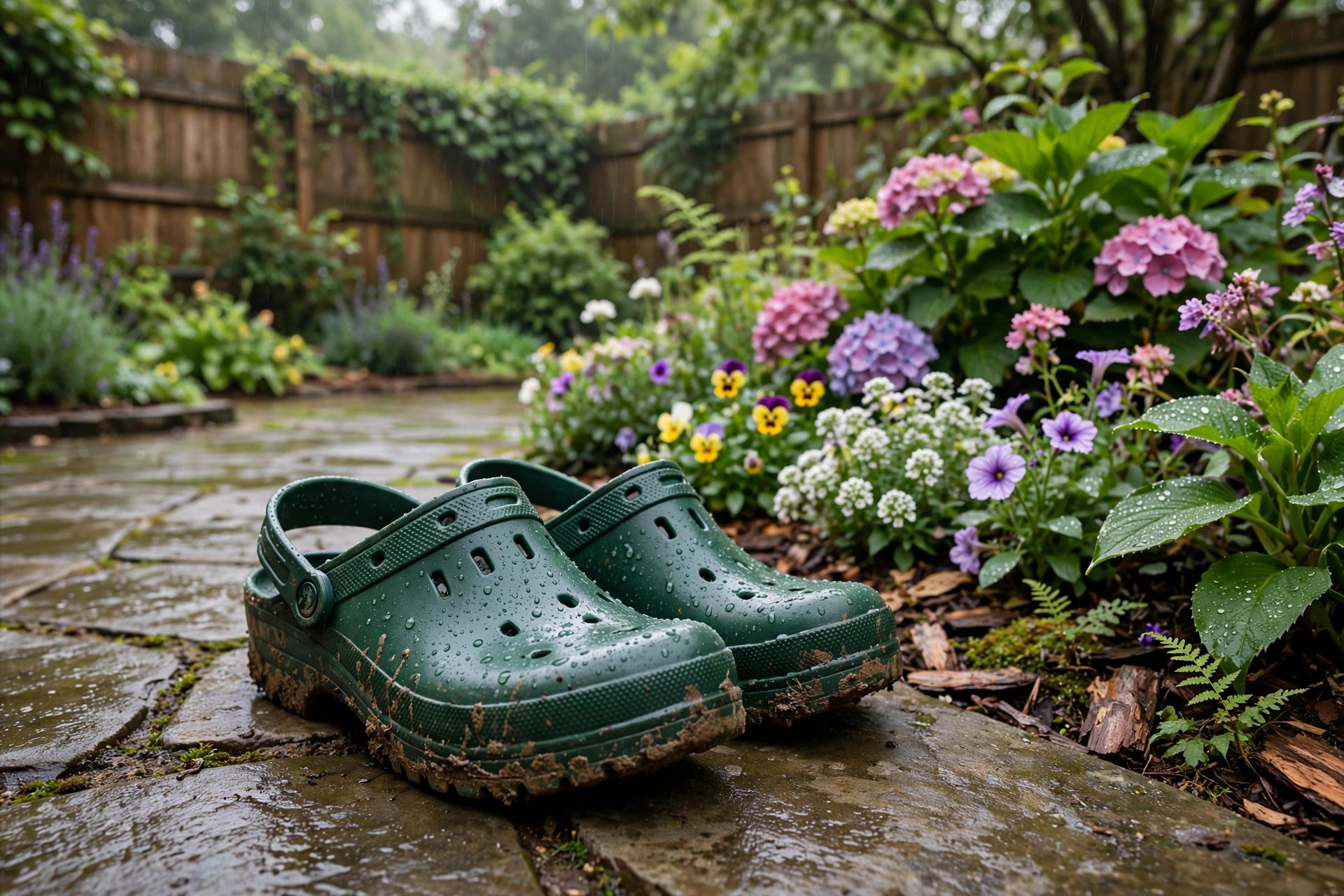

A wet spring morning should not stop good garden work. The best garden clogs waterproof for women let you step out into damp soil, puddles, and morning dew without a second thought. They keep your feet dry. They rinse clean in seconds. And they are built for the hard, honest work of beds, borders, and compost piles.
Many women garden in old sneakers or rubber boots. Sneakers soak through in minutes. Tall rubber boots keep feet dry, but they are heavy and hot on a summer day. Waterproof garden clogs sit in the middle. They give full water protection in a light, easy shoe that slips on and off at the back door.
This guide explains what to look for, how the main types compare, what you should expect to pay, and how to care for your clogs so they last for years. You will also find answers to common questions near the end.
Why Waterproof Garden Clogs Matter
Garden soil is rarely dry. Morning dew coats every leaf. A rain shower turns paths into mud. Watering cans spill. Hose bibs leak. If your shoes soak through, your socks stay wet for hours. Wet feet blister. Wet feet get cold. Wet feet make an afternoon in the garden a misery instead of a pleasure.
A waterproof clog closes that door. The material will not absorb water. Your foot stays dry even when you step through a puddle or kneel in wet mulch. At the end of the day you spray the clogs with a hose and leave them by the door. They dry fast and look clean again.
Good clogs also protect your feet from garden hazards. A sharp stone, a dropped hand tool, or a thorn can pierce thin shoes. Quality hand tool makers like Corona Tools and Fiskars remind gardeners that the right gear for every task, including footwear, keeps work safe and fast.
Comfort counts too. Garden work means hours of standing, kneeling, and bending. A clog with a cushioned footbed and good arch support keeps your back and knees happy. Cheap flat clogs may save money now and cost you comfort later.
What to Look for in Waterproof Garden Clogs: Best Garden Clogs Waterproof for Women
Not every clog that claims to be waterproof truly is. Use this checklist when you shop.
One-piece waterproof material. The best options are molded from a single piece of waterproof plastic, EVA foam, or rubber. Fewer seams mean fewer places for water to get in. If a clog has fabric panels or mesh vents, water will find them.
Sealed or closed design. Garden clogs with ventilation holes let water splash in from the sides. For truly waterproof wear, look for a closed upper. You can still find models with breathable linings inside that pull sweat away from the foot. General garden gear guides such as The Spruce also note that sealed seams matter more than marketing claims.
Grip that handles mud. Slick wet clay is a real fall risk. Look for a deep, wide tread pattern on the sole. A lug pattern that sheds mud as you walk works better than fine grooves that pack full and turn smooth.
Arch support and cushioning. Many women spend two or three hours at a stretch in the garden. A contoured footbed that supports the arch makes a clear difference. Some clogs come with removable insoles, which is handy if you want to use your own orthotics.
Secure fit. Clogs should slip on easily, but they should not slip off when you walk through thick mud. A heel strap or a snug back rim keeps the shoe on your foot. Test them on a slope or a wet patch before you trust them.
Easy cleaning. The whole point of a garden clog is low care. Smooth waterproof surfaces rinse clean under a hose. Avoid linings and materials that trap dirt or hold smells.
Types of Waterproof Garden Clogs for Women
Three main designs dominate the market. Each has its own strengths.
Molded EVA clogs. These are the light, foam-like clogs most people picture. They weigh almost nothing. They float in water. They rinse in seconds. The cushioning is soft and kind to tired feet. Their weakness is that very soft models can feel loose, and the foam can crack after years of hard sun exposure. Still, for most home gardeners they are the top pick.
Rubber garden clogs. Made from solid rubber like a rain boot cut down to shoe size, these are the toughest option. They stand up to sharp tools, hot compost, and chemicals from fertilizers. They are heavier than foam clogs and less cushioned, but they last a very long time. Women who garden daily or keep animals often prefer rubber. When you plan a full season of bed work, seed and plant suppliers like Burpee are a good reminder that durable basics beat fashion in the garden.
Leather-look waterproof clogs. Some makers sell leather clogs treated with waterproof coatings. They look smart and work for light garden tasks. But the waterproof treatment wears off over time, and deep puddles defeat them. They suit tidy patio gardens more than muddy vegetable beds.
When you compare models, it helps to read real-world testing from trusted reviewers. Consumer Reports tests footwear for durability and comfort under hard use, and their methods give a fair way to judge claims on the box.
How to Choose the Right Fit and Size
Fit matters more than brand. A waterproof clog that rubs or slips will sit unused by the door.
Shop in the afternoon. Feet swell a little during the day. A clog that fits at three in the afternoon will fit at three in the afternoon in the garden too. Morning shopping can leave you with a pair that pinches by evening.
Wear garden socks. Try clogs with the socks you will actually wear. Many women wear medium-weight cotton socks in the garden. Thick wool socks need a half size more room.
Check the heel. Walk around the store or your home. Your heel should lift only slightly. If it pops out with each step, the clog will fill with mud on your first walk through the beds.
Mind the toes. You should be able to wiggle your toes freely. Toes that press the front will go numb on a long day. About a finger’s width of space at the front is right.
Consider width. Women with wide feet should look for models marked wide. A narrow clog on a wide foot squeezes the toes and breaks the waterproof seal at the sides. Many quality brands now offer width choices.
Sizing charts differ between makers, so read each brand’s chart rather than guessing. Home project resources like Bob Vila and Family Handyman both stress that measuring first beats guessing on any fit question. When in doubt, a half size up with a heel strap is safer than a tight fit.
Cost and Price: What You Should Pay
Waterproof garden clogs for women cover a wide price range. Here is what each level buys.
Budget: fifteen to thirty dollars. Basic molded EVA clogs sit here. They are waterproof, light, and easy to clean. Support is simple and the foam is thinner. For light weekend gardening they work well. Expect one to two seasons of hard use.
Mid-range: thirty to sixty dollars. This is the sweet spot for most buyers. You get thicker cushioning, better arch support, deeper treads, and stronger materials. Many include heel straps and removable footbeds. These clogs often last three to five seasons with care.
Premium: sixty to one hundred twenty dollars. Top models use dense rubber, advanced cushioning systems, and careful fit design. They feel like real work shoes. They last many years. If you garden nearly every day, the cost per season is low.
Watch for sales at the end of spring. Retailers clear garden stock in late summer and fall. Buying off-season can save thirty percent or more. Home centers carry the main brands, and you can compare full lines at Home Depot or Lowe’s before you buy.
Do not pay for features you do not need. Anti-microbial linings, scented foam, and fashion prints add cost without adding dry feet. Spend the money on fit, sole grip, and support instead.
Care and Upkeep for Years of Use
Waterproof clogs are low care, not no care. A few habits keep them going.
Rinse after muddy days. Mud holds moisture against the material and stains light colors. A quick spray with the hose after work takes ten seconds. For stubborn soil, scrub with a soft brush and a drop of dish soap.
Dry out of direct sun. Sunlight breaks down foam and rubber over time. Dry your clogs in a shaded, airy spot, not on a hot concrete slab. Never put them in a clothes dryer. Heat warps the shape and ruins the fit.
Store upside down. Water collects in the toe cup when clogs sit upright. Tip them upside down by the door so they drain and air out between uses.
Refresh the footbed. If your clogs have removable insoles, pull them out to dry. Wash them with mild soap when they start to smell. Replace worn insoles instead of replacing the whole shoe.
Retire cracked pairs. Small cracks in the upper or a sole that has worn smooth mean the waterproof seal is failing. A cracked clog lets water in and gives no warning. Check each spring before the season starts.
With this care, a good pair serves three to five years. Budget foam clogs last less, while solid rubber clogs can last much longer.
Safety in the Garden
Waterproof clogs protect feet, but they are not work boots. Know their limits.
Watch slick surfaces. Even good tread slips on wet deck boards and algae-covered stone. Walk with care on patios after rain. If your path is always slick, choose clogs with the deepest lug pattern you can find.
Heavy tools need heavy shoes. Dropping a full spade or a stone edger on a foam clog will hurt. For digging and rock work, switch to sturdy boots. Clogs are best for planting, weeding, watering, and harvesting.
Chemicals and skin. Fertilizers and pesticides splash. Waterproof clogs keep these off your feet, which is a real health benefit. Wash the clogs after chemical use and wash your hands before you touch your face.
Sun and heat. Dark clogs get hot in full sun. Light colors stay cooler. If your clogs heat up, let them cool before long wear to avoid blisters.
Children and pets. Keep garden clogs out of the dog’s reach. Chew marks break the waterproof seal fast.
Pairing Clogs with the Rest of Your Garden Kit
The right footwear is one part of a comfortable garden setup. A good garden kneeler with handles saves your knees during long planting sessions. Sharp hand tools make work faster and safer, so keep your pruning shears for rose bushes clean and sharp. And when watering far beds, a garden hose built for large yards saves trips and tangles.
Comfort builds on itself. Dry feet, sharp tools, and a padded kneeler turn a long Saturday into a pleasure instead of a chore.
FAQ: Common Questions About Waterproof Garden Clogs
Are garden clogs really waterproof, or just water resistant? True molded clogs with no fabric or vents are fully waterproof. Water cannot soak through solid rubber or EVA. Models with mesh vents or fabric panels are only water resistant. Read the label and check for vents before you buy.
Can I wear garden clogs without socks? Yes, and many women do in summer. The smooth interior feels fine on bare skin. Socks add comfort on long days and stop sweat from pooling. If you go sockless, rinse the clogs after each use to stop odor.
Do waterproof garden clogs make feet sweat? Closed waterproof shoes trap some heat. That is the trade-off for dry feet. Choose clogs with moisture-wicking linings, wear breathable socks, and let the shoes air out between uses. Light-colored clogs run cooler in sun.
How do I clean the smell out of garden clogs? Wash with warm water and baking soda, then let them dry in shade. Removable insoles can be washed separately. A sprinkle of baking soda left overnight pulls out deep odors. Avoid bleach, which breaks down foam and rubber.
Are garden clogs good for wide feet? Many brands now make wide sizes. Look for “wide” on the size chart and avoid narrow fashion lasts. A heel strap helps keep a wider clog secure. If the sides bulge when you stand, the pair is too narrow.
Can I wear garden clogs on the street? Simple designs work fine for quick errands. Muddy treads belong in the garden, though. Keep a clean pair for town if you like the style, and rinse the garden pair before you leave the yard.
A Short Final Word
The best garden clogs waterproof for women are simple tools. They keep feet dry. They clean fast. They grip muddy paths. Choose a closed, one-piece design with real tread and honest arch support. Pay for fit before brand. Care for them with a rinse and shade drying, and they will serve you for seasons.
A garden asks for hours of standing, bending, and walking wet ground. Good clogs make those hours easy. Step out on the next damp morning and feel the difference dry feet make.
References
Bob Vila. (n.d.). Home improvement advice. https://www.bobvila.com Burpee. (n.d.). Seeds, plants, and gardening supplies. https://www.burpee.com Consumer Reports. (n.d.). Product reviews and ratings. https://www.consumerreports.org Corona Tools. (n.d.). Garden and landscape tools. https://www.corona-tools.com Family Handyman. (n.d.). DIY home repair and maintenance. https://www.familyhandyman.com Fiskars. (n.d.). Garden and cutting tools. https://www.fiskars.com Lowe’s. (n.d.). Home improvement products. https://www.lowes.com The Home Depot. (n.d.). Home improvement products. https://www.homedepot.com The Spruce. (n.d.). Home and garden advice. https://www.thespruce.com
Was this guide helpful?

About Jennifer Lee
The My Garden US editorial team writes practical, in-depth home and garden guides for American homeowners — tested advice, no fluff.
You May Also Like
Best Rain Barrel for Garden Watering: A Practical Guide
January 9, 2026 0 views
How to Prune Fruit Trees for Beginners: A Plain and Patient Guide
March 1, 2026 0 views
Best Garden Sprayer for Weed Control: A Practical Buyer’s Guide
April 3, 2026 0 views