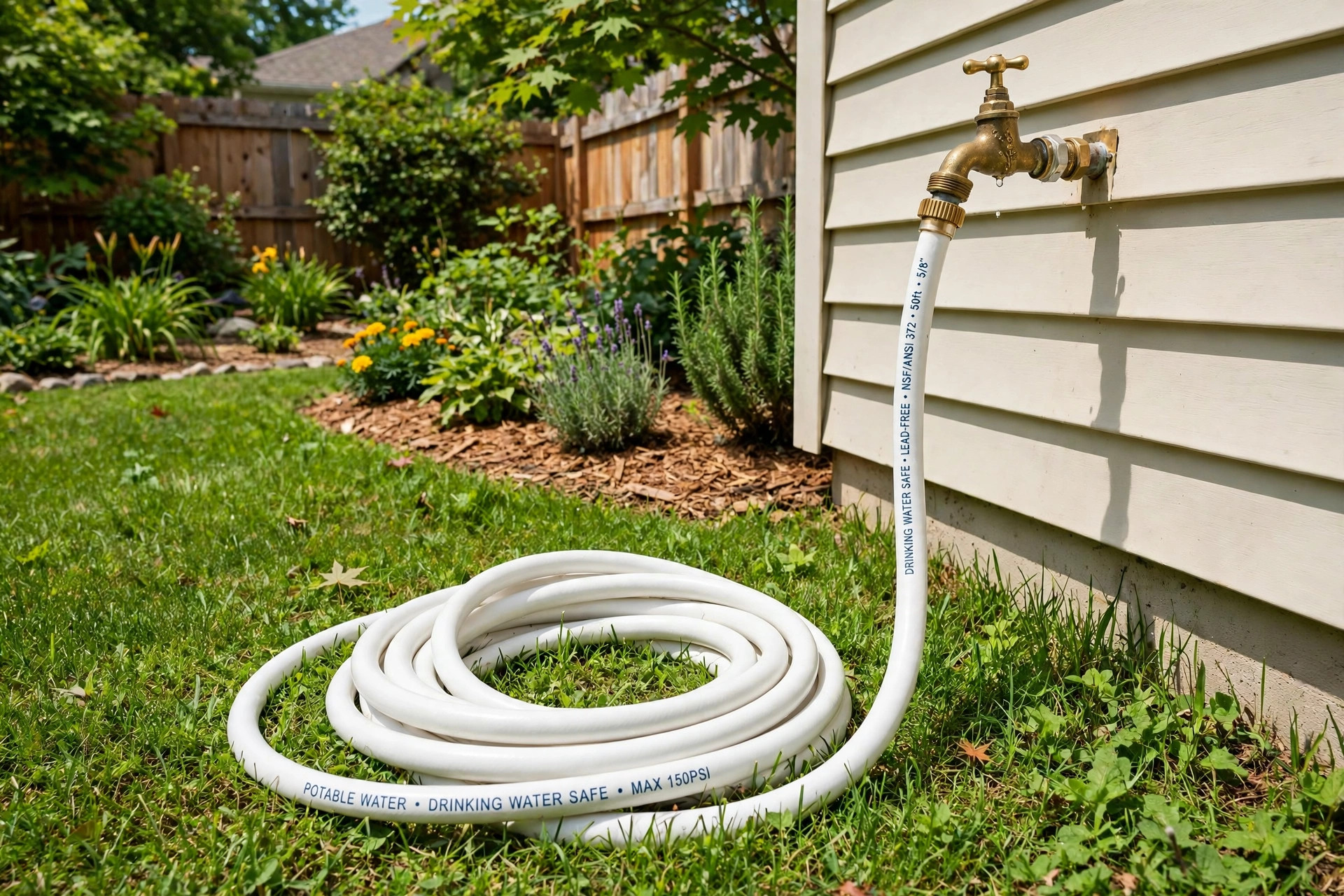

Many Americans drink from the garden hose. Children do it on hot days. Gardeners do it between rows. Pet owners fill the dog bowl from it. Most hoses were never made for drinking. They are made for watering lawns. The best garden hose for drinking water is built with safer materials. This guide explains what to look for, what to avoid, and how to keep your hose clean.
Why Drinking-Water Safety Matters
A standard garden hose can leach lead, phthalates, and BPA into the water. The water sits inside the hose. The sun heats the hose. Heat speeds the process. Studies by consumer groups have found high lead levels in some hoses. Children are the most at risk. Lead harms the brain and nervous system. Even small amounts matter.
A drinking-water-safe hose uses materials that meet strict limits. Many carry a label that says “drinking water safe” or “lead free.” Some meet NSF/ANSI 61 standards for drinking-water system parts. That standard sets limits on what may leach into water. Buying the best garden hose for drinking water is a simple way to protect your family. The cost difference is small. The peace of mind is large.
Water quality outdoors is easy to forget. We test kitchen water. We buy filters. Then we hand a child a hose that sat in the sun all day. Old hoses made before 2014 often contain brass fittings with lead. Newer brass is usually lead free. Plastic hoses may contain phthalates that keep them soft. Vinyl hoses are the main concern. A hose made for drinking water avoids these problems by design.
What to Look For When You Choose: Best Garden Hose for Drinking Water
Read the label first. Look for the words “drinking water safe.” Look for “lead free.” Look for “NSF/ANSI 61 certified.” These marks tell you the hose was tested for drinking use. No label means no proof. Do not trust color alone. A green or blue hose may still leach chemicals.
Check the material. Polyurethane hoses are light and flexible. They often meet drinking-water standards. Rubber hoses are heavy and durable. Some rubber hoses are safe for drinking. Vinyl hoses are the most common and the least safe. If you want the best garden hose for drinking water, start with polyurethane or a certified rubber model.
Check the fittings. Brass is standard on good hoses. Make sure the brass is lead free. Aluminum fittings are lighter. Plastic couplings are the lightest of all. Heavy-duty couplings resist cracks. Crushed fittings leak and waste water.
Check the diameter. Most hoses are 5/8 inch. That size gives good flow for most yards. A 1/2 inch hose is lighter but slower. A 3/4 inch hose moves the most water. For drinking use, flow matters less than safety. Pick a size that fits your outdoor faucet.
Check the length. Buy only what you need. A 25-foot hose is easy to coil and store. A 50-foot hose reaches most of a small yard. A 100-foot hose is heavy when full of water. Longer hoses also hold more stale water. Shorter is better for drinking use. Fresh water reaches you faster.
Read reviews before you buy. Independent testers like Consumer Reports publish hose ratings. Home guides like Bob Vila compare models for safety and strength. Store sites such as Home Depot carry customer reviews with real-world detail.
Types of Drinking-Water-Safe Hoses
Polyurethane hoses are a top pick. They weigh less than rubber. They stay flexible in cold weather. They resist kinks. Many are labeled drinking water safe. They cost more than vinyl. They last longer than vinyl. For daily outdoor drinking, polyurethane is hard to beat.
Rubber hoses are the workhorses of the garden. They handle rough use. They survive being run over by a cart. Some carry drinking-water-safe labels. Check each model. Not all rubber hoses are safe. Rubber is heavy, which is the main drawback. Older gardeners may prefer a lighter hose.
RV and marine hoses are made for drinking. Campers and boat owners drink from these hoses every day. They are white or light blue. They meet strict safety standards. They come in 25-foot and 50-foot lengths. An RV hose works well as a home drinking hose. It is a simple shortcut to safety.
Flat or pocket hoses expand when the water runs. They shrink when the water stops. They store in small spaces. A few are drinking water safe. Many are not. Read the fine print. These hoses wear out faster than rubber or polyurethane. They suit small patios and balconies.
Stainless steel hoses are new to the market. A metal coil wraps a flexible inner tube. They resist punctures and dog bites. Some models are labeled safe for drinking. They are costly. They do not kink. They add a modern look to the yard.
Soaker hoses are a different tool. They sweat water along their length for garden beds. Most are made from recycled rubber and are not safe for drinking. Use them for plants only. Keep a separate drinking hose for people and pets. Label each hose with tape so the house knows which is which.
Avoid ordinary vinyl hoses for drinking. They are cheap and common. They are the most likely to leach lead and phthalates. The Spruce keeps updated home and garden guidance on hose materials if you want a second opinion. If you already own a vinyl hose, use it only for plants.
Cost and Price
A safe hose costs more than a basic one. A 25-foot drinking-water-safe hose runs about 25 to 40 dollars. A 50-foot model runs about 40 to 70 dollars. Premium brands run higher. Compare prices at Lowe’s and Home Depot before you buy. Prices change with the season. Spring sales often cut hose prices.
Do not buy on price alone. A 12-dollar hose may leach chemicals for years. A 50-dollar safe hose protects your family for a decade. Cost per year favors the better hose. Cheap hoses also burst and kink. You replace them more often. The safe hose is the better value.
Watch for kits. Some sellers bundle a hose with a nozzle and a washer. A bundle can save money. Check that every part is lead free. A safe hose with an unsafe nozzle still taints the water. Read the full product listing.
Shop at the end of the season when you can. Hoses go on clearance in late summer and fall. Stores clear shelf space for winter goods. You may find a certified safe hose at half price. Buy one length longer than you think you need is a common tip, but for drinking use, stick to the shortest length that reaches. Less stored water means fresher water at the spout.
Care and Upkeep
Flush the hose before every drink. Let the water run for 30 seconds. Water that sat in the hose may be warm and stale. Flushing brings fresh water from the pipe. This step matters most in summer. A hose in the sun can reach very high temperatures.
Drain the hose after use. Lift one end and walk the water out. Standing water grows mold and algae. A drained hose lasts longer. Store it in the shade. Sunlight breaks down hose materials. A hose reel or a simple hook keeps it off the ground.
Clean the hose twice a year. Fill it with a mild bleach mix. Use one tablespoon of bleach per gallon of water. Let it sit for 30 minutes. Flush it well with clean water. This kills mold and bacteria. Do this in spring and fall.
Keep the shed organized while you are at it. A garden hose nozzle with multiple settings pairs well with a safe hose. A seed storage organizer for gardeners keeps packets dry and sorted. For light trimming, the best garden pruners for small hands fit smaller grips. Tool makers such as Corona Tools and Fiskars sell organizers and cases that fit a tidy shed.
Check fittings each spring. Tighten loose couplings. Replace cracked washers. A worn washer lets air in and leaks water out. Family Handyman publishes step-by-step repair guides for common hose problems. Most fixes take ten minutes.
Safety
Never leave a hose connected to a chemical sprayer. Backflow can pull chemicals into the house water. Use a backflow preventer on the faucet. These small devices cost a few dollars. They stop water from flowing backward. Many local codes require them.
Keep hoses away from standing puddles. A hose end in a puddle can siphon dirty water back. This is called back-siphonage. It happens when water pressure drops. Store the hose end off the ground. Coil it on a reel after use.
Do not drink from a hose that smells like chemicals. A strong plastic smell is a warning. A milky or oily film in the water is a warning. Stop and flush longer. If the smell stays, replace the hose. Trust your nose. It is a simple safety tool.
Teach children the flushing rule. Kids love the hose on hot days. Show them how to run the water first. Count to thirty together. Make it a habit. A child who learns the rule will use it for life.
Do the same for pets. Dogs drink from puddles and hose ends without thought. Fill a clean bowl instead. Rinse the bowl daily. Pets are smaller than people. Chemicals affect them faster. A safe hose protects the whole household, not just the two-legged members.
Buy from trusted garden suppliers. Shops like Burpee stock quality garden goods with clear labels. Clear labels make safe choices easy.
Frequently Asked Questions
Can you really drink from a garden hose? Yes, if the hose is labeled drinking water safe. A standard hose is not safe for drinking. It may leach lead, phthalates, and BPA. Buy a hose made for drinking. Flush it before each use.
How do I know if my hose is lead free? Look for “lead free” or “drinking water safe” on the package. Look for NSF/ANSI 61 certification. If the hose is old and has no label, assume it is not safe. Brass fittings made before 2014 often contain lead.
Are white RV hoses safe for drinking? Most are. RV and marine hoses are built to drinking-water standards. They are a reliable choice. Check the label to confirm. Use them the same way as any drinking hose. Flush before use.
How long does a drinking-water-safe hose last? A good hose lasts 7 to 10 years with care. Drain it after use. Store it in the shade. Clean it twice a year. Cheap hoses fail in 2 to 3 years. Quality and care decide the life span.
Is a more expensive hose always safer? No. Price alone does not prove safety. Only the label proves safety. Look for “drinking water safe” or NSF/ANSI 61. An expensive hose without these marks is not the best garden hose for drinking water. A mid-priced certified hose beats a costly uncertified one.
A Short Final Word
Clean water outdoors is a small luxury. It costs little. It takes a few minutes of care. Pick a hose with a clear safety label. Flush it before you drink. Drain and store it with care. Your family, your pets, and your plants will all benefit.
References
Bob Vila. (n.d.). Home improvement advice. https://www.bobvila.com Burpee. (n.d.). Seeds, plants, and gardening supplies. https://www.burpee.com Consumer Reports. (n.d.). Product reviews and ratings. https://www.consumerreports.org Corona Tools. (n.d.). Garden and landscape tools. https://www.corona-tools.com Family Handyman. (n.d.). DIY home repair and maintenance. https://www.familyhandyman.com Fiskars. (n.d.). Garden and cutting tools. https://www.fiskars.com Lowe’s. (n.d.). Home improvement products. https://www.lowes.com The Home Depot. (n.d.). Home improvement products. https://www.homedepot.com The Spruce. (n.d.). Home and garden advice. https://www.thespruce.com
Was this guide helpful?

About Emily Rodriguez
The My Garden US editorial team writes practical, in-depth home and garden guides for American homeowners — tested advice, no fluff.
You May Also Like
Cold Frame for Winter Gardening Reviews: What to Buy and How to Use It
July 3, 2026 1 views
Best Garden Hose Splitter Two Way: A Complete Guide
May 27, 2026 0 views
Best Garden Fork for Turning Compost: How to Pick the Right One
January 14, 2026 0 views