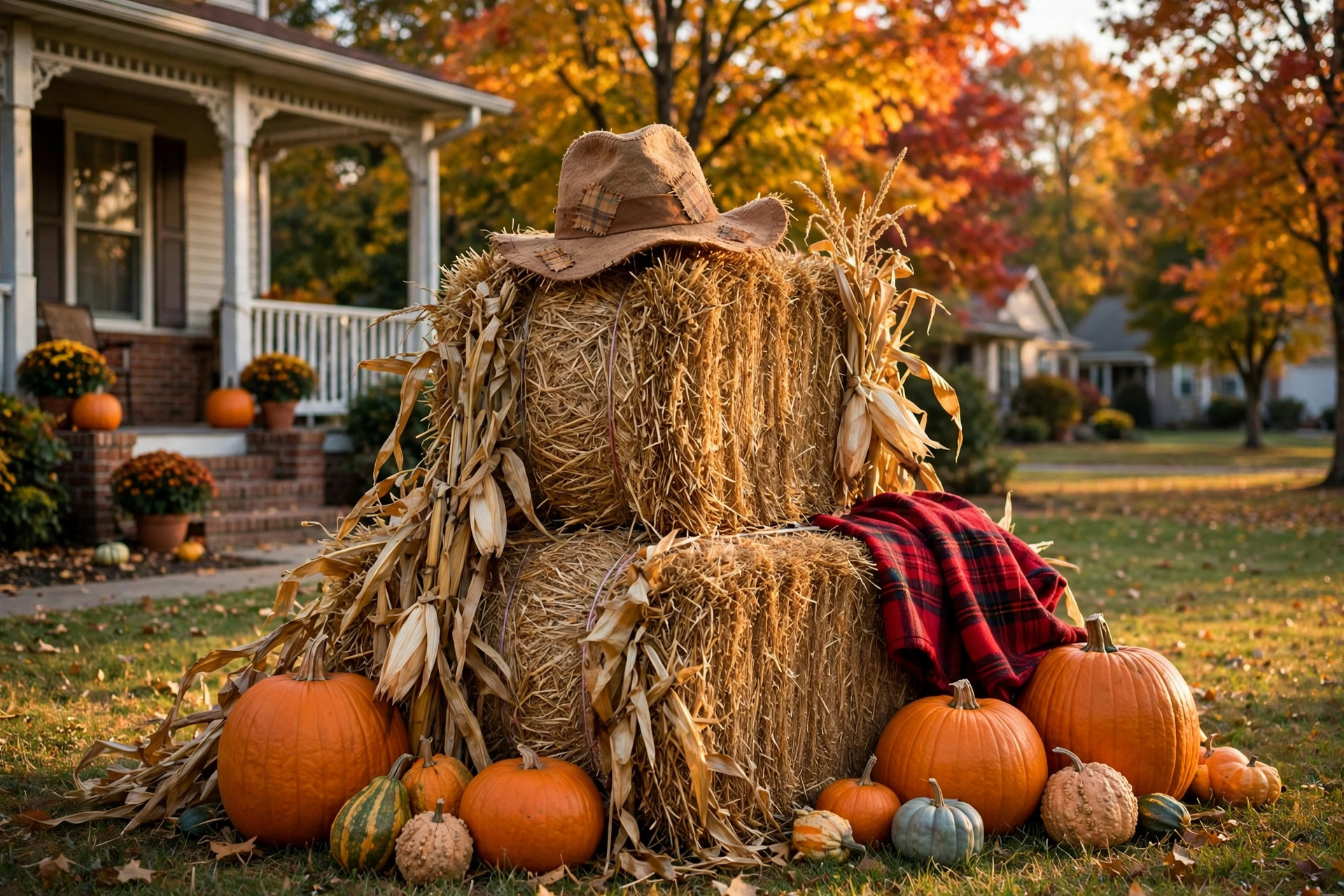
Nothing says autumn in America quite like a warm pile of golden hay sitting by the front porch. Fall hay bale decorations for yard harvest display turn an ordinary lawn into a postcard from the countryside. They are cheap to build, quick to set up, and they bring color and cheer to any home through the whole fall season.
This guide walks you through every part of building one. You will learn why hay bales work so well, how to choose the right kind, what to pair with them, what the whole project costs, and how to keep the display safe and tidy until Thanksgiving.
Why Hay Bales Belong in Your Fall Display
Hay bales carry the feeling of the harvest season like nothing else. A single golden bale can make a whole yard feel like a farm, even in the middle of the suburbs. People slow their cars to look at a well-built harvest display. Children stop to touch the rough hay. Neighbors smile when they pass it on their evening walk.
There are practical reasons too. Hay bales are light enough to carry but heavy enough to stay put in the wind. They lift pumpkins and gourds up to eye level, so your display reads from the street. They give you a sturdy base for stacking, leaning, and layering other decorations. And when the season ends, real hay breaks down into mulch for the garden, so nothing goes to waste.
A hay bale display also grows with the season. You can start it simple in early September with just the bales and a few gourds. Add pumpkins in October for a Halloween feel, then corn stalks and mums in November for a Thanksgiving harvest look. One set of bales can carry three different holidays.
Choosing the Right Hay Bales: Fall Hay Bale Decorations for Yard Harvest Display
Not all hay is the same. Small square bales are the best choice for most yards. They measure about three feet long and two feet wide, weigh between forty and fifty pounds, and are easy for one person to carry. Feed stores, farm stands, and many garden centers sell them in the fall for five to ten dollars each.
Straw Versus Hay
People often use the words hay and straw to mean the same thing. They are not. Hay is cut grass or alfalfa with the seed heads still in it. It is golden and smells sweet, but it can sprout seeds in your yard if the bales get wet. Straw is the dry stalk left after grain is harvested. It is lighter in color and has no seeds.
For decoration, straw bales are the smarter pick. They stay neat longer, they do not sprout, and their bright golden color photographs better. Many sellers label them as decoration bales. If you want the display to double as mulch later, hay works fine, but keep that in mind.
Round Bales and Mini Bales
Some farm stores sell large round bales, five feet across or more. They make a grand statement but they weigh hundreds of pounds and need a truck to move them. Skip them unless you have a very large yard and help to move them.
Mini bales, about the size of a loaf of bread, are sold in craft stores for a dollar or two. They are fine for porch railings and window boxes but they look silly in a yard display. Stick with the full-size square bales for the main arrangement.
Checking Quality Before You Buy
Pick up a bale and look at it closely. The twine or wire ties should be tight. Loose ties mean the bale will fall apart in the rain. The color should be even, with no dark or black spots, which point to mold. A musty smell is another warning sign. Good bales are dry, firm, and smell clean, like a barn in the sunshine.
Building Your Yard Harvest Display
Start with a flat spot near the front door, the mailbox, or the edge of the driveway. These spots get the most foot traffic and the best light. Lay a tarp or a few boards under the bales if the ground is soft. This keeps the bottom dry and saves your grass from bare spots.
The Classic Stack
The most-loved arrangement is simple: two bales side by side on the ground, with one or two stacked on top like a small pyramid. This gives you three levels to decorate. It stands about four feet tall, which is perfect for viewing from the sidewalk. Tie the bales together with garden twine if your street gets strong winds. You can find layout ideas in the fall decorating guides at HGTV and Country Living, which publish new seasonal yard themes every autumn.
Adding Pumpkins and Gourds
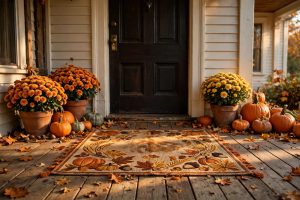
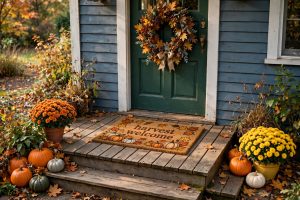
Once the bales are set, the real fun begins. Set large pumpkins on the ground around the base. Put medium pumpkins on the lower bales and small gourds on the top bale. Mix orange, white, and green varieties for a rich look. Farmers markets and pumpkin patches sell them for one to five dollars each in October.
Group items in odd numbers. Three pumpkins look better than two. Five gourds look better than four. This is an old decorating trick that holds true outdoors too. Tuck dried corn stalks behind the bales so they rise up like golden curtains. Tie each bundle with twine and lean it against the house or a fence post.
Scarecrows, Signs, and Extras
A scarecrow leaning against the top bale brings the whole scene to life. You can buy a ready-made scarecrow for ten to twenty dollars, or make one from old clothes and a burlap sack. Wooden signs with words like HARVEST, WELCOME, or GIVE THANKS add a friendly note. Drape a plaid blanket or a burlap runner over one bale for softness.
Mums are the perfect finishing touch. These hardy fall flowers come in orange, red, yellow, and purple. Set potted mums on the ground beside the bales and they will bloom through November. The plant care pages at The Spruce have solid advice on keeping mums alive in cold weather.
Cost and Price Breakdown
A fall hay bale display is one of the cheapest yard projects you can take on. Here is what a typical three-bale display costs at American stores and farm stands:
– Three square straw bales: 15 to 30 dollars – Six to ten pumpkins and gourds: 10 to 25 dollars – Two bundles of dried corn stalks: 8 to 15 dollars – One scarecrow or wooden sign: 10 to 25 dollars – Two or three potted mums: 10 to 20 dollars – Twine, tarp, and extras: 5 to 10 dollars
The full display runs between sixty and one hundred twenty-five dollars. Shop farm stands and local growers first, where prices beat big stores. You can cut the cost further by reusing pumpkins from Halloween for the November harvest look. Home improvement stores like The Home Depot and Lowe’s also carry bales, gourds, and harvest decor in their seasonal aisles each fall.
Care and Upkeep Through the Season
Hay bale displays need a little care to last from September to November. The main enemy is water. Wet hay grows mold and slumps into a soggy mess. Set your display under an overhang when you can, and move it away from sprinkler lines and downspout outlets.
Cover the display with a tarp on nights of heavy rain if you want it to last the whole season. After a storm, check the bales for dark spots and pull off any wet layers. Pumpkins rot faster than the hay, so swap out soft ones every week or two. A rotten pumpkin will stain the bale beneath it.
Check the ties on the bales once a month. Wet and dry cycles loosen twine. If a bale starts to bulge, cinch the twine tight again or wrap a new length around it. When the season ends, toss the bales in the compost pile or spread them as mulch in the garden beds. Nothing is wasted.
Safety Tips for Your Display
A harvest display should be safe for children, pets, and visitors. Keep these rules in mind:
– Keep bales off the walkway so nobody trips. Leave at least three feet of clear path. – Do not stack bales higher than three high. Taller stacks can fall in the wind. – Never place bales where they block the view of the street for drivers. – Place candles and lanterns far from hay. Hay catches fire very fast. Use battery-powered candles instead of real flames. – Anchor tall corn stalks and scarecrows so they cannot blow into the road. – If you use electric lights, keep cords off the wet ground and use outdoor-rated extension cords.
Hay is also dusty, so children with allergies should not roll in it or bring it indoors. The safety experts at the U.S. Consumer Product Safety Commission remind families to keep outdoor decorations away from heat sources and walkways.
Related Fall Ideas for Your Home
A yard harvest display pairs well with matching touches inside and out. Many families carry the autumn theme onto the porch with fall candle holders for dining table centerpiece ideas for the entryway table, then add a best thanksgiving pumpkin centerpiece for table when the holiday arrives. When winter comes, the same skills transfer to hanging best christmas bows for outdoor wreaths large on the front door.
Craft stores like Michaels sell hay bales, burlap, twine, and scarecrow kits year-round for these projects. For bargain hunting and design inspiration, browse the seasonal collections at Wayfair and the decorating features at Good Housekeeping.
Frequently Asked Questions
How long will a hay bale display last outdoors?
A dry, covered display lasts eight to twelve weeks, easily covering September through Thanksgiving. Rain is the biggest threat. Bales that sit in standing water may last only three to four weeks before they sag and mold.
Can I bring the hay bales inside the house?
It is not a good idea. Hay is dusty and can carry mold spores, seeds, and insects. It also smells strongly in a closed room. Keep the bales outside and bring only pumpkins, gourds, and mums indoors.
Where is the best place to buy hay bales for decoration?
Local farm stands and feed stores are the best source. They sell fresh bales at fair prices in the fall. Garden centers and home improvement stores stock them too. Craft stores sell smaller bales for porches.
Will the bales damage my lawn?
Bales left in one spot for many weeks will yellow the grass under them. This is usually temporary. The grass grows back in the spring. To protect the lawn, set the bales on a tarp or move them a few inches every couple of weeks.
What do I do with the hay bales after the season ends?
Do not throw them away. Break the bales apart and use them as mulch in flower beds and vegetable gardens. Hay mulch keeps weeds down and feeds the soil as it breaks down. Compost bins welcome hay too.
Can I reuse the same bales next year?
No. Real hay and straw bales do not survive a year of storage. They rot, attract mice, and lose their shape. Buy fresh bales each fall. They are cheap enough that starting over makes sense.
A Short Final Word
Fall hay bale decorations for yard harvest display prove that the best decorating ideas are often the simplest. Three bales, a few pumpkins, some corn stalks, and one autumn afternoon are all it takes to turn your yard into a warm welcome for the season. Start small, add pieces as the weeks pass, and enjoy the golden days of fall.
References
Country Living. (n.d.). Country home and lifestyle. https://www.countryliving.com Good Housekeeping. (n.d.). Product reviews and home advice. https://www.goodhousekeeping.com HGTV. (n.d.). Home and garden ideas. https://www.hgtv.com Lowe’s. (n.d.). Home improvement products. https://www.lowes.com Michaels. (n.d.). Arts and crafts supplies. https://www.michaels.com The Home Depot. (n.d.). Home improvement products. https://www.homedepot.com The Spruce. (n.d.). Home and garden advice. https://www.thespruce.com U.S. Consumer Product Safety Commission. (n.d.). Product safety information. https://www.cpsc.gov Wayfair. (n.d.). Furniture and home goods. https://www.wayfair.com
Was this guide helpful?

About Robert Taylor
The My Garden US editorial team writes practical, in-depth home and garden guides for American homeowners — tested advice, no fluff.