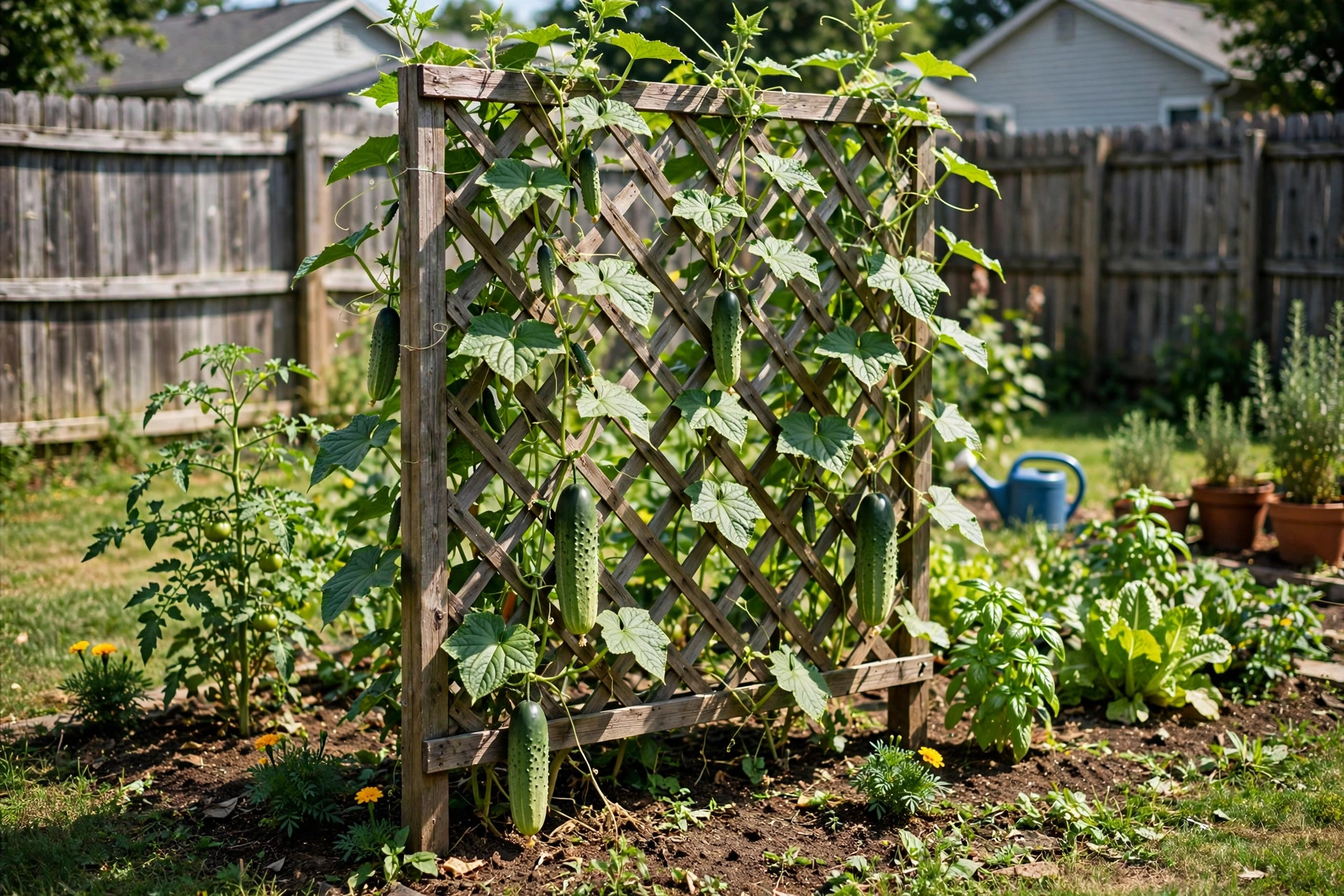
Cucumbers grow fast. They also take up a lot of room. A plant left on the ground will spread wide and cover every nearby plant. The fruit will touch the soil. It will rot or turn yellow on one side. The best garden trellis for cucumbers reviews all point to the same answer. Grow your cucumbers up, not out. A trellis lifts the vines off the ground. The fruit hangs straight and clean. The air moves around the leaves. The leaves dry fast after rain. That means less disease. You also pick more fruit because you can see it. A trellis saves space too. A patch that once grew four plants can grow eight.
Why a Trellis Matters for Cucumbers
Cucumber vines are natural climbers. They send out thin tendrils that grip anything close by. In the wild they climb fences and bushes. In your garden they will climb your tomatoes or your fence if you let them. Give them their own support and they do better.
Fruit that grows on a trellis stays clean. It does not sit in mud after a rain. It does not rot on the underside. Straight fruit is easier to slice and pickle. Gardeners who read cucumber trellis reviews notice one point again and again. Straighter fruit is the first benefit people report.
Air flow is the second benefit. Cucumber leaves hate staying wet. Wet leaves grow mildew and spot. On a trellis the leaves hang apart. The sun and wind reach them. The plants stay healthy longer. A healthy plant keeps making fruit into late summer.
Space is the third benefit. Many yards have only a small sunny spot. A trellis turns one square yard of soil into a wall of green. You can walk past it and pick fruit at eye level. There is no need to bend down and dig through leaves.
What to Look For When You Choose: Best Garden Trellis for Cucumbers Reviews
Strength
Cucumber plants get heavy. One vine can carry ten or twenty fruits at once. A light trellis will tip over or sag in a storm. Look for strong posts and a firm frame. Steel and thick wood last longer than thin plastic. The best garden trellis for cucumbers reviews always mention wind. A trellis that blows over ruins the vines. Push on the display model in the store. If it wobbles, keep looking.
Height
Most cucumber vines reach five to six feet. Some reach seven. A trellis should be at least six feet tall. Short trellises work for small bush types, but most common types need height. A tall trellis also keeps fruit off the ground as the season goes on.
Mesh Size
The vines grip with tendrils. Small mesh or netting gives them many hold points. A mesh of about four to six inches works well. Large open grids still work if you tie the vines with soft ties. Fine netting can tangle the vines at clean up time. Many gardeners prefer removable netting for this reason.
Materials
Wood looks natural and holds up for several years. Cedar and redwood resist rot. Steel tube frames are strong and light. Powder-coated metal will not rust for years. Plastic trellises cost less but bend in heat. Fabric netting is cheap and easy to store, but it wears out each year.
Footprint and Setup
Some trellises need deep ground stakes. Others fold flat and stand on their own. If your soil is soft, use stakes at least twelve inches deep. On a deck or patio, pick a freestanding A-frame model with a stable base. Garden supply stores carry both kinds in spring.
Types of Trellises for Cucumbers
A-Frame Trellises
An A-frame is two panels leaned together like a tent. Cucumbers climb both sides. The fruit hangs inside the tent where it is easy to reach. Shade grows under the frame, and some gardeners plant lettuce there. A-frames fold flat in winter. They are a top pick in many garden trellis for climbing cucumbers guides.
Arched Trellises
An arch makes a tunnel. Vines climb up and over. You walk under it and pick fruit overhead. Arches are strong when well staked. They also look beautiful. The cost is higher than simple panels. A metal arch can last ten years or more.
Vertical Panels
A single flat panel is the simplest choice. Wood or metal frames with wire or netting inside. You set it like a wall at the north end of the bed so it does not shade other plants. Panels stack well for storage. Consumer test groups often rate simple steel panels high for value.
Netting and String Trellises
Cheap netting strung between two posts works fine for one season. Heavy string also works. The vine weight can pull cheap string down, so use thick twine or real netting. This is the lowest-cost option. It suits renters and first-time growers.
Obelisk and Tower Trellises
A tower is a tall pyramid of thin rods. One plant per tower looks neat in a pot or small bed. Towers suit small gardens best. Large vines can outgrow a small tower by July. Pick a tower at least five feet tall.
How to Set Up Your Trellis
Set the trellis before you plant. The roots will grow around the stakes. Moving a trellis later can break roots. Place the trellis on the north side of the bed. The vines will not shade shorter plants that way.
Sink the legs deep. In soft soil, push stakes at least a foot into the ground. In windy places, add extra stakes and tie the frame with wire. Home improvement guides suggest checking stability after heavy rain, when soft soil can loosen stakes.
Plant seeds or starts six inches from the base. As the vines grow, guide them to the frame. Loose tendrils find the mesh on their own. On wide grids, tie the main stem with soft cloth strips every foot. Do not tie tight. The stem thickens as it grows.
Cost and Price
Prices run wide. Simple netting costs five to fifteen dollars. Basic A-frame kits cost twenty to forty dollars. Large wooden or metal panels cost forty to eighty dollars. Arches and heavy steel models cost eighty to two hundred dollars or more.
Price often tracks life span. A fifteen-dollar net lasts one season. A good steel panel lasts five to ten years. Wood lasts three to six years, more for cedar. When you read the best garden trellis for cucumbers reviews, look at cost per year. A sixty-dollar panel that lasts six years costs ten dollars a year. That beats cheap netting over time.
Sales come early in spring. Retail sites note that garden gear prices rise by May. Buy in March or April for the best stock and price.
Care and Upkeep
A trellis needs little care. Check it each spring before planting. Tighten loose bolts. Sand rough wood spots that could cut vines. Replace frayed netting. Wash mildew off with soap and water.
At season end, pull the vines down. Do not leave dead vines on the frame all winter. They hold disease. Cut the vines at the base and compost the clean ones. Store folding frames flat in a dry shed. Wooden frames last longer when stored dry. Before you store a frame, check the joints. Wobbly joints can be fixed with new screws or bolts in spring. Take a photo of the frame while it stands. The photo helps you rebuild it fast next year. If you used ties or twine, cut them off and throw them away. Old ties carry disease just like old vines do. A clean frame each spring gives your new plants a fresh start.
Paint or stain wooden trellises every two or three years. Use a garden-safe stain with no harsh chemicals. Metal frames with chipped coating can rust. Touch up chips with outdoor paint to stop rust before it spreads.
Safety
A trellis is simple, but a few rules keep it safe. Anchor it well. A fallen trellis in a storm can hurt people and pets. Keep it away from play areas. Round off sharp wire ends with tape or caps. Safety resources remind gardeners that toppled garden structures cause injuries each year.
Check for wasp nests under A-frames in late summer. They like the shade. Wear gloves when you pull old vines. Old stems can hide thorns from nearby plants. Store tall panels flat or tied so wind cannot lift them.
Matching the Trellis to Your Cucumber Type
Vining cucumbers need a tall trellis. Types sold for slicing and pickling are mostly vines. They climb with joy. Bush types grow short and need no tall support, though a low ring can still help keep fruit clean. Check your seed packet. If it says “vine” or “trellis recommended,” plan for a six-foot structure.
Heavy fruits need strong frames. Large slicing cucumbers weigh more than small pickling ones. For heavy fruit, pick steel or thick wood. Thin bamboo frames suit light pickling types but may bow under big slicers.
Pots and small beds need freestanding models. A garden products site offers tower and A-frame models sized for pots. If you plan to grow cucumbers in pots, pick a trellis with a stable base that fits the pot.
FAQ
Do cucumbers really need a trellis?
They do not need one to live, but they do far better with one. The fruit is cleaner and straighter. The plants get less disease. You save space. Almost every review of a sturdy trellis for heavy cucumbers reports a bigger harvest than the year before.
Can I use a tomato cage for cucumbers?
A tomato cage is too short and too narrow for most vines. A strong vine will climb over the top and fall back down. Use a cage only for small bush types. For vines, use a real trellis.
When should I put the trellis in place?
Before planting. The roots spread wide. If you drive stakes in later, you can cut roots. Early setup also lets you train young vines from the start.
How do I get the vines to climb?
Most vines climb on their own. Guide the first few tendrils to the frame. Tie the main stem loosely with soft strips if the grid is wide. Check once a week and tuck stray vines back on.
Will a trellis work in a windy yard?
Yes, with good anchoring. Deep stakes and guy wires hold most frames. Low A-frames catch less wind than tall flat panels. DIY guides show how to stake frames in windy spots.
How long does a good trellis last?
It depends on material. Netting lasts one season. Wood lasts three to six years. Powder-coated steel lasts five to ten years. Store frames dry in winter to add years to any type.
A Short Final Word
A trellis is one of the simplest tools in the garden. It costs little and gives back much. Pick a strong frame, set it deep, and train the vines early. Read a few reviews before you buy, but do not overthink it. Any sturdy six-foot frame will grow better cucumbers than bare ground. Once you grow up instead of out, you will never go back to vines sprawling on the bare soil. Your kneeling and tool carry needs matter too when you tend the bed, and a tidy tool caddy keeps ties and shears close at hand. Start simple, watch your vines climb, and enjoy a cleaner harvest all summer.
See Corona Tools for more detail.
References
Bob Vila. (n.d.). Home improvement advice. https://www.bobvila.com Consumer Reports. (n.d.). Product reviews and ratings. https://www.consumerreports.org Corona Tools. (n.d.). Garden and landscape tools. https://www.corona-tools.com Family Handyman. (n.d.). DIY home repair and maintenance. https://www.familyhandyman.com Gardener’s Supply Company. (n.d.). Gardening tools and supplies. https://www.gardeners.com Lowe’s. (n.d.). Home improvement products. https://www.lowes.com The Home Depot. (n.d.). Home improvement products. https://www.homedepot.com U.S. Consumer Product Safety Commission. (n.d.). Product safety information. https://www.cpsc.gov
Was this guide helpful?

About Jennifer Lee
The My Garden US editorial team writes practical, in-depth home and garden guides for American homeowners — tested advice, no fluff.