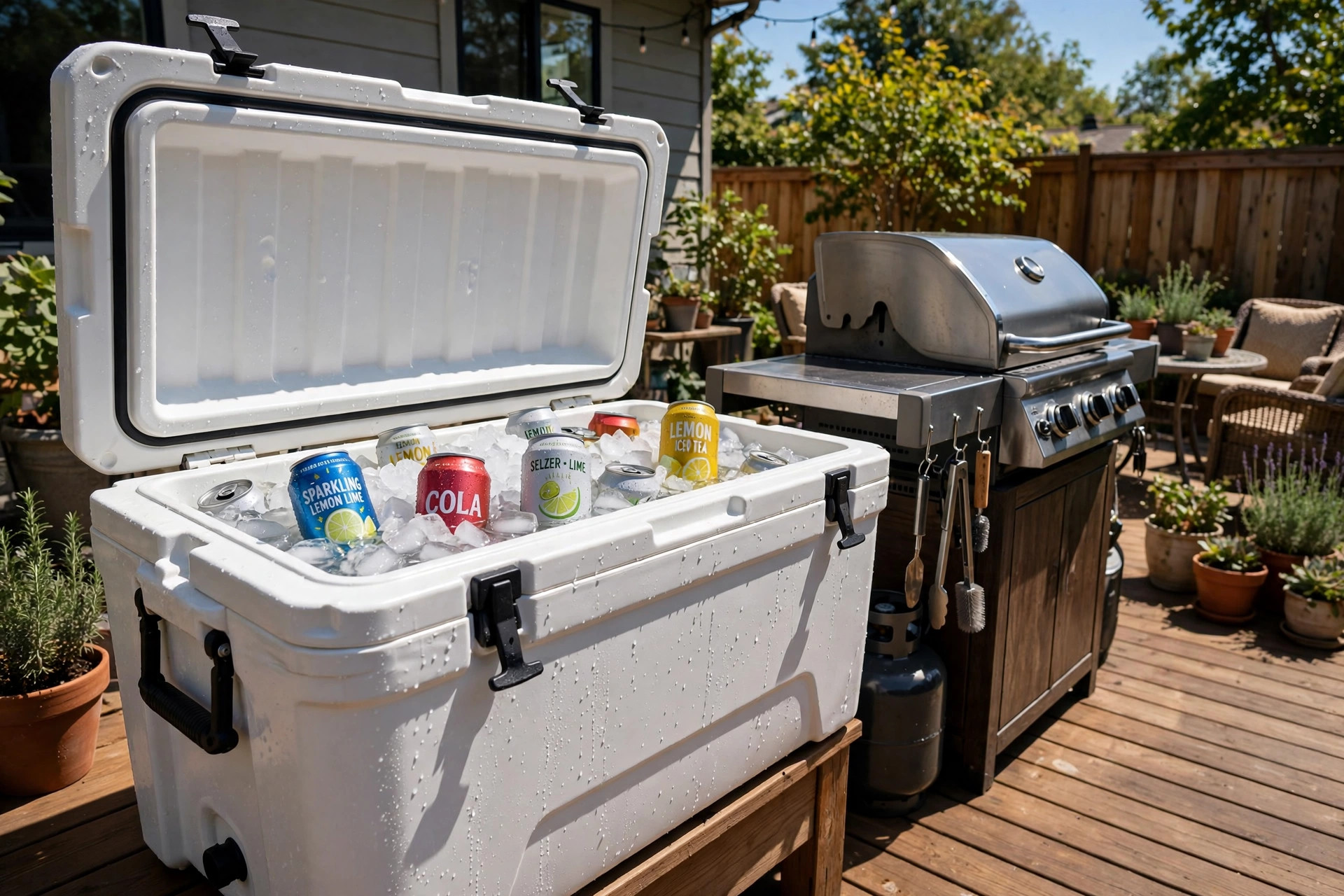
When friends gather on a warm evening, the first thing they ask for is a cold drink. The best outdoor beverage cooler for patio use keeps cans and bottles cold for hours without a trip back inside the house. It sits near the chairs, the table, and the grill, so guests can help themselves. This guide walks through what matters when you shop, what kinds are sold, what they cost, and how to keep one in good shape.
Why a Patio Beverage Cooler Matters
A patio is a second living room. People spend long hours there in spring and summer. They eat, talk, and rest outside. A drink that sits in the sun turns warm in minutes. A good cooler keeps ice firm and drinks cold from the first guest to the last.
There is also the matter of ease. Without a cooler, the host walks in and out of the kitchen all evening. The screen door slams. Guests wait. With a cooler on the patio, the host stays with the guests. The party flows better.
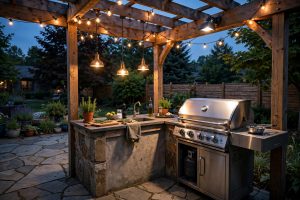
A cooler also pairs well with a grill station. Many cooks set up an outdoor bar sink for grill station use so they can rinse tools and wash hands outside. A beverage cooler takes the same idea one step further: the whole meal and the drinks live out back. You may read more about grill station setups in our guide to the outdoor bar sink for a grill station.
How to Choose: Best Outdoor Beverage Cooler for Patio
Choosing the best outdoor beverage cooler for patio life comes down to a few plain points. Think about each one before you buy.
Size and Capacity
Size is the first question. A small cooler holds about two dozen cans. That suits a couple or a small family. A large cooler holds sixty cans or more and fits two-liter bottles and wine bottles standing up. That suits big parties and holiday cookouts.
Measure your patio before you shop. A wide cooler with a lid that swings open needs room behind it. If space is tight, a slim upright model or a narrow cart may serve better. Think about how many guests you host most often, not once a year. Buy for the common case.
Ice Retention
Ice retention tells you how long a cooler holds cold. Makers test their chests and print the number of days on the box. A plain cooler holds ice for a day or two. A thick-walled rotomolded cooler holds ice for three to five days.
For most patios, a day of hold time is enough. You fill the cooler in the morning, and it stays cold through the night. If you host long weekend parties or you live where summer days run hot, look for better hold time. Review sites such as Consumer Reports test coolers side by side and publish plain numbers on ice retention.
Build and Materials
Most outdoor coolers are plastic, metal, or a mix. Hard plastic chests are light and cheap. Rotomolded plastic chests are thick and tough; they cost more but last for years. Stainless steel coolers look fine on a nice patio and resist rust. They can get hot in direct sun, so shade helps.
Check the lid seal. A good lid closes tight and keeps cold air in. Check the hinges and latches too. These small parts break first on cheap models. A cooler with strong hinges and a thick lid will serve you longer.
Wheels and Handles
A full cooler is heavy. Sixty cans plus ice can weigh more than fifty pounds. Wheels make a big difference. Wide wheels roll over grass and pavers. Small wheels stick on lawn. If you plan to move the cooler from the garage to the patio, wheels are worth the extra cost.
Telescoping handles help too. They let you pull the cooler like a suitcase. If you tailgate with your cooler, wheels and a long handle matter even more. Cooks who carry a grill to away games often read about the best portable pellet grill for tailgating along with a cooler they can roll.
Drainage
Melted ice turns to water. You need a way to let it out. A drain plug near the bottom of the chest is the answer. A wide drain empties fast. A drain with a hose fitting lets you run the water to the yard. Without a drain, you must tip the whole cooler to empty it, and that is hard work when it is full.
Types and Options
Shops sell several kinds of outdoor beverage coolers. Each has its strengths.
Hard-Sided Chest Coolers
The hard-sided chest is the classic. It has a big lid and thick walls. It holds the most drinks for the money. Sizes run from twenty quarts to over a hundred. These suit big family cookouts and block parties. The Weber site shows how outdoor cooking setups pair with large chests at grilling events.
Rolling Cart Coolers
A rolling cart cooler looks like a small bar cart. It holds a chest on a frame with wheels and often a side shelf. The shelf holds cups, a bottle opener, and napkins. These cost more than plain chests, but they look tidy on a patio and double as a serving table. Char-Broil and other outdoor brands list cart models that match their grills.
Insulated Beverage Dispensers
An insulated dispenser is a tall tub with a spigot. You fill it with a big batch of lemonade, iced tea, or punch. Guests pour their own. These suit parties where one drink serves the crowd. They do not replace a chest for cans, but they pair well with one. Party planners at The Spruce Eats often suggest a dispenser beside a chest for large gatherings.
Patio Bar Coolers
Some coolers are built to look like furniture. A patio bar cooler may hide the chest under a wooden top that opens like a trunk. Closed, it looks like a side table. These cost the most, but they blend into a well-kept patio. Stores such as Home Depot carry a range of furniture-style coolers in their outdoor section.
Electric and Plug-In Coolers
A few coolers plug into an outlet and cool like a small fridge. They keep drinks cold without ice. They need power on the patio, and they cost more to run. Some buyers prefer a small outdoor fridge instead. If that idea appeals to you, see our notes on the best outdoor mini fridge for patio.
Cost and Price
Prices run wide. A basic hard-sided chest of about forty quarts costs around thirty to sixty dollars. A mid-size cooler with wheels and a good seal runs sixty to one hundred fifty dollars. A large rotomolded cooler or a furniture-style cart runs one hundred fifty to four hundred dollars or more.
Think of cost per year. A cheap cooler that cracks in two summers costs more in the end than a sturdy one that lasts ten. Read the warranty. Many good makers back their chests for five years. That tells you they expect the cooler to last.
Watch for sales in spring. Stores stock outdoor goods in March and April and cut prices to move old stock. Buying a cooler in the off-season can save a third of the price. Napoleon dealers and grill shops often bundle coolers with grills at a lower price in spring.
Do not forget the hidden costs. Ice costs money if you buy bags each week. A cooler with weak walls eats more ice. Over a summer, the ice bill can top the price of the cooler itself. Better insulation pays for itself.
Care and Upkeep
A cooler is simple to keep, but a little care goes far.
Cleaning
Wash the inside after each use. Warm water and dish soap do the job. Rinse well and let it air dry with the lid open. Dried soda and juice leave sticky spots that draw ants. A quick wash stops that.
For stains and smells, a paste of baking soda and water works well. Rub it on, wait a few minutes, and rinse. Skip harsh bleach unless you rinse very well after, since bleach can harm the plastic seal over time.
Storage
Store the cooler with the lid cracked open. A closed, damp cooler grows mold. Keep it out of long sun when not in use. Sun breaks down plastic and fades color. A garage or a shed is best. If it must sit on the patio, a cover helps.
Parts
Latches and drain plugs wear out. Many makers sell spare parts. Traeger and Big Green Egg both stock small parts for their outdoor gear, and cooler makers do the same. Keep the model number when you buy. It makes ordering parts easy later.
Safety
Coolers are safe, but a few rules matter.
First, food safety. Keep the inside below forty degrees. Use enough ice. Do not let meat or dairy sit in a warm cooler. When in doubt, add more ice. Guides at AmazingRibs stress cold holding times for outdoor cooking, and the same rule fits drinks mixed with food.
Second, weight. A full large cooler is heavy. Lift with the legs, not the back. Better yet, roll it. Do not let small children climb into a chest. Old coolers without a vent can trap a child inside. New models have safety releases, but keep the habit anyway.
Third, glass. Many patios ban glass bottles because broken glass on stone is hard to clean. Use cans or plastic where the rule applies. A cooler full of cans also cools faster, since cans pass cold quickly.
Fourth, sun and heat. Do not set a cooler right next to a hot grill. Heat on one side melts ice fast. Give it a few feet of space. A shady corner of the patio is the best spot. Broil King grill guides note the same point about keeping gear clear of direct grill heat.
Frequently Asked Questions
How much ice does a patio cooler need?
A good rule is two parts drinks to one part ice. Fill the chest a third full of ice, add the drinks, and top with more ice. For a long hot day, use more ice than you think you need. Block ice lasts longer than cubes.
Can a beverage cooler stay outside all summer?
Yes, if it is built for it. Look for UV-stable plastic and rust-proof hardware. Still, shade and a cover extend its life. Bring electric coolers under cover when rain comes.
What size cooler fits a patio party of twenty?
Plan for three to four drinks per guest. Twenty guests means sixty to eighty drinks. A cooler of about sixty to seventy quarts holds that load with ice. For a smaller group of eight to ten, a forty-quart chest is enough.
Is a wheeled cooler worth the extra cost?
Most buyers say yes. A loaded cooler is heavy, and wheels save your back. Wide wheels roll on grass. If your patio is all stone, even small wheels work. Only skip wheels if the cooler never moves.
How do I stop the cooler from smelling?
Wash it after each use and dry it with the lid open. Baking soda paste removes old smells. A crumpled sheet of newspaper left inside overnight also pulls odor out. Store with the lid cracked so air moves.
Should I buy a cooler that matches my grill brand?
It is not needed, but it can look nice. Grill makers sell coolers that match their lines. The match is about looks, not function. Pick the cooler that fits your size and budget first. Brand match comes second.
A Short Final Word
The best outdoor beverage cooler for patio use is the one that fits your space, your crowd, and your budget. A family that hosts small dinners needs a modest chest with wheels. A house that throws big summer parties needs a large chest or a cart with a shelf. In both cases, strong walls, a tight lid, and a good drain matter more than fancy looks.
Buy in spring, wash after use, and store it dry. Do that, and a good cooler will serve ten summers or more. Your guests will always find a cold drink waiting on the patio, and you will spend the evening with them instead of running to the kitchen.
References
AmazingRibs.com. (n.d.). Barbecue and grilling science. https://www.amazingribs.com Big Green Egg. (n.d.). Kamado grills and outdoor cooking. https://www.biggreenegg.com Broil King. (n.d.). Gas and charcoal grills. https://www.broilkingbbq.com Char-Broil. (n.d.). Gas and charcoal grills. https://www.charbroil.com Consumer Reports. (n.d.). Product reviews and ratings. https://www.consumerreports.org Napoleon. (n.d.). Fireplaces, grills, and heating products. https://www.napoleon.com The Home Depot. (n.d.). Home improvement products. https://www.homedepot.com The Spruce Eats. (n.d.). Recipes and cooking guides. https://www.thespruceeats.com Traeger. (n.d.). Wood pellet grills. https://www.traeger.com Weber. (n.d.). Grills and outdoor cooking. https://www.weber.com
Was this guide helpful?

About Sarah Mitchell
The My Garden US editorial team writes practical, in-depth home and garden guides for American homeowners — tested advice, no fluff.