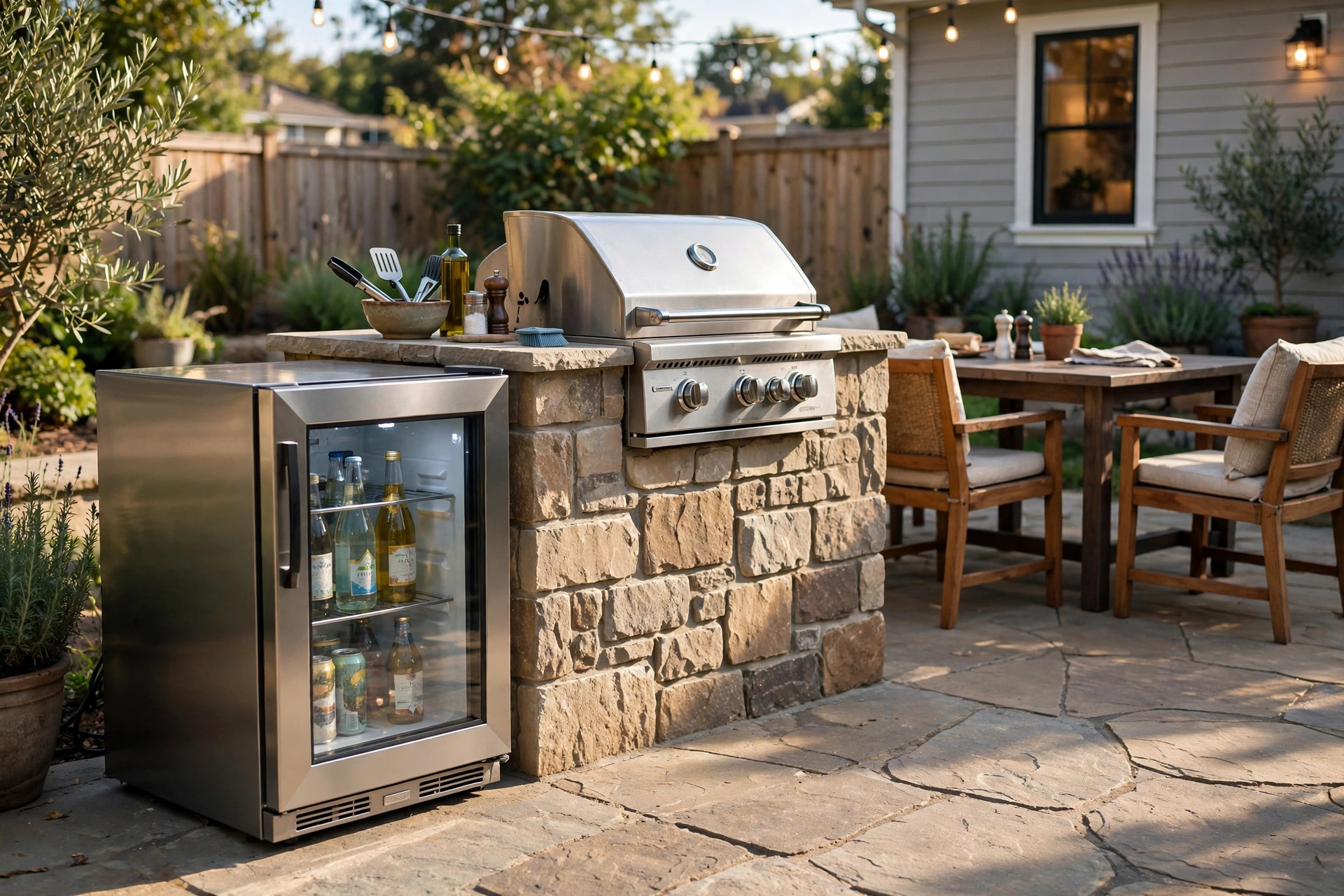

A good afternoon on the patio runs on two things: good food and cold drinks. The search for the best outdoor mini fridge for patio use starts with a simple idea. No one wants to walk inside every time the ice runs low or the soda gets warm. A small fridge near the grill saves steps and keeps the day moving.
But a patio is not a kitchen. Sun, rain, heat, and dust all press on the machine. A regular indoor mini fridge will not hold up for long outside. An outdoor-rated unit is built for the job. This guide explains what matters, what the options are, and how much you should expect to pay. By the end, you will know exactly what to look for when you shop.
Why an Outdoor Mini Fridge Matters on the Patio
A patio fridge earns its place in plain ways. First, it saves time. When the cook is at the grill, the cold drinks are a few steps away. Second, it protects food. Raw meat, cheese, and salads stay safe at cold temperatures. Third, it makes guests feel welcome. People can help themselves without going through your home.
A kitchen fridge can be moved outside, and many people try it. The problem is that indoor models are not built for heat or moisture. Their seals dry out. Their compressors run too long on hot days. Rust starts where you cannot see it. An outdoor-rated fridge, often sold as an outdoor beverage cooler, is made to handle weather. The parts are sealed. The body resists rust. The cooling system works in a wider range of temperatures.
Think about a hot July weekend. The grill is going. Guests come and go. Without a fridge on the patio, someone must open the kitchen door again and again. Each trip lets the cold air out of the house and slows the cook. With a small outdoor fridge, the drinks, the butter, and the marinade stay right where the work is. That is the real value. It is not luxury. It is order.
What to Look for When You Choose One: Best Outdoor Mini Fridge for Patio
Weather Rating
This is the first thing to check. The box or the label should say the unit is rated for outdoor use. Some models are marked for covered patios only. Others can stand in open rain. If your patio has no roof, pick one rated for full exposure. Review sites such as Consumer Reports publish buying advice on outdoor appliances and can help you read these labels with care.
Size and Capacity
Mini fridges for the patio range from about 1.6 cubic feet to just under 5 cubic feet. A 1.6 cubic foot unit holds a dozen cans and a few bottles. A 3.2 cubic foot unit fits a full shelf of drinks plus a small dish or two. For most patios, a unit near 3 cubic feet is the sweet spot. It is big enough to be useful and small enough to fit under a counter or beside the grill.
Measure your space before you buy. Note the width, the depth, and the height. Leave at least two inches of air on the sides and the back. The unit needs room to breathe. A tight fit traps heat and wears the compressor down.
Temperature Range
The best outdoor mini fridge for patio use holds a steady cold even when the day is hot. Check the stated ambient range. Many outdoor models work from about 40 degrees to 100 degrees Fahrenheit. If you live where summers run past 100, look for a wider range. The Amazing Ribs site offers practical notes on outdoor cooking setups, and similar care applies to cold storage near heat.
Cooling Method
Most outdoor mini fridges use a compressor, like a full-size fridge. Compressors cool well in heat. Some small units use thermoelectric cooling. These are quiet and light, but they cool less strongly. On a hot day, a thermoelectric unit may hold only 30 to 40 degrees below the outside air. For real food safety, a compressor unit is the safer pick.
Power Needs
Almost all of these fridges plug into a standard outdoor outlet. Make sure the outlet is GFCI protected, which most outdoor outlets are. A few models can also run on 12-volt power for RV or boat use. That is a nice extra, but not needed for a patio.
Door and Lock
A glass door lets you see inside without opening it. That keeps the cold in. A solid door keeps light off the food. Either works. A lock matters if children or guests wander the yard. Some units ship with a small key lock built in. Weber and other grill makers sell outdoor kitchen stations where a locking fridge adds peace of mind.
Drain and Shelves
Adjustable shelves help you fit tall bottles one day and short cans the next. A small drain plug makes cleaning easy. You tilt the unit, pull the plug, and rinse. This is a small detail that saves real work over time.
Types of Outdoor Mini Fridges
Freestanding Outdoor Refrigerators
These are the most common. They stand on their own and need space around them for air flow. You can put one at the end of a patio table or under a grill station. They move easily. Most cost between 200 and 600 dollars.
Built-In Outdoor Refrigerators
Built-in units fit under a counter with a vent in the front. They give the patio a clean, finished look. They cost more, often 600 to 1,500 dollars. They are a good match if you are planning a permanent outdoor kitchen. The front vent means you can slide them into a tight space without worry.
Outdoor Beverage Coolers
These have glass doors and are made for drinks only. They hold steady temperatures near 35 degrees. They look sharp and show off what is inside. They are not ideal for food, since the temperature can drift when the door opens often. For parties, they are hard to beat.
Outdoor Kegerators
A kegerator holds a small keg and serves beer on tap. Some are sold as full outdoor units. Others are conversion kits for an outdoor fridge. They are a niche pick, but a good one for a serious backyard bar. Broil King carries outdoor cooking gear that pairs well with a keg setup.
Compact Freezer Combos
A few mini fridges include a tiny freezer box. On a patio, the freezer box works less well than it does indoors. Heat leaks in faster. Ice melts faster. If you need frozen food outside, buy a small chest freezer rated for outdoor use instead.
Cost and Price Ranges
Prices for the best outdoor mini fridge for patio use fall into three bands.
Budget units run from 150 to 300 dollars. They are small, usually under 3 cubic feet. They work for covered patios and light use. The seals and finish are plain. Expect a life of three to five years.
Mid-range units run from 300 to 700 dollars. This is where most buyers land. You get a true outdoor rating, a compressor, adjustable shelves, and a decent finish. Many have a lock and a glass door option. These last five to eight years with care.
Premium units run from 700 to 1,500 dollars or more. They are often built-in models with stainless steel doors. They hold temperature well in hard heat. They suit full outdoor kitchens and people who entertain often.
Set your budget by your use. A few summer cookouts a year need only a budget unit. Weekly grilling and large parties earn a mid-range or premium model. Read buyer guides on The Spruce Eats for price context across outdoor kitchen gear before you decide.
Care and Upkeep
An outdoor fridge asks little, but it asks often. Clean the door seal once a month with a damp cloth. Dirt on the seal lets cold air escape. Wipe the inside every few weeks, sooner if something spills. A mild soap and warm water are enough. Never use harsh chemicals inside a fridge.
Check the back coils twice a year. Dust and leaves collect there. Brush them off with a soft brush or a vacuum with a brush head. Clean coils let the unit cool with less work. This one habit adds years to the machine.
Keep the top clear. People like to set plates and tools on top of a patio fridge. A little clutter is fine, but do not block the vents. Heat must escape.
In winter, decide whether to run the unit or store it. If your winter nights drop below freezing, drain and unplug it. Leave the door open a crack so air moves and mold does not grow. Cover it with a grill cover or a fitted cover made for the unit. If you run it through a mild winter, it will work, but it will cost more to run.
Level the unit once a year. Patios settle. A fridge that leans makes the door seal gap on one side. Use a small level and adjust the feet until it sits flat.
Safety Tips
Water and power need care together. Plug the fridge into a GFCI outlet. If water gets into a plain outlet, the GFCI trips and stops the power. This protects you and your guests.
Keep cords short and out of walkways. Run the cord behind the unit or under a mat. A long cord across the patio is a trip hazard and wears out faster in the sun.
Do not store raw meat above ready-to-eat food. Juices can drip. Put raw meat on the lowest shelf. This is the same rule used in any kitchen, and it matters just as much outside. Food safety guides from Traeger repeat this point for outdoor cooking areas.
Watch the temperature on very hot days. An outdoor thermometer inside the fridge costs a few dollars. Check that the box stays at or below 40 degrees. Above that, cold food stops being safe. On days past 100 degrees, open the door less and give the unit shade if you can.
Children and pets belong in the plan. A lock keeps small hands out of the fridge. It also keeps curious dogs from nosing the door open. Make sure the unit is stable and cannot tip if bumped.
Frequently Asked Questions
Can I use a regular indoor mini fridge on my patio?
You can for a short time, but it is not wise for long. Indoor models are not sealed against moisture. Their parts rust. Their compressors strain in heat. The warranty usually ends the moment the unit goes outside. If you need a fridge on the patio, buy one rated for outdoor use.
How long do outdoor mini fridges last?
A good unit lasts five to ten years with care. Budget models tend to run three to five years. Mid-range and premium models run longer. Cleaning the coils, keeping the seal clean, and covering the unit in winter all add life.
Do they use much electricity?
Most use between 100 and 200 kilowatt-hours a year. That is similar to a small indoor fridge. Outdoor heat makes the compressor run more, so the bill rises a little in summer. Models with an Energy Star mark use less power. Check labels before you buy.
Can the fridge sit in direct sun?
It can, but shade is better. Direct sun heats the metal shell and forces the compressor to work hard. Under a roof, an awning, or a simple shade sail, the unit runs cooler and lives longer. If the patio has no shade, place the fridge on the north side where the sun is weaker.
What size should I buy for a family of four?
A 3.2 to 4.5 cubic foot unit fits most families of four. It holds drinks for a meal, leftovers, and a few cold dishes. If you host large parties often, go bigger or add a second unit. Two small fridges, one for drinks and one for food, work well for big groups.
Should I buy a glass door or a solid door?
Glass doors are handy for parties. Guests see what is inside and open the door less. Solid doors keep out light and hold temperature a bit better. Either is fine. Pick the one that fits how you use the patio.
A Short Final Word
The best outdoor mini fridge for patio use is not the most costly one. It is the one that matches your patio, your weather, and your habits. Pick an outdoor-rated unit. Size it to your space. Keep it clean. Give it shade. With those basics, it will serve you for years.
A patio fridge turns a backyard into a real outdoor room. The cook stays with the food. The guests stay with the company. No one misses the good part of the day walking back and forth to the kitchen. If you are building out a full cook zone, pair it with a solid grill and a handy outdoor bar sink for prep and cleanup. And if you take your setup on the road, a portable grill makes a fine travel partner for the same cold-drink habit. For brand comparisons and test data, Napoleon and similar makers publish detailed outdoor kitchen specs worth a read.
References
AmazingRibs.com. (n.d.). Barbecue and grilling science. https://www.amazingribs.com Broil King. (n.d.). Gas and charcoal grills. https://www.broilkingbbq.com Char-Broil. (n.d.). Gas and charcoal grills. https://www.charbroil.com Consumer Reports. (n.d.). Product reviews and ratings. https://www.consumerreports.org Napoleon. (n.d.). Fireplaces, grills, and heating products. https://www.napoleon.com The Home Depot. (n.d.). Home improvement products. https://www.homedepot.com The Spruce Eats. (n.d.). Recipes and cooking guides. https://www.thespruceeats.com Traeger. (n.d.). Wood pellet grills. https://www.traeger.com Weber. (n.d.). Grills and outdoor cooking. https://www.weber.com
Was this guide helpful?

About Emily Rodriguez
The My Garden US editorial team writes practical, in-depth home and garden guides for American homeowners — tested advice, no fluff.
You May Also Like

Outdoor Pizza Oven Wood Fired Reviews: What to Know Before You Buy
May 6, 2026 0 views
Best BBQ for Small Balcony Reviews: What to Know Before You Buy
September 28, 2026 0 views
The Best Outdoor Cookware Set for Camping: A Plain Guide
March 7, 2026 0 views