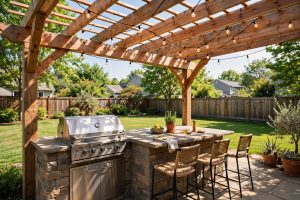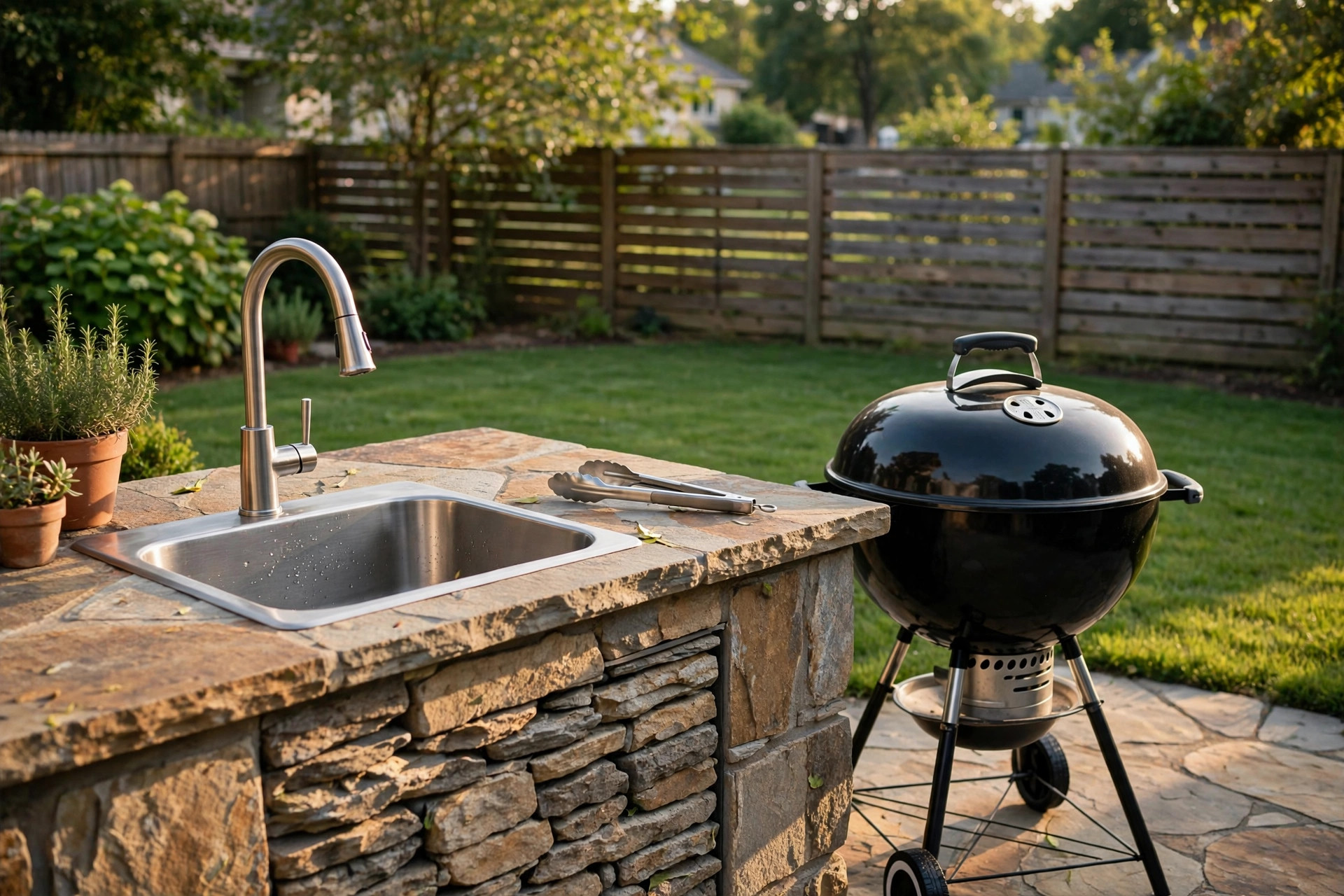

An outdoor bar sink for grill station changes the way you cook outside. You no longer carry dirty plates back to the kitchen. You rinse them right where the food is made. Water, soap, and a drain stand within arm’s reach of the flames. For anyone who grills often, this one fixture makes the whole yard feel like a real kitchen.
Why an Outdoor Bar Sink for Grill Station Matters
A grill station without water is only half a kitchen. Think of a normal evening of burgers. Raw meat comes out on a plate. That plate needs washing before it can carry cooked meat back. Without a sink, you walk inside, wash, and walk back out. You do this many times. The cook spends more time walking than grilling.
An outdoor bar sink for grill station ends that trip. You wash the raw-meat plate at the station. You rinse your hands after rubbing spices on ribs. You fill a pot with water for corn on the cob without leaving the yard. Guests can wash their hands before they eat. The cookout flows better, and the food stays safe because hands and tools get washed fast.
It also keeps the inside kitchen clean. Grease, smoke smell, and sauce stay outside. Your indoor sink does not get clogged with grill grime. Your guests stay out where the party is. A sink turns the grill area into a place where work and fun happen together.
If you are planning a full setup, read our guide on how to build an outdoor kitchen on a budget. A sink often costs less than people think, and it can be added to a simple counter without a full remodel.
What to Look for When You Choose One: Outdoor Bar Sink for Grill Station
Size and Bowl Depth
A bar sink is smaller than a kitchen sink. Most are 15 to 18 inches wide. This size fits a grill island without taking over the counter. The bowl should be at least 7 inches deep. A shallow bowl splashes when you rinse a large platter. A deeper bowl holds a stack of plates without water running over the edge.
Measure your counter first. Leave 3 inches of counter on each side of the cutout. If your counter is narrow, look for a compact 12-inch model. If you wash sheet pans, look for a wide 24-inch model instead.
Material
Stainless steel is the common choice for an outdoor bar sink for grill station. It stands up to weather, hot pans, and grease. It does not crack in cold winters. Look for 16 or 18 gauge steel. Thicker steel dents less and sounds quieter when water runs in.
Copper looks warm and rich on a stone patio. It costs more than steel. It also changes color over time unless you seal it. Cast iron with a coated finish is heavy and strong, but the coating can chip if you drop a grate in it. For most buyers, stainless steel is the right call. Weber and other grill makers sell stations built around steel sinks for good reason.
Single Bowl or Double Bowl
A single bowl is fine for most grill stations. It handles plates, tongs, and hands. A double bowl lets you soak in one side and rinse in the other. It takes more counter space and costs more. If you host large parties, the double bowl pays for itself. If your station is small, a single deep bowl is better.
Faucet Height and Reach
The faucet must clear your tallest stockpot. A tall arc faucet makes filling easy. The spout should reach the center of the bowl, not the edge. Side sprayers help blast sauce off a grate. A single-handle faucet is easy to turn with a greasy hand. Look for a faucet rated for outdoor use, since sun and rain wear cheap finishes fast.
Drain and Water Hookup
Every sink needs a drain. The simplest drain runs into a gravel pit or a dry well under the patio. This works only for wash water, and some towns do not allow it. Check your local code before you dig. The safer route is a drain line tied into your home’s waste pipe. A plumber can run the line under the yard in a day.
For water supply, you can tap a garden hose bib. Hot water is nicer but needs a line from the house. Some owners skip hot water and heat a kettle for greasy pans. A small under-counter water heater also works and needs no long pipe run.
Types of Outdoor Bar Sinks for Grill Stations
Drop-In Sinks
Drop-in models sit on top of the counter. The rim holds them in place. They are the easiest to install. A homeowner with basic tools can cut the hole and set the sink in an afternoon. They suit stone, tile, and concrete counters. The rim can catch crumbs, so wipe it after each use.
Undermount Sinks
Undermount models hang below the counter. The counter edge runs smooth into the bowl. This looks clean and makes wiping crumbs into the sink easy. They need strong clips and a water-tight seal. Stone or concrete counters hold them best. They cost more to install, often with a professional.
Freestanding Sink Cabinets
Some makers sell a full cabinet with a sink built in. You set the cabinet next to your grill. It holds the sink, a small tank of fresh water, and a waste tank. No plumbing lines are needed. This is the choice for renters and for yards where digging a drain line is hard. You empty the waste tank by hand after each cookout.
Bar Prep Sink Combos
These units pair a small sink with a cutting board and a trash ring. You chop vegetables over the board, sweep scraps into the ring, and rinse in the sink. They suit grill stations used for full meals, not just meat. They cost more but replace three separate tools.
Cost and Price
A basic stainless drop-in bar sink costs 60 to 150 dollars. A deep single bowl in thick steel runs 150 to 300 dollars. Copper or cast iron models run 300 to 800 dollars. A good outdoor faucet adds 50 to 200 dollars. A freestanding cabinet with tanks runs 400 to 1,200 dollars for the whole unit.
Installation is the bigger cost. A simple hose-bib feed and a gravel drain pit can be done by the owner for under 100 dollars in parts. A plumber running hot and cold lines plus a tied-in drain may charge 800 to 2,500 dollars, based on the distance from the house. Concrete counters need a pro to cut the hole, which adds 200 to 400 dollars.
Set a budget before you shop. Many owners find the mid range, about 500 to 1,000 dollars all in, buys a strong steel sink, a good faucet, and a simple drain. That matches the price of a good grill, and the sink gets used at every cookout. For the full outdoor kitchen plan, our guide on how to build an outdoor kitchen on a budget shows where to spend and where to save.
How to Install It Without Trouble
Plan the spot before you buy. Put the sink close to the grill but away from open flame. Twelve to eighteen inches of counter between the sink and the grill is a good gap. The cook should turn, not walk, between the two.
Mark the cutout with the template that comes in the box. Cut slow. Seal every cut edge so water cannot seep in. Set the sink level. Hook the drain first, then the water lines. Turn the water on and check every joint for leaks before you push the counter back in place.
If your yard slopes, set the sink on the high side of the station. Water runs downhill, and a drain on the low side clears faster. Keep the waste tank or drain pit away from the seating area so guests never smell it.
A grill station with a sink works best when the cooking gear matches. A flat top grill for your outdoor kitchen gives you a large cooking surface, and the sink beside it handles the greasy tools the griddle creates.
Care and Upkeep
Stainless steel needs little care. Rinse the bowl after each use. Wipe it with a soft cloth and mild dish soap once a week. Never use steel wool. It scratches the finish and leaves tiny bits of metal that rust. For hard water spots, rub with a cloth dampened in white vinegar, then rinse.
Copper needs a wax seal twice a year to hold its shine. If you like the aged look, let it darken and just rinse it clean. Cast iron coated sinks need gentle soap and a soft sponge. Fix chips fast with touch-up coating so water cannot reach the metal.
Clean the faucet the same way. Wipe the spout and handle after each cookout. Mineral buildup clogs the aerator. Unscrew the aerator twice a year and soak it in vinegar.
The drain needs care too. Pour a kettle of hot water down it after greasy meals. Grease hardens in cold pipes and causes clogs. Never pour used cooking oil down the sink. Wipe oil out of pans with a paper towel first, then wash.
In cold climates, winterize the sink. Shut off the water feed and drain the lines. Pour plumber’s antifreeze in the trap so it does not crack. Cover the faucet. This takes twenty minutes and saves a burst pipe in spring. For grill care through the cold months, see our guide on how to clean gas grill burners properly, since burners need the same seasonal care.
Safety Around the Sink and Grill
Water and fire need clear rules. Keep the sink far enough from burners that steam never blows into an open flame. Steam can knock out a low flame and let gas build up. Never pour water on a grease fire. Smother it with the grill lid or a metal pan.
Keep soap and cleaners in a closed cabinet, away from heat. Some cleaners are flammable. Store them below the counter, not above the grill. Keep a fire extinguisher rated for kitchens within ten feet of the station. Make sure every adult in the house knows where it is.
Teach children that the sink area is a work zone, not a play zone. Hot water from the tap can scald. Set the water heater to 120 degrees or lower. Keep knives and sharp tools in a drawer, never loose on the counter by the sink.
Ground fault protection matters outdoors. Any outlet near the sink must be a GFCI outlet. Water and electricity are a deadly pair. If your station has a disposal or a hot water tank, have an electrician check the wiring once a year.
Food safety is the quiet benefit of an outdoor bar sink for grill station. Wash hands before and after touching raw meat. Wash plates that held raw meat before they carry cooked food. Keep a pump bottle of soap at the sink so no one skips the step. These small habits stop most cookout stomach bugs.
FAQ
Can I add a sink to a grill station I already have?
Yes, in most cases. If your counter has room for a cutout, a drop-in sink fits right in. You need a water feed and a drain. A hose bib feed and a simple drain pit are the easy path. A plumber can add full lines if you want hot water.
Do I need hot water at the grill station?
It helps but is not required. Cold water handles rinsing and hand washing. Hot water cuts grease faster. If running a hot line is costly, a small under-counter heater or a kettle of hot water from the house works fine.
What is the best sink material for outdoor use?
Stainless steel wins for most owners. It resists weather, heat, and grease. It costs less than copper. It lasts for decades with simple care. Thick 16 gauge steel is the sweet spot between strength and price.
How do I keep the drain from freezing in winter?
Shut off the feed and drain the lines before the first hard freeze. Pour plumber’s antifreeze into the trap. This stops the trap water from cracking the pipe. Cover the faucet to keep ice out of the spout.
Can the sink water go into a gravel pit?
It depends on your town. Some places allow gray water pits for wash water. Others require a tie into the waste line. Call your local building office before you dig. A fine for an illegal drain costs more than a plumber.
How much counter space does a bar sink need?
Plan on 24 inches of counter width for a standard 15 inch sink, with room on each side. A double bowl needs 36 inches or more. Measure twice. A sink that crowds the grill makes cooking harder, not easier.
A Short Final Word
An outdoor bar sink for grill station is a small upgrade with a large payoff. It saves steps, keeps food safe, and keeps the mess outside. Pick a deep stainless bowl, a tall faucet, and a drain that fits your yard and your local code. Install it with care, keep it clean, and it will serve every cookout for years. The best grill station is the one where the cook never has to leave.
For more background, see Napoleon, Big Green Egg, and Broil King. For more background, see The Home Depot, The Spruce Eats, and AmazingRibs.com. See Consumer Reports for more detail.
References
AmazingRibs.com. (n.d.). Barbecue and grilling science. https://www.amazingribs.com Big Green Egg. (n.d.). Kamado grills and outdoor cooking. https://www.biggreenegg.com Broil King. (n.d.). Gas and charcoal grills. https://www.broilkingbbq.com Consumer Reports. (n.d.). Product reviews and ratings. https://www.consumerreports.org Napoleon. (n.d.). Fireplaces, grills, and heating products. https://www.napoleon.com The Home Depot. (n.d.). Home improvement products. https://www.homedepot.com The Spruce Eats. (n.d.). Recipes and cooking guides. https://www.thespruceeats.com Weber. (n.d.). Grills and outdoor cooking. https://www.weber.com
Was this guide helpful?

About David Wilson
The My Garden US editorial team writes practical, in-depth home and garden guides for American homeowners — tested advice, no fluff.
You May Also Like
Best BBQ Mop Sauce Recipe for Ribs: A Simple Guide
June 6, 2026 0 views
Gas Grill Clearance Sale Near Me: How to Save Big on a Quality Grill
August 18, 2026 0 views
How to Make Pulled Pork on Smoker: A Simple Step-by-Step Guide
January 4, 2026 0 views