
Introduction
A search for kitchen backsplash tiles for sale usa will turn up thousands of results. Styles range from plain white subway tile to bold patterned cement. Prices run from a few dollars a square foot to forty dollars or more. This guide will help you sort through the choices and buy with confidence. You will learn what makes a tile good for a kitchen wall, how to judge quality before you pay, and how to spot a fair price. Whether you hire a tile setter or plan to do the work yourself, the steps below will keep the project simple and the result strong.
Why the Backsplash Matters: Kitchen Backsplash Tiles for Sale Usa
The backsplash is the strip of tile that covers the wall between the counter and the upper cabinets. It is small next to the floor or the walls of a room. Yet it shapes the whole look of the kitchen. It sits right at eye level when you cook. It frames the range and the sink. A well chosen backsplash can lift plain cabinets and make a tired kitchen feel new again.
The tile also does hard work. It takes splashes of grease, sauce, and steam. It stands up to daily wiping. Good tile resists stains and heat. It keeps the wall behind it dry and clean. A painted wall cannot do that job as well. That is why the backsplash is both a style choice and a practical one.
For many buyers the backsplash is the first tile project they try on their own. The area is small. The risk is low. A success here builds the skill for larger jobs later. When you shop for kitchen backsplash tiles for sale usa, you are shopping for a project that pays you back in looks and in use.
What to Look For When You Choose Tile
Match the Tile to the Kitchen
Start with what you have. Look at your cabinets, countertops, and floor. The backsplash should talk to them, not fight them. If your counters are busy with pattern, pick a quiet tile. If your kitchen is all plain white, a tile with color or shape can add life. Hold a sample next to the counter in your own light before you order.
Size and Shape
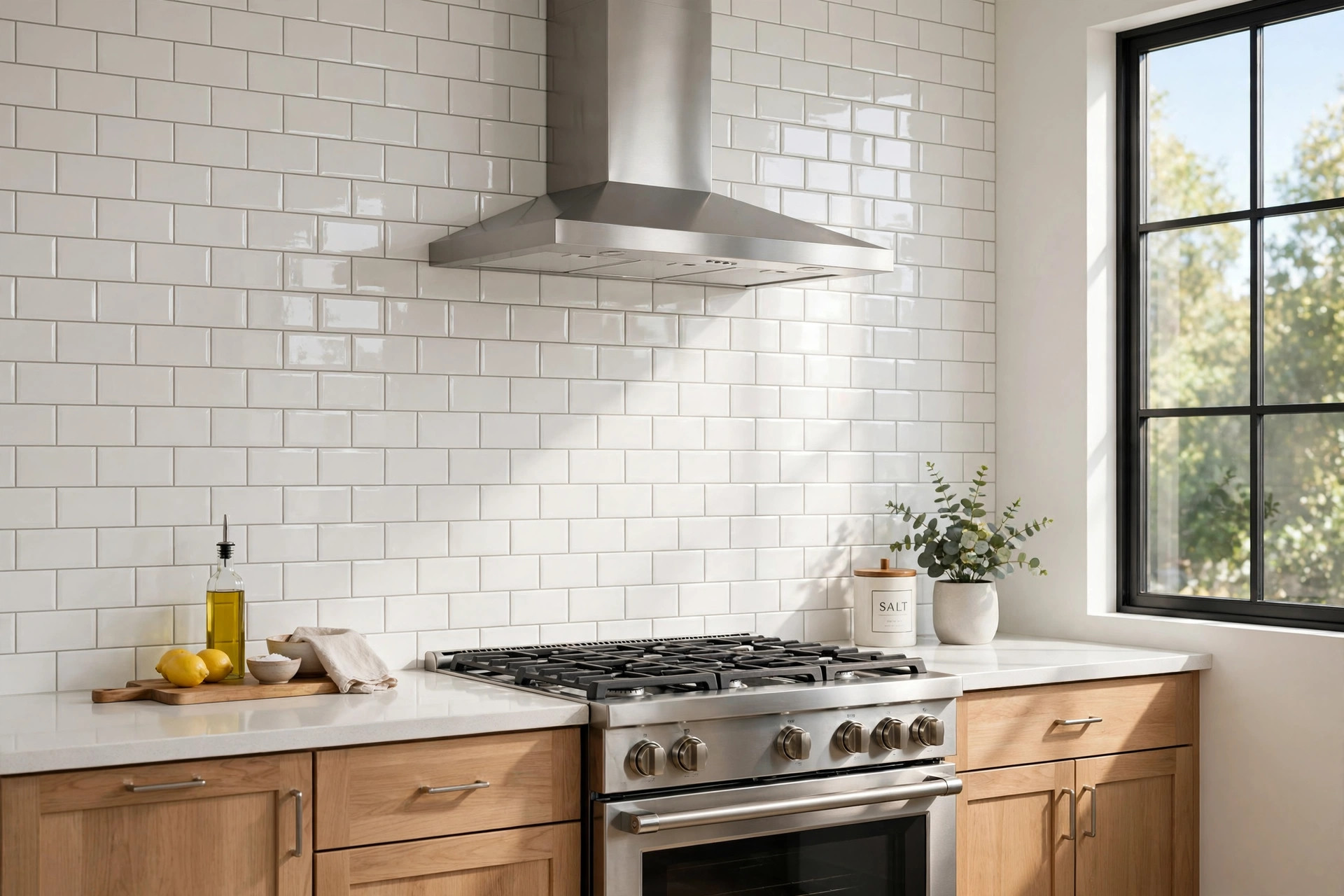
Classic subway tile, three by six inches, fits almost any kitchen. Larger tiles make a small kitchen feel wider. Small mosaic tiles add texture but take more time to set. Long planks give a modern look. Hexagon and arabesque shapes read as traditional or romantic. There is no wrong answer. There is only what suits your room.
Finish
Glossy tile bounces light around a dark kitchen. Matte tile hides fingerprints and reads calm. Crackle glaze adds charm but shows more wear with time. Textured stone needs sealing. Ask how each finish cleans. Wipe a sample with a damp cloth and a drop of oil. That test tells you more than any label.
Edge and Color
Field tile covers the wall. Trim pieces finish the edges and corners. Some lines include bullnose trim. Others do not. If your line has no trim, plan how the raw edge will look at the ends. A metal profile or a painted edge can solve the problem. Buy from one dye lot so the color stays even across the whole wall.
Types of Kitchen Backsplash Tile
Ceramic Tile
Ceramic is the most common choice. It is fired clay with a glazed face. It is light, easy to cut, and kind to a tight budget. Glazed ceramic wipes clean in one pass. Most patterns and colors exist in ceramic first. For a first project, ceramic is the safe and wise pick.
Porcelain Tile
Porcelain is denser and harder than standard ceramic. It resists chips and stains well. It costs a little more. Through-body porcelain keeps its color if it chips, since the color runs through the tile. This makes it a strong pick behind a busy range.
Natural Stone
Marble, travertine, and slate bring depth that no factory can copy. Stone needs sealing, and it stains faster than glazed tile. Acid from lemons or tomatoes can dull marble. If you love the look, seal it on schedule and wipe spills fast. Buy extra pieces, since stone varies from box to box.
Glass Tile
Glass tile glows. It is a fine pick for dark kitchens that need light. It shows every mark on the wall behind it, so the setting bed must be clean and even. Glass scratches more easily than porcelain. It also costs more to set, since the cuts are slow and the grout choice matters.
Cement and Handmade Tile
Encaustic cement tile carries bold pattern. Zellige tile carries handmade charm. Both are beautiful and both are fussy. They vary in thickness and shade. They need sealer and care. Save these for a kitchen where the backsplash is the star, not the backdrop.
Metal Tile
Stainless steel and copper tiles suit modern kitchens. They wipe clean and shrug off heat. They scratch over time. That patina pleases some owners and bothers others. Look at aged samples before you commit.
Where to Buy and What a Fair Price Looks Like
The phrase kitchen backsplash tiles for sale usa points you to big box stores, tile shops, and online sellers. Each has a place.
Big box stores like Home Depot and Lowe’s carry standard lines at clear prices. You can touch the tile and take a box home the same day. Staff can cut a sample to size. The trade-off is a narrow range of styles.
Specialty tile shops carry wider lines and sharper staff. You will pay more, but you will also find trim pieces and advice that big stores lack. For stone or handmade tile, a real tile shop is worth the trip.
Online sellers offer the widest choice. Read the return policy before you order. Shipping tile is heavy work, and a broken box can slow the job. Order full boxes, not loose pieces. Buy ten to fifteen percent extra for cuts and waste. A site like The Spruce can help you compare looks, while Consumer Reports offers independent test notes on materials and durability.
Cost and Price
Expect these ranges per square foot for material only:
– Basic ceramic subway tile: 3 to 8 dollars – Porcelain tile: 6 to 15 dollars – Glass tile: 10 to 25 dollars – Natural stone: 12 to 30 dollars – Handmade or cement tile: 15 to 40 dollars
Setting costs run 10 to 25 dollars a square foot in most markets, more in large cities. A simple thirty square foot backsplash often totals 600 to 1,500 dollars with labor. DIY work cuts that nearly in half. Grout, thinset, and tools add 50 to 120 dollars to a small job.
Watch for fake sales. A tile marked down from a high list price may cost the same as the regular price at another store. Compare the price per square foot, not the red sticker. Check the price of trim and grout too. Cheap field tile with costly trim is not the deal it seems.
Care and Upkeep
Glazed ceramic and porcelain ask for little. Warm water and a mild soap keep them bright. Skip harsh acids on natural stone. Seal stone once a year, or as the maker directs. Re-grout or touch up caulk where the tile meets the counter. That joint moves with the house, and a fresh bead of caulk keeps water out.
Wipe grease near the range each week. A thin film builds up if you wait. Use a soft cloth, not steel wool. Steel wool scratches glaze and leaves gray marks on light tile. For grout lines, a soft brush and a paste of baking soda lift most stains without harm.
If a tile cracks, you can replace one piece. Score the grout around it, chip it out, and set a new tile in its place. Keep a few spare tiles from the same dye lot. Years later, that spare box is the difference between a quick fix and a long search.
Safety
Tile work is safe when you respect the tools. Wear eye protection when you cut tile. Wet saws keep dust down, but snap cutters throw chips. Wear a dust mask when you mix thinset. The powder irritates lungs.
Check what sits behind the wall before you drill. A stud finder and a slow hand will keep you clear of pipes and wire. Around outlets, cut power at the breaker and extend the box out flush with the tile face. Tile is thin, but it is still thick enough to trap a plate against the wall if the box sits too deep.
Keep children and pets out of the work area until the grout cures. Wet grout stains skin and clothes. Clean tools the same day. Thinset that hardens in a bucket is a lost bucket.
Buying Smart: A Simple Checklist
1. Measure the wall. Height times length gives square feet. Add fifteen percent for waste. 2. Pick a tile that suits the counter and cabinets, not one that fights them. 3. Take home a sample. Look at it in morning and evening light. 4. Price per square foot at three sellers. Include trim, grout, and sealer. 5. Confirm the line has trim pieces or plan your edge detail. 6. Buy from one dye lot. Keep the box labels. 7. Order samples of grout. Grout color changes the whole look. 8. Save spare tiles for future repairs.
Buyers who plan a full refresh should read our kitchen backsplash tiles buying guide usa for a deeper walk through materials. If new counters are on the list too, see the quartz countertop installation buying guide usa before you pick a tile color. And if the cabinets need a face-lift as well, the shaker cabinet doors buying guide usa pairs well with this project.
Frequently Asked Questions
How much tile do I need for a standard backsplash?
Measure the wall in feet. Multiply height by length. A common kitchen has twenty-five to thirty-five square feet of backsplash. Add ten to fifteen percent extra for cuts and waste. Order all boxes from the same dye lot.
What is the best tile for behind a gas range?
Porcelain or glazed ceramic both handle heat and grease well. Glass works too, but set it with care. Seal natural stone if you choose it, and wipe it often. Keep the grout lines tight in the splash zone.
Can I tile over existing tile?
Yes, if the old tile is sound and flat. Scuff the glaze, clean it well, and use a polymer-modified thinset. This adds thickness, so check how the edge will look at outlets and trim. Loose or cracked tile must come off first.
Is subway tile still in style?
Yes. The classic three-by-six subway tile has stayed popular for more than a century. New colors and finishes keep it fresh. It pairs with farmhouse, modern, and traditional kitchens alike. For honest reviews of tile lines, Bob Vila and Whirlpool both publish useful kitchen guides, and ENERGY STAR covers efficient kitchen upgrades that pair well with a remodel. GE Appliances also offers kitchen design resources worth a look.
How do I keep white grout clean?
Choose a stain-resistant grout or add a sealer after it cures. Wipe the wall weekly with mild soap. Avoid bleach on colored grout. For deep stains, a paste of baking soda and water with a soft brush works well.
Should I hire a setter or do it myself?
A small, simple backsplash is a fair DIY project for a careful beginner. Complex patterns, stone, and glass repay a skilled setter. Get two or three quotes. Ask each setter how they handle outlets, edges, and grout color.
Final Word
Shopping for kitchen backsplash tiles for sale usa is easier when you know what to ask. Choose a tile that fits the kitchen you have. Price the job by the square foot. Buy enough from one dye lot, and save spares. Do the small jobs right — measure twice, seal stone, keep the grout clean — and the wall will serve you for years. A good backsplash is a small project with a large return. Pick well, and enjoy the kitchen every time you walk in.
References
Bob Vila. (n.d.). Home improvement advice. https://www.bobvila.com Consumer Reports. (n.d.). Product reviews and ratings. https://www.consumerreports.org ENERGY STAR. (n.d.). Energy efficient products. https://www.energystar.gov GE Appliances. (n.d.). Kitchen and home appliances. https://www.geappliances.com Lowe’s. (n.d.). Home improvement products. https://www.lowes.com The Home Depot. (n.d.). Home improvement products. https://www.homedepot.com The Spruce. (n.d.). Home and garden advice. https://www.thespruce.com Whirlpool. (n.d.). Home appliances. https://www.whirlpool.com
Was this guide helpful?

About Emily Rodriguez
The My Garden US editorial team writes practical, in-depth home and garden guides for American homeowners — tested advice, no fluff.
You May Also Like

Kitchen Island Seating for Texas Homes, USA
September 2, 2026 0 views
Dishwasher Third Rack for Sale USA: A Complete Buying Guide
June 9, 2026 0 views
Dishwasher Third Rack Deals Near Me: How to Find and Choose One
March 22, 2026 0 views