The kitchen counter is the busiest spot in most homes. Cooks chop, read recipes, and clean there every day. Many kitchens still depend on one bright ceiling light. That light leaves deep shadows under the wall cabinets. Under cabinet strips for sale usa shoppers often look for solve this one simple problem. These thin strips of light mount under the cabinets. They wash the counter in clean, even light. This guide explains what to know before you buy.
Why Under Cabinet Strips Matter
Shadows are more than a nuisance. A shadow across the cutting board makes knife work harder to see. Older eyes need even more light to read a recipe card. A tired cook at night faces a dim counter and a bright ceiling. The contrast tires the eyes. Under cabinet strips remove that problem at its source.
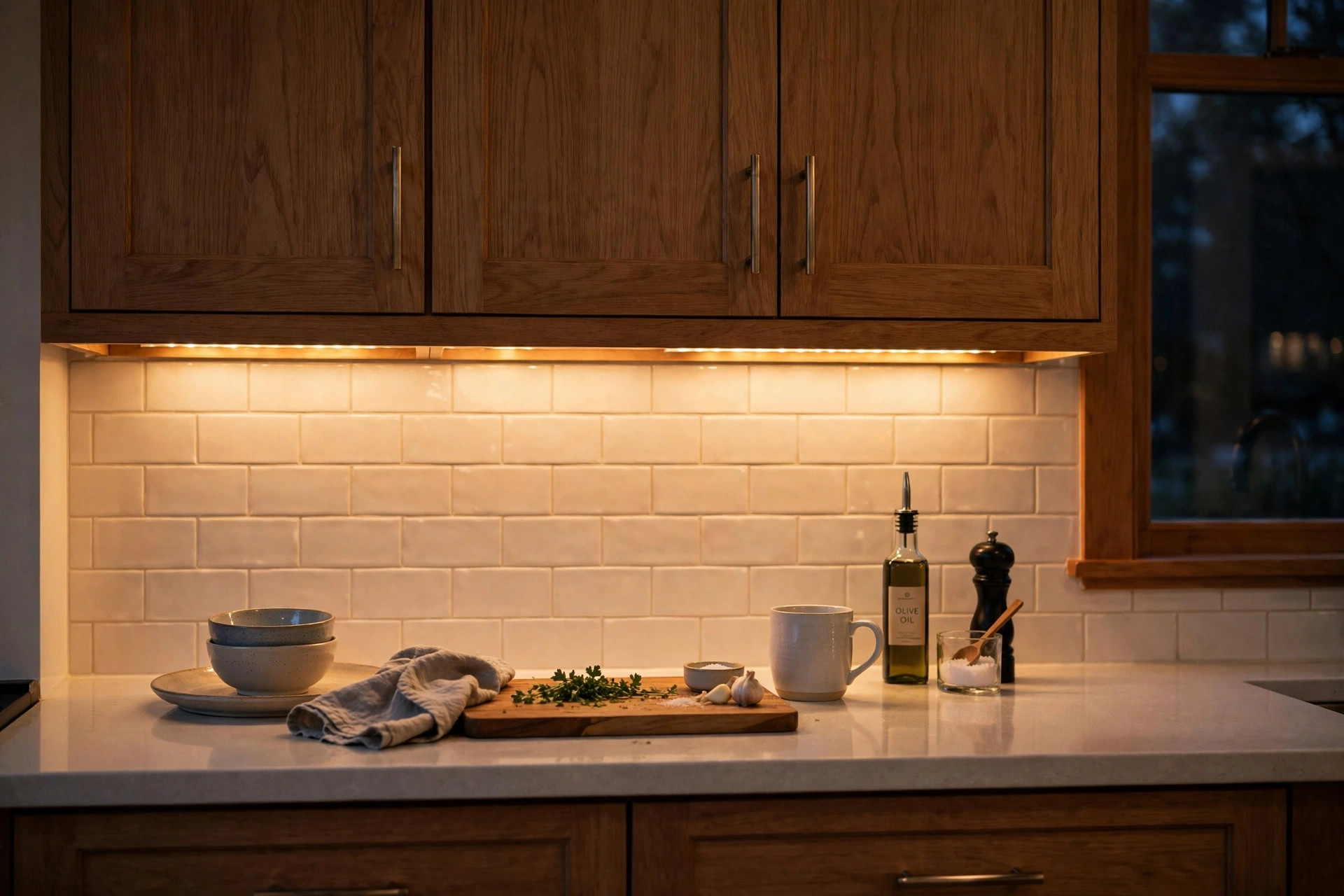
The strips also change the look of a kitchen. A row of warm light under the cabinets gives the room a calm glow. Backsplash tile picks up the light and looks richer. Dishes stacked in open shelves stand out. Many home sellers add this lighting before a sale. Buyers notice it at once. It reads as a finished, cared-for kitchen.
The cost is small compared with most kitchen upgrades. A set of strips often costs less than one nice faucet. The install takes an afternoon. The payoff comes every time someone cooks at dinner.
What to Look for When You Shop: Under Cabinet Strips for Sale Usa
Not all strips are equal. A few key details decide whether a strip will please you or annoy you.
Brightness
Brightness is measured in lumens. For a kitchen counter, most guides suggest 200 to 400 lumens per foot of strip. Too dim and the light will not help you see. Too bright and it will glare off the counter. Start with the middle of that range. You can dim a strip down. You cannot make a dim strip brighter.
Color Temperature
Color temperature is measured in kelvin. Warm white, around 2700 to 3000 kelvin, looks like late sun. It feels homelike and soft. Cool white, around 4000 kelvin, looks like a bright office. It shows food colors well. Neutral 3500 kelvin splits the difference. Most kitchens do best with 2700 to 3500 kelvin. Pick one tone for all strips in the same kitchen. Mixed tones look sloppy.
Length and Fit
Measure the underside of each cabinet. Buy strips that cover the full run with small gaps between segments. Many strips come in 12, 24, and 36 inch lengths. Some link together in a series. Plan the full run on paper before you order. A tape measure is the best tool in this job.
Power Source
Some strips plug into a wall outlet. Some run on batteries. Some hardwire into the home wiring. Plug-in strips are the easiest for a first project. Hardwired strips look cleaner because no cord shows. Battery strips suit renters. Note that battery strips dim faster and need fresh batteries often.
Dimming
A dimmer changes everything. Full brightness suits chopping and cleaning. Low light suits a midnight snack. Look for strips that work with a wall dimmer or a remote. Some strips dim from an app on a phone. Test the lowest setting in the store or check reviews. A dimmer that jumps from bright to off is no good.
Color Rendering Index
The color rendering index, or CRI, runs from 0 to 100. It shows how true colors look under the light. A CRI of 80 or better works for most kitchens. A CRI of 90 or better makes food look natural. Cheap strips often skip this detail. It is worth asking about.
Types of Under Cabinet Strips
Stores sell several kinds of strips. Each has its place.
LED strip reels. These are long flexible ribbons of tiny LEDs. You cut them to length and stick them up with the tape back. They cost the least and fit odd shapes. The light is even if you buy a dense strip with many LEDs per foot. Thin spots show on cheap reels, so check the LED count.
Rigid LED bars. These are hard bars in aluminum shells. They mount with screws or clips. They give steady light and last long. They cost more than reels. They suit straight runs under standard cabinets.
Puck lights. These are small round disks. They make pools of light instead of a smooth wash. Some cooks like them for looks. For task light on a counter, strips beat pucks.
Battery tap lights. These are cheap disks you stick up and tap on. They work in a pinch. They give weak light. Most owners replace them within a year.
Smart strips. These link to a phone or a voice speaker. You can change color and set timers. They cost the most. They suit owners who like to tune the mood of a room. Large home stores carry wide smart lighting aisles; see The Home Depot for examples of what is on the shelf now.
For a first kitchen project, a mid-priced LED reel or a set of rigid bars serves most people well.
Cost and Price Ranges
Prices for under cabinet strips vary wide across the United States. A basic 6-foot plug-in reel often sells for 20 to 40 dollars. A set of three rigid bars with a dimmer may run 60 to 120 dollars. Smart strips with color change start near 80 dollars and climb from there. Hardwired systems installed by an electrician can reach 300 to 600 dollars for a full kitchen.
Store brands cost less. Big home stores carry their own lines. Shoppers can compare prices at places like The Home Depot and Lowe’s before they buy. Online lighting shops such as Lamps Plus and Lumens stock wider ranges with detailed specs. Price is not the whole story. A 25-dollar strip that flickers will annoy you every night. A 60-dollar strip with a good dimmer will please you for years.
Watch for sales around major holidays. Lighting often goes on sale in spring and late fall. Buying the full run at once keeps the color match exact. Strips bought months apart may differ in tone.
How to Install the Strips
Most plug-in strips install in a few simple steps. First, clean the underside of the cabinets with a damp cloth. Dust keeps tape from sticking. Let the surface dry. Second, lay the strip out on the counter and test it. Plug it in and check the color. Third, peel the tape back a little at a time and press the strip up. Work slow. Straight lines matter.
Place the strip toward the front edge of the cabinet, not the back wall. The front position throws light across the full counter. The back position lights only the wall. For a run longer than one strip, link the segments with the small connector clips in the box. Keep wire joins tight. Loose joins flicker.
Hide the cord. Run it up behind the cabinet side or into the wall if the strip hardwires. Cord clips hold the wire flat. A visible black cord will spoil the clean look.
If the run needs an electrician, call one. Hardwired strips tie into home circuits. That work needs a permit in many towns. A licensed electrician finishes it in a few hours. Ask for a dimmer switch on the wall. It beats hunting for a tiny remote.
Renters should ask the landlord before drilling. Most tape-backed strips come off clean with a warm hair dryer. Save the box and the receipt in case the lease ends.
Care and Upkeep
Under cabinet strips need little care. Dust is the main enemy. A film of dust on the strip dims the light. Wipe the strips with a dry cloth every few months. Do not spray cleaner straight onto the strip. Spray the cloth, then wipe.
LED strips run cool, but they still need air. Do not pile paper or cloth against them. Keep the power supply in open air, not packed in a closed box. A hot power supply dies young.
When a section dims or changes color, the strip is aging. Most LED strips last 25,000 to 50,000 hours. In normal kitchen use that means many years. Replace the strip rather than fight with repairs. Keep the brand name so the next strip matches the old ones.
For a related lighting project, see our guide on kitchen island pendants buying guide usa. Outdoor spaces have their own needs, covered in solar path lights buying guide usa. And if you want a deeper look at this topic, read under cabinet strips buying guide usa.
Safety Notes
Low-voltage strips are safe by design. Still, a few rules keep the project sound. Buy strips with a UL or ETL mark on the label. That mark means a lab tested the product. Avoid strips with no brand and no mark. They may run hot.
Keep strips away from the stove and the oven hood. Heat and grease shorten their life. Grease can also coat the strip and dull the light. Wipe greasy strips with a cloth dampened in mild soap. Dry them at once.
Unplug the power supply before you clean or move a strip. Do not cut a strip while it is plugged in. Follow the cut marks printed on the reel. Cut anywhere else and the strip may fail.
Government guides at the Department of Energy explain LED efficiency in plain terms. The Energy Star program lists certified lighting that meets strict tests. Check both before a big purchase.
Frequently Asked Questions
Do under cabinet strips use much power? No. A full kitchen run of LED strips often draws less than 50 watts. That is less than one old incandescent bulb. The Philips lighting guide notes that LED light can cut lighting energy by a large share. Your power bill will hardly notice.
Can I put the strips on a timer? Yes. A plug-in timer turns the strips on at dusk and off at bedtime. Smart strips have timers built in. Many owners run a low warm glow in the evening. It works as a night light for the whole kitchen.
Will the tape hold on wood cabinets? It holds well on clean, smooth wood. Rough or waxed wood gives trouble. Test a small piece first. If the tape fails, use small mounting clips and screws. Clips hold forever and cost little.
What color should I pick for a small kitchen? Warm white at 2700 to 3000 kelvin suits small kitchens. It feels cozy and makes the room seem lived in. Cool white can make a small room feel like a lab. Keep the tone the same across all strips.
Can strips light a dark corner cabinet? Yes. Short strips fit inside glass-front cabinets. They show off dishes and glassware. Use a warm, low strip for display. Keep the driver outside the cabinet so it stays cool.
Where can I learn more about home lighting ideas? Home guides such as The Spruce cover lighting plans room by room. They show photos and simple how-to steps. Browse a few designs before you buy. A clear plan saves a second trip to the store.
A Final Word
Good kitchen light is quiet work. Nobody praises it. Everybody misses it when it is gone. Under cabinet strips for sale usa listings offer many choices, from cheap reels to fine hardwired bars. Measure twice. Buy from a known brand. Pick one warm tone. Install with care. The reward is a counter that shows its true self every time you cook.
References
ENERGY STAR. (n.d.). Energy efficient products. https://www.energystar.gov Lamps Plus. (n.d.). Lighting and home decor. https://www.lampsplus.com Lowe’s. (n.d.). Home improvement products. https://www.lowes.com Lumens. (n.d.). Lighting and ceiling fans. https://www.lumens.com Philips. (n.d.). Lighting products. https://www.philips.com The Home Depot. (n.d.). Home improvement products. https://www.homedepot.com The Spruce. (n.d.). Home and garden advice. https://www.thespruce.com U.S. Department of Energy. (n.d.). Energy efficiency and renewable energy. https://www.energy.gov
Was this guide helpful?

About James Carter
The My Garden US editorial team writes practical, in-depth home and garden guides for American homeowners — tested advice, no fluff.