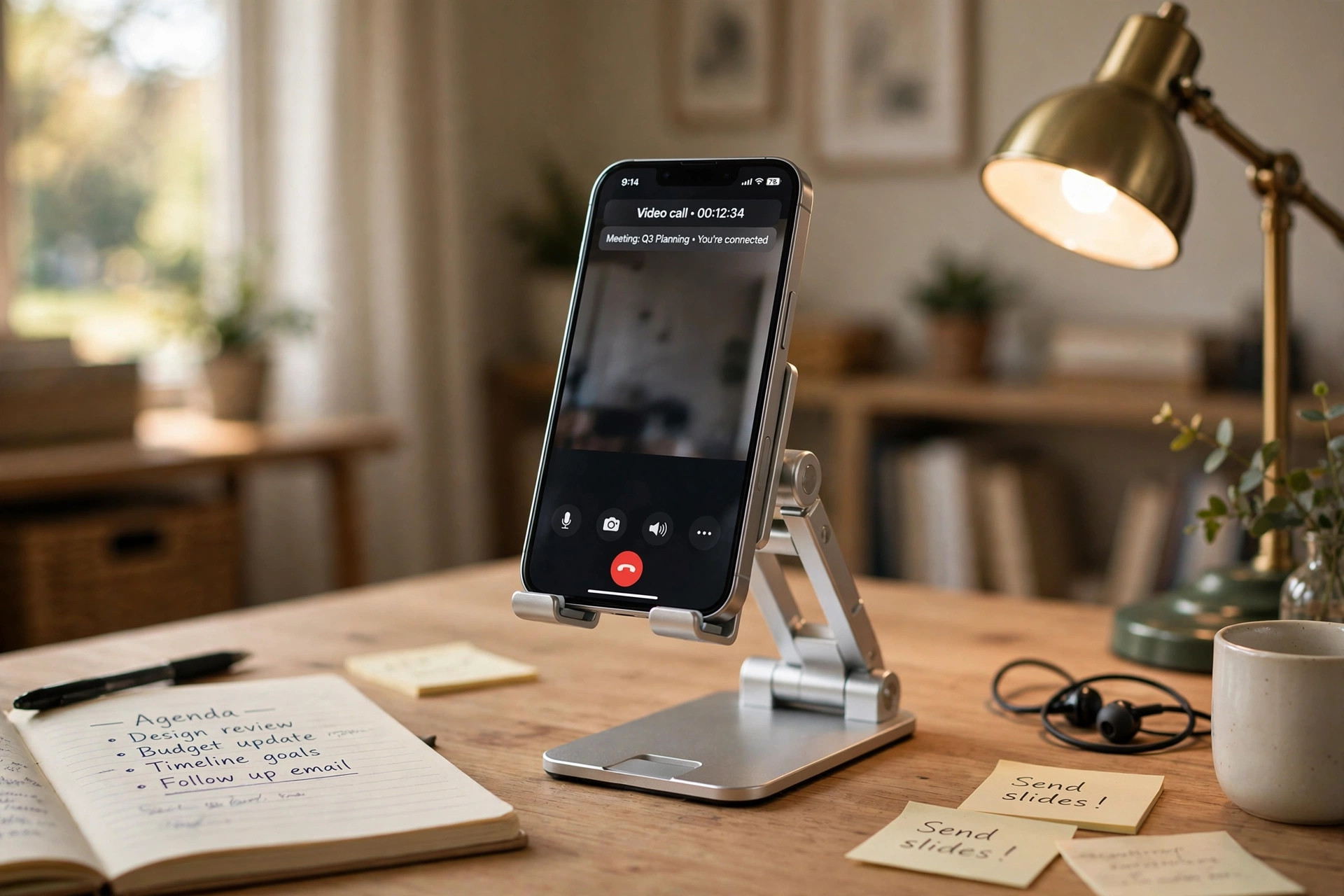

More people than ever work from home. They meet clients, students, and colleagues through a small screen. An adjustable phone stand for desk video calls makes those meetings easier. It holds the phone at the right height. It keeps the picture steady. It frees both hands for notes, typing, and gestures.
This guide explains what a phone stand does, why it matters for video calls, and how to choose one. It covers the main types, the prices you can expect, and simple care. It also answers common questions. Every point is written in plain words, so anyone can follow it.
Why an Adjustable Phone Stand Matters for Video Calls
A video call is a face-to-face meeting through a camera. The camera is on the phone. Where the phone sits decides how you look on the other person’s screen. A phone propped against a book slips and slides. A cheap plastic holder may wobble every time you type.
An adjustable phone stand solves these small problems. It lifts the phone to eye level or near it. It tilts the phone to the right angle. It keeps the phone still during a long call. The result is a calm, professional picture. You look the other person in the eye. Your face is well lit. Your hands are free to take notes or hold papers.
Comfort matters too. Many people hold their phone in one hand for a thirty-minute call. The neck bends. The arm tires. A stand takes that weight away. You can sit up straight and speak naturally. Over weeks and months, this small change helps the neck, shoulders, and back.
The Difference Between a Stand and a Tripod
A tripod is another way to hold a phone. It has three legs and a tall neck. Tripods work well outdoors or in big rooms. But on a crowded desk, a tripod can take too much space. An adjustable phone stand has a smaller base. It sits close to the monitor or keyboard. For most desk video calls, the stand is the simpler choice.
What to Look for When Choosing a Phone Stand: Adjustable Phone Stand for Desk Video Calls
Not all stands are the same. A few key features decide whether a stand is worth its price. Check each one before you buy.
Adjustability
The first feature is in the name: adjustability. The stand should let you change the height. It should let you change the viewing angle. Some stands have one hinge at the base. Better stands have two hinges, so you can move the phone up and down and also tilt it. A few models rotate the phone from portrait to landscape. For video calls, the ability to tilt is the most important. You want the camera to point straight at your face.
Stability and Base Weight
A stand must not tip over. Look for a wide base or a weighted base. Metal stands often feel more solid than thin plastic ones. Some bases have rubber pads on the bottom. These pads keep the stand from sliding on a smooth desk. Before you buy, check the stand’s maximum phone weight. A heavy phone in a thick case needs a strong holder.
Phone Holder and Grip
The holder is the part that grips the phone. It should fit your phone’s size. Most stands fit phones between four and eight inches wide. The grips should be padded with rubber or silicone. Soft grips protect the phone from scratches. They stop the phone from slipping. The grips should be easy to open with one hand. Some stands also have a cutout at the bottom so you can plug in a charging cable while the phone sits in the holder.
Build Material
Phone stands are made of plastic, aluminum, steel, or wood. Plastic stands cost less but may bend over time. Aluminum stands are light and strong. Steel stands are the heaviest and most stable. Wooden stands look nice on a home desk but offer less adjustability. For daily video calls, aluminum or steel gives the best mix of strength and life.
Cable Management
A phone loses power during long calls. A charging cable keeps it alive. Some stands have a hole or a clip in the back for the cable. This keeps the desk tidy. It also stops the cable from pulling the phone sideways. This feature is small, but people who use it every day find it useful.
Portability
If you travel, a folding stand is handy. Many stands fold flat and fit in a laptop bag. A travel stand may be less tall than a desk stand. Think about where you will use it most. One stand for the home desk is fine for most people. A second folding stand is a nice extra for trips.
Types of Adjustable Phone Stands
Phone stands come in several designs. Each design suits a different desk and a different way of working.
Desktop Stands
The desktop stand is the most common type. It has a flat base and a short arm. The phone sits about five to ten inches above the desk. These stands are simple, cheap, and easy to use. They suit most home offices. Many workers pair a desktop stand with a laptop stand that improves posture to keep both screens at comfortable heights.
Tall Gooseneck Stands
A gooseneck stand has a long, bendable neck. It can raise the phone much higher than a desktop stand. You can bend the neck into any shape. This type works well when you want the phone camera above the monitor. The flexible neck can wobble if bumped, so it needs a strong clamp or a heavy base. Shoppers can compare tall and short models at major retailers such as IKEA or Wayfair, which carry a wide range of desk accessories.
Clamp-Mount Stands
A clamp-mount stand attaches to the edge of the desk. It saves desk space because it has no base. The arm reaches over the work area and holds the phone above it. Clamp stands suit small desks and shared tables. They also work on a bookshelf or a bedside table. Make sure the clamp fits the thickness of your desk before you buy.
Weighted Pedestal Stands
A pedestal stand has a heavy round base and a tall post. It looks clean and professional. The height adjusts by sliding the post up or down. Some pedestal stands also rotate. They cost more than basic stands, but they last a long time. Offices that buy equipment in bulk often choose this type from suppliers like Office Depot.
Multi-Device Stands
Some stands hold more than one device. A dual stand can hold a phone and a tablet side by side. This helps people who take notes on a tablet during a call. These stands need a strong base because two devices add weight. They cost more, but they replace two separate stands.
How a Phone Stand Fits Into a Full Home Office Setup
A phone stand is one piece of a larger setup. The full picture matters for video calls. Good lighting, a clear background, and steady sound all help.
Lighting is the next step after the stand. A ring light made for home office video calls removes shadows from your face and makes the picture sharp. Place the light in front of you, not behind you. Window light from the side also works well during the day.
Sound matters too. The phone’s microphone picks up room noise. A quiet room helps. A headset with a built-in microphone helps more. For a full desk plan, think about where each item sits: the stand holds the phone, a dual monitor arm holds the screens, and the light sits to one side. Each item has its own place, and the desk stays tidy.
Ergonomics research from furniture makers such as Herman Miller and Steelcase shows that small posture changes add up over a workday. Raising the phone to eye level is one such change. It reduces neck bend. Combined with a good chair and a desk at the right height, it supports a full day of calls.
Cost and Price Guide
Prices for an adjustable phone stand range from a few dollars to over one hundred dollars. The price depends on material, height, and brand.
Budget stands cost between five and fifteen dollars. These are usually plastic with one hinge. They work for light use. A phone in a heavy case may feel loose in them. They are a fine choice if you only make short calls.
Mid-range stands cost between fifteen and forty dollars. Most are made of aluminum. They have two hinges and a weighted base. They hold the phone firmly. This range gives the best value for most buyers. A stand in this range should last for years of daily use.
Premium stands cost between forty and one hundred dollars or more. These include tall pedestal stands, clamp-mount stands with long arms, and multi-device stands. They use steel parts and smooth hinges. They suit people who make video calls all day. Design-focused brands and adjustable desk makers such as UPLIFT Desk sell stands built to match their furniture lines.
Watch for fake prices. A stand that costs three dollars may break in a week. A stand that costs ninety dollars may do the same job as a thirty-dollar stand. Read recent reviews before you buy. Review sites such as PCMag and the Wirecutter test phone accessories and rate them for build quality. Home guides at The Spruce also compare popular models for home office use.
What the Price Should Include
A good stand includes rubber grips, a stable base, and a charging cutout. Some stands include a carrying case. Some include an extra cable. These extras do not justify a much higher price, but they are nice to have. A warranty of one year or more is a good sign. It shows the maker trusts the product.
Care and Upkeep
A phone stand needs little care. A few simple habits keep it working well.
Dust the stand with a dry cloth once a week. Dust builds up on the base and in the hinges. A damp cloth can clean sticky spots, but dry the metal parts after. Water left on steel can cause rust over time.
Check the hinges every few months. Tighten any screws that feel loose. Most stands use small Phillips screws. Do not force a hinge past its limit. If a hinge feels stiff, a tiny drop of machine oil on the joint helps.
Keep the rubber grips clean. Oil from hands makes them less grippy over time. Wipe them with a damp cloth and mild soap. Let them dry fully before placing the phone in the stand.
Store a folding stand flat when not in use. This protects the hinges. Keep the stand away from strong heat, such as a radiator or a sunny windowsill. Heat can warp plastic stands.
Safety Notes
A phone stand is a safe product, but a few cautions help.
Place the stand on a flat, stable surface. A stand near the edge of the desk can fall if bumped. Keep the charging cable away from walkways so no one trips.
Do not use a damaged stand. A cracked holder can drop the phone. A bent hinge can snap. Replace a stand that shows cracks or deep bends.
Keep small stands away from small children and pets. Small screws and loose parts can be a choking hazard. Tech accessory brands like Logitech follow safety standards for desk products, and it is wise to buy stands from makers that do the same.
If the stand uses a clamp, do not overtighten it. A clamp squeezed too hard can crack a thin desk edge. Tighten it only until it holds firm.
Frequently Asked Questions
What is the best height for a phone during a video call?
The camera should sit at or just below eye level. This keeps your face natural on screen. Most desktop stands raise the phone five to ten inches. If your desk is low, a taller stand or a stack of books under the base can help.
Can I use a phone stand with a phone case on?
Yes, in most cases. Most stands fit phones with cases. Check the holder’s width range before you buy. Very thick cases, such as rugged outdoor cases, may need a stand with a wider grip.
Will a phone stand work with any phone brand?
Yes. Stands grip by size, not by brand. They fit Apple, Samsung, Google, and other phones. The key numbers are the phone’s width and weight. Match those to the stand’s rated range.
Can I charge my phone while it sits in the stand?
Most stands allow this. Look for a cutout or gap at the bottom of the holder. Slide the cable through before or after placing the phone. Wireless charging pads can also sit under some stands, though the metal holder may block the signal. Test your setup before an important call.
Is a phone stand better than leaning the phone against a monitor?
Yes. A leaned phone slips. It also points the camera at the wrong angle. A stand holds the phone steady and at the right angle. The picture looks better, and you do not need to adjust it during the call.
Do I need a stand if I have a laptop with a camera?
A laptop camera works for many calls. But a phone often has a better camera than a laptop. Using the phone for video and the laptop for notes gives you the best of both. A stand makes this two-device setup easy.
A Final Word
An adjustable phone stand for desk video calls is a small tool with a big effect. It steadies the picture. It frees the hands. It helps posture. It costs less than most desk accessories and takes a minute to set up.
Choose a stand with good adjustability, a stable base, and soft grips. Match the stand to your phone’s size and weight. Set it at eye level. Add good light and a quiet room. Your video calls will look better from the first meeting.
References
Herman Miller. (n.d.). Office furniture and ergonomic seating. https://www.hermanmiller.com IKEA. (n.d.). Home furnishings. https://www.ikea.com Logitech. (n.d.). Computer accessories and headsets. https://www.logitech.com Office Depot. (n.d.). Office supplies and furniture. https://www.officedepot.com PCMag. (n.d.). Technology product reviews. https://www.pcmag.com Steelcase. (n.d.). Office furniture and workplace research. https://www.steelcase.com The Spruce. (n.d.). Home and garden advice. https://www.thespruce.com UPLIFT Desk. (n.d.). Standing desks and ergonomic office furniture. https://www.uplift-desk.com Wayfair. (n.d.). Furniture and home goods. https://www.wayfair.com Wirecutter. (n.d.). Product reviews from The New York Times. https://www.nytimes.com/wirecutter
Was this guide helpful?

About Sarah Mitchell
The My Garden US editorial team writes practical, in-depth home and garden guides for American homeowners — tested advice, no fluff.
You May Also Like
A Home Office Desk with Cable Management Holes: A Plain Guide
May 10, 2026 0 views
Best Home Office Desk for Crafters and Sewing: A Practical Guide
June 1, 2026 0 views
Home Office Desk With Modesty Panel Front: A Simple Buying Guide
August 3, 2026 0 views