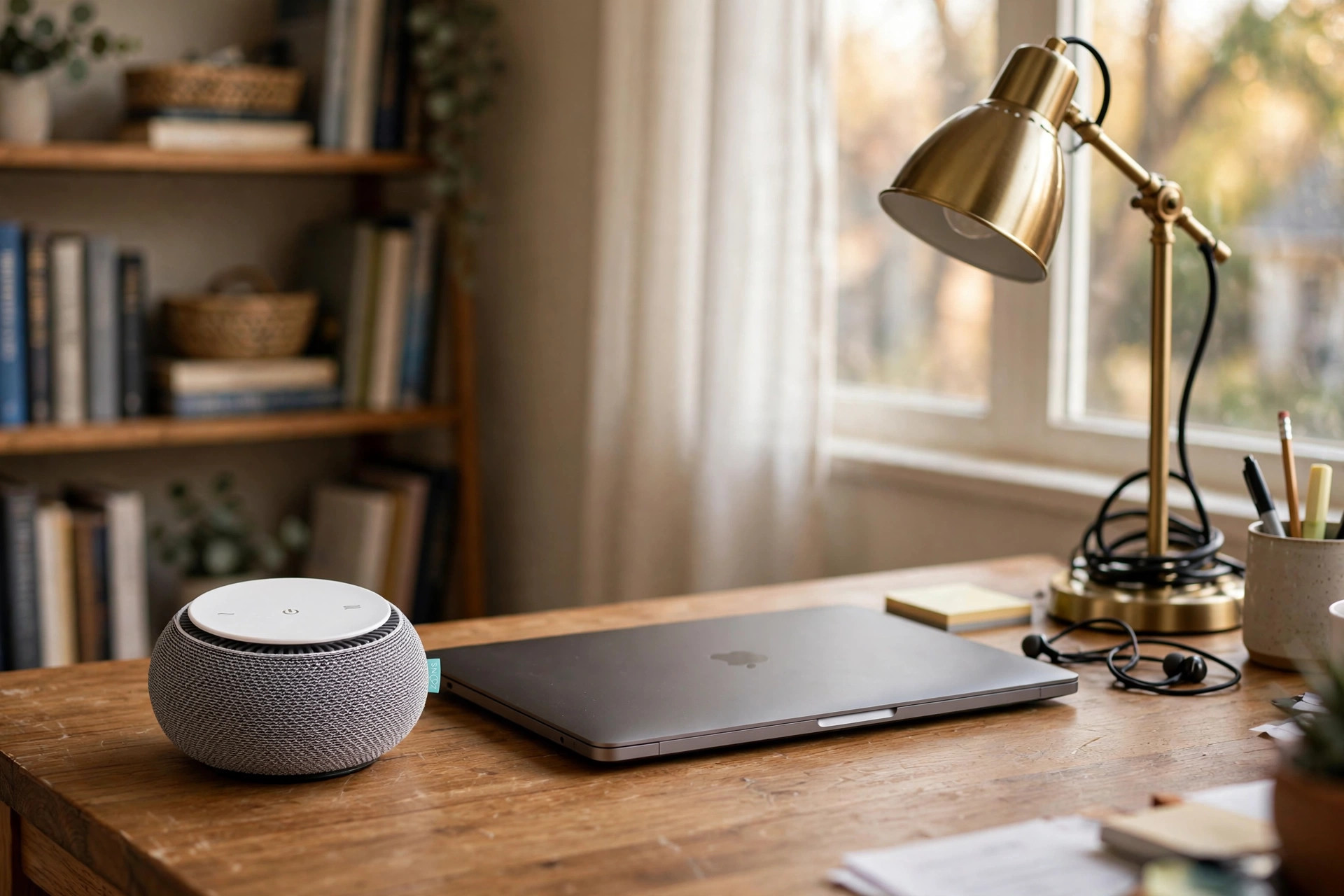

More people now work from home. The kitchen table has become the office. The spare bedroom has become the call center. With this change comes a new problem: noise. A home office noise machine for focus and privacy offers a plain answer to this problem. It fills the room with a soft, even sound. That sound covers up small sharp noises. It helps the mind stay on the task at hand. It also helps keep work talk private from other people in the house. This article explains how these machines work. It covers what to look for when you buy one, what kinds exist, what they cost, how to care for one, and how to use one in a safe way.
Why a Home Office Noise Machine Matters
Focus is hard to keep in a busy house. A phone rings in the next room. A child asks a question through the door. A truck passes on the street outside. Each small break pulls the mind away from work. Work studies have long shown that it takes many minutes to return to full focus after each break. A steady background sound can hide these small breaks before they reach you. The mind stops tracking each little noise. It hears only the steady hum. The work itself can then hold the mind. This effect is called sound masking.
Privacy matters just as much. Many home workers take calls about money, health, or legal matters. Thin walls do not stop sound. A closed door is not enough. Family members or roommates may hear parts of the call. A noise machine placed near the door can blur the words. The listener may hear the sound of speech but not the words themselves. This gives the caller more comfort and more trust in the setup.
A home office noise machine for focus and privacy also helps with stress. Sudden loud sounds raise the heart rate. A steady sound keeps the ear calm. Many users say they feel less tired at the end of the day. The machine does not remove all noise from the house. It lowers the sharp edge of noise. That is often enough to change the whole work day.
What to Look For When You Choose: Home Office Noise Machine for Focus and Privacy
Not all machines are the same. The first thing to check is the sound itself. Most machines offer white noise. White noise is a steady hiss, much like a fan. Some offer pink noise. Pink noise is deeper and softer, much like steady rain. Some offer brown noise. Brown noise is deeper still, much like a low rumble. Many people find pink or brown noise more restful than white noise over a long day. Try each one before you buy if you can. Home guides at The Spruce and Good Housekeeping often compare these sound types side by side.
Check the speaker next. A small cheap speaker can sound harsh and thin. A larger speaker gives a fuller and warmer sound. Some machines use a real fan inside the case. These are called mechanical machines. They move air and make real sound. Many users like them because the sound feels natural. Electronic machines play sounds through a speaker. They offer more sound choices but depend on the quality of that speaker.
Volume control is key. The machine must play loud enough to mask noise but soft enough to be safe for the ears. Look for a wide range of volume steps, not just three or four. A sleep timer is a nice extra. It turns the machine off after a set time. This saves power and spares the ears at night.
Size and power matter for a home office. A small unit fits on a desk corner or a shelf. Check whether it runs on batteries, a USB cable, or a wall plug. USB power is handy for a desk that already has ports. A wall plug is better for all-day use. If you travel for work, a small battery unit is the best pick.
Some machines add extra sounds. They may play rain, ocean waves, or a crackling fire. These are nice for rest. They are less good for deep focus. Nature sounds change over time. The brain pays attention to each change. A steady noise stays the same, and the brain can let it fade. For speech privacy, a steady hiss or rush works best. Sites that test office gear, such as PCMag and Wirecutter, often review sound machines and note which ones hold a steady tone.
Also check the warranty and the return policy. Ears differ from person to person. A sound that one person finds calm may annoy another. Buy from a store that lets you return the unit if it does not suit you. Read reviews from home workers before you decide. Tech sites like CNET track new models and price drops through the year.
Types of Noise Machines
Mechanical fan machines
These units hold a small fan inside a round case. The fan moves air. The moving air makes sound. The sound is smooth and steady. There are no loops and no repeats. Many users trust them for sleep and for work. They have few settings. Most offer two or three speeds. They need more power than electronic units. They also need cleaning from time to time, since dust slows the fan.
Electronic sound machines
These are the most common type. A chip makes the sound. A speaker plays it. They offer many sound choices. Most have white, pink, and brown noise. Many add nature sounds too. They are small and light. They run on USB or batteries. The weak point is the loop. Some cheap units repeat a short sound file. The ear can learn the repeat point. This can annoy some users over time. Better units use longer files or make sound in real time. These cost more but sound much smoother.
Phone apps and smart speakers
Some people use a phone app or a smart speaker for noise. Apps are cheap or free. They can play for hours. The weak point is the speaker. A phone speaker sounds thin. It may not mask noise well. A good smart speaker does better. But a phone call or a notice can break the sound at the worst moment. A stand-alone machine keeps playing no matter what the phone does. For work that needs steady focus, a stand-alone unit is the safer pick.
Whole-room sound masking systems
These are larger systems. They sit above the ceiling or inside vents. They fill a whole room or a whole floor with sound. They are common in large open offices. For a home office, one small unit is usually enough. A whole-room system costs much more. It also needs a pro to set it up. Most home workers should skip this type.
For most home workers, an electronic unit with real pink or brown noise is the best mix of price and use. Pair it with simple steps like closing the door and adding soft furnishings to the room. Some workers also add home office acoustic panels to reduce echo to cut down sound that bounces off hard walls.
Cost and Price
Prices vary by type. Simple electronic machines cost between twenty and forty dollars. They offer a few sounds and a basic speaker. Mid-range units cost between forty and eighty dollars. They offer more sounds, better speakers, and timers. High-end electronic units cost between eighty and one hundred fifty dollars. They may use adaptive sound. This means they listen to the room and raise or lower their own sound to match the noise around them.
Mechanical fan machines cost between fifty and seventy dollars. They are simple but they last a long time. Whole-room systems cost many hundreds of dollars. They are not needed for most home offices.
Think of the machine as a tool, not a toy. A worker who bills by the hour can earn back the cost in one good day of focus. Even a cheap unit can help a great deal. Stores like IKEA and Wayfair sell home office goods at many price points. Brands that focus on office furniture, such as Herman Miller and Steelcase, also publish guides on workspace comfort that are worth a read.
Care and Upkeep
A noise machine needs little care. Keep it free of dust. Dust can block the speaker holes and dull the sound. Wipe the case with a dry cloth once a month. If you have a mechanical fan unit, check the vents. Hair and dust can slow the fan. A slow fan makes less sound and works less well. Clean the vents with a soft brush. Desk gear makers such as Uplift Desk make the same point in their care guides: dust is the slow killer of small motors.
Do not place the unit where it can get wet. Keep it away from open windows in the rain. Keep it off hot surfaces like radiators. Do not cover it with cloth while it runs. The motor needs air to stay cool.
Check the power cord each year. A frayed cord is a fire risk. Replace the cord or the unit if you see damage. If the unit runs on batteries, take the batteries out when you do not use it for weeks. Old batteries can leak and ruin the case.
Safety
Noise machines are safe when used with care. The main risk is volume. Do not play the sound too loud for too long. A good rule is to keep it at the level of a quiet chat. You should still hear a knock on the door. If your ears ring after you turn it off, the volume was too high.
Place the machine at least a few feet from your head. Do not rest your head next to the speaker. Do not use it at full volume all day. Give your ears breaks. Turn it off during lunch and during long pauses.
For babies and small children, use extra care. Keep the machine far from the crib. Keep the volume low. Health experts note that long loud noise can harm young ears. When in doubt, choose the softer setting.
Frequently Asked Questions
Will a noise machine really help me focus?
For many people, yes. The steady sound hides small breaks in the house. The mind stops tracking each little noise. It can then stay on one task for a longer time. It will not help everyone. Some people work best in full quiet. Try it for a full work week and judge by your own output.
Can a noise machine keep my calls private?
It can help a great deal. Place the unit near the door or the thin wall. Set it loud enough to blur words from the next room. It will not make a room soundproof. A person with an ear to the door may still catch some words. But for normal home use, it adds a strong layer of privacy.
Is white noise or pink noise better for work?
Most users pick pink or brown noise for long work days. They sound softer and deeper than white noise. White noise can feel harsh after many hours. The best choice is the one your own ear likes. Test each sound for a full work day if you can before you decide.
Can I just use a fan instead of a machine?
A real fan can work well. It moves air and makes steady sound. It also cools the room in warm months. The weak point is control. A fan has only a few speeds. It may be too loud or too soft for the job. It also blows air on you, which some people dislike in winter. A noise machine gives more control and no draft.
Do I still need one if I have a headset?
A headset and a noise machine do different jobs. A noise cancelling headset for home office meetings blocks sound at your ears. It helps you hear calls with clear sound. A noise machine fills the room with sound. It helps others not hear you. It also helps during the hours you are not wearing the headset. Many home workers use both at once. You may also pair them with a quiet keyboard for shared home office space to cut the key clicks that bother others in the room.
A Final Word
A home office noise machine for focus and privacy is a small tool with a large effect. It costs little. It asks for little care. It pays back in calmer days and safer calls. Choose a steady sound that suits your ear. Keep the volume at a safe level. Place the unit where it does the most good. Then let the steady hum do its quiet work.
References
CNET. (n.d.). Technology news and reviews. https://www.cnet.com Good Housekeeping. (n.d.). Product reviews and home advice. https://www.goodhousekeeping.com Herman Miller. (n.d.). Office furniture and ergonomic seating. https://www.hermanmiller.com IKEA. (n.d.). Home furnishings. https://www.ikea.com PCMag. (n.d.). Technology product reviews. https://www.pcmag.com Steelcase. (n.d.). Office furniture and workplace research. https://www.steelcase.com The Spruce. (n.d.). Home and garden advice. https://www.thespruce.com UPLIFT Desk. (n.d.). Standing desks and ergonomic office furniture. https://www.uplift-desk.com Wayfair. (n.d.). Furniture and home goods. https://www.wayfair.com Wirecutter. (n.d.). Product reviews from The New York Times. https://www.nytimes.com/wirecutter
Was this guide helpful?

About Jennifer Lee
The My Garden US editorial team writes practical, in-depth home and garden guides for American homeowners — tested advice, no fluff.
You May Also Like
Best Home Office Desk for Left Handed Users: A Practical Buying Guide
June 23, 2026 0 views
Ergonomic Balance Board for Standing Desk Use: A Plain Guide
March 28, 2026 0 views
Small L Shaped Desk With Monitor Shelf: A Practical Guide for Small Home Offices
February 2, 2026 0 views