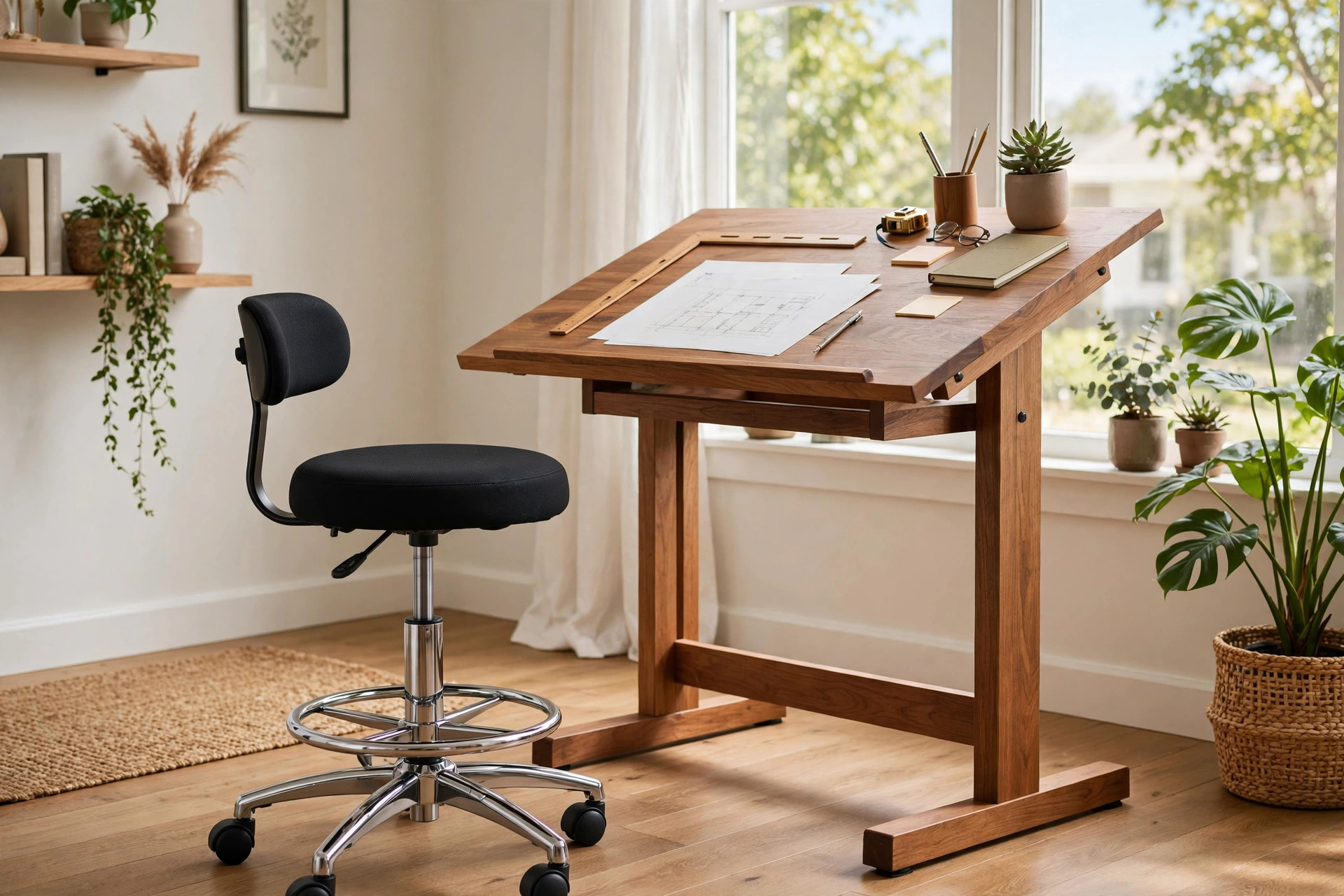

Many people now work at desks that stand taller than the desks of the past. Artists, engineers, architects, and home office workers all share one problem. A normal chair sits too low. The knees rise too high. The back rounds. The feet dangle or slip. An ergonomic drafting stool with foot ring was made to solve this problem. It raises the seat to match a tall desk. It gives the feet a firm ring to rest on. It holds the back in a calm, straight line.
This guide explains what the stool is, why it matters, and how to pick one. It also covers cost, upkeep, and safety. Every fact here is written in plain language. You do not need any special training to follow it.
Why It Matters
A chair is not just furniture. It shapes how your body feels at the end of a long day. A bad seat can leave you with a stiff neck, sore knees, or a dull ache in the lower back. These pains grow slowly. They start as a small bother. They end as a daily burden. The right seat helps stop this pattern before it starts.
The Problem With Ordinary Chairs
Most office chairs are built for desks about 29 to 30 inches high. They work well at that height. Many drafting tables and standing desks sit much higher. Some rise to 42 inches or more. At those heights, a normal chair forces a poor trade. You can raise the chair, but then your feet hang in the air. Or you can keep your feet flat, but then your arms reach up too far. Both choices strain the body. Neither choice lasts long.
How a Drafting Stool Helps
An ergonomic drafting stool with foot ring is taller than a normal chair. It lifts the hips to match the high desk. The foot ring gives the feet a place to land. Your spine stays close to its natural curve. Your shoulders drop. Many people who switch to a taller stool can work longer without the tired, heavy feeling in their back.
Who Uses It Most
The stool serves several kinds of workers. Architects and engineers use it at drafting tables. Artists use it at easels and high work tables. Laboratory workers use it at lab benches. Cashiers and reception staff use it at high counters. Home office workers use it at standing desks set to full height. Anyone who moves between sitting and standing will find the high seat useful. It lets you perch, rise, and sit again with little effort.
Good workplace seating is a serious health topic. Government safety offices publish guidance on proper seated posture and workstation setup that apply to tall stools as much as to low chairs. Medical experts also note the value of back support and foot placement in easing back strain.
What to Look For: Ergonomic Drafting Stool with Foot Ring
Not every tall stool earns the name ergonomic. The word appears on many boxes, but the design must prove it. Look at these points before you buy.
Height Range and Lift
Check how high the seat rises. A true drafting stool should reach at least 24 inches and rise to 30 inches or more at its top end. Many good models reach 33 to 36 inches. A gas lift cylinder is the usual way to set the height. Pull the lever, shift your weight, and the seat glides up or down. Make sure the lift moves smoothly and locks with no slow sag. Test the lowest and highest settings in the store or read the stated range with care.
The Foot Ring
The foot ring is the signature feature of this stool. It must be easy to reach and firm to the foot. Look for a ring that moves up and down the center post. Your feet should rest on it with the thighs nearly level and the knees bent near a right angle. The ring should lock tight with a knob or a clamp. A ring that slips under pressure is worse than no ring at all. It breaks your trust in the stool and disturbs your posture.
Some stools use a fixed foot ring. It stays at one height. That can work if it matches your body. But a moving ring fits more people. It also lets you share the stool with others in a studio or lab. For a related guide to setting up the rest of your desk space, see our article on the best task lighting for home office desk setup.
Seat Shape and Padding
The seat should be wide enough to sit on with ease. A round seat of 18 to 20 inches across suits most people. Padding matters. A seat that is too thin will press into the thighs and slow blood flow. A seat that is too soft will sag and pull the spine out of line. Medium firm foam with a water-fall front edge is a sound choice. The waterfall edge slopes down at the front. It takes pressure off the backs of the thighs. The cover should breathe. Mesh or woven fabric stays cooler than vinyl in warm rooms.
Backrest and Armrests
A backrest adds real value on a drafting stool. It holds the lower back and reminds you to sit tall. Look for a backrest that tilts and locks. Lumbar support, even a small curve in the lower part of the rest, helps on long days. Armrests are less settled. Some users love them. Some find them in the way at a drafting table. If you choose armrests, pick ones that flip up or slide back. That way the stool can tuck under the table when you stand.
Base and Casters
A five-leg base is the standard. It spreads the load and keeps the tall seat steady. Aluminum bases last longer than plastic ones. Check the casters too. Hard floors want soft wheels. Carpeted floors want hard wheels. If you sit on a rug, soft wheels will grip and drag. Choose the wheel for the floor you have.
Types and Options
Drafting stools come in several styles. Each style fits a different kind of work.
The Classic Drafting Stool
The classic model has a round padded seat, a ring, a backrest, and a five-leg base. It looks like a tall office chair. It fits architects, engineers, and students. It is the safest choice for a general buyer. You can find many versions from office furniture makers with ergonomic lines and design houses that sell tall seating.
The Standing-Desk Stool
This style is made for people who switch between sitting and standing. The seat is smaller. Some models have a saddle seat that you perch on rather than sit on. The height range is wider. It suits home office workers who move all day. One well-known maker of sit-stand desks also sells perch stools built for standing desks.
The Saddle Drafting Stool
A saddle seat slopes down on both sides like a horse saddle. It opens the hips and pulls the spine tall. Try one before you buy if you can. Saddle styles appear in premium ergonomic seating lines and in lab equipment catalogs.
Review sites often compare these styles side by side. You can read hands-on seat reviews and buying guides to see how models differ in comfort and build. For a second opinion on build quality and value, check independent furniture reviews and tech and home office gear tests.
If your home office needs more storage alongside the stool, read our guide to a home office filing cabinet lateral two drawer.
Cost and Price
Prices for an ergonomic drafting stool with foot ring run wide. A basic model can cost less than 100 dollars. A mid-range model runs from 150 to 350 dollars. A high-end ergonomic model can cost 500 dollars or more. The price follows the parts. A smooth gas lift, dense foam, a steel base, and a strong backrest all raise the cost.
Do not judge by price alone. Read the stated limits. Check the weight rating. Most stools hold 250 pounds. Stronger models hold 300 to 350 pounds. Check the warranty too. A one-year warranty is the floor. Two or three years is better. A good maker stands behind the lift cylinder most of all. That part works hardest and fails first.
Think about cost per year. A cheap stool that lasts two years costs the same per year as a mid-range stool that lasts six. The mid-range stool also gives better comfort in all six years. For most buyers, the mid-range is the sound deal. Buy the best seat you can afford. You will use it for thousands of hours.
Care and Upkeep
A drafting stool needs little care, but a small routine keeps it safe and smooth.
Weekly Checks
Wipe the seat with a damp cloth. Vacuum crumbs and dust from under the cushion. Check the foot ring clamp. It should grip tight. If it slips, tighten the knob or the bolt. Spin the seat and test the gas lift. It should hold its height while you sit.
Monthly Checks
Look at each caster. Hair and thread wrap around the wheels. Cut the wrap away with small scissors. A jammed caster can tip the stool when you roll. Check the base for cracks. Plastic bases can crack at the center hub after years of use. Check the bolts under the seat. Tighten any that have worked loose.
Long-Term Care
Keep the stool out of direct sun. Strong sun dries vinyl and fades fabric. If the gas lift starts to sink, the stool is telling you it needs a new cylinder. Replacement cylinders are sold online and are easy to fit. If the foam has gone flat and the cover is worn, a new cushion may cost less than a new stool. For seat covers and spare parts, large furniture retailers stock a wide range of replacement parts and accessories.
Safety
A tall stool carries more risk than a low chair. A fall from a high seat can hurt. Take these steps to stay safe.
First, set the height so both feet rest flat on the foot ring. Do not perch with one foot on the ring and one on a caster. Second, lock the casters if your stool has locks, or place the stool on a mat when you work at full height. A rolling base can slide when you lean. Third, do not stand on the seat. The stool is not a step ladder. Fourth, keep the ring clean and dry. A wet ring can let a shoe slip.
If you share the stool in a studio or classroom, post a small note with the height steps. New users often guess the height wrong. A short note saves them the trouble. A small desk organizer with phone charging dock can also keep shared tools neat on the desk nearby. Workplace safety pages carry more on seated work and stool safety for shared work areas.
Frequently Asked Questions
What height drafting stool do I need?
Match the stool to your desk. Measure the desk height in inches. Your seat should sit about 10 to 12 inches below the desk surface. For a 42-inch desk, look for a seat that reaches about 30 to 32 inches. For a 36-inch counter, a seat of 24 to 26 inches works. Always check the stated seat range before you order.
Is a foot ring really needed?
Yes, for most users. Without a ring, the feet hang or press on a caster. Hanging feet pull on the thighs and slow blood flow. The ring gives a firm rest and lets the legs hold a natural bend. It is the single most important part of a drafting stool after the seat itself.
Can a drafting stool replace an office chair?
It can, if your desk is tall enough. A drafting stool suits high desks, drafting tables, and standing desks. At a normal desk of 29 to 30 inches, a drafting stool is too tall. Use a normal office chair there. Many home workers keep both: a tall stool for the standing desk and a normal chair for a low side desk.
How do I adjust the foot ring?
Most rings ride on the center post. Find the clamp knob under the ring. Loosen it, slide the ring to the height where your feet rest flat with knees near a right angle, then tighten the knob firmly. Sit and press your feet hard on the ring. If it slips, tighten more. Check it again after a week of use.
What is the weight limit of a typical drafting stool?
Most models hold 250 pounds. Mid-range and heavy-duty models hold 300 to 350 pounds. The limit covers the person plus anything they carry in their lap. Stay within the stated limit. Overload wears out the gas lift and can crack the base. Stronger bases and lifts cost more but give more margin.
How long should a good drafting stool last?
A sound mid-range stool should last five to eight years of daily use. The gas lift is the first part to fail. Many makers sell replacement cylinders. The seat foam is next. Covers can be cleaned or replaced. A steel base can last far longer than the cushion. Good care, as noted above, adds years.
A Final Word
An ergonomic drafting stool with foot ring is a simple tool with a clear job. It puts your body at the right height for tall work. It keeps the feet planted and the back tall. It lets you move between sitting and standing with ease. Pick a model with a smooth lift, a firm locking ring, a kind seat, and a steady base. Keep it clean and tight. It will repay you with calmer days and a back that feels better at night.
References
Herman Miller. (n.d.). Office furniture and ergonomic seating. https://www.hermanmiller.com IKEA. (n.d.). Home furnishings. https://www.ikea.com Mayo Clinic. (n.d.). Diseases and conditions. https://www.mayoclinic.org Occupational Safety and Health Administration. (n.d.). Worker safety and health. https://www.osha.gov PCMag. (n.d.). Technology product reviews. https://www.pcmag.com Steelcase. (n.d.). Office furniture and workplace research. https://www.steelcase.com The Spruce. (n.d.). Home and garden advice. https://www.thespruce.com UPLIFT Desk. (n.d.). Standing desks and ergonomic office furniture. https://www.uplift-desk.com Wayfair. (n.d.). Furniture and home goods. https://www.wayfair.com Wirecutter. (n.d.). Product reviews from The New York Times. https://www.nytimes.com/wirecutter
Was this guide helpful?

About James Carter
The My Garden US editorial team writes practical, in-depth home and garden guides for American homeowners — tested advice, no fluff.
You May Also Like
Ergonomic Balance Board for Standing Desk Use: A Plain Guide
March 28, 2026 0 views
Adjustable Foot Hammock for Under Desk Comfort: A Complete Guide
September 26, 2026 0 views
Wall Mounted Monitor Stand to Save Desk Space
May 30, 2026 0 views