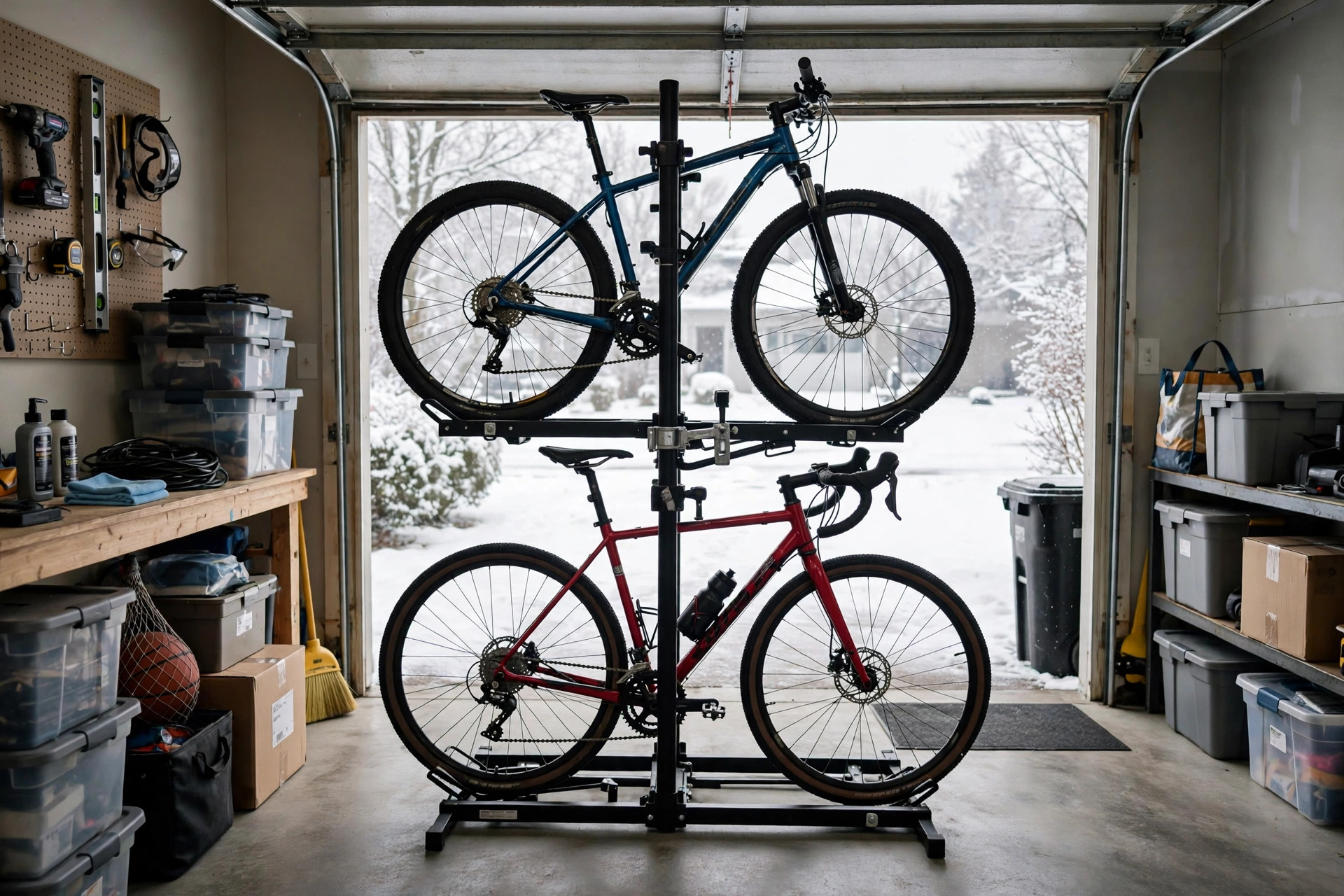

Winter is long in the northern states. Bicycles sit idle for months. A good rack keeps them safe during that time. Stackable bike storage racks for cold climates solve this problem well. They hold two or more bikes in a small space. They keep wheels off the cold floor. They protect frames from damp air. This guide explains what these racks are, why they matter, and how to pick the right one for your home and your budget.
Why Cold Climate Bike Storage Matters
Cold air and dampness harm a bicycle. Metal parts rust. Chains stiffen. Tires lose air and crack. Brake cables can freeze. A bike left on a cold concrete floor faces the worst of it. Moisture rises from the ground. Salt from the road stays on the frame and starts corrosion.
A stackable bike storage rack lifts each bike off the floor and keeps every wheel dry. Air moves around the frame. Water cannot pool near the wheels. The rack also keeps bikes apart. Handlebars do not bang against other frames. Paint stays in better shape.
Stackable racks save space too. A family may own three or four bikes. Floor space in a garage is limited in winter. Cars, snowblowers, and tools crowd the room. A rack that stacks bikes one above the other cuts the needed floor space in half or more. For renters and owners of small homes, this matters a great deal. Ideas for sports gear organization work on the same idea: give every item a home and keep the floor clear.
What to Look For in Stackable Bike Storage Racks for Cold Climates
Not every rack suits a cold garage or shed. Cold places test materials. Plastic turns brittle. Cheap metal bends. Paint flakes. Look for these points before you buy.
Cold-Resistant Materials
Steel with a powder coat finish is the best common choice. The coating keeps rust away. Bare steel rusts fast in damp air. Aluminum is also good. It does not rust at all. It costs more, but it lasts.
Avoid cheap plastic racks for unheated spaces. Cold makes hard plastic crack. Rubber hooks can also harden in freezing air. Check that all plastic parts are rated for cold use. Many guides on home storage basics stress this same point about garage gear.
Weight Capacity
Each slot on the rack must hold your heaviest bike. An electric bike can weigh 50 to 70 pounds. A steel touring bike weighs 30 to 40 pounds. Add the weight of baskets, locks, and child seats. Then leave a margin of safety. A rack rated for 40 pounds per slot will fail under a heavy e-bike.
Look for a clear weight rating on the box or the product page. If the maker hides the number, be wary. Good makers state it plainly.
Space and Fit
Measure your space before you shop. Know the ceiling height. Know the depth from the wall. Stacked racks place one bike above another. The top bike must clear the ceiling. The bottom bike must clear the floor.
Also check wheel size. Most racks fit 26-inch to 29-inch wheels. Fat-tire bikes and small folding bikes need special slots. Bring your wheel size with you when you shop.
Types and Options
Floor-Standing Stackable Racks
These are the most common type. They sit on the garage floor without bolts or screws. Two tiers hold bikes at different heights. Some models roll out so you can reach the top bike with ease.
Floor-standing racks suit renters. You can move them when you move. They also suit people who change their garage layout often. Their weakness is weight. A fully loaded rack is heavy. It can tip if bumped hard. Place it against a wall for safety.
Wall-Mounted Stacked Racks
These racks bolt to wall studs. They hold bikes in a vertical stack along the wall. They use almost no floor space. They are very stable once mounted.
The trade-off is installation. You must drill into studs. You need a stud finder and a drill. Landlords may not allow holes in the wall. For owners, though, this is often the strongest option. DIY-minded readers can find helpful mounting tips at Family Handyman.
Freestanding Tower Racks
Tower racks are tall, narrow frames. Each level cradles one bike. Some hold four or more bikes in a single footprint. They often have adjustable arms for different bike sizes.
These towers work well in basements and heated storage rooms. They look neat and tidy. They cost more than simple racks. They can be top-heavy, so keep them against a wall or in a corner.
Comparing Prices and What You Get
Prices range widely. A basic two-bike floor rack costs about 30 to 60 dollars. Mid-range racks with adjustable arms cost 80 to 150 dollars. Premium aluminum towers and heavy-duty wall systems can reach 200 to 300 dollars or more.
A bike storage racks price comparison across stores can save you real money. Prices change with the season. Late fall often brings sales as shops clear summer stock. Winter is a good time to buy.
Think in terms of value, not just price. A 40-dollar rack that rusts in one season costs more than a 120-dollar rack that lasts ten years. Check warranty terms. Good brands offer one to five years. Read customer reviews from cold states like Minnesota and Maine. Their experience matches yours best. Shoppers browsing Wayfair or The Home Depot will find many of these models side by side.
Care and Upkeep Through Winter
A rack needs little care, but some care keeps it strong for years.
Wipe the rack down in late fall before you load the bikes. Remove dust and old grime. Check every bolt and screw. Tighten what is loose. Cold air and vibration loosen hardware over time.
Clean each bike before storage. Wash off road salt and mud. Dry the frame with a towel. Oil the chain lightly. Inflate the tires to the recommended pressure. A little care in November prevents big repair bills in April.
Check the rack once mid-winter. Look for rust spots. Touch them up with paint if you see any. Make sure the rack still stands level. A rack that leans puts stress on one side and may tip. These simple habits mirror good garage organization practice, where a monthly walk-through keeps small problems small.
If your garage floor floods during spring thaw, move the rack to higher ground. Standing water is the enemy of steel racks and bike chains alike.
Storing Accessories With the Bikes
Helmets, locks, pumps, and lights need a home too. Hang helmets on hooks at the side of the rack. Keep them off the floor where they can crack. Store bike locks oiled and dry. Cold can seize a dry lock mechanism. A drop of oil in the keyhole each fall keeps it working.
Pumps and patch kits can stay in a small bin under the rack. Keep spare tubes away from direct sun and heat vents. Tubes last longer in a cool, dark spot. Lights and computers should come inside the house. Their batteries and screens do not like freezing air. Keep a simple list of what lives with each bike. Come spring, you will find everything fast and ready to ride.
Safety First
Safety is not an extra. It is the whole point of a rack.
Anchor tall racks to the wall when you can. A strap or bracket costs little and prevents a fall. Keep the heaviest bikes on the lowest tier. This lowers the center of gravity.
Lift with care when loading the top tier. A 40-pound bike at head height can strain your back or slip. Stand on a stable step stool, not a wobbly box. Keep children away while you load and unload. A falling bike can injure a small child badly.
Check that hooks and arms cannot scratch your face or eyes. Some racks have sharp metal ends. Cover them with rubber caps if needed. Product safety resources at CPSC remind buyers to check for sharp edges on any home storage product, and the same rule fits bike racks.
In homes with small children, place the rack where kids do not play. A garage corner works well. If space is tight, add a simple barrier so children cannot climb the rack.
Cold Storage and Your Bike
Cold alone does not ruin a bike. Cold plus moisture does. A heated room is ideal but not required. An unheated garage works fine if it stays dry.
Do not store a wet bike. Wipe it dry after every winter ride before you hang it up. Remove the battery from an electric bike and bring it inside. Batteries lose life in freezing air. Store the battery at room temperature and charge it once a month.
Tires may lose air in the cold. Check them monthly. Soft tires can develop flat spots over a long winter. A quick pump-up takes two minutes and saves the tire.
Lubricate the chain before the long rest. A dry chain rusts. A lightly oiled chain survives months of cold without trouble. For more winter bike care detail, The Container Store and IKEA both publish garage storage guides that cover these steps.
Frequently Asked Questions
Will cold weather damage a bike stored indoors?
Cold alone rarely harms a bicycle. The danger comes from moisture, road salt, and freezing air reaching lubricants. A clean, dry bike on a rack in an unheated garage is fine. Wipe off salt after rides. Oil the chain. Bring e-bike batteries inside.
How many bikes can one stackable rack hold?
Most models hold two to four bikes. Two-bike racks are the most common. Four-bike towers exist but need a tall space and a firm anchor. Count your bikes before you shop. Leave room for one more if your family grows.
Can I use these racks in an unheated garage?
Yes. Choose a rack made of coated steel or aluminum. Avoid plain plastic parts that turn brittle in the cold. Make sure the garage stays dry. Damp air causes rust even on coated racks over time.
Do stackable racks scratch bike frames?
Cheap metal hooks can scratch paint. Look for rubber-coated hooks and arms. You can also add foam sleeves or old inner tubes over bare metal. Hang each bike with care so frames do not knock together.
What is the best material for cold climates?
Powder-coated steel is the best balance of strength and price. Aluminum is lighter and never rusts, but it costs more. Avoid uncoated steel and brittle plastic in freezing spaces. Readers comparing options on Lowe’s or Target will see these materials listed in the product specs.
How hard is it to assemble a stackable rack?
Most racks need 20 to 40 minutes and basic tools. The box includes the hardware. Instructions are usually clear. Wall-mounted models take longer because you must find studs and drill. If you can build flat-pack furniture, you can build a bike rack.
A Final Word
Stackable bike storage racks for cold climates are a simple answer to a real winter problem. They lift bikes off cold floors. They keep frames apart and dry. They save precious garage space. Choose coated steel or aluminum. Check the weight rating. Mount or anchor tall racks. Clean each bike before the long rest. Do these things, and your bikes will roll out in spring as good as they went in the fall. For more ways to tame a crowded garage, see this stackable organizer buying guide.
References
Apartment Therapy. (n.d.). Home design ideas and inspiration. https://www.apartmenttherapy.com Family Handyman. (n.d.). DIY home repair and maintenance. https://www.familyhandyman.com IKEA. (n.d.). Home furnishings. https://www.ikea.com Lowe’s. (n.d.). Home improvement products. https://www.lowes.com Target. (n.d.). Retail store. https://www.target.com The Container Store. (n.d.). Storage and organization products. https://www.containerstore.com The Home Depot. (n.d.). Home improvement products. https://www.homedepot.com The Spruce. (n.d.). Home and garden advice. https://www.thespruce.com U.S. Consumer Product Safety Commission. (n.d.). Product safety information. https://www.cpsc.gov Wayfair. (n.d.). Furniture and home goods. https://www.wayfair.com
Was this guide helpful?

About James Carter
The My Garden US editorial team writes practical, in-depth home and garden guides for American homeowners — tested advice, no fluff.
You May Also Like
Waterproof Kitchen Drawer Organizers for New England Homes: A Practical Guide
March 24, 2026 0 views
Best Overhead Garage Storage Systems for USA Homes
May 23, 2026 0 views
How to Buy Heavy Duty Wire Shelving Online in California
May 30, 2026 0 views