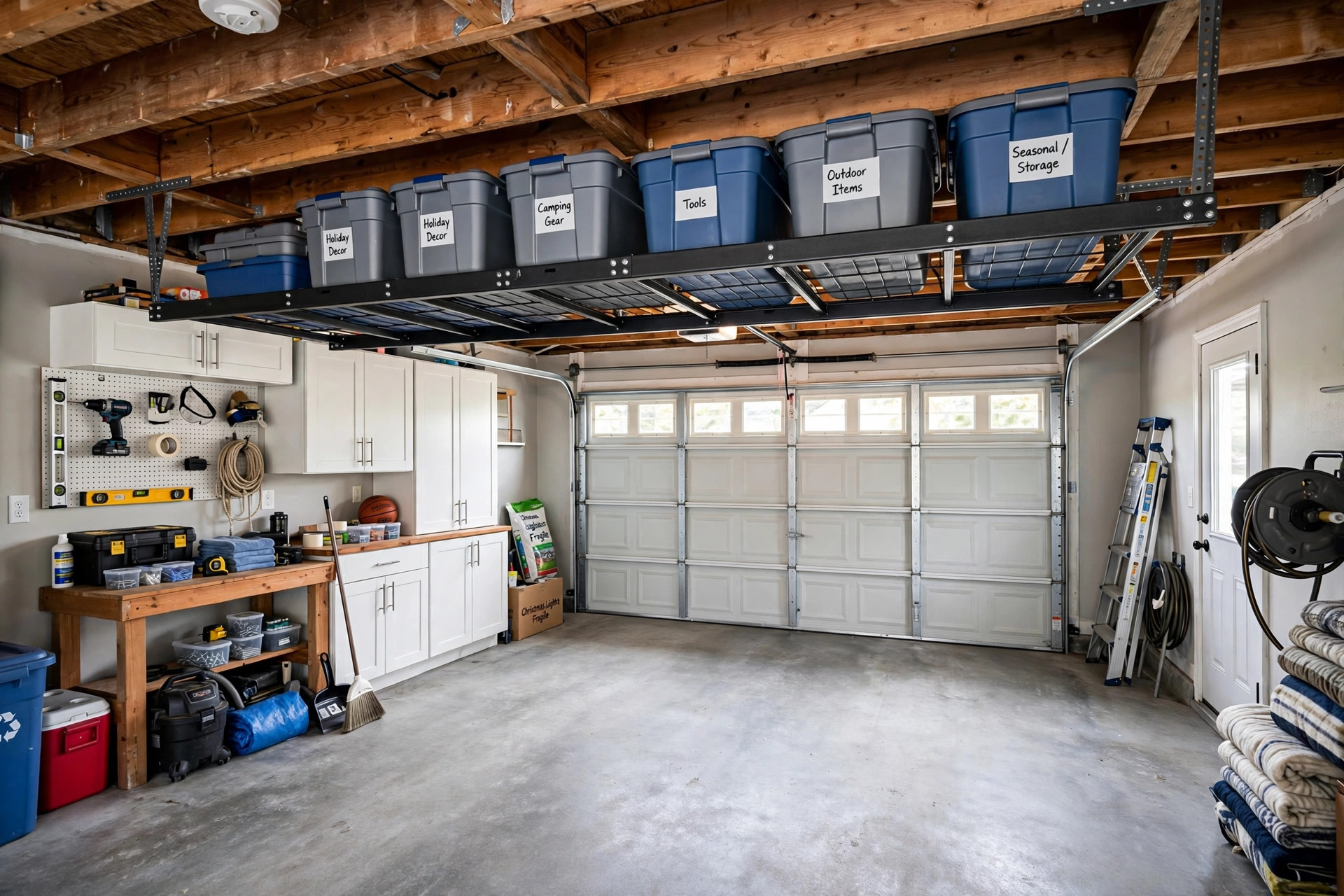

Why Overhead Garage Storage Matters
Most American garages have the same problem. The floor is full of boxes, tools, and sports gear, while the ceiling space above the cars sits empty. The best overhead garage storage systems for usa homes solve this problem by lifting storage off the floor and into the open air above the parked vehicles. A family that once tripped over camping gear in October can have a clear floor by November.
In the United States, the garage often serves as more than a place to park. It holds lawn tools, holiday decorations, bicycles, and paint cans. When these items crowd the floor, they create fire risks, trip hazards, and a home that looks untidy. Overhead storage moves bulky and seasonal items up high, where they stay dry and out of the way. Many homeowners report that the change feels like gaining a whole new room.
This guide covers the types of overhead systems, what to look for before you buy, realistic prices, and simple safety rules. It is written for the average homeowner who wants a clean garage without a large budget or special skills.
What to Look For Before You Buy: Best Overhead Garage Storage Systems for Usa Homes
Not every ceiling can carry weight. Before you shop for a system, take these steps.
First, measure your garage. Note the ceiling height and the space above your parked cars. Most overhead racks need at least 30 inches of clear drop room above a vehicle so doors and hoods open freely. A tall truck or a roof rack may need more room. Sketch the layout on paper so you buy a rack that fits.
Second, learn your ceiling type. Exposed wooden joists make the easiest mount points, because you can bolt directly into solid wood. Finished drywall ceilings hide the joists, so you must find them with a stud finder or measure from a known point. Concrete or metal ceilings need special anchors. If you are unsure, ask a local contractor for a quick look before you drill.
Third, check the weight rating. Every system lists a maximum load, often between 250 and 600 pounds per rack. Add up the weight of the bins and boxes you plan to store, then stay well under the limit. Seasonal boxes of clothes are light; boxes of old books or tools are heavy. A fair rule is to store light items up high and keep heavy items near the floor or on waterproof wall mounted storage shelves instead.
Fourth, think about the bins themselves. Standard plastic totes work best because they are light, stack well, and keep dust out. Measure your totes before you buy a rack so the grid openings match the box size. Buy sports equipment organizers sized for helmets and pads if sports gear is your main clutter.
Fifth, plan for access. Items you reach often, such as garden tools, should stay within easy reach. Holiday decorations and camping gear, which you need twice a year, are perfect for the high ceiling. You can find general storage advice for small homes at Apartment Therapy and step-by-step install guides at Family Handyman.
Types and Options
Fixed Ceiling-Mounted Racks
Fixed racks are the most common choice. They are steel grids that bolt directly to the ceiling joists and stay in place. Most measure 4 by 8 feet, which matches the size of a plywood sheet and covers a good area above one car bay. Prices run low, installation takes one afternoon with two people, and weight ratings are high.
The frame usually has a wire grid deck so you can see what is stored from below. Some racks include side hooks for bikes and ladders. Because they do not move, fixed racks suit items you need only a few times a year. Shoppers can compare fixed-rack brands and read test results at Consumer Reports.
Adjustable-Height Overhead Systems
Adjustable systems hang from the ceiling on long steel straps or cables. You can set the height anywhere from a few inches below the ceiling to several feet down. This helps when you want to lower the rack for easy loading, then raise it back up. Some models winch up and down with a crank, which makes them kind to bad backs.
These systems cost more than fixed racks but earn their price in comfort. Look for a model with a locking winch so the platform cannot slip. Reviewers at Bob Vila often test these units and note which winch designs hold up over time.
Ceiling Hoists and Pulley Systems
Hoists use pulleys and ropes to lift single large items, such as a kayak, canoe, or hard-shell roof box. You attach the item to straps, then pull a rope to raise it toward the ceiling and tie it off on a wall cleat. This is the cheapest overhead option, and it works well for one or two bulky items that will not fit in bins.
The limit is weight and balance. A kayak is light enough for one person; a heavy roof box may need two. Always tie off the rope and test the hold before you let go. The Home Depot carries many hoist kits with weight ratings clearly printed on the box.
Garage Loft Platforms
A garage loft is a larger platform that spans wall to wall, often built from lumber and plywood. It creates a true second level above the garage doors. Lofts hold the most weight of any option, sometimes over 1,000 pounds, because they spread the load across wall studs as well as ceiling joists.
Building a loft takes real carpentry skill and a weekend of work. You must follow local building codes and use proper bolts. The Container Store sells lighter modular decking kits for smaller lofts, while large home retailers sell the lumber for a full custom build.
Overhead Corner and Wall-Edge Racks
Some systems mount where the wall meets the ceiling. These corner racks use two surfaces for support, which makes them strong in a small footprint. They suit garages where the ceiling above the cars is blocked by a garage door track, a common layout in American tract homes built in the 1990s.
Corner racks are narrower than full racks, so they fit over a workbench or a heavy duty laundry room shelving area in a laundry-garage combo. Lowe’s stocks several corner models with clear install diagrams.
Cost and Price
Prices for overhead garage storage systems in the United States fall into clear bands. Small pulley hoists cost the least, usually $30 to $80 per unit. Fixed 4-by-8 steel racks run from $120 to $300, with better brands charging more for thicker steel and stronger bolts. Adjustable winch systems cost $250 to $600. A full custom garage loft built from lumber costs $400 to $1,500 in materials, plus labor if you hire help.
Most homeowners spend $200 to $400 to cover one full rack with bins and hardware. That is less than renting a small storage unit for a year. Watch for free shipping deals at large online sellers such as Wayfair and Walmart, which often cut the total price by a third.
Installation costs extra if you hire a handyman. A simple rack install takes one to two hours and may cost $100 to $250 in labor. Lofts take longer and cost more. Many buyers save this money by installing the rack themselves with a friend, a stud finder, and a socket wrench. Detailed project cost breakdowns appear regularly on The Spruce.
Care and Upkeep
Overhead storage needs little care, but a yearly check keeps it safe. Once a year, look at every bolt and lag screw. If any feel loose, tighten them. Look for rust on steel parts, especially in damp coastal or northern garages. A light coat of rust-proof spray paint stops small spots from spreading.
Check the bins too. Plastic totes crack in hot garages after many summers. Replace cracked boxes before they split and drop items on a car. Label every bin on two sides so you can read the label from the floor and from a ladder. Clear bins save you from opening every box to find one item.
Keep the rack level. If one side hangs lower than the other, redistribute the weight or re-torque the mounts. Dust the grid deck once a year so dust does not drift down onto cars. These small habits take an hour and add years to the system. For long-term garage care schedules, IKEA publishes simple home maintenance checklists that include garage tasks.
Safety Rules That Matter
Safety is the most important part of overhead storage. A falling box can break a windshield or hurt a person. Follow these rules without exception.
Never exceed the weight rating. The rating counts the rack, the bins, and the contents together. Stay at least 20 percent under the maximum to keep a safety margin. Never store liquid containers up high, such as paint cans or oil jugs, because a leak drips onto everything below.
Mount only into solid structure. Lag bolts must bite deep into joists or studs, never into drywall alone. If your garage has a garage door opener rail in the way, mount the rack clear of the rail and the door path. Check local building codes if you plan a heavy loft, because some towns require a permit for large platforms.
Use a stable ladder and keep three points of contact when you load or unload the rack. Lift with your legs, not your back, and pass heavy bins to a helper rather than carrying them down a ladder. Keep children and pets away while you load. These steps sound simple, but they prevent most garage injuries.
Frequently Asked Questions
Can I install overhead garage storage by myself?
Most fixed racks need two people for at least part of the job, because the steel frame is heavy and awkward to lift overhead. One person can handle a small hoist kit alone. If you are not comfortable working on a ladder, hire a handyman for one hour.
How much weight can overhead garage racks hold?
Common fixed racks hold 250 to 600 pounds each. Adjustable winch systems hold 200 to 400 pounds. Lofts hold the most, often over 1,000 pounds. Always read the rating on the box and stay at least 20 percent under it.
Will an overhead rack damage my garage ceiling?
A properly installed rack spreads the load across several joists and will not damage a sound ceiling. Problems come from poor installs: short screws, drywall-only anchors, or overloaded racks. Mount into solid wood or proper anchors and the ceiling will be fine.
What items should I never store overhead?
Never store paint cans, fuel, or chemicals overhead because leaks drip down. Keep heavy tools and car parts near the floor. Keep paper records and photos out of hot garages, because heat and humidity ruin them. Seasonal decorations, camping gear, and sports equipment are ideal overhead items.
Do overhead racks work with a garage door opener?
Yes, as long as you mount the rack clear of the door track and the opener rail. Leave at least a few inches of clearance around all moving parts. If your garage is small, a corner rack or a narrow rack over a side wall may fit better.
Are adjustable or fixed racks better?
Fixed racks cost less and hold more weight, so they suit most homeowners. Adjustable racks suit people with back trouble or tall items that change size through the year. If you plan to reach the rack often, the crank-down feature is worth the extra cost.
A Final Word
The best overhead garage storage systems for USA homes share three traits. They bolt into solid wood, they hold far more weight than you plan to store, and they match the size of your bins. Buy once with these traits in mind, install with care, and check the bolts once a year. Your garage floor will stay clear, your cars will park inside through winter, and your tools will last longer in a dry, tidy space.
References
Apartment Therapy. (n.d.). Home design ideas and inspiration. https://www.apartmenttherapy.com Bob Vila. (n.d.). Home improvement advice. https://www.bobvila.com Consumer Reports. (n.d.). Product reviews and ratings. https://www.consumerreports.org Family Handyman. (n.d.). DIY home repair and maintenance. https://www.familyhandyman.com IKEA. (n.d.). Home furnishings. https://www.ikea.com Lowe’s. (n.d.). Home improvement products. https://www.lowes.com The Container Store. (n.d.). Storage and organization products. https://www.containerstore.com The Home Depot. (n.d.). Home improvement products. https://www.homedepot.com The Spruce. (n.d.). Home and garden advice. https://www.thespruce.com Walmart. (n.d.). Everyday low prices. https://www.walmart.com Wayfair. (n.d.). Furniture and home goods. https://www.wayfair.com
Was this guide helpful?

About Lisa Anderson
The My Garden US editorial team writes practical, in-depth home and garden guides for American homeowners — tested advice, no fluff.
You May Also Like

Luxury Stackable Shoe Storage Boxes for Sale: A Buyer’s Guide
March 5, 2026 0 views
The Best Entryway Coat Racks for Southern States: A Plain Buyer’s Guide
February 12, 2026 0 views
Top Rated Craft Room Storage Cabinets: A Buying Guide
May 29, 2026 0 views