A good heavy duty laundry room shelving buying guide starts with a simple fact. Laundry rooms hold more weight than most people expect. A full jug of detergent weighs over ten pounds. A basket of damp towels can weigh twenty. Stack a few of those on weak shelves and the shelves bow, sag, or fall. This guide shows how to pick shelves that hold strong for years.
The laundry room is a work room. It gets warm and damp. Bottles leak. Dryers vibrate. Heavy duty shelving is built for this job. It uses thicker steel, solid wood, or coated wire that resists rust. When you buy the right kind, you store more and never worry about a crash of falling bottles.
Why Heavy Duty Shelves Matter in the Laundry Room
Laundry rooms gather weight in small spaces. One shelf might hold three gallon jugs of detergent, a bottle of bleach, a box of baking soda, and a stack of folded linens. That is forty to sixty pounds on a single shelf. Light shelves are rated for far less. They sag in the middle. The brackets pull out of the wall. Then everything lands on the floor.
Safety is the first reason to buy heavy duty shelving. A shelf that fails can spill bleach and other chemicals. That is a danger for children and pets. Strong shelves with honest load ratings remove that risk. They hold the load they promise.
The second reason is order. A small room with strong shelves fits more. You can go up the wall instead of crowding the floor. The room stays neat, and chores go faster.
The third reason is the life of the shelf itself. Heat and damp air from the washer and dryer wear down thin materials. Chipboard swells. Thin metal rusts. Heavy duty shelves use powder-coated steel, coated wire, or sealed solid wood. They last many years in these tough conditions.
What to Look for When You Choose: Heavy Duty Laundry Room Shelving Buying Guide
Load Rating per Shelf
The load rating is the most important number on the box. It tells you how many pounds one shelf can hold. For laundry rooms, look for at least 50 pounds per shelf. For shelves that will hold full detergent jugs or stacks of linens, aim for 75 to 100 pounds per shelf. Check the fine print. Some brands list the rating for the whole unit, not for each shelf. Divide by the number of shelves to get the real number.
Remember that the rating assumes the weight is spread evenly. A single very heavy item in the middle of a shelf stresses it more than the same weight spread across the shelf.
Material
Heavy duty laundry shelves come in four main materials. Each has strengths.
Powder-coated steel holds the most weight and resists rust well. The coating seals the metal against damp air. This is the best pick for most laundry rooms.
Coated wire shelves let air flow through. That is a real help in a damp room. Wet items dry faster. The wire shelves often come in upright storage racks that need no wall mounting. Make sure the coating is thick and free of nicks. Bare spots invite rust.
Solid wood shelves look warm and hold good weight when they are thick enough. One inch thick hardwood works well. Wood must be sealed with paint or polyurethane on all sides, or damp air will warp it. Avoid plain chipboard and MDF in laundry rooms. They soak up moisture and swell.
Plastic resin shelves do not rust and are easy to wipe clean. They are fine for medium loads of forty to sixty pounds. They cost less. They do not suit very heavy loads because plastic bends over time.
Bracket and Mounting Style
How a shelf attaches to the wall matters as much as the shelf itself. Heavy duty shelves use thick steel brackets screwed into wall studs. A stud finder helps you locate the solid wood behind the drywall. Screws that grip only drywall will pull out under real loads. For tile or concrete walls, use the right masonry anchors.
Freestanding units need no wall mounting at all. They stand on the floor like a bookcase. They suit renters who cannot drill into walls. Check that the unit has adjustable feet so it stands level on uneven floors. Many freestanding racks let you change the shelf height, which is handy for tall detergent bottles.
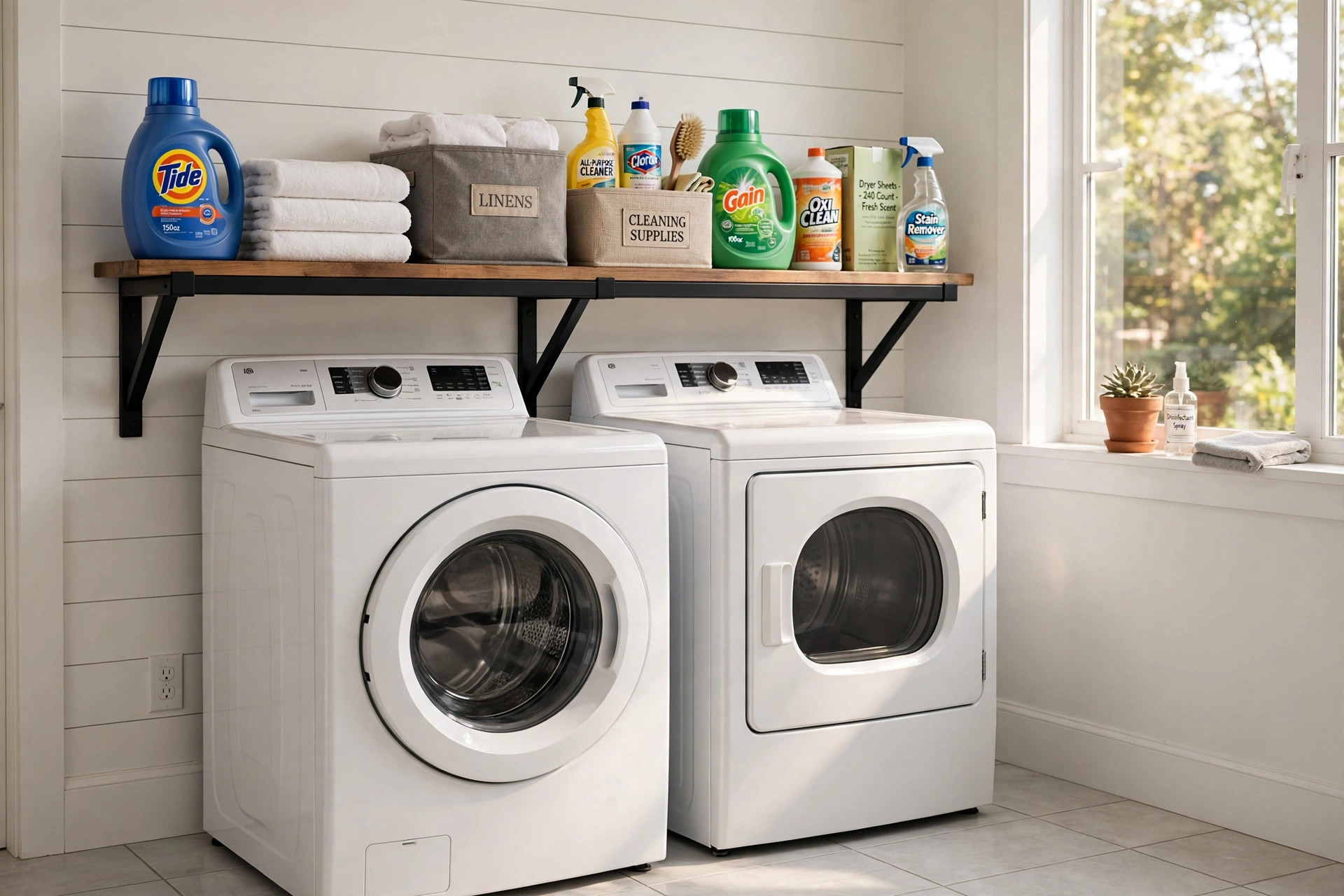
Over-the-washer shelving uses the space above the machines. These units often stand on legs between or beside the machines. They turn dead space into storage. Measure the gap above your washer and dryer before you buy. Leave room for the lids to open.
Depth and Height
Standard shelf depth for laundry rooms runs twelve to eighteen inches. Twelve inches fits bottles and folded towels. Eighteen inches holds storage bins and baskets.
Measure the wall before you shop. Note the height of the washer and dryer, the door swing, and any pipes or vents. Sketch a simple plan on paper. Leave at least a foot of space above the tallest bottle you will store.
Ventilation
Laundry rooms run warm and wet. Shelves that let air move through keep things fresher. Wire shelves are the top pick for airflow. If you choose solid wood or steel, leave gaps between items and do not pack shelves edge to edge. Good air flow slows mildew on stored linens.
Types of Heavy Duty Laundry Room Shelving
Wall-Mounted Shelves
Wall-mounted shelves free up the floor completely. You hang brackets on the wall and rest thick shelves on them. This type suits small laundry rooms where every inch of floor counts. It also works well over folding tables. The work is in the mounting. Find studs, use long screws, and check with a level. When mounted right, each shelf can hold seventy-five pounds or more.
Some wall systems use tracks. You mount vertical tracks on the wall, then clip brackets into them at any height. Track systems cost more, but they let you move shelves up and down as your needs change.
Freestanding Storage Racks
Freestanding racks come as tall metal or wood units with four to six shelves. You build them with simple tools and stand them against the wall. They need no drilling. That makes them the best choice for renters. They also move easily when you rearrange the room.
Look for racks with shelves that adjust in small steps. Wire racks with clip-on shelves adjust easily. Heavy freestanding racks can hold one hundred pounds or more per shelf. Anchor tall racks to the wall with the straps that come in the box.
Over-the-Washer Shelves
These units are made to fit above side-by-side washers and dryers. Some hang on the wall. Others stand on the floor with tall legs that reach over the machines. They use the wide empty space above the machines, which is often wasted.
Measure with care. The space between the top of the machines and the bottom shelf must clear open lids and any tall caps. Also check the depth. Shelves deeper than the machines stick out into the room and block light.
Wire Shelving Kits
Wire shelving kits are sold as full systems in a box. They include upright posts, wire shelves, and clips. You can build a single tall unit or split it into two shorter units. The parts are light. The coating stands up to damp air. Wire shelves let you see everything from the front and sides, so nothing hides at the back.
The look is plain and work-like. You can soften the look with fabric bins on the shelves. The bins hide clutter and keep small items from slipping through the wires.
Cost and Price
Heavy duty laundry shelves span a wide price range. A single twelve-foot-long wall shelf with two heavy brackets costs about twenty to forty dollars. A pair of thick wood shelves with track brackets runs fifty to one hundred dollars.
Freestanding wire rack units with five shelves cost sixty to one hundred fifty dollars, based on size and load rating. Solid steel freestanding units run one hundred to two hundred fifty dollars. Over-the-washer shelf units cost forty to one hundred twenty dollars.
Installation adds cost if you hire help. A handyman charges fifty to one hundred dollars to mount a set of wall shelves. Most people can build a freestanding unit in under an hour with the directions in the box.
Price tells you something about quality, but not everything. Check the load rating and the material first. A cheap shelf with an honest seventy-five-pound rating beats a costly shelf with no rating at all.
Care and Upkeep
Heavy duty shelves need little care, but a small routine keeps them strong for years.
Wipe shelves with a damp cloth every few months. Detergent spills turn sticky and attract dust. Bleach spills harm coatings and finishes, so rinse them off fast with clean water.
Once a year, check the mounting. Pull gently on each shelf to feel for looseness. Tighten screws that have worked loose. Look at brackets for bent metal or cracked paint. Check wire coatings for chips that show bare metal. Touch up chips with rust-proof paint so rust cannot start.
Do not exceed the load rating. If a shelf starts to sag, move some weight to a lower shelf. Lower shelves carry weight better because the unit is more stable.
Keep air moving in the room. Run the exhaust fan during and after laundry loads. Dry air protects the shelves and the things stored on them.
Safety
Safety comes first with any heavy storage. These rules keep your laundry room safe.
Mount shelves into studs, never into bare drywall alone. Drywall holds little weight. A shelf full of detergent bottles can pull weak anchors straight out of the wall. Use a stud finder. Mark the studs with a pencil before you drill.
Anchor tall freestanding racks to the wall. The box should include straps or brackets for this. A loaded rack is top-heavy. A child who pulls on a shelf or climbs the rack can bring the whole unit down. Anchoring takes ten minutes and stops this danger.
Store chemicals high and locked away if children live in the home. Better yet, put bleach, drain cleaner, and other strong chemicals in a locked cabinet instead of on open shelves. Keep them in their marked bottles. Never pour chemicals into food containers.
Keep the floor clear in front of the shelves. Do not pile baskets on the floor where you must step. A clear floor means no trips and falls.
Watch the total load on old walls. Plaster walls and very old drywall hold less than new walls. If the wall crumbles around the screws, stop and get help from a contractor. A weak wall needs repair before it can hold heavy shelves.
Frequently Asked Questions
How much weight should each laundry room shelf hold?
Aim for at least fifty pounds per shelf. Sixty to one hundred pounds is better if you store full detergent jugs and stacks of wet linens. Always check whether the rating is per shelf or for the whole unit. Spread heavy items across the shelf and place the heaviest ones near the brackets.
Can I mount heavy duty shelves on drywall?
Only mount into the wood studs behind the drywall. Screws in drywall alone cannot hold laundry room loads. If no stud sits where you want the shelf, use heavy-duty toggle bolts rated for the load.
Are wire shelves or wood shelves better for laundry rooms?
Both work well. Wire shelves win on airflow and rust resistance when the coating is thick. Wood shelves win on looks and on holding items that might slip through wire gaps. For a damp laundry room, coated wire or sealed hardwood both do the job. Avoid plain chipboard in this room.
How do I stop my laundry shelves from rusting?
Choose powder-coated steel or thick-coated wire. Wipe up spills fast. Rinse bleach spills with clean water right away. Run the room fan to keep the air dry. Touch up any chips in the coating with rust-proof paint. Once a year, inspect every shelf for bare metal spots.
What is the best depth for laundry room shelves?
Twelve to fourteen inches suits most laundry rooms. That depth holds bottles, folded towels, and small bins. Sixteen to eighteen inches works if you use deep storage bins. Deeper shelves waste space and hide items at the back. Measure your wall and your machines before you buy.
Should I put shelves above the washer and dryer?
Yes, that space is often wasted. Over-the-washer shelves keep detergent and supplies within easy reach. Leave enough room for lids to open and for tall bottles.
Final Word
The right heavy duty shelving turns a cramped laundry room into a calm work space. Pick shelves with honest load ratings, materials that stand up to damp air, and mounting that grips the wall for real. Measure first. Buy for the loads you truly carry. Keep the shelves clean and dry, and they will serve you for many years.
For the rest of the home, matching storage ideas help too. Wicker storage baskets soften hard shelves and hide small items. Stackable bathroom organizers use the same sturdy-shelf logic in wet rooms. And wall mounted storage shelves free floor space anywhere they go.
Retailers like IKEA and The Container Store show many laundry storage ideas. Home centers such as Home Depot, Lowe’s, and Wayfair list load ratings and reviews. How-to sites like The Spruce, Apartment Therapy, and Family Handyman explain mounting and care. Consumer Reports, Bob Vila, and This Old House cover rack strength and wall anchors.
References
Apartment Therapy. (n.d.). Home design ideas and inspiration. https://www.apartmenttherapy.com Bob Vila. (n.d.). Home improvement advice. https://www.bobvila.com Consumer Reports. (n.d.). Product reviews and ratings. https://www.consumerreports.org Family Handyman. (n.d.). DIY home repair and maintenance. https://www.familyhandyman.com IKEA. (n.d.). Home furnishings. https://www.ikea.com Lowe’s. (n.d.). Home improvement products. https://www.lowes.com The Container Store. (n.d.). Storage and organization products. https://www.containerstore.com The Home Depot. (n.d.). Home improvement products. https://www.homedepot.com The Spruce. (n.d.). Home and garden advice. https://www.thespruce.com This Old House. (n.d.). Home renovation guidance. https://www.thisoldhouse.com Wayfair. (n.d.). Furniture and home goods. https://www.wayfair.com
Was this guide helpful?

About James Carter
The My Garden US editorial team writes practical, in-depth home and garden guides for American homeowners — tested advice, no fluff.