
Introduction
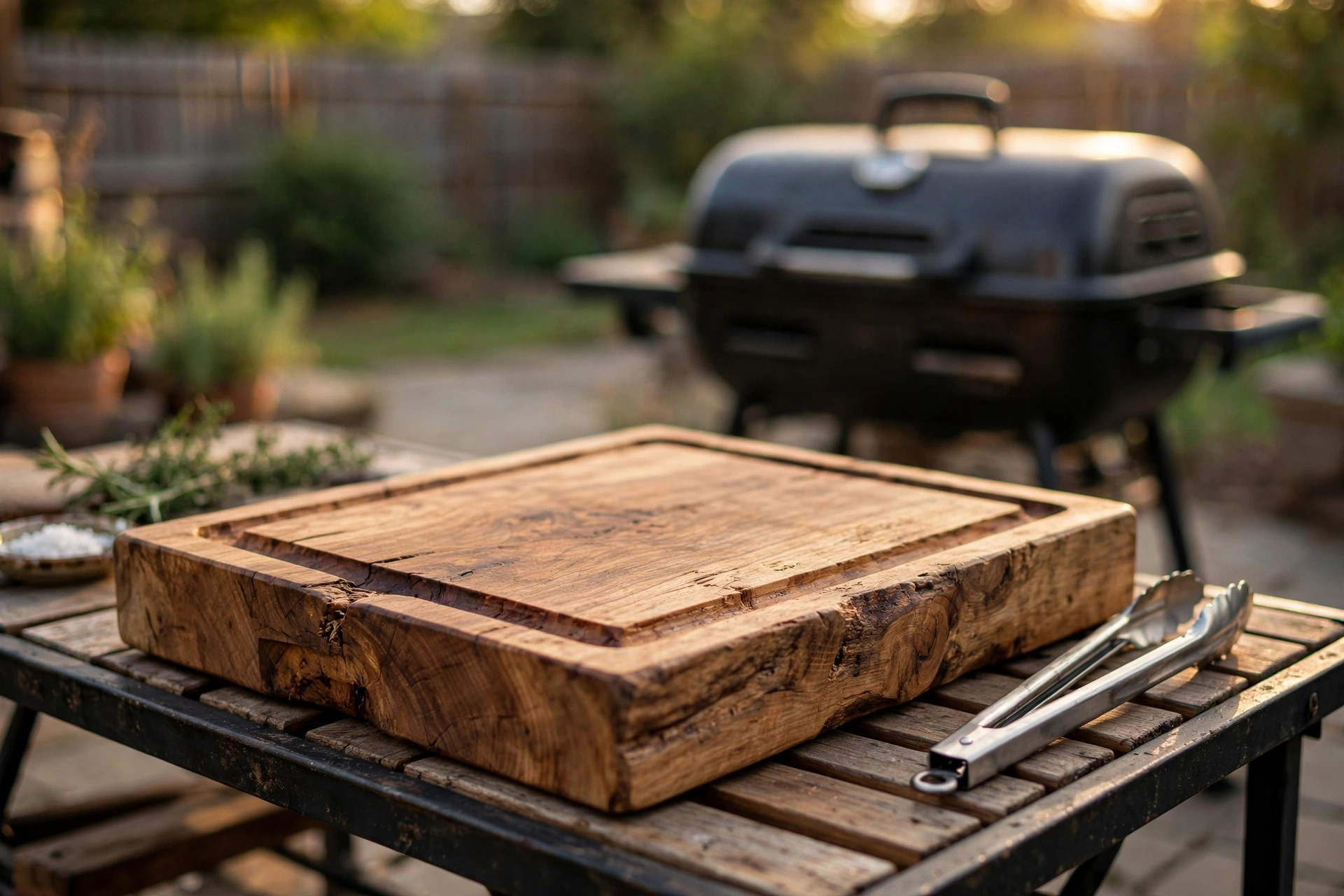
Every grill owner knows the moment. The meat comes off the fire, hot and sizzling, and there is nowhere good to put it. The plate is too small. The counter is too far. The juice runs off and makes a mess. The best outdoor cutting board for grilling solves all of this in one simple step. It gives you a safe, sturdy place to rest meat, slice it, and serve it right beside the grill.
A good grilling board is not the same as a kitchen cutting board. It is bigger. It is thicker. It has a deep groove to catch juice. It can take heat. It stands up to wind, sun, and rough use on the patio. This guide will help you pick the right one for your backyard.
Why a Good Grilling Board Matters: Best Outdoor Cutting Board for Grilling
Resting Meat Makes It Juicy
When meat comes off the grill, the juice inside is hot and moving. If you cut too soon, the juice runs out onto the plate. The meat turns dry. Resting lets the juice settle back into the meat. A thick wooden board is the best place to rest meat. It holds heat well. It keeps the meat warm while it rests. Many cooks rest a thick steak for five to ten minutes before slicing. A brisket may rest for an hour or more. A board with a deep juice groove catches every drop during that rest. The Spruce Eats offers good guidance on resting times for grilled meat.
Food Safety at the Grill
Raw meat and cooked meat must never touch the same surface. This rule is simple and it saves lives. One board should serve raw meat only. Another board should serve cooked meat only. Many grill owners use color coding to keep this straight. A red board marks raw meat. A wood board marks cooked meat. Plastic boards are cheap enough to own two or three. Keep them separate and wash them well. AmazingRibs has clear articles on safe meat handling at the grill.
A Board Does Double Duty
The best outdoor cutting board for grilling works as a serving tray too. Carry it from the grill to the table. Slice the meat right on it. Guests can take what they want. A board with handles makes this easy. A large board looks good on the table. It turns a simple cookout into a small event.
What to Look For
Size and Weight
Size matters at the grill. A small board cannot hold a whole brisket or a rack of ribs. For most home cooks, a board that is at least 18 inches by 12 inches works well. That size holds two racks of ribs or a full pork shoulder. Bigger cooks may want 24 inches by 18 inches.
Weight matters too. Thick wood boards are heavy. A maple board two inches thick can weigh eight pounds or more. That weight is good on the grill cart because the board does not slide. It is bad when you carry hot food to the table. Look for a board with cut handles if you plan to carry it far.
The Juice Groove
A juice groove is a channel cut around the edge of the board. It catches juice before it runs off. For grilling boards, the groove should be deep. A shallow groove fills up fast with a juicy brisket. A deep groove, half an inch or more, holds plenty. Some boards have a groove on one side and a flat side on the other. Use the grooved side for meat. Use the flat side for vegetables or bread.
Heat Tolerance
Hot meat comes off the grill at 200 degrees or more. Some plastic boards warp at high heat. They can also pick up odd smells from hot meat. Wood boards handle heat far better. Hard maple, walnut, and teak all take heat well. Teak is a strong choice for outdoor use because it resists water and sun. Napoleon sells grill accessories built for outdoor heat, and their care tips apply to boards as well.
Feet and Grip
A board that slides is a hazard. Some boards have small rubber feet. The feet raise the board and keep it in place. Other boards have a rough back side for grip. Either style works. On a grill cart or a stone patio, grip matters. A sliding board and a sharp knife are a bad pair.
Types of Boards for Outdoor Grilling
Hardwood Boards
Hardwood boards are the classic choice. Maple is the most common wood. It is hard, dense, and safe for food. It does not dull knives fast. Walnut is darker and looks rich on the table. Cherry sits between the two in tone and price. Teak is the king of outdoor boards. It has natural oils that fight water and rot. It can live outside in all weather. It costs more, but it lasts for years.
Wood boards need oil now and then. Food grade mineral oil keeps the wood from drying out. A dry board can crack. A cracked board can hold germs. Oil the board once a month during grilling season. Weber offers care guides for wooden grill tools that also fit boards.
Plastic and Composite Boards
Plastic boards are light and cheap. They wash fast and go in the dishwasher. For raw meat prep, a plastic board is a smart pick. It costs little, so you can own several and swap them out. The downside is heat. Thin plastic warps under hot meat. It can also stain from smoke and rub. Thick commercial grade plastic holds up better. Look for boards marked for high heat use.
Composite boards mix wood fiber with resin. They feel like wood but wash like plastic. They are hard on knives, so they are best for serving and resting rather than slicing.
Bamboo Boards
Bamboo is hard and light. It costs less than hardwood. It looks clean and modern. The downside is that bamboo is very hard. It dulls knives faster than maple. It can also split along the grain if it dries out. For a budget board that sees light use, bamboo is fine. For heavy grilling, hardwood wins.
Boards With Built-In Features
Some boards come with extras. Handles make carrying easy. Some boards have a spike or claw to hold a roast still while you slice. Others have a drip tray under the groove. A few boards fit over the side shelf of a grill. These extras add cost. They also add use. If you grill every week, a board with handles and a deep groove is worth the price.
Cost and Price
Outdoor grilling boards span a wide price range. A simple bamboo board may cost 20 dollars. A mid range maple board with a deep juice groove often costs 40 to 70 dollars. A large teak board can cost 100 to 200 dollars or more. Size drives price. Wood type drives price. Thickness drives price.
You do not need the most costly board. A mid range maple board does the job for most cooks. Spend more if you grill often or cook large cuts. A good board lasts for years with care. Think of it as a tool, not a throwaway. Consumer Reports tests kitchen tools for value, and their buying advice applies to boards too.
Watch out for very cheap boards with thin grooves. The groove is too shallow to catch juice, and the board warps after a few uses.
Care and Upkeep
Cleaning
Wash the board soon after use. Hot water and dish soap do the job. Scrub with a stiff brush to clean the groove. For wood boards, never soak the board in water. Soaking makes the wood swell and crack. Never put a wood board in the dishwasher. The heat and water will ruin it. Plastic boards can go in the dishwasher.
For stains and smells, rub the board with coarse salt and half a lemon. The salt scours. The lemon freshens. Rinse well after. For wood boards, dry them standing on edge so air reaches both sides.
Oiling Wood Boards
Food grade mineral oil is the standard. Rub a thin coat over the whole board. Let it sit for a few hours or overnight. Wipe off the extra. Do this once a month during grilling season. Do it more often if the board looks dry or light in color. Never use cooking oils like olive oil. They turn rancid and leave bad smells. Char-Broil care guides remind cooks to keep wooden tools oiled, and the same rule fits boards.
Storage
Store boards in a dry place. A covered grill cabinet works. A garage shelf works. Teak can stay outside, but it will turn gray in the sun. Oil keeps the color rich. Stand wood boards on edge. Stacking flat boards traps dampness. Dampness breeds mold.
Safety at the Grill Station
A sharp knife and a hot grill demand respect. Keep these rules in mind.
First, never place a board on a hot grill grate. The board is for the side table or the cart, not the fire. Second, keep raw and cooked meat on separate boards or separate sides of a large board. Mark your boards so you never mix them up. Third, wash your hands after touching raw meat. Wash the knife too.
Fourth, think about kids and pets. A grill station is a busy place. Keep the board away from the edge where it can be knocked off. Hot meat on the ground is a loss and a burn risk. Fifth, let the knife do the work. A dull knife slips more than a sharp one. Keep knives sharp and store them safe.
Big Green Egg cooking advice stresses calm, steady habits at the grill. That calm starts with a safe station and a steady board.
How the Board Fits Your Grill Setup
The board is one part of a full grill station. Think about how it fits with the rest of your gear. If you run a gas grill for beginners on a small patio, a mid size board is enough. It rests on the side shelf. If you cook on a flat top grill for an outdoor kitchen, you may prep big batches. A large board with a deep groove pays off there. If you smoke brisket on a pellet grill, you rest meat for a long time. A thick wood board holds heat during that long rest.
Pair the board with good tongs, a sharp carving knife, and a meat thermometer. The board holds the meat. The knife cuts it. The thermometer tells you when it is done. Together they make grilling smooth and safe.
FAQ
What is the best wood for an outdoor grilling board?
Hard maple is the best all round wood. It is hard, dense, and safe for food. It holds up to knives and heat. Teak is the best wood for boards that live outside. Its natural oils fight water and rot. Walnut and cherry are fine too, and they look great on the table. Avoid soft woods like pine. They dent, stain, and hold germs.
Should I use wood or plastic for raw meat?
Plastic is the safer pick for raw meat. It costs little, so you can keep one board for raw meat only. It goes in the dishwasher for a deep clean. Wood is fine for raw meat too if you wash it well, but many cooks prefer to save their good wood board for cooked meat and serving. Either way, never mix raw and cooked on the same surface.
How big should a grilling cutting board be?
For most home cooks, 18 by 12 inches is the sweet spot. It holds a full rack of ribs or a pork shoulder with room to spare. If you cook briskets or whole turkeys, step up to 24 by 18 inches. A board that is too small is worse than no board. Juice runs off the edge and makes a mess.
Do I need a juice groove?
Yes, if you cook juicy meat. A deep groove catches the juice that runs out during resting and slicing. Without a groove, juice pools on the board and runs off the edge. Look for a groove at least three eighths of an inch deep. For brisket and prime rib, half an inch or more is better. Traeger smoking tips note that long rested cuts release a lot of juice, and a deep groove keeps it all on the board.
Can I put a hot pan on a wood cutting board?
A hot pan from the grill can scorch a wood board. Brief contact with hot meat is fine. A cast iron skillet at 400 degrees is not. Use a trivet under hot pans. If you do scorch the board, sand the spot lightly and oil it again.
How long does a good board last?
A good hardwood board can last ten years or more with care. Oil it each month during grilling season. Wash it by hand. Store it dry. A cheap thin board may warp in one season. Spend a little more up front and care for it well, and the board will serve you for years.
Final Word
The best outdoor cutting board for grilling is the one that fits your cooking. A mid size maple board with a deep juice groove serves most cooks well. It rests meat, catches juice, and carries food to the table. It costs less than a tank of propane and lasts for years.
Pick your board with care. Keep raw and cooked meat apart. Oil the wood. Wash it well. A good board makes every cookout smoother and safer. The Home Depot grill aisle carries boards in every size and wood, so you can feel the weight and the groove before you buy. Your grill deserves a board that can keep up.
References
AmazingRibs.com. (n.d.). Barbecue and grilling science. https://www.amazingribs.com Big Green Egg. (n.d.). Kamado grills and outdoor cooking. https://www.biggreenegg.com Char-Broil. (n.d.). Gas and charcoal grills. https://www.charbroil.com Consumer Reports. (n.d.). Product reviews and ratings. https://www.consumerreports.org Napoleon. (n.d.). Fireplaces, grills, and heating products. https://www.napoleon.com The Home Depot. (n.d.). Home improvement products. https://www.homedepot.com The Spruce Eats. (n.d.). Recipes and cooking guides. https://www.thespruceeats.com Traeger. (n.d.). Wood pellet grills. https://www.traeger.com Weber. (n.d.). Grills and outdoor cooking. https://www.weber.com
Was this guide helpful?

About Jennifer Lee
The My Garden US editorial team writes practical, in-depth home and garden guides for American homeowners — tested advice, no fluff.
You May Also Like
Best BBQ Seasoning for Chicken Wings: A Plain Guide to Great Flavor
March 16, 2026 0 views
The Best BBQ for Super Bowl Party: A Complete Guide
April 17, 2026 0 views
Best Outdoor Grill for Townhouse Patio: A Complete Buyer’s Guide
April 7, 2026 0 views