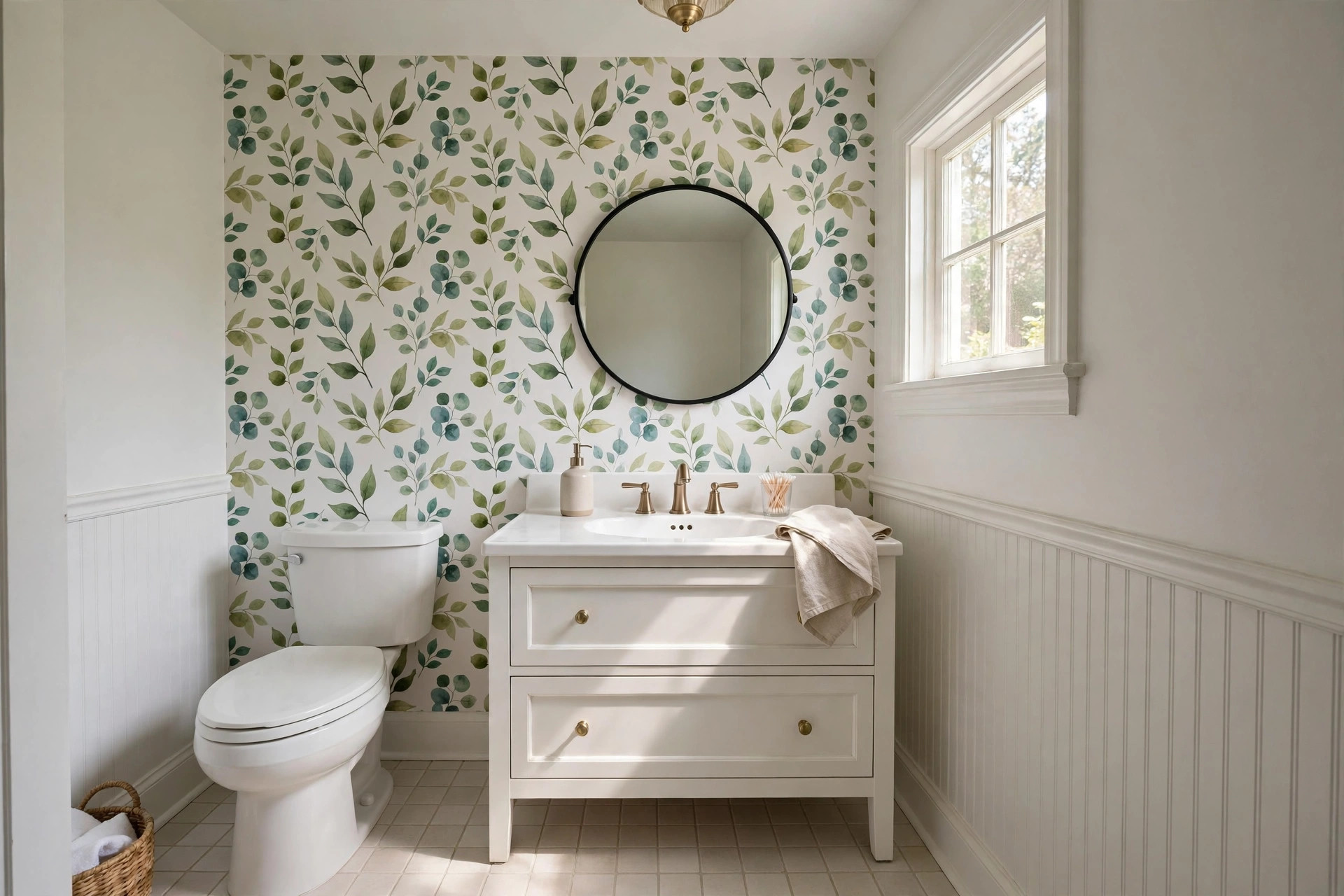

Small bathrooms are hard to decorate. There is little wall space. Paint can chip in the steam. Tile costs a good deal of money. Yet one simple product can change the whole look of the room in a single afternoon. That product is peel and stick wallpaper for small bathrooms. It is a self-adhesive paper. You peel off the backing. You press the paper onto the wall. There is no paste to mix. There is no brush to clean. When you wish to change it, you pull it back off the wall. Renters like it because it does not harm the wall. Owners like it because it is cheap and quick. This guide explains what it is, how to pick a good roll, how to hang it, and how to keep it looking new.
Why It Matters
A small bathroom is often the most dated room in a house. The walls may be plain white or a faded color. A full tile job can cost thousands of dollars. A paint job is cheaper, but paint takes days to dry and smells strong in a small space. Peel and stick wallpaper for small bathrooms sits between the two. It gives the look of tile, stone, or painted panel without the high cost.
Many owners want a fresh look before they sell a house. A neat bathroom can lift the value of a home. A quick wall update is one of the cheapest ways to do it. That is one reason this paper has grown so popular in recent years.
Renters gain the most. Most leases do not allow paint. A tenant who paints must paint the room back before moving out. Stick-on paper removes clean. It leaves the wall as it was. It is a true renter-friendly bathroom update. If you liked this idea for other rooms, you may enjoy our notes on peel and stick wallpaper for bedrooms too.
Moisture is the main worry in any bathroom. Steam from a hot shower rises and coats the walls. Paper that is not made for damp rooms can bubble or peel. That is why you must buy a roll that is made for bathrooms or kitchens. Vinyl-backed peel and stick paper stands up to steam far better than plain paper. Sellers often mark these rolls as splash-proof or moisture-resistant. Reading paint and wall guides from Sherwin-Williams and This Old House can help you judge which wall finishes hold up best in damp rooms before you buy.
What to Look For When You Buy: Peel and Stick Wallpaper for Small Bathrooms
Moisture resistance
Check the label for words like vinyl, washable, or splash-resistant. These rolls have a plastic face that keeps steam out. Avoid thin paper rolls with no coating. They will curl at the edges after a few hot showers. A bathroom without a fan needs the toughest roll you can find.
Adhesive type
Most rolls use a low-tack glue. This lets you lift and shift the paper as you hang it. Some cheap rolls use a stronger glue that tears paint on removal. Look for the words “repositionable” and “removable.” These two words mean the paper can come off clean. The Spruce and HGTV often publish buyer notes on removable wall products that are worth a read before you shop.
Thickness and feel
Thicker paper hides small flaws in the wall. Thin paper shows every bump. Run your thumb across the roll in the store if you can. A heavier roll costs a bit more but is far easier to hang without wrinkles. Thick rolls also hide small patches where old paint is rough.
Pattern repeat
The repeat is the size of the pattern before it starts again. A large repeat looks fine on a big wall but may be lost in a small bath. A small repeat suits small walls. Measure your wall and think about where the pattern will fall. Some buyers order one extra roll so they can match patterns at the seams.
Roll width and coverage
Rolls are often 20 inches wide and 16 feet long. A small bathroom has far less wall than a bedroom. Measure the height and width of each wall. Subtract the area of doors and windows. Then buy one roll more than the math says. You will need extra for trimming at the top and bottom.
Types and Patterns That Suit Small Baths
Light and airy prints
Small rooms need light colors. White, pale blue, and soft green make a tight bath feel larger. Small floral prints and fine dots add charm without crowding the room. A light print on the wall behind the toilet can turn a blank space into a focal point.
Vertical stripes
Stripes that run up and down make low ceilings seem taller. This is an old decorator trick and it still works. Thin pinstripes in two soft tones are safe. Wide bold stripes can feel too strong in a room this small. Use them on one wall only.
Faux tile and stone looks
Many rolls copy the look of subway tile, marble, or brick. These give a rich look for a small price. A faux subway tile paper behind a vanity looks like a real backsplash. Homeowners who like bold walls may also want to read our accent wall painting ideas for living rooms for ways to pair painted and papered walls.
Botanical and leaf prints
Leaves, ferns, and vines are very popular now. They bring a garden feel into a room with no plants. In a small bath they work best in a muted color. Dark green on white is classic. Bright tropical prints can feel loud in a room under fifty square feet.
Geometric designs
Small geometric shapes, such as hexagons or diamonds, add a modern feel. They also hide wall flaws well. Pick a design with thin lines and plenty of white space. Heavy dark geometrics can close a small room in and make it feel tight.
Cost and Price
Peel and stick wallpaper for small bathrooms is one of the cheapest wall updates you can buy. A single roll usually costs between fifteen and forty dollars. Most small bathrooms need two to three rolls. That puts the full cost of paper between thirty and one hundred and twenty dollars.
Tools add little. You will want a smoothing tool, a sharp craft knife, and a tape measure. Many sellers ship a small kit with the roll. If you buy the tools alone, they cost under twenty dollars in total. Big-box stores such as Lowe’s and Home Depot stock both the paper and the tools in one aisle.
Paint costs about the same in material, but paint takes more time. Tile costs far more. A tiled bathroom wall can cost five hundred dollars or more in tile alone, plus labor. Stick-on paper is a clear winner for a tight budget. Paint brands like Behr and Benjamin Moore are worth checking when you compare the cost of a paint job to the cost of paper.
Labor is free if you do it yourself. Most owners hang their first roll in under two hours. Hiring a handyman adds cost but is rarely needed. The job is simple enough for a first-time do-it-yourselfer.
Care and Upkeep
Care for the paper is simple. Wipe it with a damp cloth and mild soap. Do not scrub hard. Do not use bleach or strong cleaners. They can dull the print and weaken the glue. Wipe up splashes near the sink as they happen.
Ventilation is the key to long life. Run the bath fan during every shower and for twenty minutes after. An open window works too. Moving air pulls steam off the walls before it can sink into the paper. Advice on keeping small rooms dry appears often on Bob Vila, and it applies here as much as anywhere else in the house.
Check the edges once a month. Steam can lift a corner over time. If an edge curls, press it back down with a dry cloth. A hair dryer on low heat softens the glue and helps it re-stick. If a panel fails badly, you can peel off that one panel and hang a fresh one. You do not need to redo the whole wall.
Keep the paper clear of direct water. Do not hang it inside the shower or behind a tub faucet. Even splash-proof rolls are not made to sit under running water. Use it on dry walls only: above the wainscot line, behind the toilet, or on the wall opposite the shower.
Safety
Safety matters in any bathroom project. First, look at the fire rating on the roll. Wall coverings sold in the United States often carry a Class A or Class C fire rating. A Class A rating means the material resists flame spread. Pick Class A when you can, since bathrooms hold dry towels and paper goods.
Second, watch for mold. Paper can trap damp air against the wall if the room has no fan. Mold can grow behind the paper where you cannot see it. Fix leaks before you hang anything. Make sure the wall is fully dry. If the room already has mold spots, clean them and solve the moisture problem first.
Third, mind electrical outlets and light switches. Turn off the power at the breaker before you trim paper around them. Use a sharp knife and cut with care. Do not push a wet tool into an outlet box.
Fourth, keep a clear path in the room while you work. A small bath is cramped. Move out bath mats and trash cans. Step stools can tip on wet floors, so dry the floor first. If you ever want a bigger paper statement, our notes on mural wallpaper for living room show how large-scale prints change a room.
Frequently Asked Questions
Does peel and stick wallpaper work in a bathroom?
Yes, it works well if you buy the right kind. Choose a vinyl-coated or splash-resistant roll made for damp rooms. Hang it on dry walls, away from direct shower spray. Run the bath fan during and after showers. Under those terms, the paper can look good for years.
How long does it last in a humid bathroom?
Most rolls last two to five years in a well-vented bathroom. In a bath with no fan and long steamy showers, the life may be shorter. Edges may curl first. The good news is that a single panel is easy to replace without redoing the whole wall.
Will it damage the paint when I remove it?
On sound, clean paint it usually removes clean. Warm the paper with a hair dryer and peel it back slowly at a low angle. If the paint underneath was loose or the wall was dirty, some paint may lift. Test a small corner behind the door first to see how your wall behaves.
Can I put it behind the toilet or above the sink?
Yes. These are the best spots in a small bath. They add pattern where you look most, and they stay clear of heavy spray. Wipe splashes off the paper near the sink with a soft cloth. Do not hang it inside the tub surround or in the shower itself.
Is it cheaper than painting a small bathroom?
Often it is close in price but much faster. Paper and tools may cost fifty to one hundred dollars. Paint costs about the same, but paint needs primer, drying time, and clean-up. Paper goes up in one afternoon and the room is ready to use the same day.
Can renters use it without losing their deposit?
In most cases, yes. The glue is made to release without harm. Clean the wall before hanging so no dirt stays behind. When you move out, warm each panel and peel it back slow. Wipe the wall with a damp cloth after. Keep the product label in case the landlord asks what you used.
A Final Word
Peel and stick wallpaper for small bathrooms is a small project with a big payoff. It costs little. It takes an afternoon. It needs no paste, no brush, and no special skill. Pick a vinyl-coated roll in a light pattern. Measure twice. Hang it on clean, dry walls. Keep the bath vented and the edges checked. If the pattern ever bores you, peel it off and start again. Few home updates give so much change for so little money. A small bath deserves better than blank walls, and this paper is one of the simplest ways to give it that.
References
Behr. (n.d.). Paints, primers, and stains. https://www.behr.com Benjamin Moore. (n.d.). Paints and stains. https://www.benjaminmoore.com Bob Vila. (n.d.). Home improvement advice. https://www.bobvila.com HGTV. (n.d.). Home and garden ideas. https://www.hgtv.com Lowe’s. (n.d.). Home improvement products. https://www.lowes.com Sherwin-Williams. (n.d.). Paints and coatings. https://www.sherwin-williams.com The Home Depot. (n.d.). Home improvement products. https://www.homedepot.com The Spruce. (n.d.). Home and garden advice. https://www.thespruce.com This Old House. (n.d.). Home renovation guidance. https://www.thisoldhouse.com
Was this guide helpful?

About James Carter
The My Garden US editorial team writes practical, in-depth home and garden guides for American homeowners — tested advice, no fluff.
You May Also Like
Best Paint for Outdoor Furniture Metal USA: What Really Works
August 16, 2026 0 views
Concrete Stain for Patio Reviews USA: A Plain Guide to Lasting Color
July 5, 2026 0 views
How Long Does Exterior Paint Last in the USA?
March 17, 2026 0 views