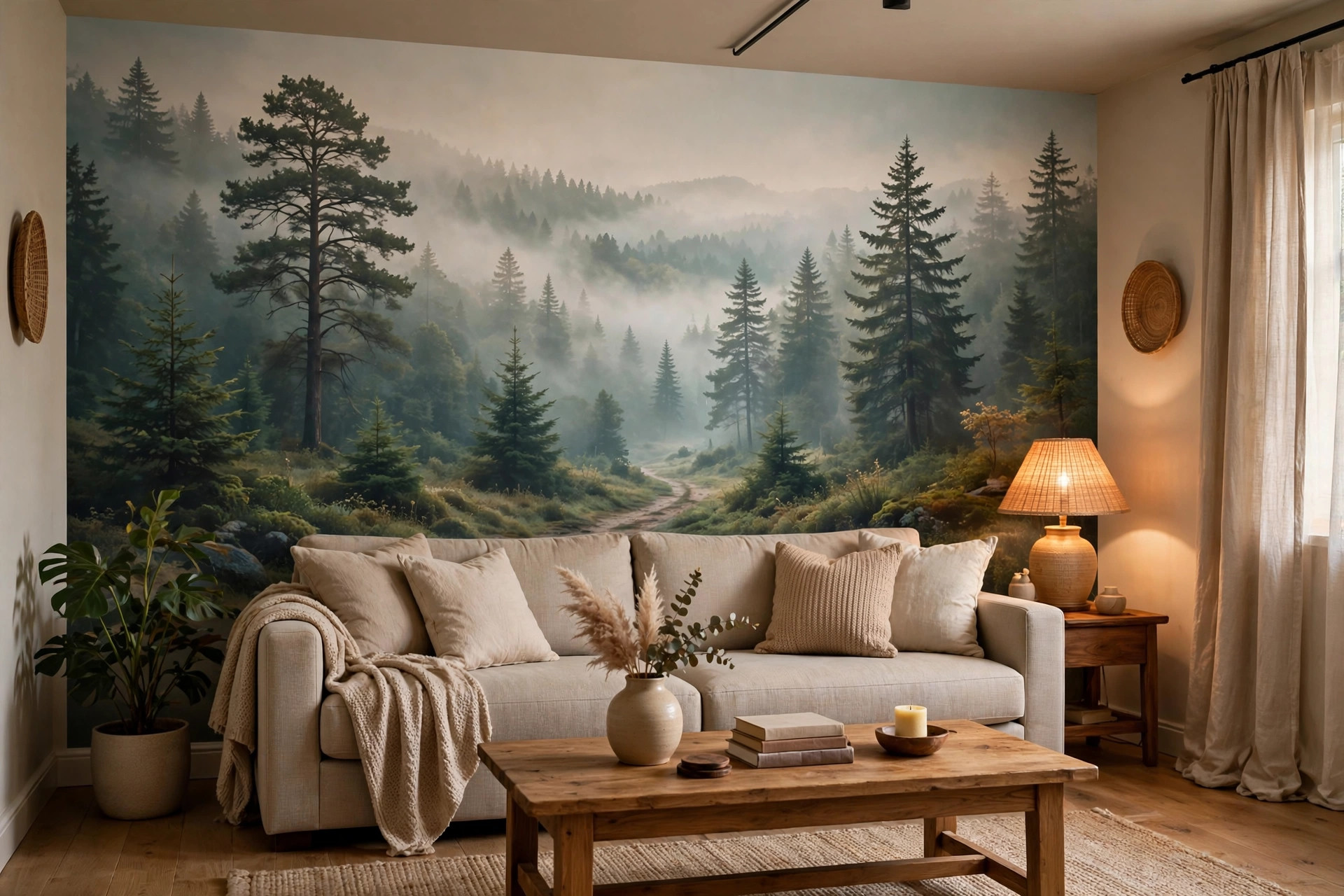

Few changes alter a room as quickly as mural wallpaper for living room walls. One large scene, printed across a full wall, can make a small room feel open or give a large room a clear center of interest. A mural differs from ordinary patterned wallpaper. Instead of a small design that repeats, a mural presents one complete picture, such as a forest, a coastline, a city skyline, or an abstract wash of color. The image runs from one edge of the wall to the other, much like a window onto another place.
Interest in large-scale wall scenes has grown in recent years. Homeowners who once chose plain paint now want a wall that shows something. Stores and online sellers have responded with a wide range of designs, materials, and sizes. With so much on offer, a careful buyer benefits from knowing what to look for before money changes hands.
Why a Wall Mural Matters in the Living Room
The living room is the heart of most homes. Family gathers there. Guests are welcomed there. It is the room most people see first when they enter a house. Because of this, the living room wall is the most visible surface in the home, and it deserves thought.
A mural works well in this room for three reasons. First, it gives the room character without filling it with objects. A plain room with a forest mural feels calm. A room with a bold abstract mural feels modern. The wall does the work that a dozen smaller decorations might do, yet the floor stays clear and the shelves stay uncluttered.
Second, a mural can change how large a room feels. A scene with depth, such as a path leading into the woods or a beach stretching to the horizon, draws the eye outward. The wall seems to recede. In a small living room, this sense of distance is valuable. Painters and designers have long used perspective for this purpose, and a printed mural simply applies the same idea in a direct way.
Third, a mural is often less costly than other large wall treatments. Commissioning an artist to paint a scene by hand takes weeks and costs thousands of dollars. A printed mural gives a similar effect at a fraction of the price. For homeowners who want drama without a large bill, mural wallpaper for living room walls is a practical middle ground.
What to Look for When Buying: Mural Wallpaper for Living Room for Sale
Not all mural wallpapers are made alike. The differences matter, especially in a room that gets daily use. Consider these points before you buy.
Material and finish
Most mural wallpapers fall into three material groups. Non-woven paper is the most common today. It is thick, tear resistant, and easy to hang, because the paste goes on the wall rather than on the paper. Many non-woven murals can also be pulled off in full sheets when the time comes to change the decor. Vinyl murals are tougher. They resist moisture and wipe clean with a damp cloth, which makes them a good choice for homes with children or pets. Traditional paper murals cost less but tear more easily and demand a steadier hand during hanging. Each material has its place, and the right one depends on the room and the household.
The finish also matters. A matte finish absorbs light and looks like a painted wall, which suits most living rooms. A satin finish has a soft sheen and adds a touch of richness, but it can show seams more clearly. High-gloss finishes are rare for murals, since glare distracts from the picture.
Size and fit
Murals are sold by size, often in panels of a set width. Before you order, measure the wall with care. Measure the width and the height at three points each, and use the largest reading. Walls are seldom perfectly straight, and a mural cut too small will leave gaps. Most makers advise ordering a few extra inches in each direction, then trimming the excess after hanging.
Some sellers offer custom sizes. You send the wall measurements, and the mural is printed to fit. This service costs more, but it removes the guesswork and usually gives cleaner edges. For rooms with unusual features, such as a sloped ceiling or a built-in bookcase, custom printing is worth the added cost.
Image quality and print clarity
A mural enlarges a picture across a whole wall, so the source image must be sharp at a large scale. A blurry or pixelated print will show every flaw once it is on the wall. Quality sellers state the print resolution and use high-resolution source files. Before buying, ask the seller about the resolution of the design you have chosen. Reading buyer reviews also helps. Guides from home improvement publishers explain what to check in print quality and wall covering materials, and sites like The Spruce and Bob Vila offer plain-language advice on choosing wall treatments.
Ease of installation
Some murals go up like ordinary wallpaper, one panel at a time. Others are designed for beginners, with peel-and-stick backing that lets you reposition a panel if it lands crooked. Peel-and-stick murals are popular with renters and with first-time wallpaper hangers, because mistakes can be undone. If you plan to hang a large paste-required mural yourself, plan for a full day and a helper. Detailed hanging guides from publications such as This Old House and HGTV walk through the process step by step.
Types and Options
Mural wallpaper for living room spaces comes in several broad styles. Knowing the types helps narrow a search.
Nature scenes are the most popular choice. Forests, mountains, lakes, and beaches bring the outdoors inside. They work in many home styles, from rustic to modern, and they tend to stay pleasing over many years. A nature scene also photographs well, which matters to homeowners who care how their room looks in pictures.
City and travel scenes show skylines, famous streets, and landmarks. A Paris street or a New York skyline gives the room an urban feel. These murals suit lofts and modern apartments, and they appeal to people who love to travel.
Abstract designs use color, shape, and texture rather than a recognizable scene. Watercolor washes, geometric patterns, and marbled effects all count as abstract murals. They are a safe choice for rooms where the furniture may change often, since they clash less with new fabrics and colors.
Vintage and map designs show old world maps, botanical drawings, or sepia photographs. They give a room a sense of history and pair well with leather furniture, wood, and brass.
Trompe-l’oeil scenes create an illusion, such as a brick archway, a library full of books, or a balcony with a view. These are playful, but they suit some tastes more than others.
Beyond style, buyers can choose between standard and custom designs. Standard designs come from the seller’s catalog and ship quickly. Custom designs use your own photograph or art, which is ideal for a personal touch, such as a favorite vacation view. Custom printing takes longer and costs more, but the result is one of a kind.
Cost and Price
Prices for mural wallpaper vary widely. A small ready-made mural for a single wall may cost under one hundred dollars. A large premium mural with a designer image can cost several hundred. Custom-sized or custom-image murals usually start around two hundred dollars and rise with size.
Three factors drive the price. The first is material. Vinyl and high-quality non-woven papers cost more than basic paper. The second is size. The third is design licensing. Murals that use famous photographs or licensed artwork carry a higher price than simple stock designs.
Set a budget before you shop, and measure first. Ordering the wrong size and reordering costs more than measuring twice. Also factor in installation. Hanging a mural yourself costs nothing but time. Hiring a professional wallpaper installer adds cost but often pays for itself in a cleaner result, especially with paste-required papers. Major home improvement retailers such as Home Depot and Lowe’s stock both murals and the tools needed for hanging, so comparing prices in one place is easy.
Care and Upkeep
A wall mural asks little of its owner, but a few habits keep it looking fresh. Dust it lightly with a dry cloth or a soft brush every few months. In rooms near a kitchen, a thin film of cooking grease can settle on walls over time. Vinyl murals can be wiped with a damp cloth, but paper and non-woven murals should stay dry. Always check the maker’s care instructions before using water or any cleaner.
Keep direct sunlight in mind. Strong sun fades printed inks over the years, just as it fades fabric and furniture. If the mural wall faces a large window, consider curtains or shades for the brightest hours. Quality inks resist fading better than cheap ones, which is another reason to buy from a trusted seller.
Small scuffs and marks can often be left alone. Most murals are printed on panels, and replacing a single panel is usually possible if one is damaged. Keep the name of the design and the seller’s order number in a safe place. That information makes it easy to order a matching replacement years later.
Safety
Wallpaper is generally safe, but a few safety points deserve attention. Choose murals printed with low-VOC inks and labeled as low odor. VOCs are chemicals that some inks and adhesives release into the air. Low-VOC products are easier on the lungs and leave less smell in the room. This matters most in homes with small children or anyone with breathing trouble.
Check fire ratings if the mural will hang near a fireplace or a heat source. Some papers meet stricter fire standards than others, and the product label should state the rating. Keep the pasting area well ventilated while you hang the mural, and store leftover paste away from children and pets.
When the day comes to remove an old mural, do not simply tear at it. Steamers and scoring tools make the job faster and protect the wall beneath. Homeowners who plan to change their decor often find that steamer wallpaper removal tool reviews are a useful starting point for the right equipment. Proper removal keeps the wall ready for whatever comes next.
Where to Buy
Mural wallpaper for living room walls is sold through several channels. Specialty wallpaper stores, both local and online, carry the widest range of designs. Large home improvement chains carry a smaller but reliable selection, and their return policies are usually simple. Online marketplaces offer the largest choice of all, including designs from independent artists, but buyer care is needed. Read seller ratings and review the return policy before ordering from a seller you have never used.
Paint makers are another useful stop. While they sell paint rather than murals, their color tools help you choose paint that matches a mural. Sherwin-Williams, Behr, and Benjamin Moore all offer color matching services that pair wall paint with mural tones. A well-matched adjacent wall color makes the mural look like part of the room rather than an add-on.
When comparing sellers, look for clear size information, material details, installation guides, and a fair return policy. A seller who answers questions promptly is usually a seller who stands behind the product.
FAQ
How long does mural wallpaper last?
With normal care, a quality mural lasts ten to fifteen years or more. Vinyl and non-woven murals last longest. Sunlight, moisture, and rough handling shorten the life of any wall covering.
Can I hang a mural myself, or should I hire a professional?
Many homeowners hang murals themselves, especially peel-and-stick types. Paste-required murals take more skill. If you have never hung wallpaper before, start with a smaller wall, or hire a professional for the first attempt. The cost of a professional is often less than the cost of a ruined mural.
Will a mural damage my walls when I remove it?
Most modern non-woven and peel-and-stick murals come off cleanly with little or no wall damage. Older paste-heavy papers may pull off some paint. Renters who plan to move should favor removable options. Those exploring removable wallpaper for renters will find many designs made with easy removal in mind.
What size mural should I order for my living room wall?
Measure the wall’s width and height at several points and use the largest readings. Add two to three inches to each measurement for trimming. If the seller offers custom sizing, use it. A mural that is slightly too large is easy to trim; a mural that is too small cannot be stretched.
Are mural wallpapers safe for homes with children and pets?
Yes, provided you choose wisely. Vinyl murals wipe clean and resist scuffs, which makes them the best pick for busy households. Low-VOC inks keep the air safe. Keep peel-and-stick edges pressed flat so curious little fingers do not start peeling.
Can I use a mural in a room with a bold entryway style?
A mural can pair well with a bold entryway if the colors work together. Many homeowners carry one strong accent through both spaces. For ideas on strong patterns in small areas, see reviews of bold wallpaper for entryway designs, which show how bold choices can work without overwhelming a space.
A Final Word
Mural wallpaper for living room walls is one of the simplest ways to give a home new life. It costs less than new furniture, installs in a day or two, and changes the feel of the room at once. Take time to measure, choose a material that fits the household, and buy from a seller who answers questions. Do that, and the wall that once held nothing but paint can hold a forest, a coastline, or a city you love. Choose well, and you will enjoy the view for years.
References
Behr. (n.d.). Paints, primers, and stains. https://www.behr.com Benjamin Moore. (n.d.). Paints and stains. https://www.benjaminmoore.com Bob Vila. (n.d.). Home improvement advice. https://www.bobvila.com HGTV. (n.d.). Home and garden ideas. https://www.hgtv.com Lowe’s. (n.d.). Home improvement products. https://www.lowes.com Sherwin-Williams. (n.d.). Paints and coatings. https://www.sherwin-williams.com The Home Depot. (n.d.). Home improvement products. https://www.homedepot.com The Spruce. (n.d.). Home and garden advice. https://www.thespruce.com This Old House. (n.d.). Home renovation guidance. https://www.thisoldhouse.com
Was this guide helpful?

About James Carter
The My Garden US editorial team writes practical, in-depth home and garden guides for American homeowners — tested advice, no fluff.
You May Also Like
Faux Brick Wall Panels for Sale USA: A Complete Buying Guide
March 7, 2026 0 views
Driveway Sealer Buying Guide for USA Homes
May 18, 2026 0 views
Best Washable Paint for Kids Rooms USA: A Plain Guide for Parents
March 29, 2026 0 views